Yale University – Warner House // 1887

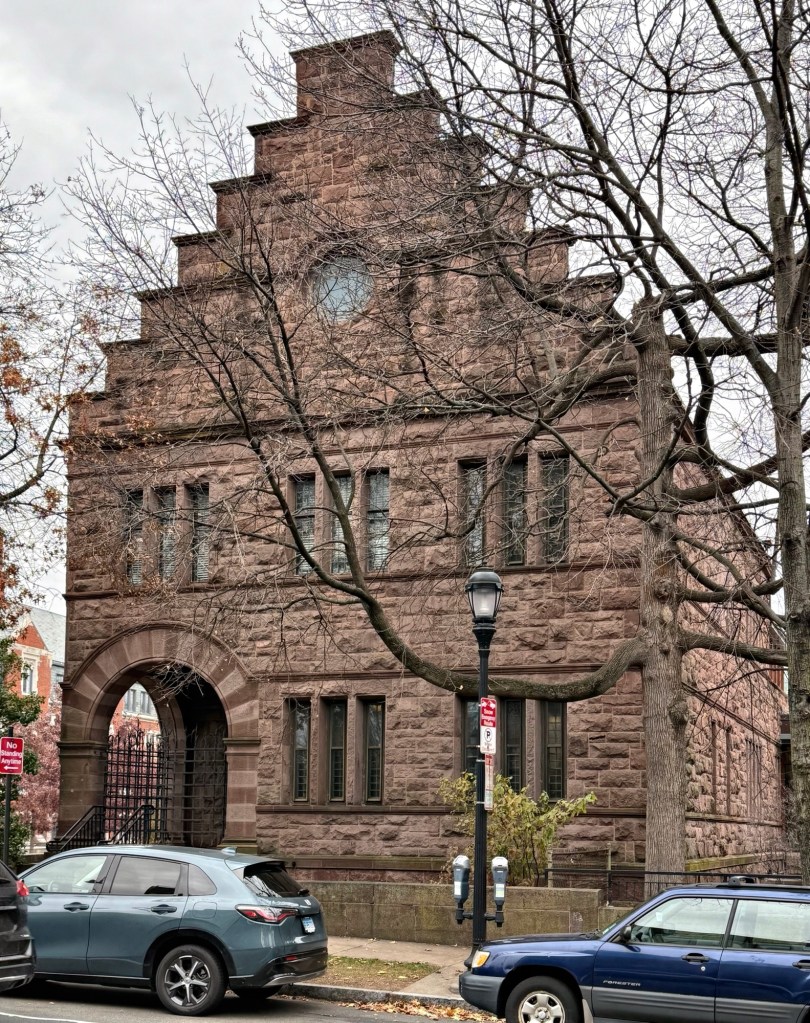
Originally known as Cloister Hall, this ornate building on Hillhouse Avenue in New Haven, Connecticut is one of the most interesting I have seen. The building was constructed in 1887-8 as a residence hall for members of the Book and Snake, a secret society at Yale University. Architect H. Edwards Ficken designed the ornate brownstone Cloister which was completed in 1888. At the time, it was considered “one of the most picturesque buildings on the Yale campus.” The society added a matching rear addition in 1915, which is a heavier mass, but compliments the original structure. Yale University would eventually acquire the building after the society no longer needed a separate lodging house for members. Today, the building is called Warner House, and Yale does a great job at maintaining this beauty.

St. Elmo Hall – Rosenfeld Hall // 1912

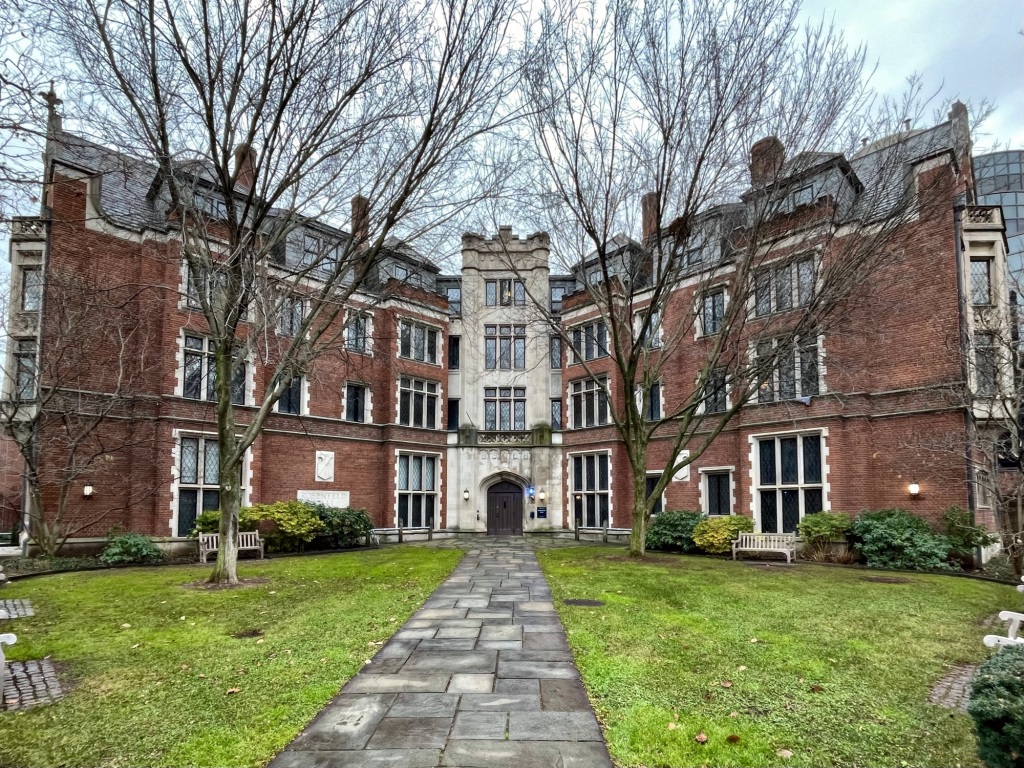
St. Elmo Society at Yale was founded in 1889 as a chapter of the national fraternity Delta Phi, and it is today one of the “ancient eight consortium” of secret societies at the university. The society’s original building was erected in 1895 and provided housing, meeting spaces, a library, smoking room, and other recreational spaces for the members. Just over a decade later, the group’s increasing wealth and membership necessitated a larger building. This building, named St. Elmo Hall was designed by architect Kenneth MacKenzie Murchison in an Elizabethan style and built in 1912 for the society, replacing its former residence hall. The society saw dwindling funding and during World War II, St. Elmo Hall became a convalescent hospital for soldiers who were out of the hospital but still need observation. After WWII, the group began leasing some rooms out to Yale University, who eventually purchased the building in 1962, renaming it Rosenfeld Hall after Richard Rosenfeld ’63. The L-shaped building is sited opening up to the corner lot and is Neo-Gothic in style, likely drawing inspiration from Yale’s established Gothic stylistic influence.

The Colony // 1898-1969

In 1898, before the Berzelius Society at Yale built their present “tomb” in New Haven, the organization funded one of the finest residence halls in town at the time. The building was known as “The Colony” and would house Seniors who were members of the secret society. Located on Hillhouse Avenue, the stately Colonial Revival/Neoclassical building was designed by architects Henry Bacon and James Brite. Bacon is best known for having designed the Lincoln Memorial on the National Mall. Yale purchased the Colony dormitory in 1933 for student housing, later using it for faculty offices before demolishing it in 1969 to facilitate construction of the Yale Health Services Center, one of the least inspiring buildings on the campus.

Berzelius Tomb // 1910

Yale, like other Ivy League colleges, has a long and complex history of secret societies. The secret societies all are headquartered at their own buildings, called “tombs”. These are massive, very impressive structures without windows or signage and all share an unmistakable message with their architecture: “Private; keep out.” One of the lesser-known tombs at Yale is the Berzelius Tomb, completed by 1910 from plans by architect Donn Barber. The Berzelius was established in 1848 as a secret society and formerly was located in Berzelius Hall, a Romanesque style building. The tomb is sited on an difficult lot at the convergence of three main roads but holds its own architecturally as a highly ornamented box. This austere tomb is built of limestone, with a balustrade and detailed cornice at the roof, but the main attraction is the entrance, which is a double brass door with floral panels, all surrounded by a Classical surround. Above the entrance, a limestone panel showcases the Society’s insignia with fruit and flower swags.