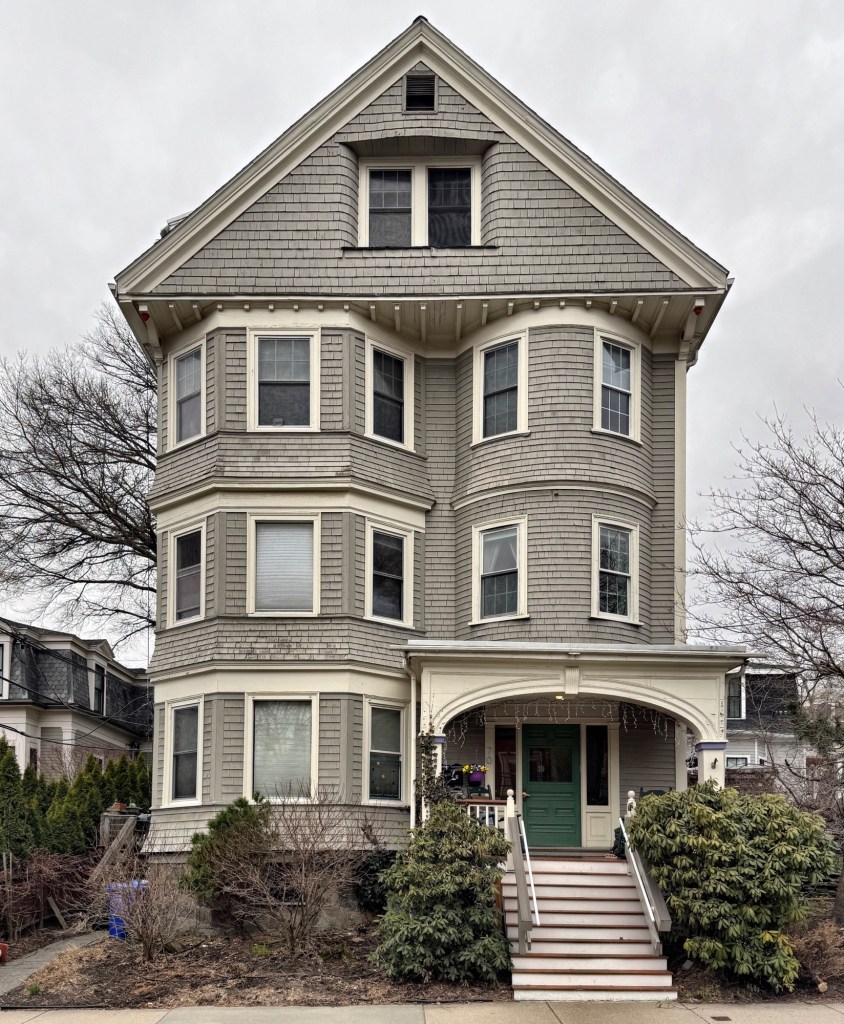
The Triple Decker is a popular housing form that between 1880 and 1930, saw an estimated 15,000 examples built in Boston and surrounding cities. The unique construction of three flats stacked on top of eachother provided density and lowered housing costs for three families and supplying the housing needs of huge numbers of new immigrants and working class families, providing an important path to homeownership. Often, a family could purchase a property, building a triple decker and could live in one unit while renting the others to pay for the mortgage and taxes, providing upward mobility for those who so long were priced out of owning their own home. By the late 19th century however, strong and organized pushback against the housing type occurred, led by groups like the Immigration Restriction League, who were “convinced that Anglo-Saxon traditions, peoples, and culture were being drowned in a flood of racially inferior foreigners from Southern and Eastern Europe,” sound familiar? Led by Prescott Farnsworth Hall, a Brookline resident, the group advocated to limit immigration from areas they deemed “lesser” and locally, fought to ban the construction of triple deckers in Massachusetts, ultimately succeeding in part when in 1912, Massachusetts passed a law allowing cities and towns to ban triple deckers by preventing construction of any ‘wooden tenement’ in which ‘cooking shall be done above the second floor. While major catastrophic fires like the Great Chelsea Fire of 1908 were fresh in people’s minds, a leading cause for the legislation was likely to limit upward mobility of groups of people from owning real estate. The Mary E. Paul Triple Decker, pictured here, was built in 1898 in the Shingle style, contributing to the rich architectural and social character of the surrounding neighborhood.
 Buildings of New England