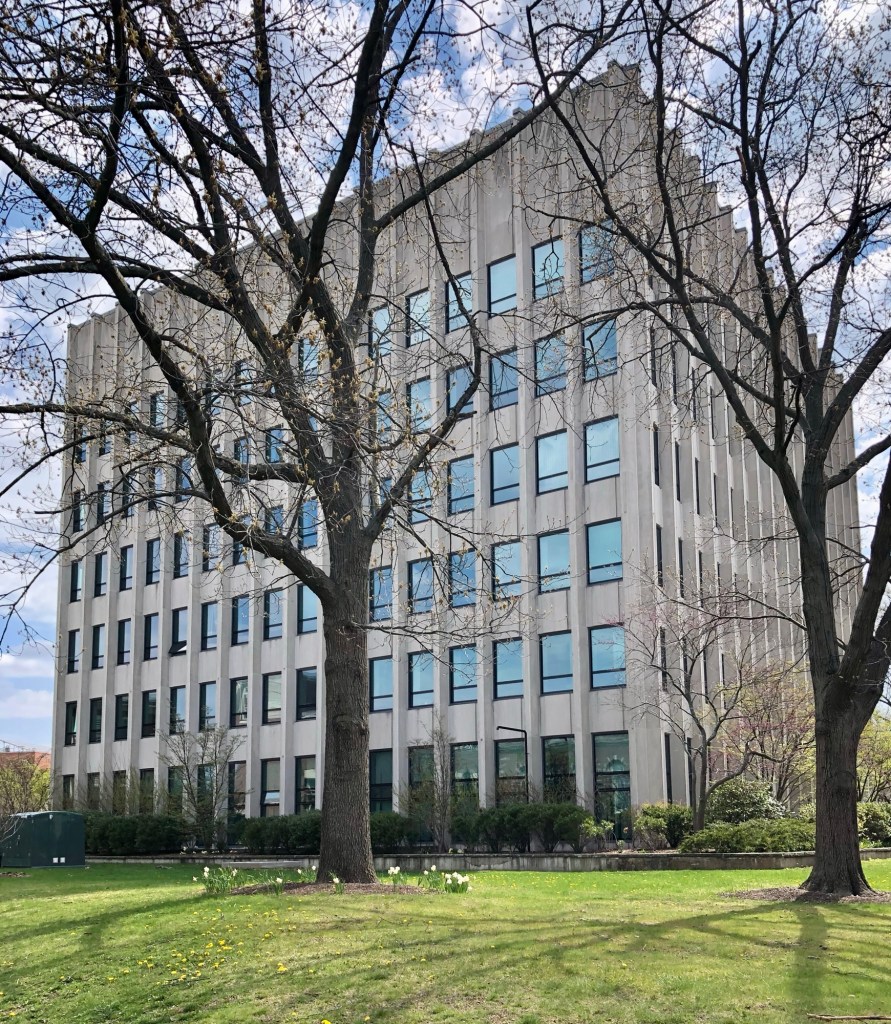
The modernist Brookline Town Hall building stands in stark contrast to the many historic buildings in Brookline Village, and even more-so from the town’s third Town Hall, a Victorian Gothic design by architect Samuel J. F. Thayer. Completed in 1965 as a six-story municipal “skyscraper”, the structure was designed by Anderson, Beckwith, and Haible, architects who specialized in sleek, clean, Modernist designs, primarily in office parks and college campuses. The unadorned box is broken up only by the rows of identical windows and slightly projecting fins, which break up the bays in their own monotony. Like many such municipal and office buildings of the time, the structure is set back from the street and surrounded by landscaping, with surface parking behind. While the building was lauded when it opened in 1965, tastes shifted and like in many communities, a majority of the public (and likely the employees who work here) would have preferred its predecessor.
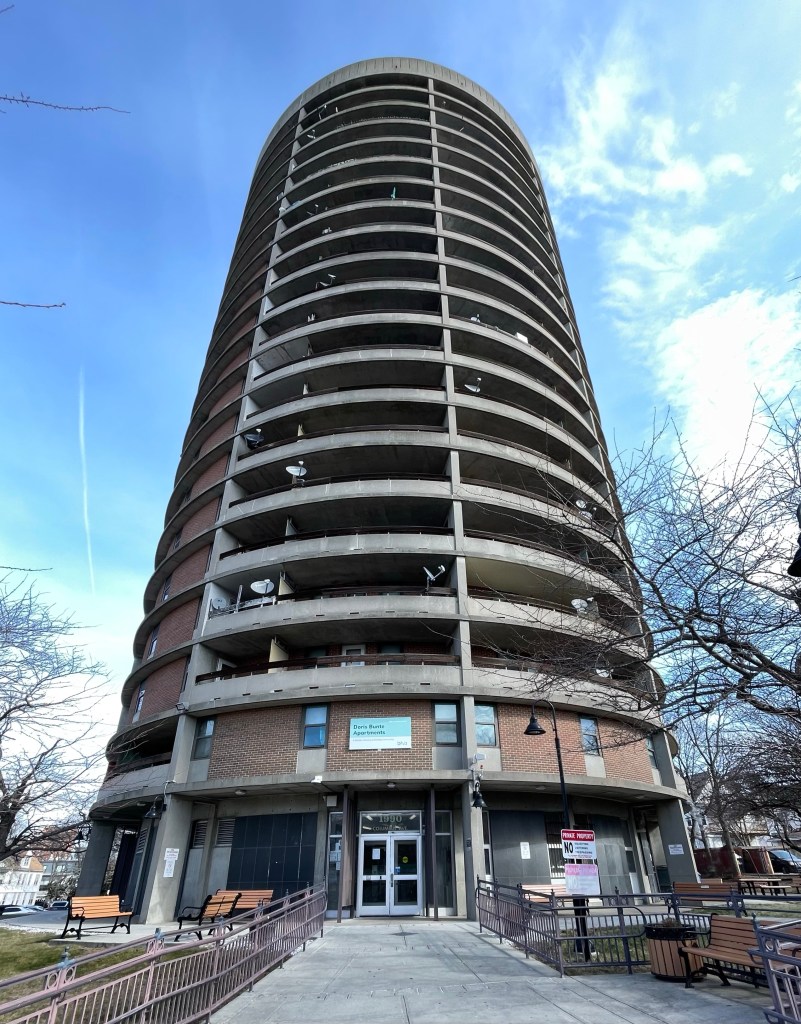
In the second half of the 20th century, parts of Boston saw disinvestment by private property owners as well as local and state government. With people leaving Boston for the suburbs, the hemorrhaging of tax revenue led urban planners to go big and institute ‘Urban Renewal‘ policies and planning to demolish what they believed to be substandard housing and invest in Modern apartments and car-oriented developments. The triangular shaped new community was as comprehensive as any urban renewal district in the region; indeed of the ten General Neighborhood Renewal Plans created by the BRA in 1961, Washington Park was the most self contained Urban Renewal District in the city. It included new police and fire stations, a courthouse, two public libraries, a shopping mall, a health center, elementary school and five garden style housing developments totaling almost 2000 apartments or townhouses. At its completion in 1975, $70.4 million had been invested to build the new community of which $31. 3 million came from the federal government. Part of this massive undertaking was the construction of elderly housing, which resulted in this 20-story cylindrical tower at the southernmost edge of the Urban Renewal area. The tower was constructed between 1967 and 1970 and was designed by Boston-based architectural firm Richmond & Goldberg, led by Isidor Richmond and Carney Goldberg. Apartments were “integrated” with with 70% Black and 30% White residents, all with private balconies and an emergency pull-chain system in kitchens and bedrooms for the elderly residents. As far as mid-century apartment towers go, this one is pretty interesting and unique. The building was renovated a few years ago and renamed the Doris Bunte Apartments. In 1969, Buntè was nominated to the Boston Housing Authority board, making her the first female public housing tenant to serve. In 1972, she was elected to the Massachusetts House of Representatives, becoming the first woman of color to serve in the Massachusetts legislature, and the first female to serve in the House leadership in 68 years. While there, Buntè helped found the Black Legislative Caucus and the Caucus of Women Legislators.
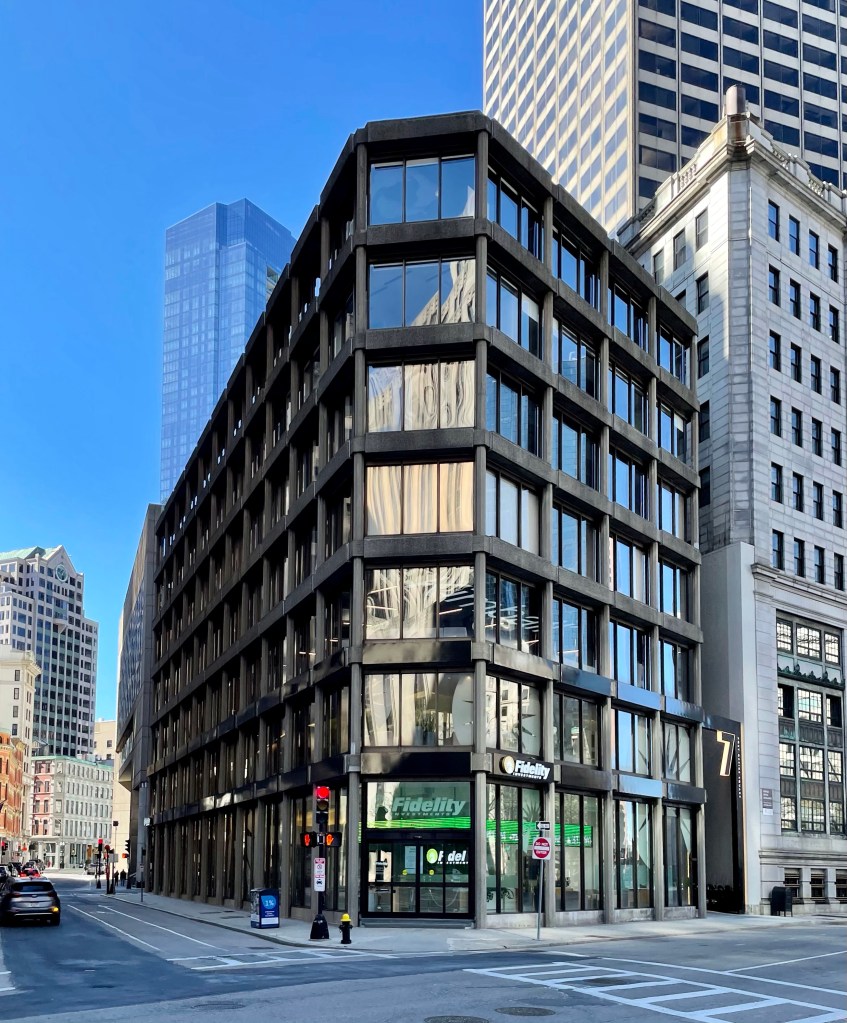
One of the lesser-known and written about examples of Brutalism in Boston is this refined, elegant take on the style, found in Downtown Boston. While many of you may dislike or even despise Brutalism, this building is a lighter version of the strong mass that we all know. The Massachusetts General Life Building was designed by Boston architect Frederick A. Stahl, who was trained in architecture locally at Harvard’s Graduate School of Design and MIT. Frederick Stahl was a perfect architect for Boston, he often worked on preservation projects including the rehabilitation of the Old South Meeting House, but showcased how 1960s architecture could compliment historic forms in a big way. For this building, he re-envisioned the historic granite commercial blocks found scattered around Boston, but showcased the ability of concrete to do more for much less massing. One of the key features of the design is that the two entrances are somewhat hidden, and are recessed in 14′ wide slots where the building is connected to the adjacent historic building. This was the aim to make this structure recess and not try and command the prominent corner. In the Mass. General Life Building, tenants also included the Loeb, Rhoades & Company, a brokerage firm based out of New York, that had offices in buildings in major financial centers all over the country. They later merged with Hornblower & Weeks, a Boston based firm, who had their own building in Boston.
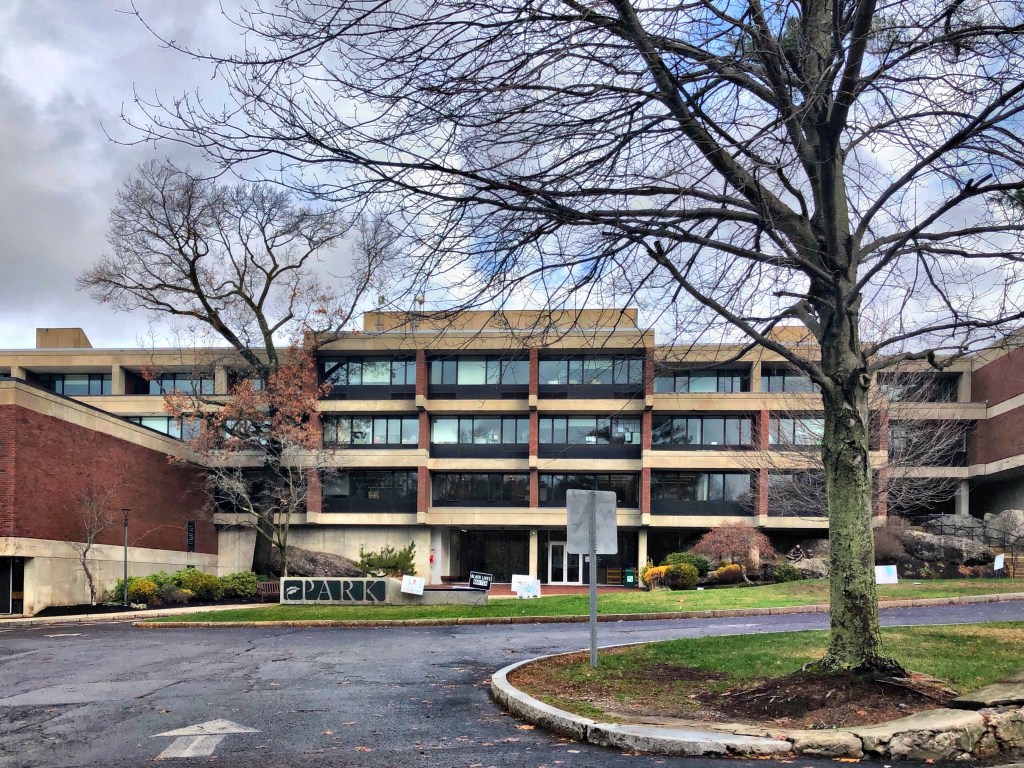
Founded in 1888, The Park School, one of the premier private schools in the Boston area began off Walnut Street in Brookline in half of a house. Founded by Miss Caroline Pierce, the school was officially incorporated in 1923 and named to commemorate Julia Park, principal from 1910-1922. The school occupied the former Hill Estate before the school board voted in 1967 to look for a new campus, with space to grow. James and Mary Faulkner donated 14-acres of rolling fields and woods to the school for their new campus. The Park School hired architect Earl Flansburgh of Cambridge to design the new, Modern school building. The Brutalist building allowed for large, open classrooms with the flexibility for the school to adapt as its needs changed. The school is built of reinforced precast concrete as a stack of modular classroom and office spaces with wall-length windows for more natural illumination of rooms. Since the 1970s, the school has expanded a couple more times, notably with a 1990s addition by Graham Gund. The school remains one of the most desired in the region and fits well within its landscape.
 Buildings of New England