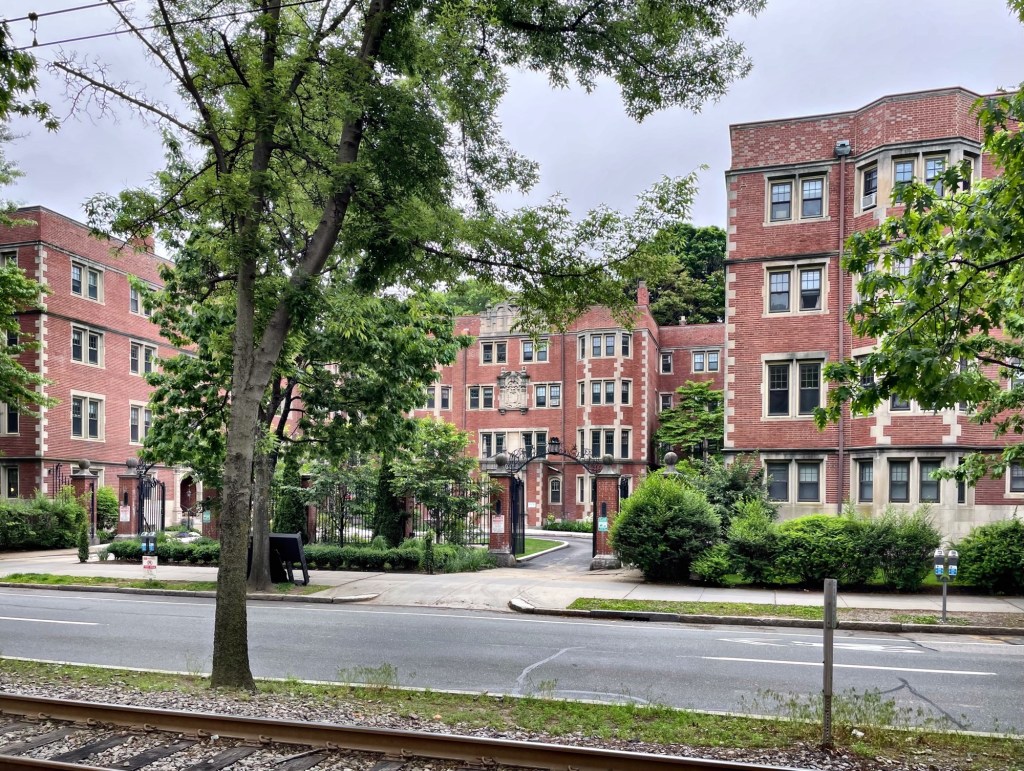
Richmond Court // 1898

Believe it or not, but this apartment building on Beacon Street in Brookline, Massachusetts is one of the most significant buildings of the type in the Boston area! This is Richmond Court, which is one of the oldest (if not the first) apartment house built in the northeastern United States that resembled an English Tudor manor house. The apartment building was constructed in 1898 from plans by architect Ralph Adams Cram, one of the best American architects of the late 19th and 20th centuries. Cram even moved into the building briefly before moving into a townhouse in the Back Bay neighborhood of Boston. The building set the tone architecturally for later apartment buildings in the Boston area, with many architects attempting (largely not as effectively) to design Tudor-influenced apartment buildings regionally. The development is also significant in that at a time when most Boston-area developers were building apartment houses that maximized the buildable square footage, as they do to this day, Richmond Court included a landscaped courtyard to provide residents with more light and air circulation. The development also included two separate town houses on either side of the apartment block.
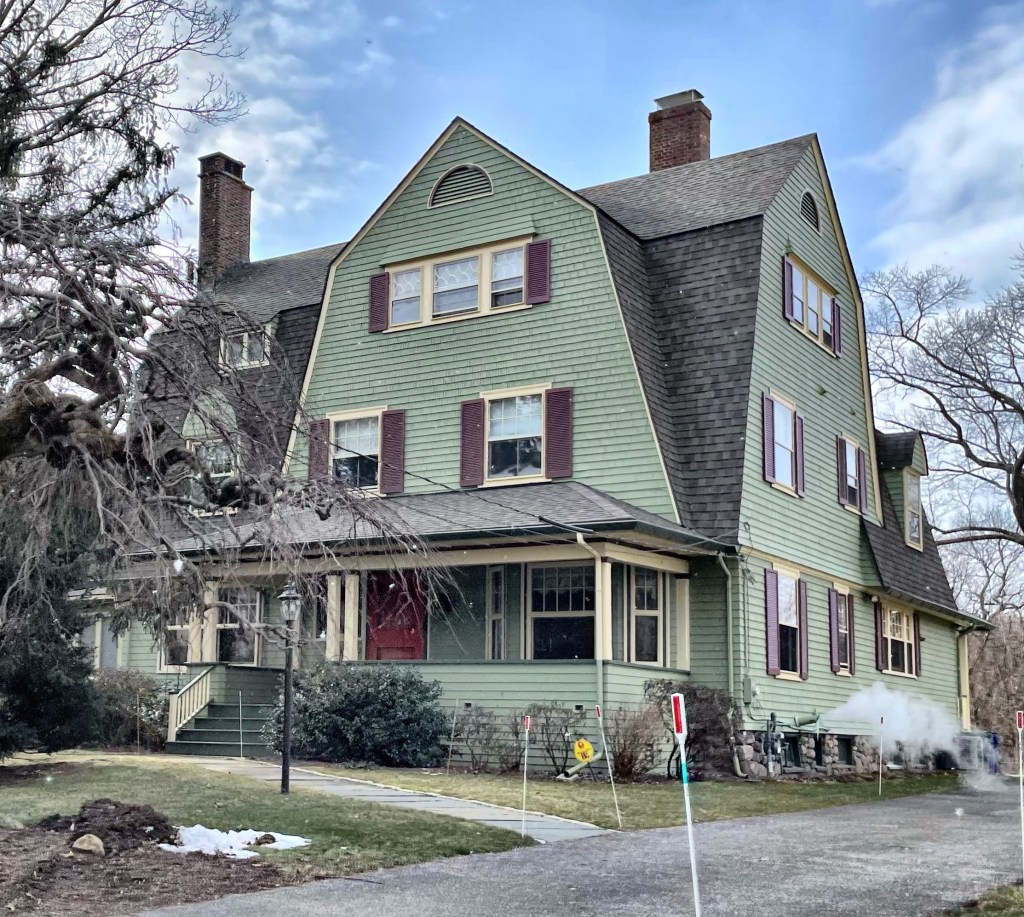
John Parry House // 1895

In 1895, Waban Village was in the middle of its massive development period, when half of the homes in the neighborhood were built within 10 years. One of the earliest in this neighborhood was this investment property by John E. Parry, a businessman and major developer. This house appears to have been rented at first, but was listed as vacant for some time in the city directories. Eventually it was purchased and has been lovingly maintained to this day. The design is a regional take on the transitional Shingle and Colonial Revival styles, this one with a really unique cross gambrel roof.

Upper Falls Village School // 1846

The Upper Falls Village in Newton, MA is a small industrial neighborhood which grew after the Revolutionary War due to its location on the Charles River where rapids and falls occur. Mills and factories were built in the village and thus, workers from other towns and even Europe moved here to work in the dozen manufacturing facilities. By 1850, the village had 1,500 residents, a quarter of those living in the town of Newton at the time, in a much denser area. With workers and families moving here, the need for a school was paramount. As the Upper Falls Village continued to grow, schools were built and demolished for newer and larger structures to house the growing population. In 1846, this two-story schoolhouse was constructed in the then popular Greek Revival style. The schoolhouse was quickly deemed inadequate and was sold when a new school closer to the center of the village was built in 1855. This building was then converted to commercial use, serving as a grocery and dry goods store and later a watchmaking shop, with the storefront added at the time.