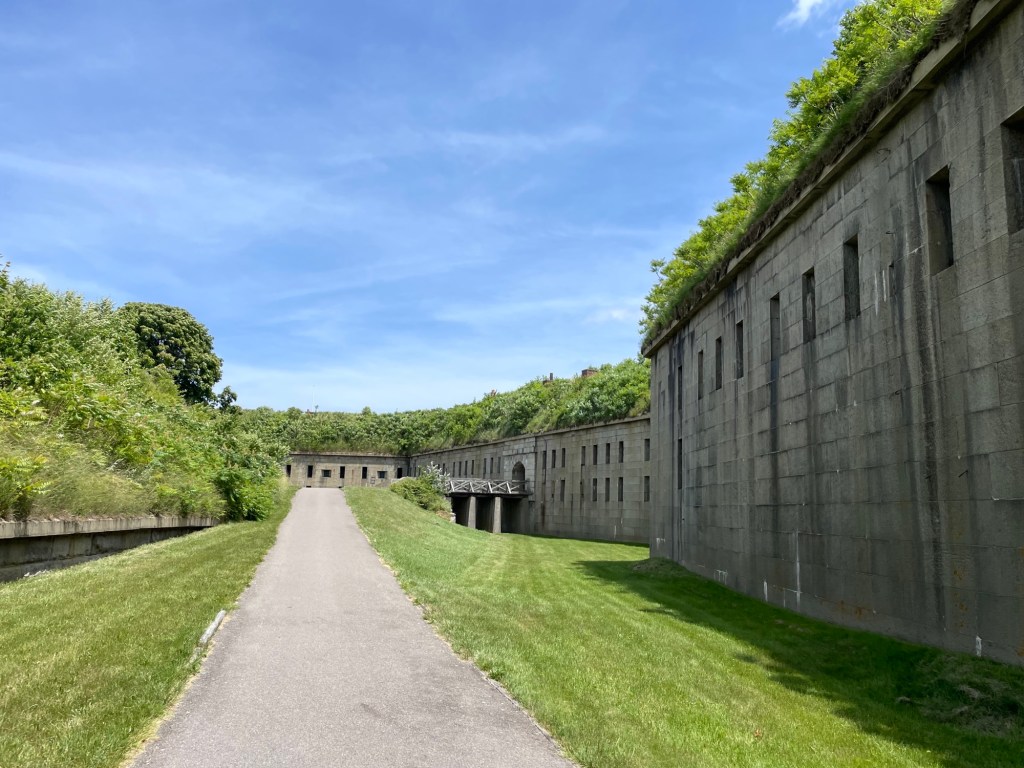
George’s Island – Fort Warren // 1847

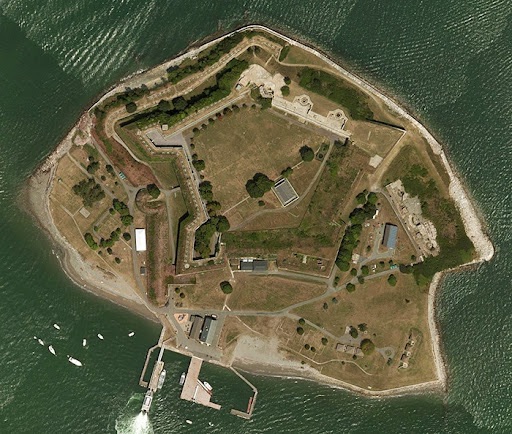
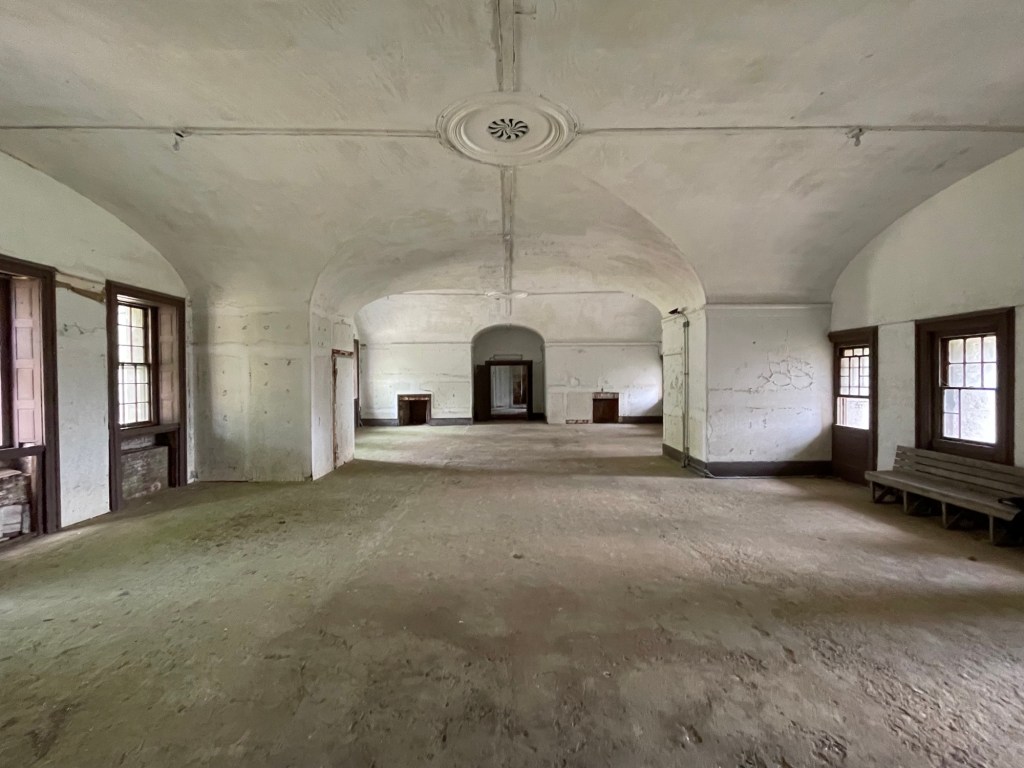
Located seven miles by boat from downtown Boston, Georges Island is a must-visit location for history-buffs and those looking to see the city from a new vantage point! The island in its early days was used for agriculture for 200 years until 1825, when the U.S. government acquired it for coastal defense. Fort Warren was first-dedicated in 1847 and is named for Revolutionary War hero Dr. Joseph Warren, who sent Paul Revere on his famous ride, and was later killed at the Battle of Bunker Hill. Fort Warren is a pentagonal bastion fort, made of granite, and was constructed from 1833 to 1861, overseen by Col. Sylvanus Thayer, and completed shortly after the beginning of the American Civil War. Fort Warren defended the harbor in Boston, Massachusetts, off-and-on from 1861 through the end of World War II. It’s highest use was during the Civil War, where it served as a training facility and as a prison for Confederate officers and government officials. Unused after WWII, Fort Warren was acquired by the Commonwealth of Massachusetts by the Federal government and is today maintained by the Massachusetts Department of Conservation and Recreation as the centerpiece of the Boston Harbor Islands National Recreation Area.
Have you been to Georges Island?
Long Wharf Hotel // 1982

In the second half of the 20th century, much of Downtown Boston and the Waterfront areas were blighted with decaying buildings. Seeing tax dollars flee to the suburbs, the City of Boston used Urban Renewal to demolish large areas to erect new neighborhoods and blocks to revitalize the city. Much of it was done with a heavy hand, evicting largely minority and immigrant residents and razing of traditionally walkable neighborhoods for more car-centric districts. The Waterfront was traditionally the economic hub of Boston, with large commercial wharf buildings jutting out into the harbor symbolizing the economy’s strong ties to maritime trade for centuries. Boston Properties was an early developer who saw the potential of the revitalized waterfront, and developed this hotel off Long Wharf. Architect, Araldo Cossutta, (who was originally picked 8th of 8 submissions in a design competition) was ultimately selected to design the hotel, which at first glance may look out of place. However, the building draws cues from the area, evoking the Quincy Market warehouses as well as the attributes of a modern ocean liner on its head. Relatively simple massing with rectilinear and semi-circular fenestration at the lower level rises to a complex series of stepped back balconies, which form a steep gabled roof. To me, its the right amount of recessiveness and boldness in Postmodernism.

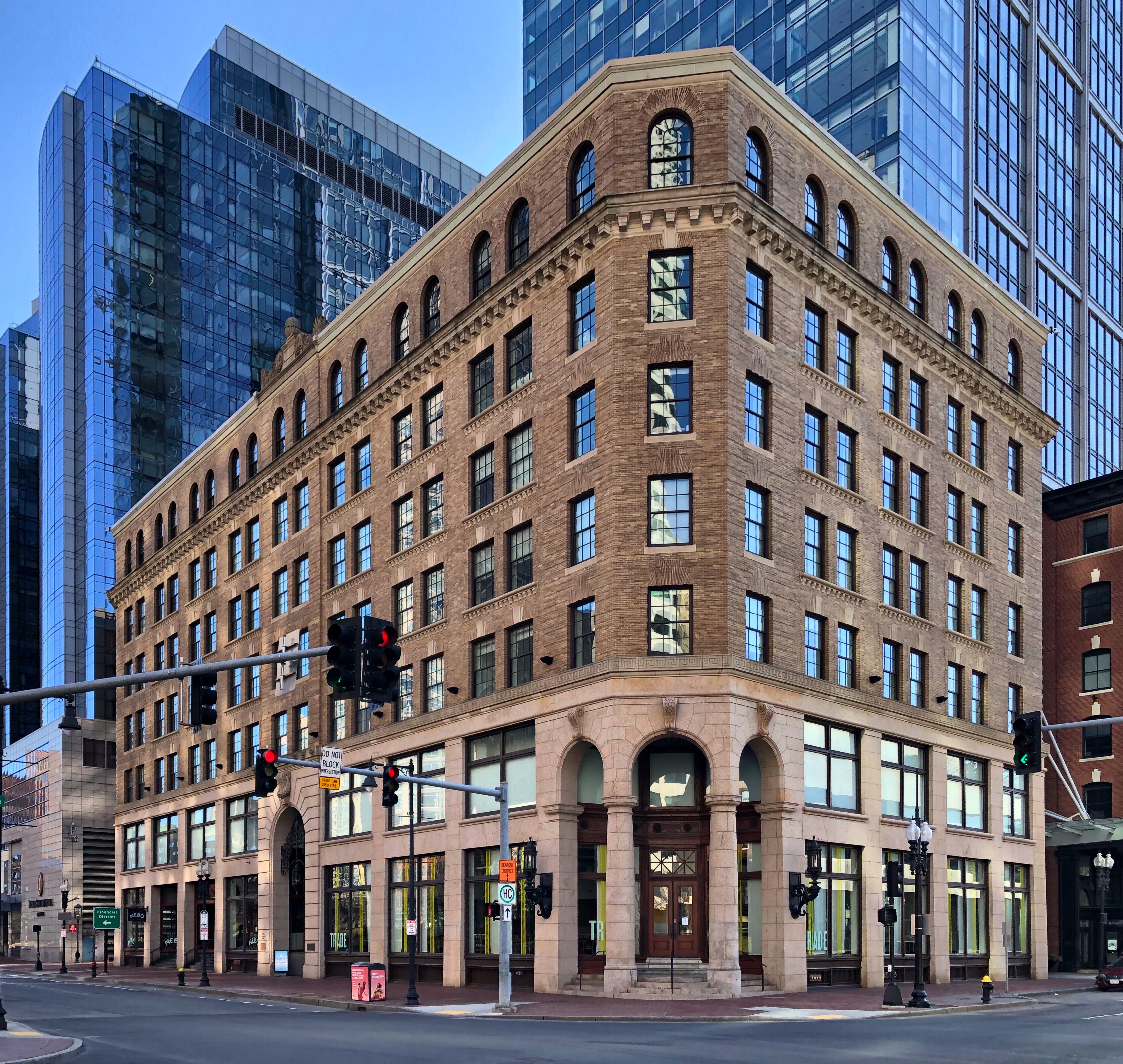
Russia Building // 1897

After the Great Fire of 1872 burned a large portion of Downtown Boston and destroyed the Russia Wharf structures on Atlantic Ave, the city decided to extend Congress St. over the wharf and across a new bridge connecting Downtown to areas being filled in South Boston (now Seaport). The wharf was the center of Boston’s trade with Russia in the late 18th and early 19th centuries. The original wharf buildings were destroyed in the Great Boston Fire of 1872, and the land area was extended by building over the wharf and filling the spaces surrounding it. Three new Russia Wharf buildings were built on the original site of Russia Wharf, near where the Boston Tea Party took place in 1773. Permits were issued in 1897 for the Russia Building and its two neighbors facing Congress St. Opening in 1898, the principle occupant of the Russia Building (seen here) was the Library Bureau, manufacturers of the “Perfected Card System,” library and office Supplies, with branches in other major cities. The buildings were designed by the renowned firm of Peabody and Stearns, who were VERY busy at the end of the 19th and early 20th centuries around Boston.