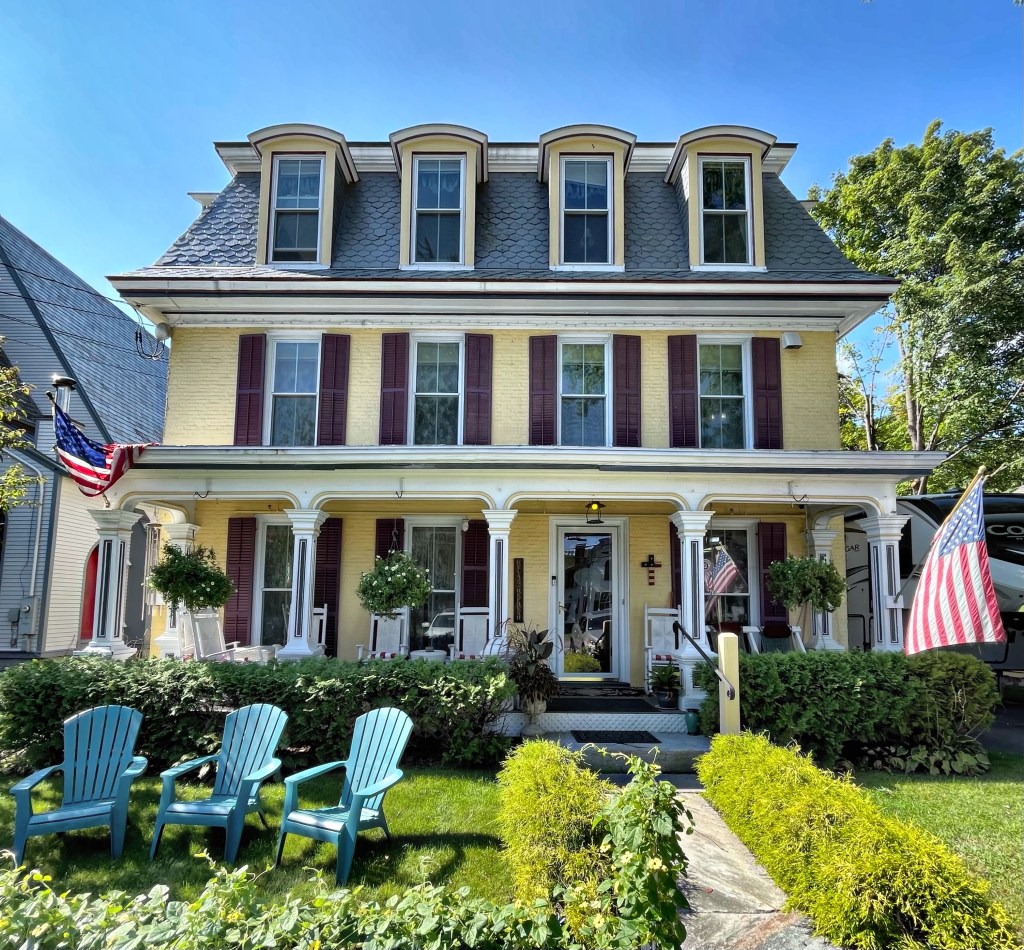
Inn Victoria // c.1850

Located right on Main Street in the beautiful village of Chester, Vermont, this historic inn has been a landmark in town since it was built in the mid 19th century. The house was constructed around 1850 for Dr. Abram Lowell (1794-1876), the village doctor. Dr. Lowell conducted his medical practice in a small building next to the main house and resided in the home, which originally had a side-gable roof. Tributes printed in regional newspapers at the time of his death called him an eminent physician, accomplished gardener, “eccentric in his ideas,” and “the wealthiest man in town.” After his death, the home was inherited by his daughter and her husband, George Hilton. They immediately “modernized” the home, adding the mansard roof, which provided an extra full story of living space. The home was converted to a bed & breakfast in 1998, and has been one of the most intact, Victorian era inns in the state since! It is known as Inn Victoria, so named after Queen Victoria and the Victorian period of architecture in the United States.
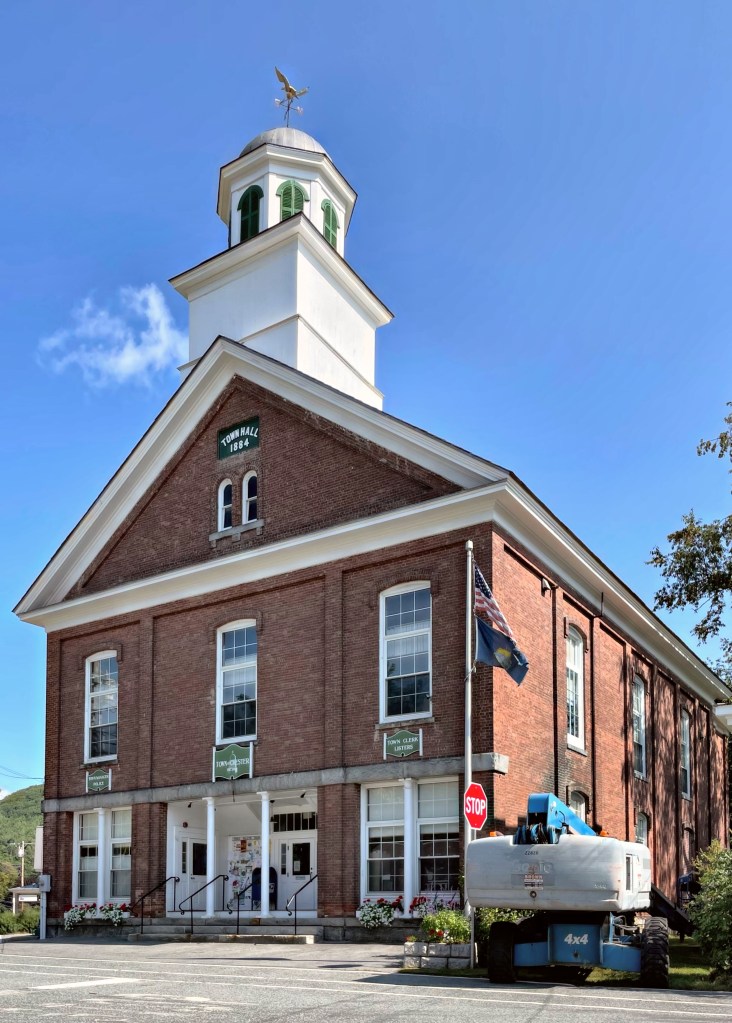
Chester Town Hall // 1884

The town of Chester, Vermont, was originally chartered by New Hampshire Governor Benning Wentworth as Flamstead, in 1754. The terms of the charter were not met and the town was re-chartered as New Flamstead in 1761. In 1766, a patent was issued by New York that changed the name of the town to Chester, after George Augustus Frederick, the Earl of Chester and the eldest son of King George III. Vermont in the 18th century was contested land claimed by both New Hampshire and New York, unsettled until the colonists in the area decided to petition for their own statehood. The town of Chester voted to keep their name. The town grew with two distinct villages, Chester Village and Stone Village. Both villages were very distinct in terms of politics, religious affiliations, and architecture. When the railroad cut through the town, the route passed between Chester’s North and South villages, and Chester Depot village emerged right in the middle. The establishment of a third village by the railroad depot, offered neutral ground on which to erect a town hall, as before 1884, town meetings were held alternately each year in the two opposing villages. The large town hall building in Depot Village is a late example of Greek Revival and Italianate design.