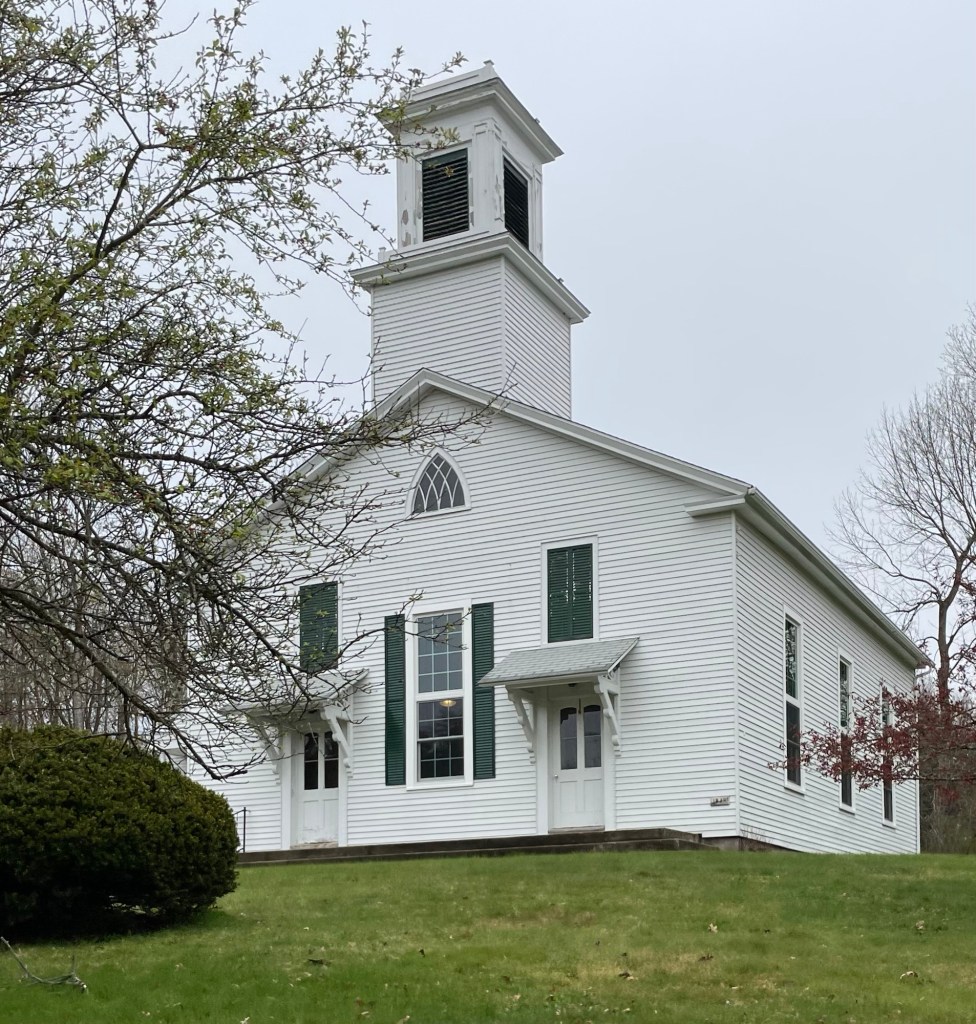
The Congregational Church of Union // c.1841

The small town of Union, Connecticut was established in 1734 and as with many towns at the time, religion and community were some of the first things to be codified when settling in a new area. The town’s publicly supported religion, Congregationalism permeated everyday life in Union. Even after disestablishment in 1818, the Congregational church continued as Union’s predominant religious organization well into the twentieth century. By 1841, the members built this edifice, the congregations second, on a hill overlooking the town’s modest green. The vernacular church features a Gothic lancet window, classical belfry, and later pent roof porches over the entrances on the primary facade.

United Church of Christ Southbury // 1844

Originally, the parishioners living in present-day Southbury would travel to Woodbury Center to attend church services. This changed after the Southbury parish was incorporated in 1731, voting to erect a church a year later. Founded in 1732, the Southbury Congregational Church was dwelled in several sites until the third church was built on the present site in 1844. This Greek Revival style church features Doric pilasters and Ionic columns at the recessed portico with a large pediment above with ornate scroll carvings around the clock. The church remains well-preserved and a visual landmark on the Main street.

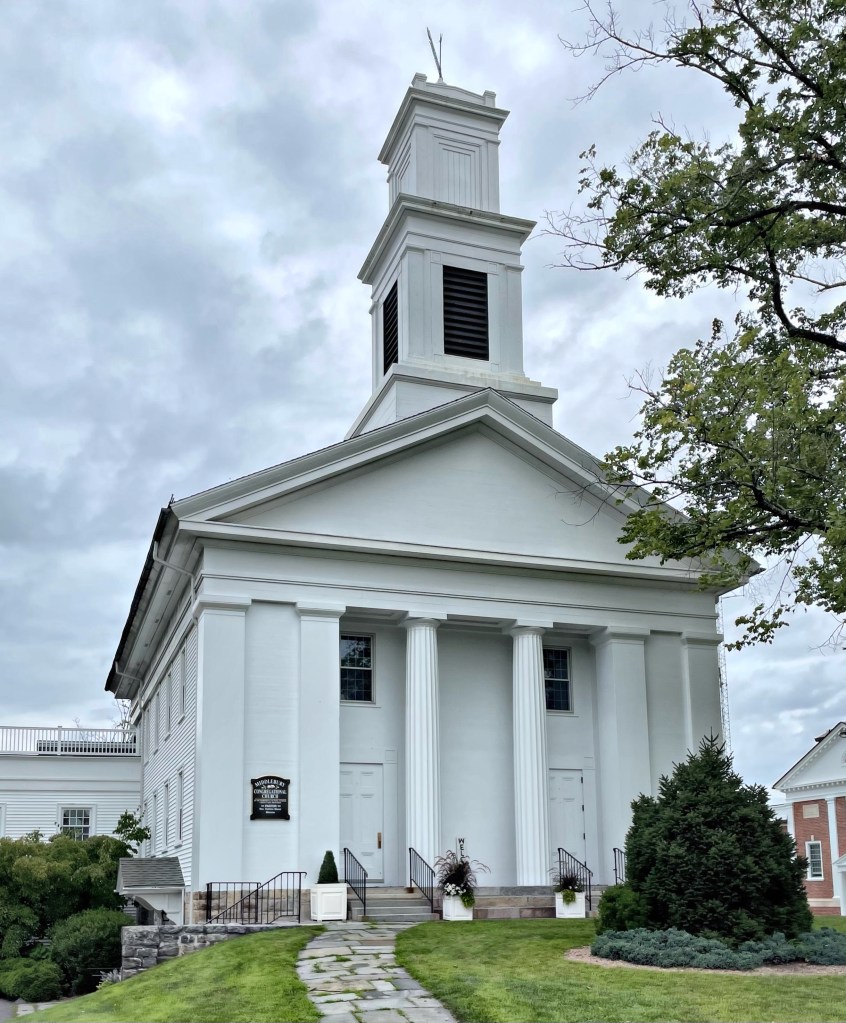
Middlebury Congregational Church // 1935

Located next door to the Middlebury Town Hall, the Middlebury Congregational Church has a very similar history to its Classically inspired counterpart. The congregational church here was established in 1791, less than a year after a separate Middlebury ecclesiastical society was granted and the first church here was erected in 1794. Decades later, a more traditional and larger church was desired by the congregation, so they had a Greek Revival style church built in 1839. Nearly 100 years later, the church (and adjacent original town hall building) burned in a large fire in April 1935. Undeterred, the congregation hired architect Elbert G. Richmond, AIA (1886-1965), who as a young man worked in the New Haven office of J. Frederick Kelly, Connecticut’s first and most famous restoration architect. The present building is a near-replica of the mid-19th century church building, and even has a bell that was recast from pieces of the old bell that crashed through the building during the earlier fire. Talk about rebirth!