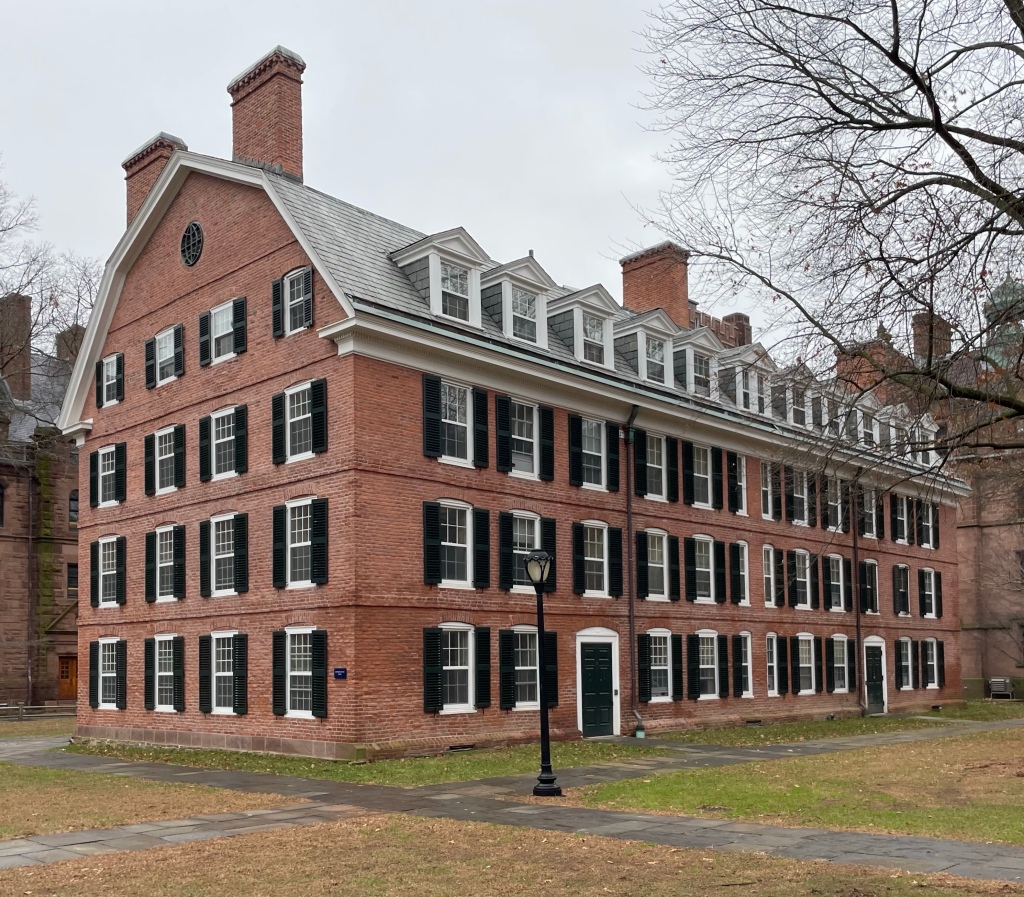
Yale University – Connecticut Hall // 1752

Welcome to Yale! When Yale College, one of the nine Colonial Colleges moved to New Haven in 1718, a wooden building was soon constructed and known as the College House. By 1747, the College House held less than half of the college’s enrolled students, and college president Thomas Clap announced that funds would be raised from the Colony of Connecticut for a “new College House” of three stories. The design followed the traditional Georgian appearance of Harvard College’s Massachusetts Hall, but by the 1790s, it was already outdated. The building was threatened with demolition, but Connecticut Hall was instead given an additional story and a new gambrel roof by 1820, being incorporated into the Brick Row, fronting the Green along College Street. But by the middle of the century the Brick Row was out of style and Connecticut Hall was being described as “dilapidated, scabby and malodorous.” After the Civil War Yale decided to raze all its old Georgian architecture and redevelop the West side of the Green with larger and more modern buildings. Luckily for us, by the 1890’s the Colonial Revival style was booming in popularity and before Connecticut Hall could be demolished, a group of alumni organized to save and restore it. Connecticut Hall stands today as the third-oldest of only seven surviving American colonial-era college buildings, and the second-oldest structure built for Yale College in New Haven (the oldest exant). It was built, in part, by at least five enslaved Africans, including one of whom was owned by Yale president Thomas Clap.
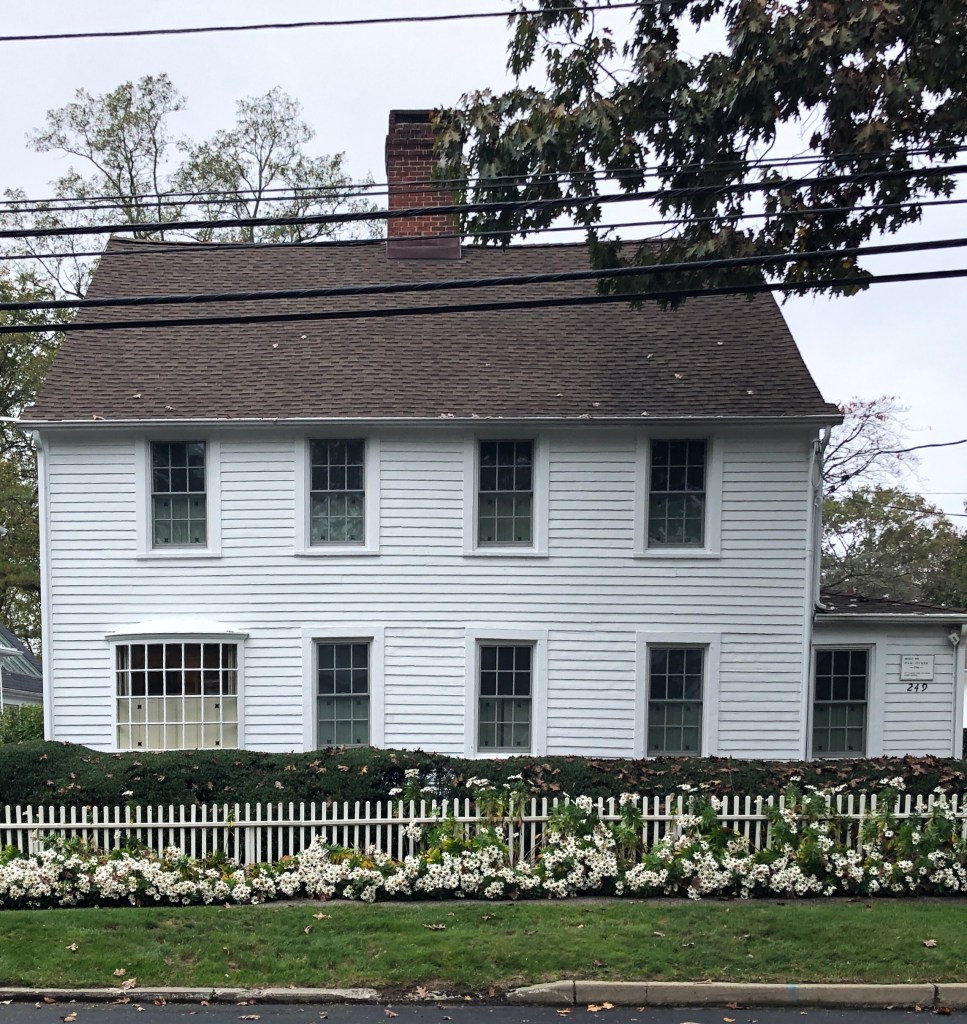
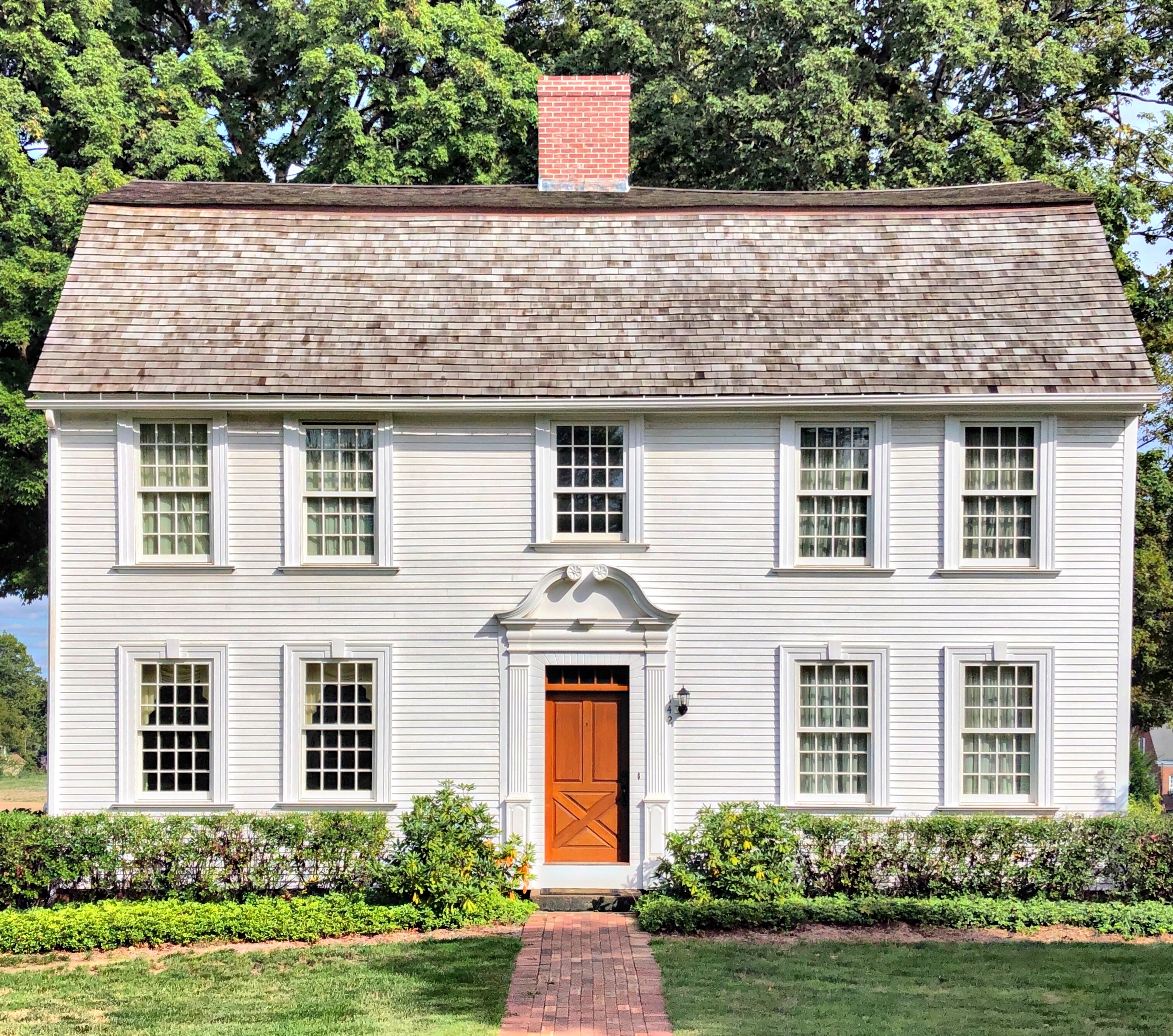
Captain John Maltbie House // 1766

On July 7-8, 1779, the Red Coats marched through Fairfield torching houses to punish the locals for seeking independence. They killed locals, destroying anything they could find on their way out, setting fires to homes and civic buildings around the Green. This home was built by Isaac Tucker, later sold to Jonathan Maltbie, sea captain involved with East Indies trade. He later would fight against the British during the Revolution, and after the war, was hired as captain on one of the first cutter ships built, the Argus. During the British invasion of Fairfield, they attempted to set fire to this home three times, but it seemed to never go up in flames when they returned. The tradition holds that an elderly servant, hiding upstairs, put out the flames and saved the house from destruction, after the British Troops torched it. Burn marks apparently remain inside to this day. Since the home was built, the front door facing the street was relocated to the side, and a large multi-pane bay window was installed in its place.

Gay Manse // 1743

Ebenezer Gay (1718-1796), the third minister of the First Congregational Church of Suffield, was born in 1718 in Dedham, Mass. His father was a substantial farmer, and his uncle was the famous minister, Ebenezer Gay of Hingham. Young Ebenezer graduated from Harvard in 1737, and held his first preaching job three years later. Reverend Gay became a candidate for a pastor in the Suffield Congregation, becoming ordained in 1742. That same year he married his wife, Hannah, and they had this massive home built adjacent to the town’s church. Rev. Gay and his wife had no children, but had adopted a black girl “Sybil” who was baptized as the “child of Ebenezer and Hannah”. There were other black members in the Gay household in later years including Titus Gay. “Old Ti” was born in 1787, and lived nearly his entire early life in Suffield, CT. He was born to a family of slaves also owned by Reverend Ebenezer Gay, making him born into slavery. His mother, Rose Gay, was a princess in Africa, and his father was owned by Major Elihu Kent. Reverend Gay was the pastor of the church until his death in 1796. The home was later occupied by other pastors at the church, and was eventually acquired by Suffield Academy for use as housing. The gambrel roof Georgian mansion features a stunning Connecticut Valley doorway with swan’s neck pediment.

Elihu Kent Jr. House // 1787

In 1775, when news of the Battle of Lexington reached Suffield, Elihu Kent Sr. (1733-1814) at the age of 42 took command of a local militia of 59 men the next day, along with his son Elihu Kent Jr., 18, and his slave Titus Kent, and marched to Springfield, before heading toward Boston. Initially, slaves were discouraged from enlisting in the Continental Army as the Continental Congress was trying to appease the southern states into fighting in the Revolution. England offered freedom to slaves who fought for their side. forcing the Continental Congress to do the same in order to keep a balance. The militia later ended up on Long Island and Kent Jr. was captured by British forces and confined for a long time as a prisoner of war in the old Rhinelander Sugar House in New York. After his return to Suffield, Elihu Kent Jr. had this Georgian home built for his family.