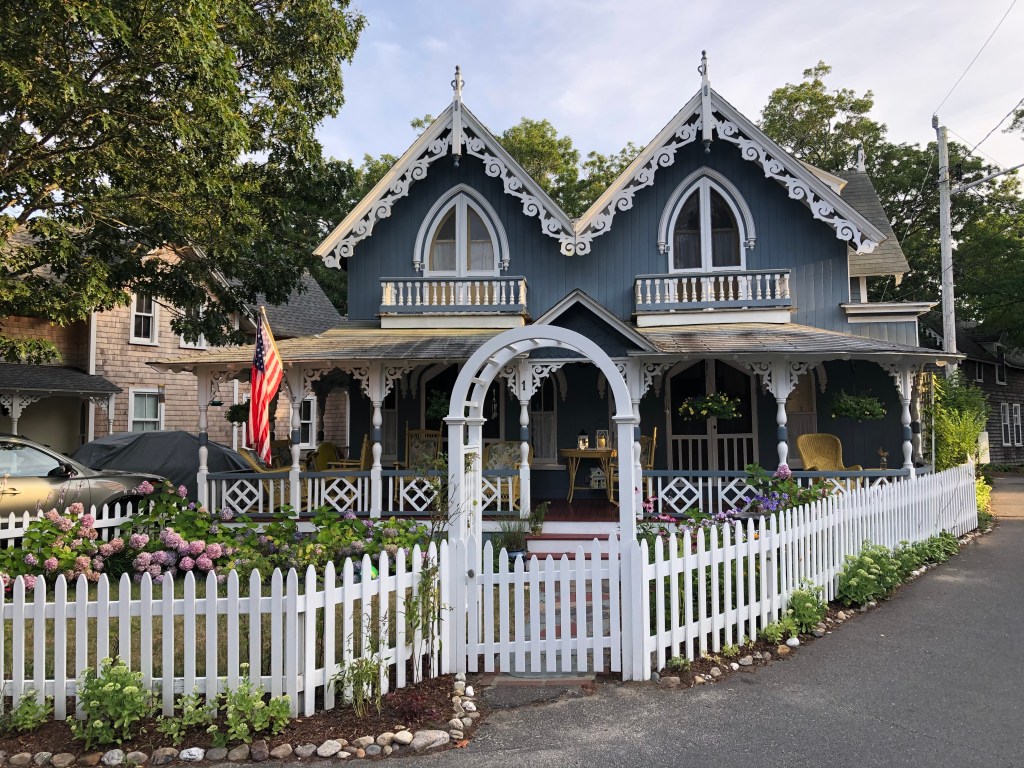
Kickemuit Cottage // 1869

Summer is here and I am missing my favorite place to explore, Oak Bluffs on Martha’s Vineyard. The town is sleepy most of the year, but in the Summer, the place explodes with summer residents and tourists, providing such a lively and diverse atmosphere. One of the most beautiful of the cottages in the Wesleyan Grove campground is the Kickemuit Cottage, built in 1869 for a family from Rhode Island. They so-named the cottage after the Kickemuit River which runs from Massachusetts through Warren, RI and spills out into the Mt. Hope Bay. The story goes that this double cottage was actually just a single peaked home until it was combined with another giving it the double-peaked appearance we see today. The cottage retains the turned posts, delicate gingerbread detailing, and the lancet windows and doors. Swoon!

Side note: If anyone has a cottage in Oak Bluffs that they’ll let me rent, I would love to be in touch!

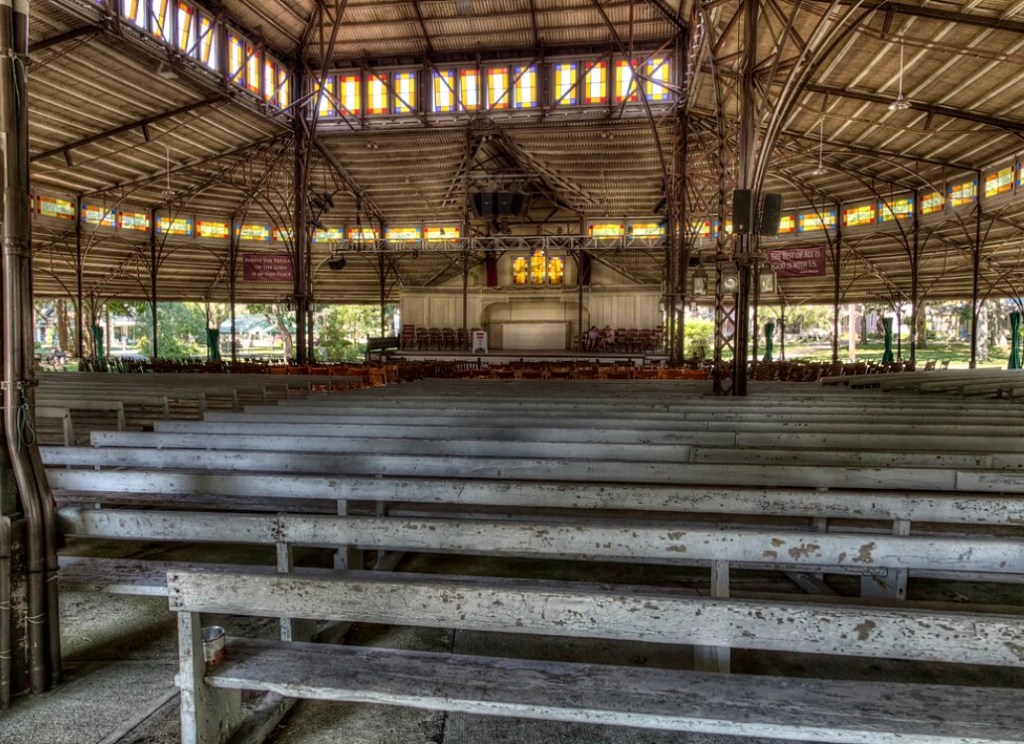
The Tabernacle // 1879

The year after Trinity Methodist Church was constructed, the Martha’s Vineyard Camp Meeting Association at Wesleyan Grove, built the wrought-iron Tabernacle, the most significant single building in the campground. The beautiful iron Tabernacle, which seats over 2,000, was designed and built in 1879 by John W. Hoyt of Springfield, Massachusetts. The building was completed in less than four months after the contract was signed. The Tabernacle covers the original consecrated ground of 1835 where the first Methodists erected canvas tents to worship under the trees. By 1869, the attendees at the revival meetings needed more protection from the sun and rain because the large oaks that had attracted the founders 35 years before had begun to die. Since 1870, the Association erected a mammoth canvas tent supported on tall poles every summer. The tent proved unsatisfactory because of ventilation problems and a tendency to collapse in storms. In 1878 the Association solicited designs for a large wooden tabernacle a building of vast roofs, minimal supports, and open walls. The plans it received, which were elaborate versions of the wooden
tabernacles or “arbors” of southern camp meetings, proved too expensive to build on this site. Campground resident John W. Hoyt solved the problem with a much cheaper wrought iron structure that was largely prefabricated and could be speedily erected on the uneven site. The gorgeous Victorian Gothic tabernacle remains today as the centerpiece of the Wesleyan Grove National Historic Landmark District, an esteemed historical designation.

Image courtesy of John G. Hoey.