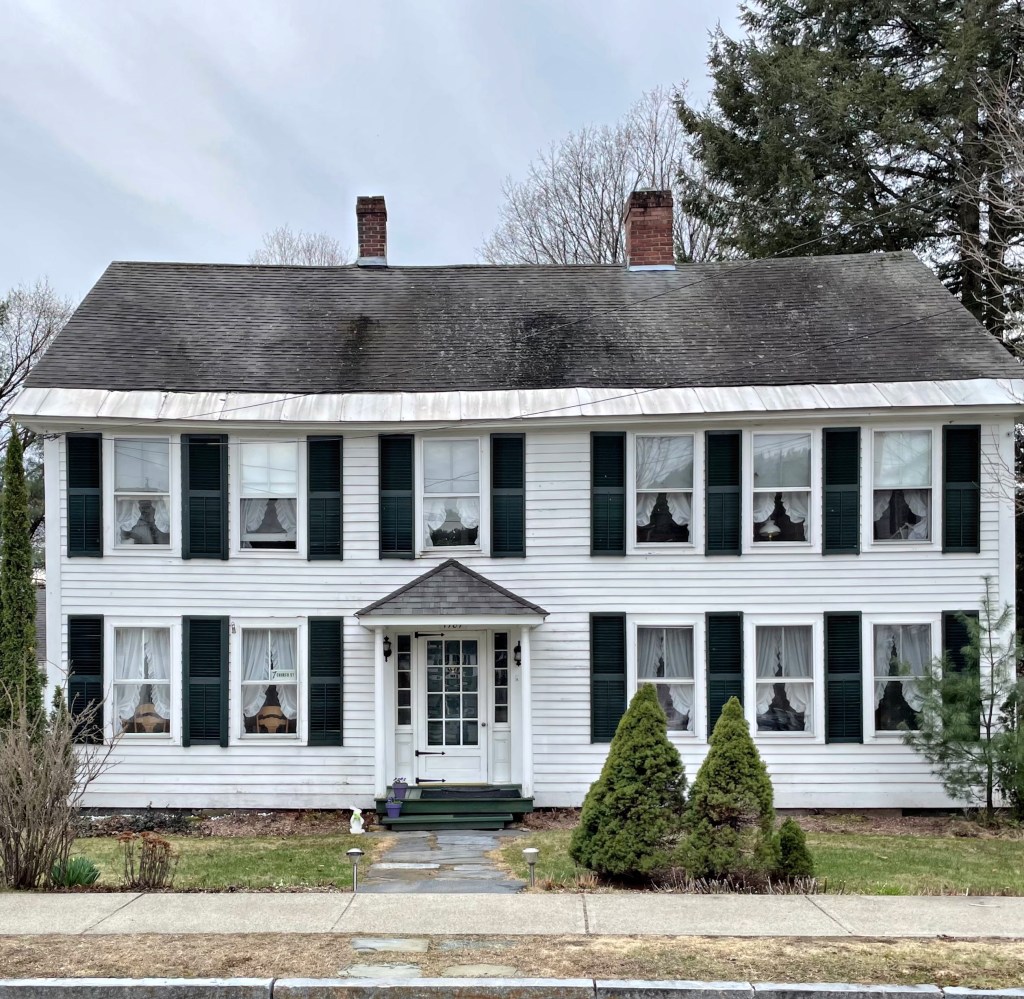
Old Windham County Jail – Jones House // 1787

Among the earliest buildings in Newfane, this plain two-and-a-half-story, wood-framed and clapboarded gable-roofed house was constructed on its original site on Newfane Hill in 1787 to serve as the county jail. When the residents in town found that living on a hill in winter was less than ideal, much of the town relocated to the flat of town. In 1825, this building was dismantled and moved to its present site. With a new jail being built already, this building was reconstructed as the residence of Anthony Jones, an early resident and businessman. During the middle decades of the century (c.1840-1880), the house served as the Congregational Parsonage for the adjacent church.
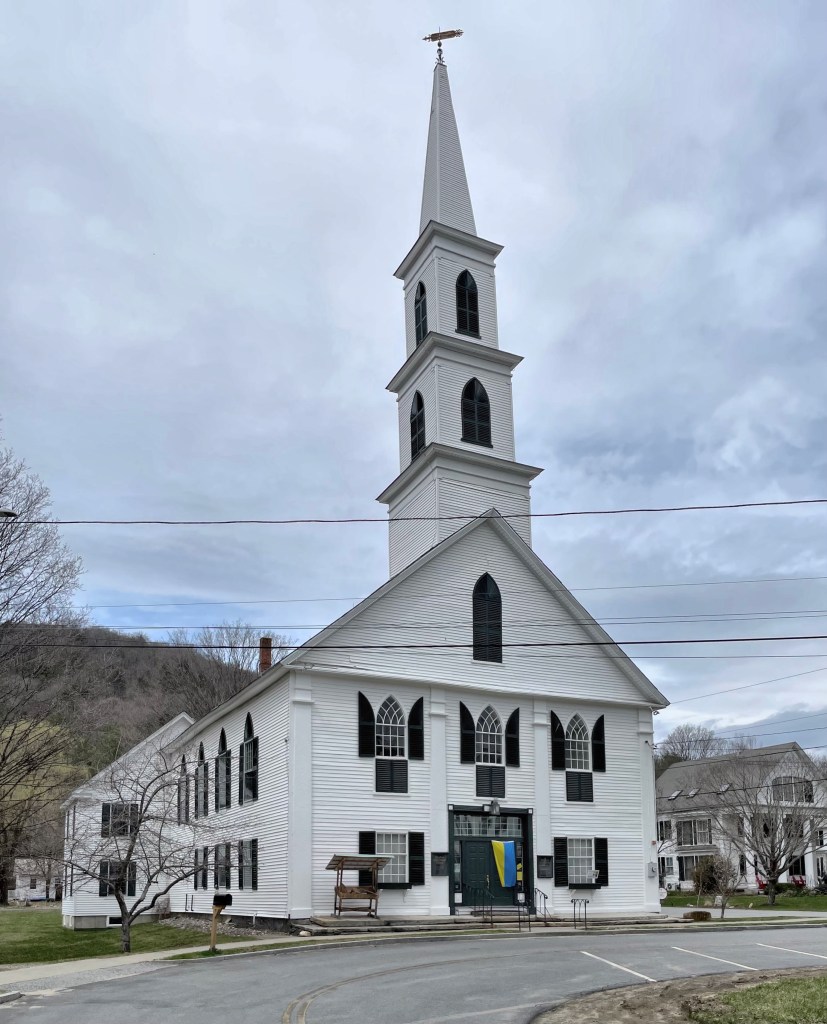
Newfane Congregational Church // 1839

The town of Newfane, Vermont was chartered on June 19, 1753, by Governor Benning Wentworth, who named it Fane after John Fane, the 7th Earl of Westmoreland. But hostilities during the French and Indian War prevented its settlement, and because a first town meeting was not held within the required five years, the charter was annulled. From this, Wentworth issued an entirely new charter in 1761, as New Fane. The town was eventually settled in 1766 from families that moved there from Worcester County, Massachusetts. Newfane became the shire town of the county before 1812 and county buildings were constructed. The village’s location up the hill was not ideal and was difficult to access in the winter, so many new buildings were constructed on the flat of town. The village has retained its rural character, but packs a punch in terms of architecture, especially for a town of under 2,000 people. One of the landmarks in town is the Newfane Congregational Church, constructed in 1839 in the Gothic Revival style. The large lancet (pointed arch) windows with corresponding shutters and spire are eye-catching.