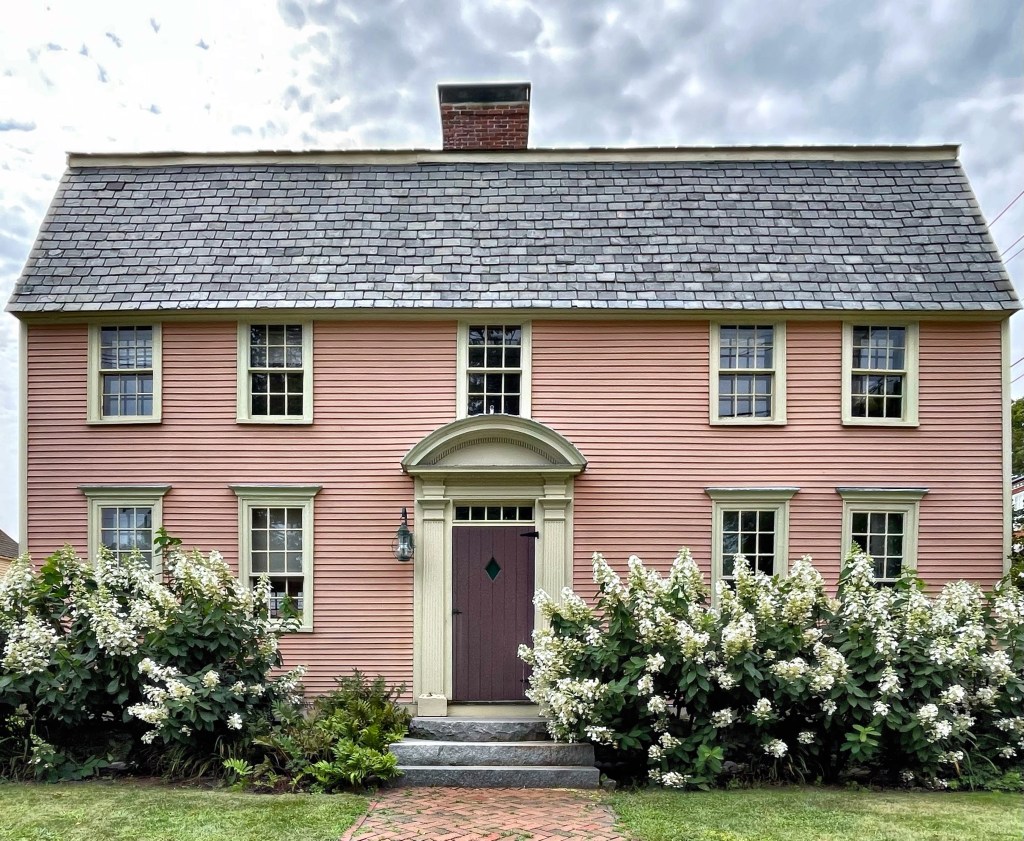
Wibird-Oracle House // 1702

One of the oldest extant houses in Portsmouth (and New England for that matter) is this gambrel-roofed Georgian house on Marcy Street. The home was originally constructed in 1702 by Richard Wibird, who arrived to Portsmouth in the late-1600s and married Elizabeth Due (Dew) in 1701. Mrs. Due owned a market in town, and that helped propel Richard to be a prosperous merchant. Like many very wealthy residents in New England at the time, he enslaved three Africans and had five properties all over town. The house was moved two times, it was originally built behind the North Meetinghouse on Market Square. It was moved from that location c.1800 to Haymarket Square where Prescott Park is now, and again in 1937 to its present location on Marcy Street. The Portsmouth Oracle, an early newspaper, was printed and edited from this building when it was altered for commercial spaces at the ground floor. The Prescott sisters who developed Prescott Park had the foresight to move this building to the opposite corner and the home was later restored, giving us a glimpse at early 18th century merchant housing.
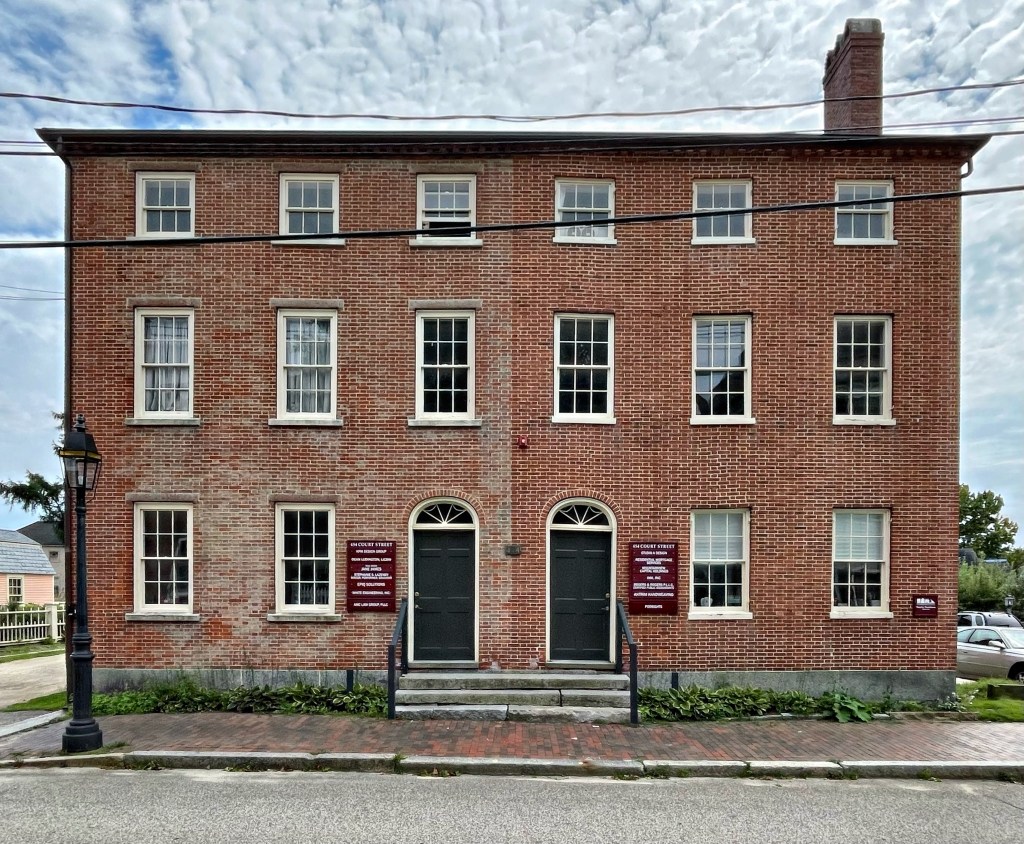
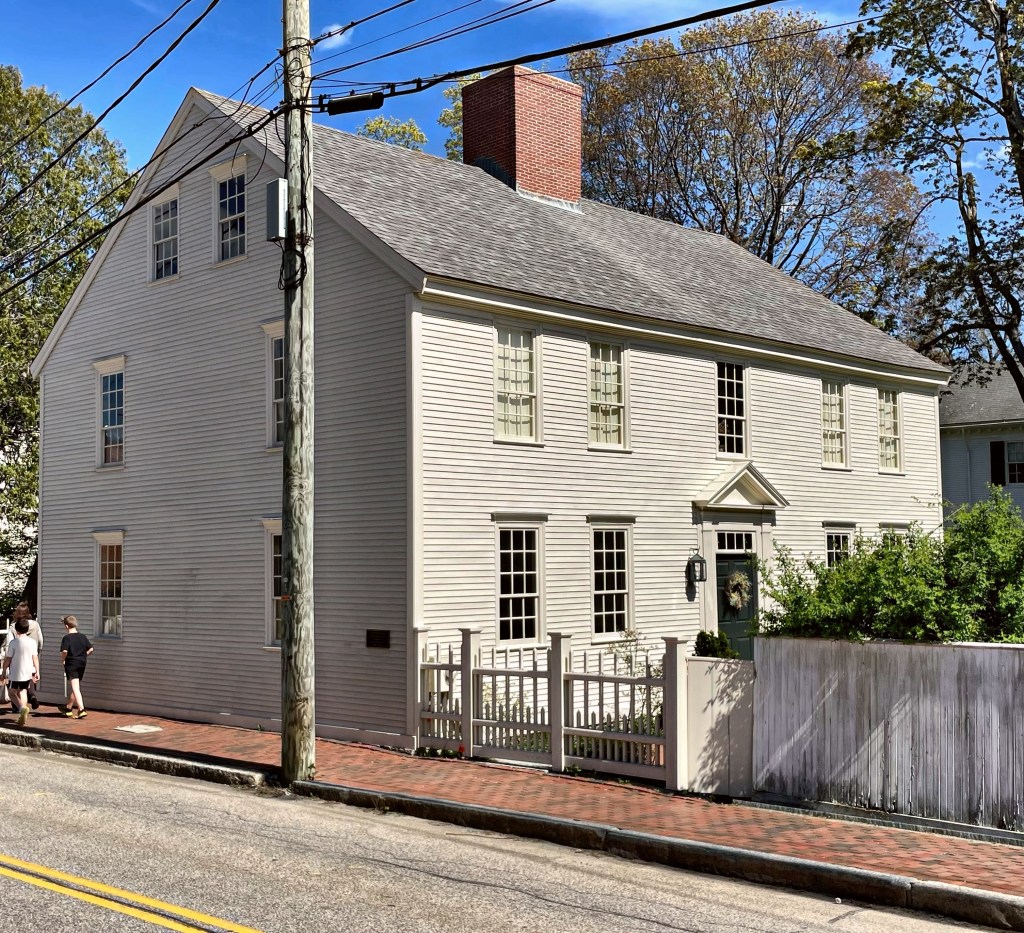
Shapley Townhouses // 1815

The Shapley Townhouses in Portsmouth, New Hampshire sit on Court Street and were built around 1814-15, after the Great Portsmouth Fire of 1813 had destroyed the center of town. It was constructed to conform with the new Brick Law that required all new buildings in downtown Portsmouth to be built of “fireproof” brick. The paired townhouses are unusual in the city as a particularly well-preserved example of a Federal period double-house. The house was built by Captain Reuben Shapley, a ship’s captain and merchant. In about 1973, this building was remodeled into a temporary home and counseling center for troubled youth. Suffering from deferred maintenance and the direct proximity to the Strawberry Banke Museum, the Strawberry Banke Foundation purchased the double-house who rent out spaces inside to offices, providing a revenue stream to maintain and further showcase the history of the port town.

Laighton House // c.1795

This stunning Late-Georgian house in Portsmouth dates to the end of the 18th century and is one of the many well-preserved homes near downtown. Deed research shows that the property was purchased in 1795 by Amos Tappan from a Nabby Chase (a widow) and he would erect this house on the lot. The house was purchased in 1822 and sold again in 1835 to John Laighton, the namesake of the house. John Laighton (1784-1866) was the eleventh of thirteen children. His family were “mechanics” – carpenters and makers of sails, blocks, spars, and masts. He became a mast and block maker with his place of employment not far from the relocated Sheafe Warehouse in Prescott Park (featured on here previously). Captain Laighton held the post of Navy Agent for the port of Portsmouth during the presidencies of William Henry Harrison and Andrew Jackson, and he also served as mayor of Portsmouth in 1851. In 1864, two years before his death, John Laighton sold the house to his third son, Lafayette Laighton. The historic home features a massive brick chimney at the center ridge, with clapboard walls atop a fieldstone foundation. The facade has a wood-paneled entrance door with four-light transom, pilasters, and triangular pediment. The house faces southwest with a large front lawn, and it sits next-door to the stunning Gov. Langdon House. Pretty spectacular.