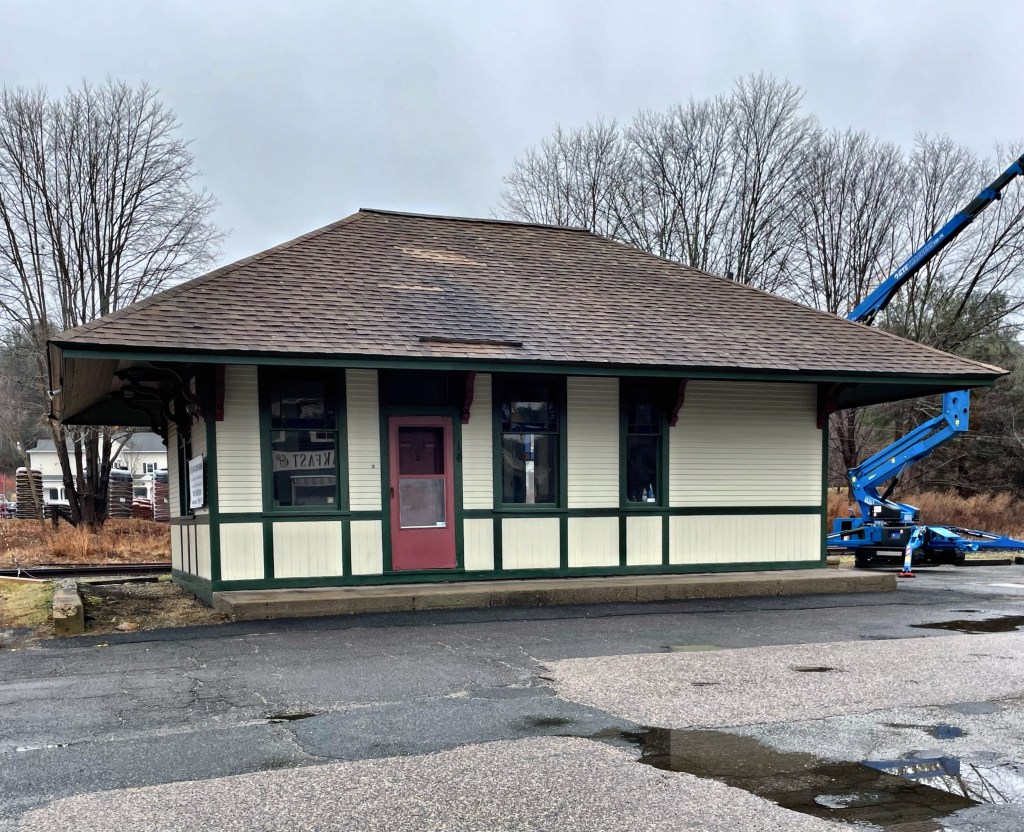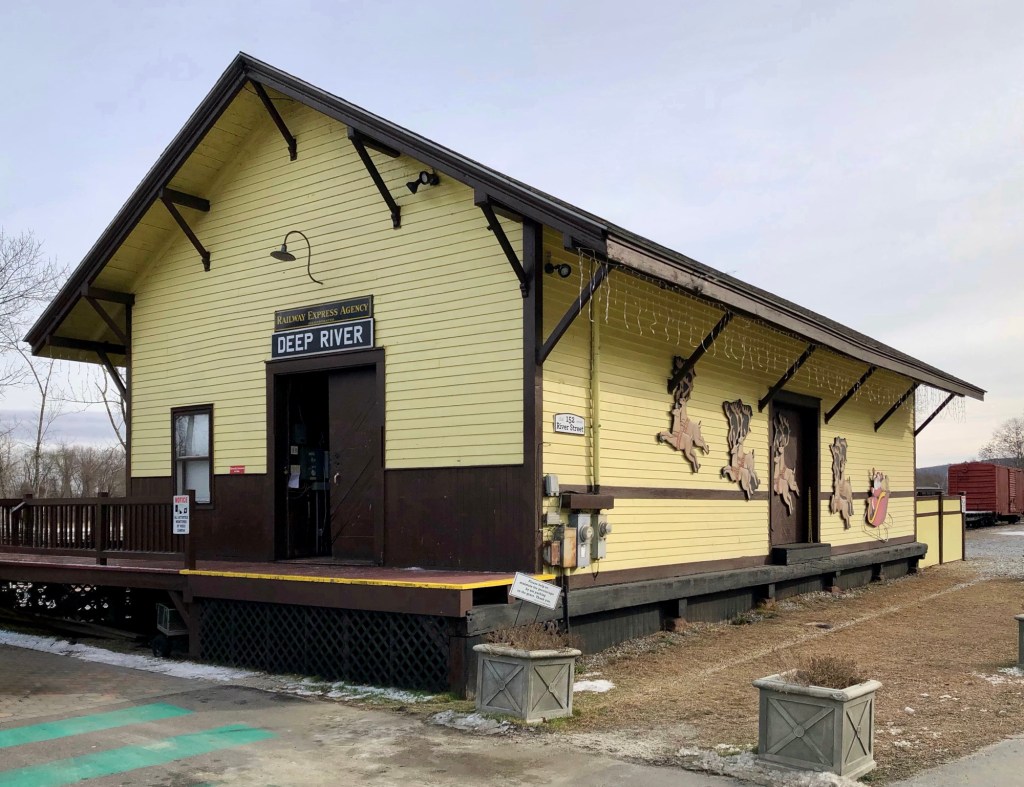
Deep River Freight Station // 1915

The Connecticut Valley Railroad opened for service in 1871, connecting towns along the Connecticut River between Hartford to Old Saybrook on the coast. This line carried passengers and freight between commercial and trade centers. The Deep River Station, which is sited along the banks of the Connecticut River, was built about 1915 by the New York, New Haven and Hartford Railroad, who had acquired the Connecticut Valley Line, as part of a government-mandated program to update aging railroad infrastructure. This station was originally built to serve both passengers and freight and showcases the dwindling usage of train service with the more vernacular and less ornate architecture compared to 19th century stations. Passenger service on the line was soon decimated by competition from the automobile, and ended in 1933. Freight service continued until 1961, when the New York, New Haven and Hartford Railroad went bankrupt. A portion of the former Connecticut Valley Railroad track was revived as a heritage railroad in 1971, connecting this station to the 1892 Essex Station via steam train!
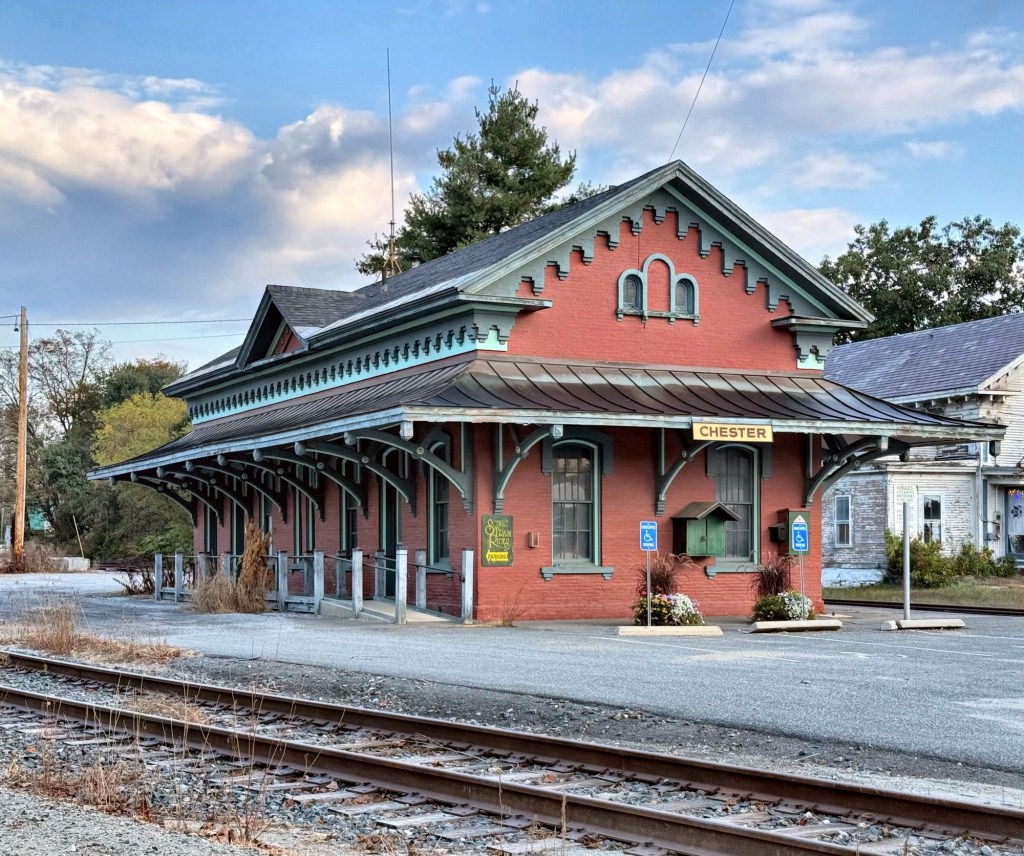
Chester Depot // 1872

The first public train arrived in Chester, Vermont, on July 18, 1849, and in December, the Rutland & Burlington Railroad opened the first rail line across Vermont linking the Connecticut River valley at Bellows Falls and Lake Champlain at Burlington. A fire destroyed the first station in 1871, and the Vermont Central Railroad built the current station within a year. The State of Vermont purchased the line in 1963, leasing it in part to the Green Mountain Railroad. Exceptional in Vermont, this brick station retains its high-style Italianate design and continues in railroad use. The station can be classified as Italianate/Romanesque in style and has a corbeled cornice, windows capped by brick hood moldings, and a projecting trackside awning. It appears that the station is not in active use, does anyone know more?

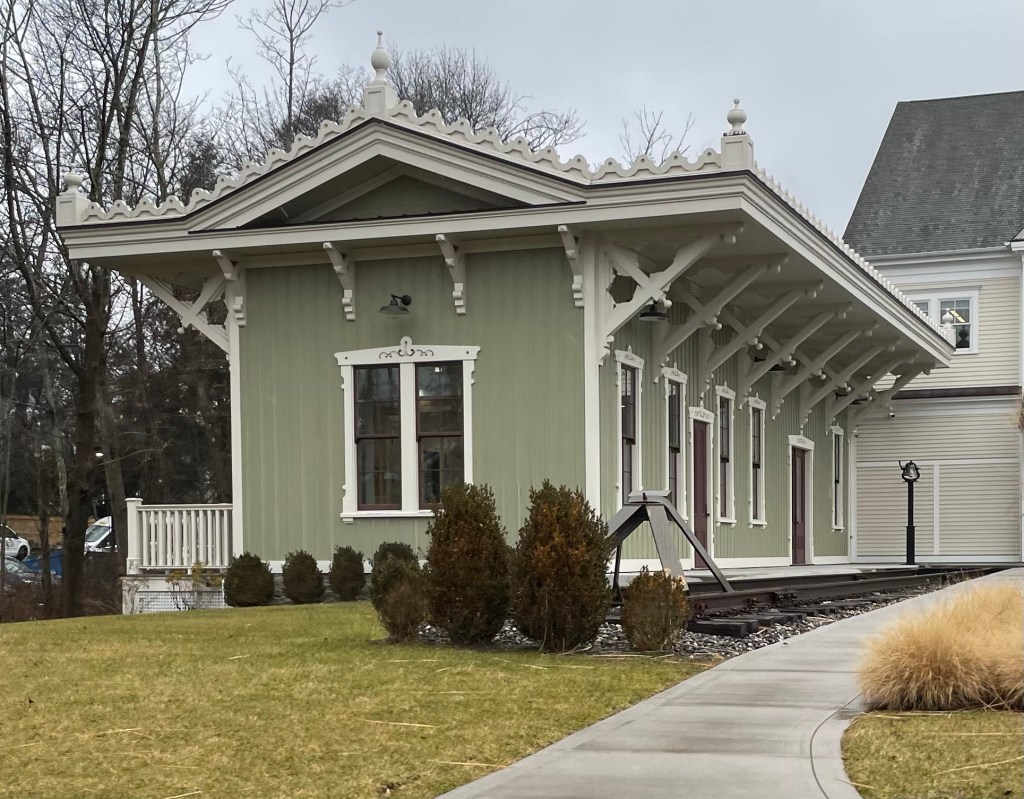
Ridgefield Train Depot // 1870

In 1870, the Ridgefield Branch branch line of the Danbury and Norwalk Railroad and later the New York, New Haven and Hartford Railroad was built connecting the sleepy village of Ridgefield to Branchville train station via the main line. The line was an early risk, built to offer service to the wealthy New Yorkers who began arriving to spend their summers in Ridgefield. Many of these “summer people” had their own private railroad cars, with chauffeurs meeting them as they arrived, driving horse and buggies to bring them and their luggage to their estates located throughout the town. As travel shifted to personal automobile, ridership dropped in the early 20th century, and the branch was replaced by bus service in 1925. Freight service was scarce, and lasted longer, to 1964. The depot was sold to the Ridgefield Supply Company, who used the 1870 building as storage for decades until it was disassembled, moved and rebuilt by the Ridgefield Supply Company in 2015, as part of their expansion. The historic station today provides an important link to Ridgefield’s past.

Willington Train Depot // 1895

TOOT TOOT! Next stop, Willington, Connecticut. Historically, all of central Connecticut was occupied by various Algonquin tribes which for thousands of years inhabited the region, the larger Pequot and Mohegan, and the smaller Nipmuck, Podunk, Shenipset and Skunkamaug all sharing a common-lineage, and language. In 1720, a party of eight men, originally from England, bought 16,000 acres of the region and called it Wellington after the town in England. Willington was incorporated in 1727. Like many early towns, Willington began as a farming community with modest industry until the 19th century, when the American Industrial Revolution saw mills and factories sprouting up all along the river towns in the region. Villages spouted up in town, mostly following their geographic location in relation to the town center (South Willington, West Willington, etc.) and each had their own industry and character. By the 20th century with industry in decline, many of the former mills and villages closed up and residents moved to “greener pastures”. The town is today mostly rural and serves as a suburb to larger towns nearby.

This train depot is located in West Willington just over the town line of Tolland. Due to this, the depot was originally named Tolland Station. Rail service began here in 1850, when the New London, Willimantic and Palmer Railroad Company built a freight and passenger station near this location. The rail line was later absorbed into the larger Central Vermont Railway in 1871. The original depot burned down in 1894, and was replaced that same year by this structure. The line, and this station, were in use for passenger service until 1947, when it closed. The depot has luckily been occupied by businesses ever-since, preserving this building typology in America that we are losing every year.