“The House with the Eagles” // 1808

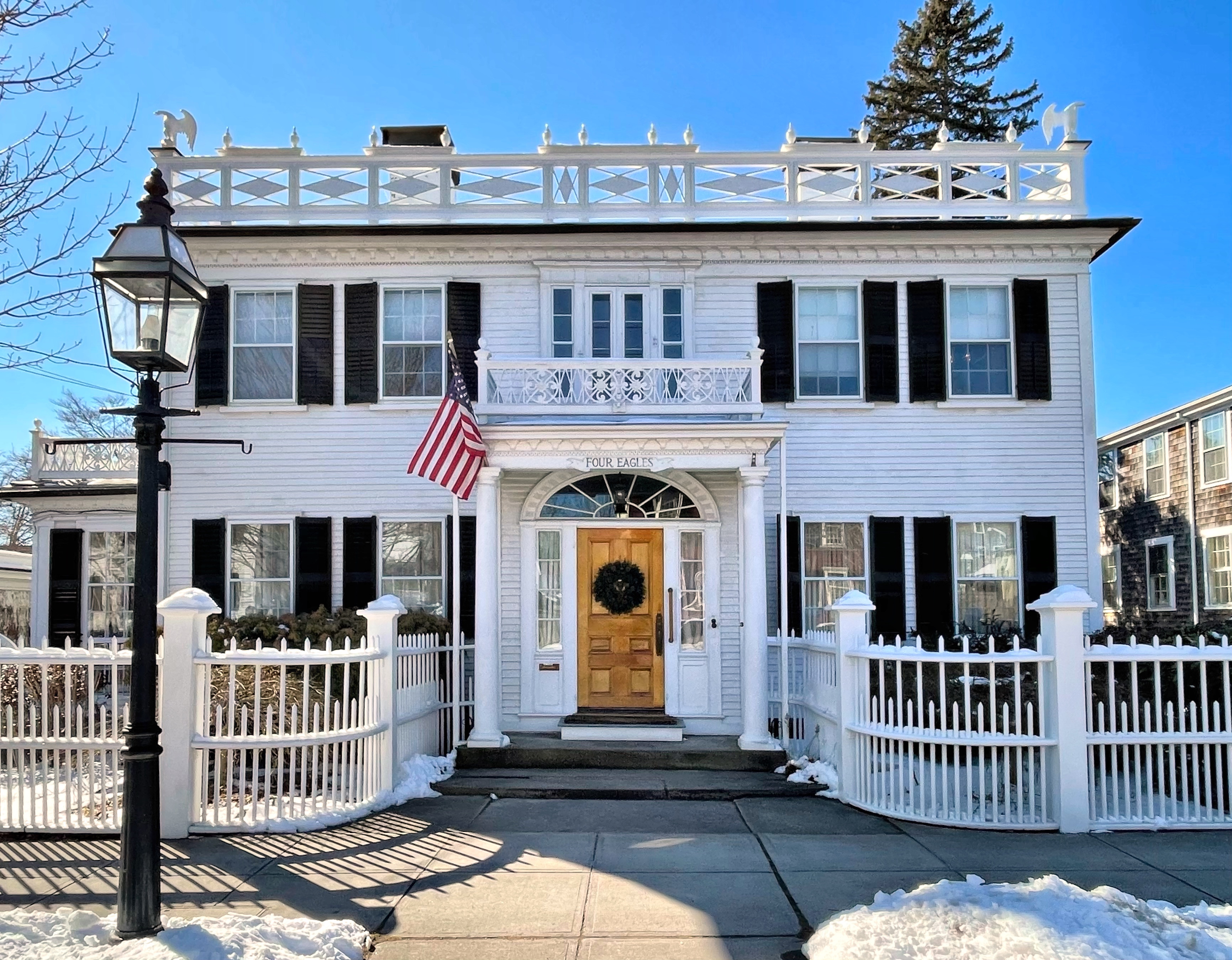
In 1807, a young John Howe (1783-1864), a descendent of the DeWolf family, married Louisa Smith, and built this family home soon after. He hired local esteemed architect Russell Warren (who was the same age as Howe at the time) to design the home, which is a simply designed, hipped roof home with an elliptical fanlight and sidelights at the central entrance. It is embellished with superb architectural woodwork with an ornate roof balustrade. Howe and his family lived in the home until 1822, when it passed to ship captain, Benjamin Churchill, who appears to have been involved with the transport of slaves to the Americas. According to local legend, Churchill gave the house its name by having the sailors of his ship, the Yankee, carve four American eagles, which he placed at the corners of the Chippendale balustrade that crowned his roof. Churchill’s tenure in the home was brief, and in 1825 the house passed to Byron Diman, a powerful merchant with interests in whaling, banking, and the local cotton mills who served as governor of Rhode Island in 1846–1847. The home has been restored numerous times and is well maintained.
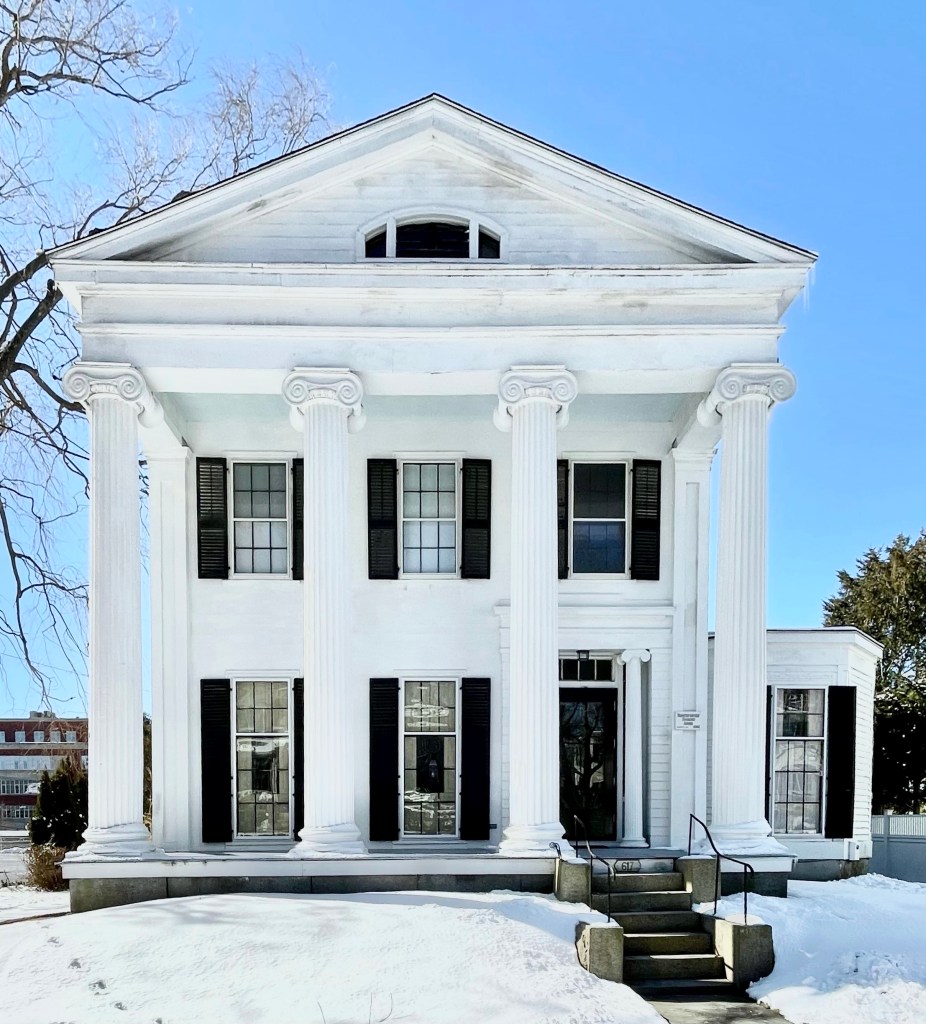
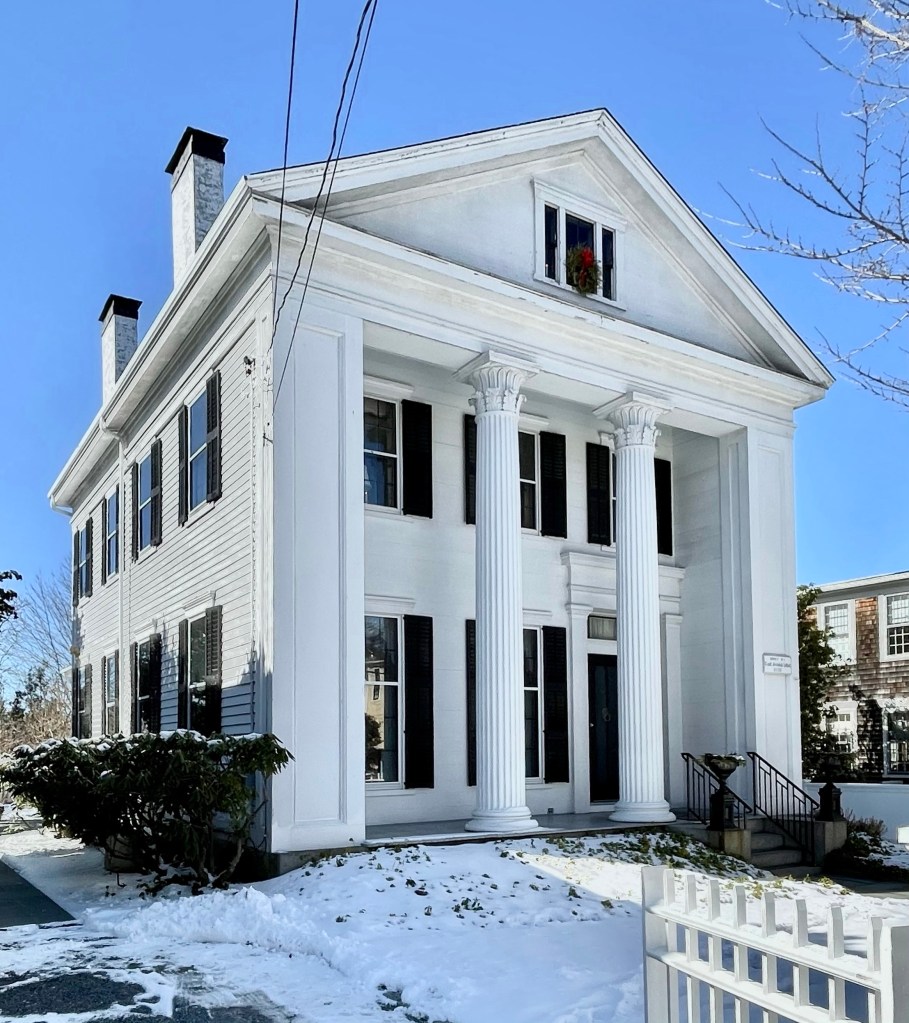
Francis M. Dimond House // 1838

Built in 1838, just three years after the Talbot House in Bristol, Rhode Island, (just two houses away), the Dimond House remains as the other of the two remaining Greek, temple-front homes in town. Like the Talbot House, this home was also designed by Russell Warren, but is unique as it is in the tetrastyle (with four columns) and utilizes the Ionic order with the capitals featuring volutes (scrolls). Additionally, a polygonal bay can be seen on the right side of the home. Images show that the bay features stunning lancet windows! The home was designed for Francis Moore Dimond (1796-1859), who was born in Bristol, and later traveled to the Caribbean and served for several years (1832-1835) as the United States consul at Port-au-Prince. It is entirely possible that Dimond was involved in the slave trade, but I wasn’t able to find more than a couple articles referencing his connections to the infamous DeWolf Family. From 1842 to 1849, Dimond was United States Consul to the Mexican port city of Veracruz. When he returned to Rhode Island, he promoted the Southern Pacific Railway and presided over its construction. He was elected lieutenant governor of Rhode Island in 1853. He became the governor of Rhode Island when Philip Allen, then Governor, resigned to become a Senator. He held the governor’s office just one year. He moved back to Bristol and lived out his final days at his home.

Josiah Talbot House // 1835

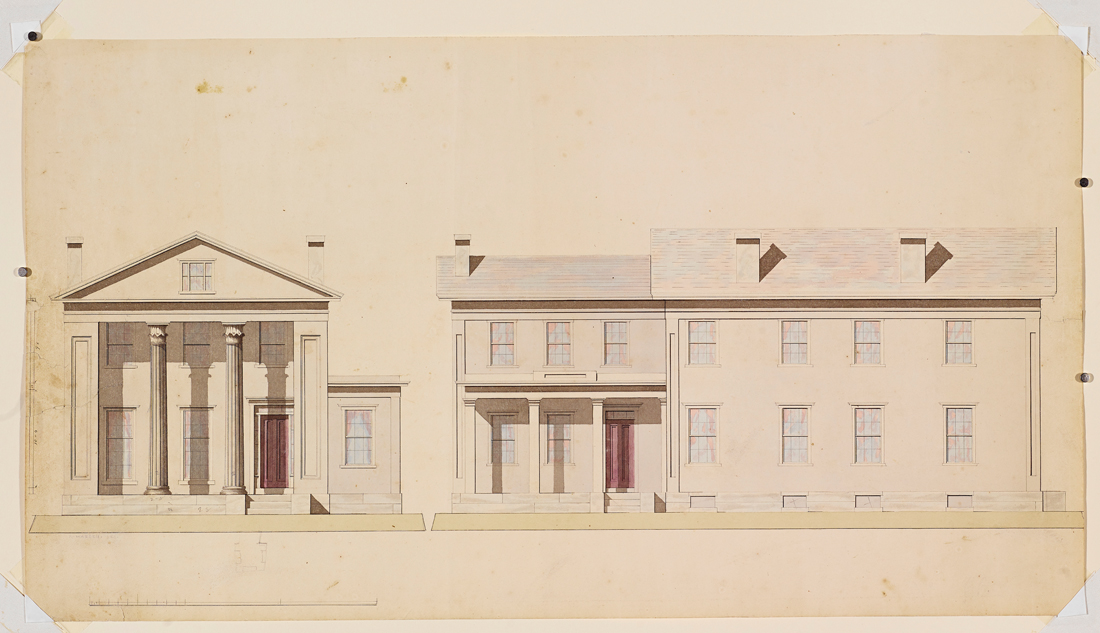
Anyone that has followed this account for a while knows at least one thing, I LOVE Greek temple-front homes. Designed by famed architect, and Bristol-native, Russell Warren, this 2-story, 3-bay, gable-roof Greek Revival house is one of the finest in the state. Its facade has a pair of fluted Corinthian columns, set in antis (where the side walls extend to the front of the porch). A simple side-hall entrance is framed by heavy Doric pilasters, supporting a broad, plain entablature, making this such a head-turning Greek Revival home. The walls are sheathed with horizontal flush boarding at the facade to give a smoother look and clapboards on the side and rear. The home was built for Josiah Talbot, a sea captain. The house is excellently preserved to this day, almost 200 years later.

“Longfield” // 1848

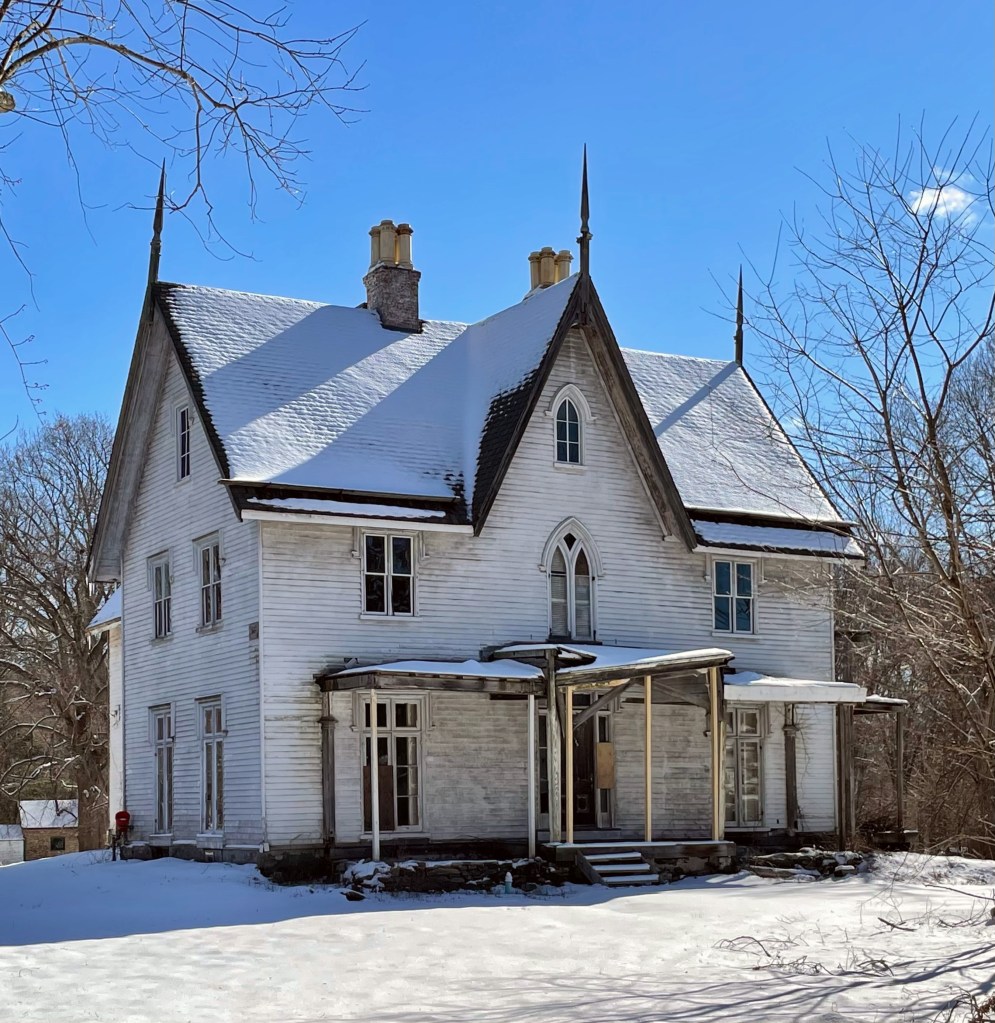
“Longfield”, aka the Abby DeWolf House was built in 1848 and is one of the finest homes in Bristol, Rhode Island. The home was completed from designs by Providence architect Russell Warren, who also designed other mansions in town (I’ll post those later on in this series), the Westminster Arcade in Providence, and “Hey Bonnie Hall” a since demolished Federal style home I featured a couple days ago. Longfield’s name derives from the 60-acre meadow, part of the 300-acre Henry DeWolf farm, given to Abby DeWolf when she married Charles Dana Gibson at just 21 years of age. The DeWolf Family paid for the home as a gift to Abby. The DeWolf Family is infamous for being highly active in the slave trade, and was believed to have transported over 11,000 enslaved people from Africa to the Americas before congress abolished the African Slave Trade in 1808, which “prohibited the importation of slaves into any port or place within the jurisdiction of the United States…from any foreign kingdom, place, or country.” This policy did little as many owners of slaves just kept children born into slavery and also opened plantations in the Caribbean and South America. After Abby died in 1901, the home went to her granddaughter who maintained the home. By the 1970s, the home was sold out of the family and began a period of decades of deterioration to its current state. The interior is effectively gutted, but some original woodwork and fireplaces remain. Recent calls for a townhouse development with ample parking was proposed and approved by the town a couple years ago, but would greatly diminish its siting and architectural integrity. Nothing has happened on the site, but here’s to an appropriate restoration!

“Hey Bonnie Hall” // 1808-1944

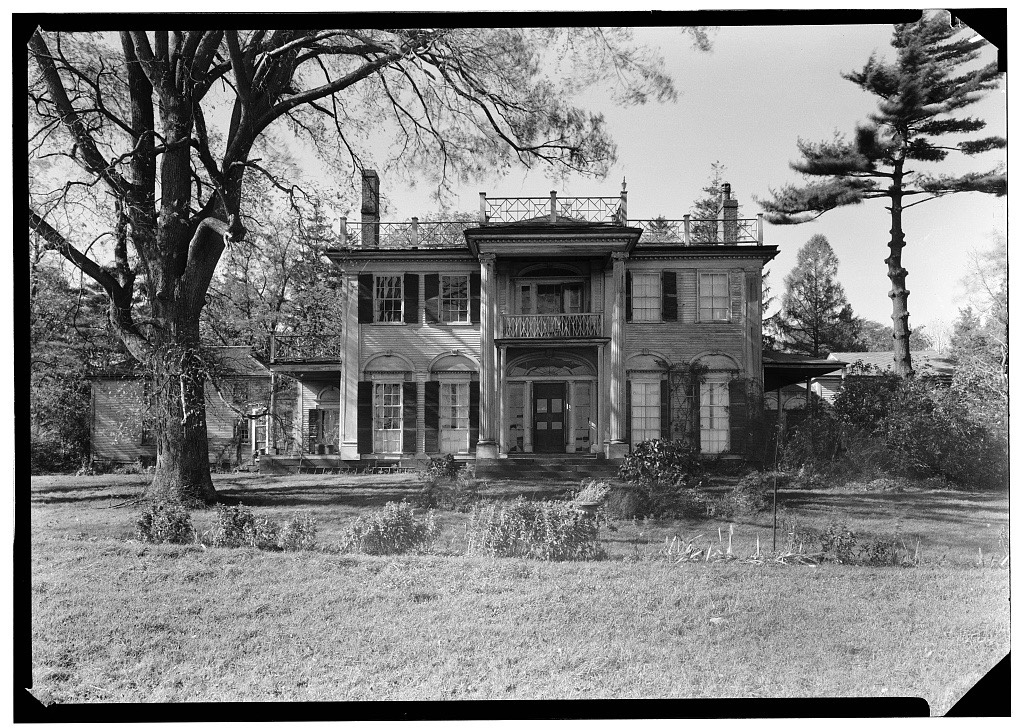
Formerly located on the Poppasquash Peninsula in Bristol, Rhode Island, the William DeWolfe House, also known as Hey Bonnie Hall, was constructed in 1808 for William DeWolf (1762-1829) and his wife Charlotte Finney (1764-1829). William DeWolf was a member of the infamous DeWolf Family of Rhode Island, which is believed to have transported tens of thousands of enslaved people to the United States and Caribbean before the African slave trade was banned in Rhode Island. The Ocean State played a leading role in the transatlantic slave trade. Not only did Rhode Islanders have slaves—they had more per capita than any other New England state. The beauty of Hey Bonnie Hall, and its melodic name hid the dirty money with which it was built. With his extreme wealth, William hired Providence architect Russell Warren to construct the home in a high form of the Federal style. Eventually, the home was willed to Anna DeWolf, who married Nathaniel Russell Middleton, from a slave-owning family in Charleston, South Carolina (birds of a feather…). It was Anna Middleton who gave the house its curious name of “Hey Bonnie Hall”. When she was younger, she used to sing an old Scottish song called “Hey The Bonny Breast Knots” over and over again to delight her grandfather, William, the first owner of this home. After Anna’s death, the home was willed to her two unmarried daughters. The Great Atlantic Hurricane of 1944 proved fatal for the grand estate, when the front portico was ripped off the home and flew away. The damage was deemed too expensive to repair and the home was demolished that year.