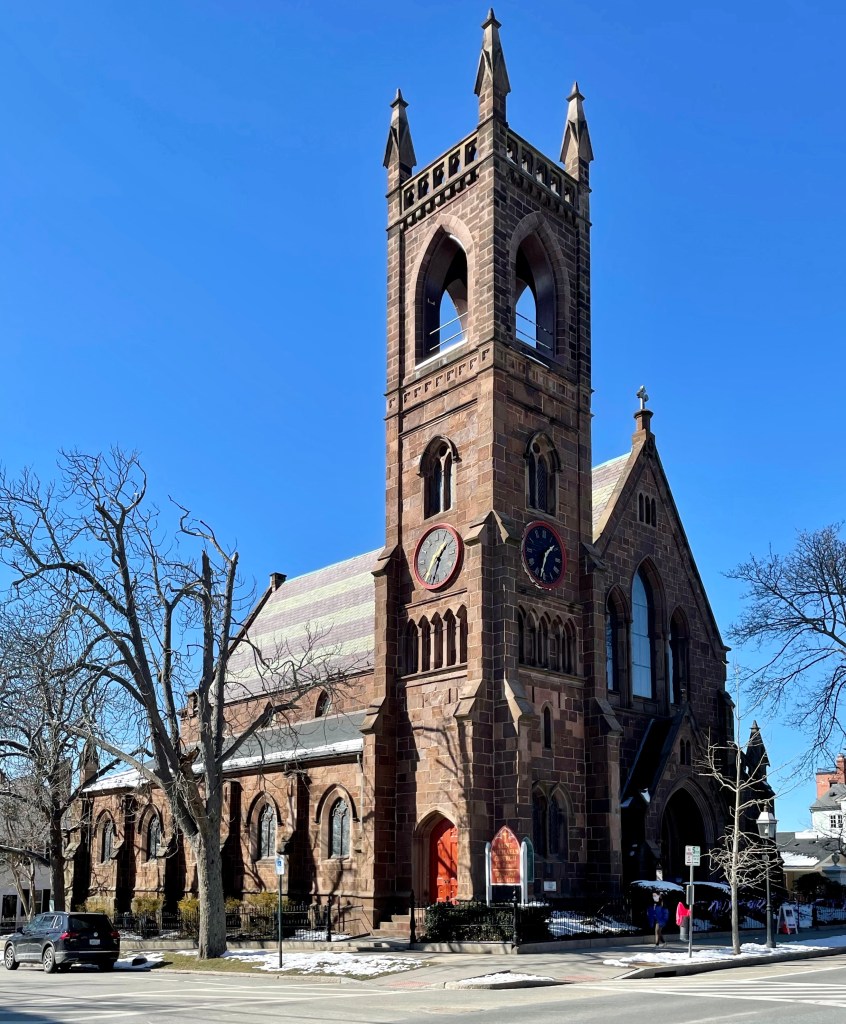
St. Michael’s Episcopal Church // 1860

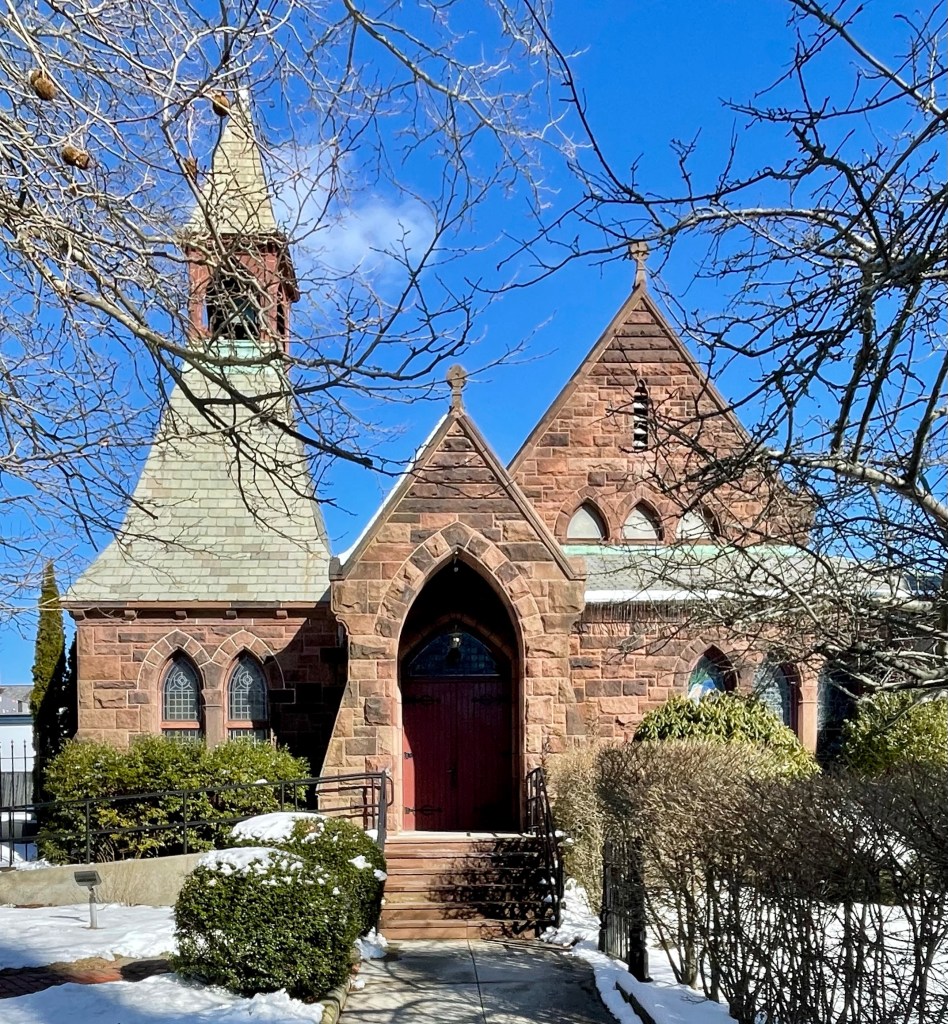
While I love the quintessential white, wood-frame New England churches that proliferate the region, the stone, Gothic churches always make me stop in my tracks; and this example in Bristol is no exception! St. Michael’s parish was founded in 1718 as one of the Rhode Island’s four colonial churches, funded and overseen from London. The first church, built in 1720, was ironically later burned during a British raid in 1778. It was replaced in 1785 by a plain wooden meetinghouse with funds from local residents and partitioners. In 1833, it was replaced by a wood-frame Gothic church which burned in 1858. Undeterred, the church hired New York City architects Alexander Saeltzer and Lawrence B. Valk, who designed the present brownstone Gothic Revival church. Just over a decade later, the church hired Worcester architect Stephen C. Earle, to design a chapel and parish house, across the street. The chapel building follows the Gothic Revival style, but with more Victorian flair, and is also constructed of brownstone to compliment the church. Together, the two structures transport you to the English countryside with their design and presence on the main street in town. What do you think of them?
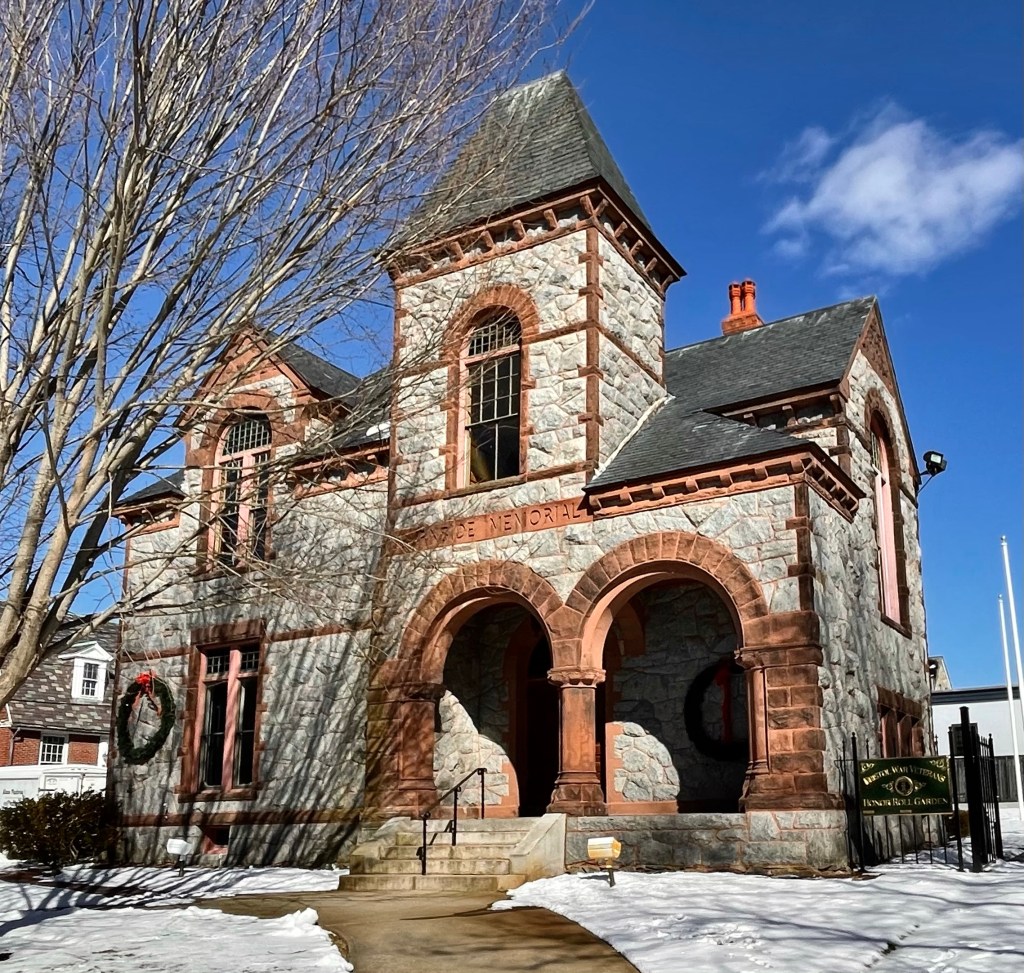
Burnside Memorial Hall // 1883

Located on Hope Street in Bristol, the Burnside Memorial Hall stands out as an elaborate, poly-chromed, two-story Richardsonian Romanesque public building. The Town of Bristol required a new town hall, and hired Worcester-based architect Stephen C. Earle to design the new structure. Earle’s program was to combine a town hall with a memorial to Major General Ambrose E. Burnside, Civil War hero, thrice governor of Rhode Island, and later United States senator, who died in 1881. The centerpiece of Burnside Memorial Hall was to be a statue of the general on its porch, long since removed from the building. Bristol town offices were removed from the building in 1969, and shifted to a bland building attached at the rear, Burnside Hall now serves purely as a memorial. Fun Fact: Burnside was noted for his unusual beard, joining strips of hair in front of his ears to his mustache but with the chin clean-shaven; the word burnsides was coined to describe this style. The syllables were later reversed to give the name we know today as “sideburns”!

St. John’s Episcopal Church // 1868

The St. John’s Episcopal Church in North Adams, MA was established in 1855 by Rev. William Tatlock and Stephen Higginson Tyng Jr. while both were studying at nearby Williams College. A church was built in 1858, but deteriorated quickly, and the congregation gathered funding to erect this large edifice. Architect Stephen C. Earle, a leading architect in Central and Western Massachusetts, designed the Gothic church constructed out of large stone blocks quarried nearby. The church continued to grow over the next decades, and it was added onto as the immigrant community boomed in town following North Adams’ industrial growth. In 1893, the adjoining Parish House was constructed of the same stone as the main church, also designed by Earle. In the 20th century, membership shrunk due to decreasing population, and in 2011, the parishes of St. John’s Episcopal Church in North Adams and St. Mark’s Episcopal Church in Adams merged to form the All Saints’ Episcopal Church.