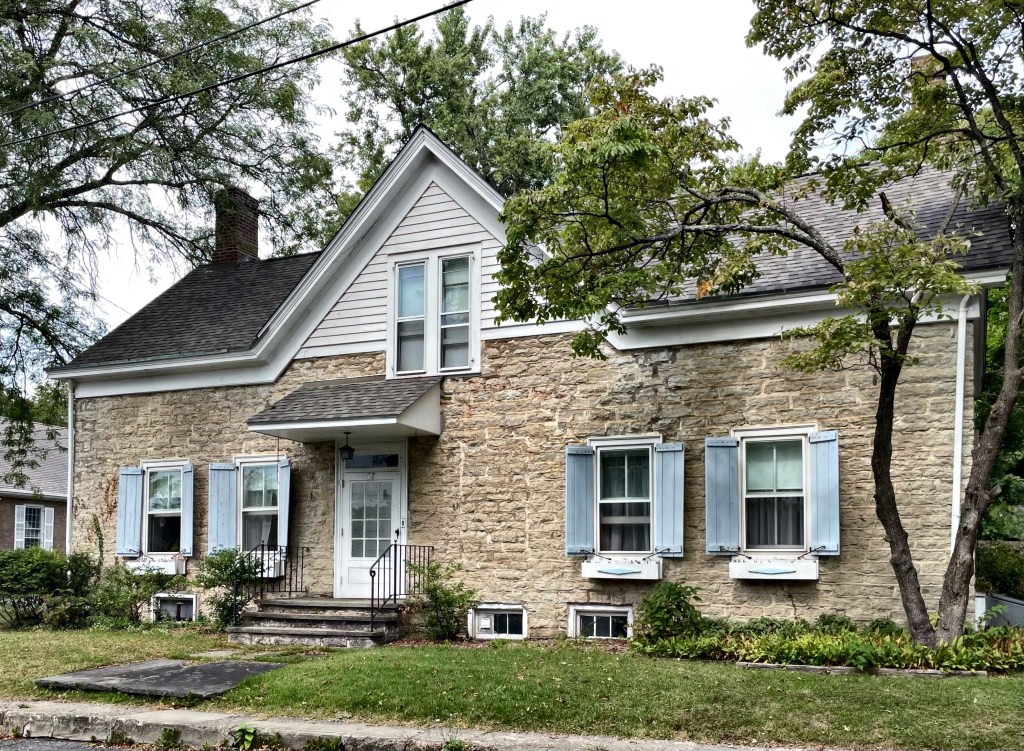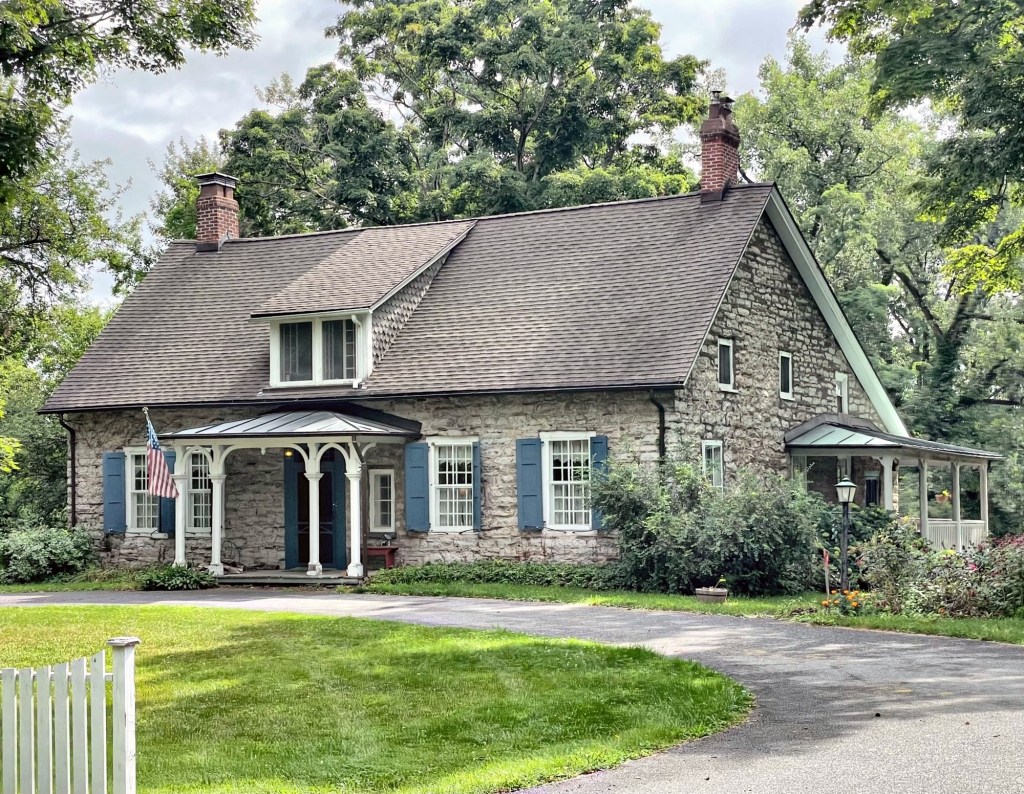
Cornelius Person House // c.1770

The Cornelius Person House is a pre-Revolution stone dwelling built in the Katsbaan village of Saugerties, New York. The residence was constructed around 1770 by Cornelius Person (1744-1827) a merchant who held a store just south of this home. The store was apparently used as a meeting place for Patriots during the Revolutionary War and Cornelius fought in the local militia at the time. After the war, John Jacob Astor was said to have traded with local fur trappers at the store. The Person Stone House was originally a smaller dwelling and was expanded multiple times to give it the center hall appearance and later saltbox rear. Later alterations include the porches, but the house retains so much of its original charm.
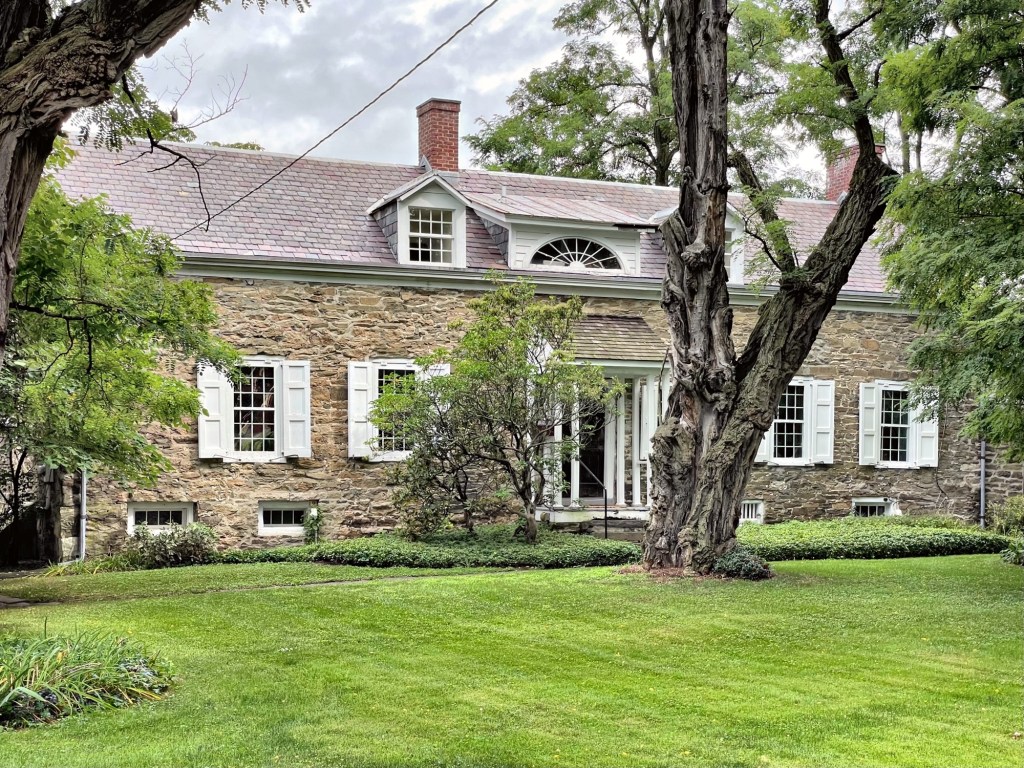
DuBois-Kierstede Stone House // 1727

Ulster County, New York, is known for its many stone houses, largely built in the 18th and 19th centuries by Dutch and other European settlers to the region. This stone house in Saugerties was built beginning in 1727 by Hiskia DuBois (Du Boys), who established a 40-acre farm here. The original homestead was the one-and-a-half-story east wing of the present structure and occupied by Hiskia until his death in 1757, afterwhich, the property was inherited by his son David, who would sell the farmstead to Dr. Christoffel “Christopher” Kiersted (1736-1791), the first doctor to take up a residence in present-day Saugerties. After Dr. Kiersted died in 1791, the property was expanded and enlarged to its current composition, likely by his son, John Kiersted. Under the ownership of John, a grove of Black Locust trees were planted in the front yard setting the cottage in a small forest. The DuBois-Kierstede Stone House is currently the home of the Saugerties Historical Society, which operates the structure as the Kiersted House Museum, along with a preserved Dutch Barn on the site.

Elmendorf House // c.1780

Built circa 1780, this old stone house is fairly new compared to some of its neighbors (it was built after the Revolution). The land upon which the house sits was originally owned by Anthony de Hooges and his wife Eva. It was purchased by Conrad Elmendorf, who likely built the home after the War. and handed down to his great-grandson Col. Jonathan Elmendorf who served in the War of 1812. The property is now home to the Hurley Historical Society, which host an Old Stone House Tour every year.

Petrus Crispell House // c.1725

Another of Hurley, New York’s beautiful old stone houses is this Georgian-era home, right on Main Street. The house is known as the Petrus Crispell House and dates to about 1725. Petrus Crispell must have purchased or inherited the house and occupied it for some years until it was acquired by the Dutch Reformed Church in the village to be used as a parsonage. It is 1 1/2 stories and is built of coursed and squared stone which continues into the gables. The facade, now 5 bays, was formerly 6, perhaps with two entrances. Nineteenth century alterations by the church include a large cross-gabled dormer and 2/2 sash.