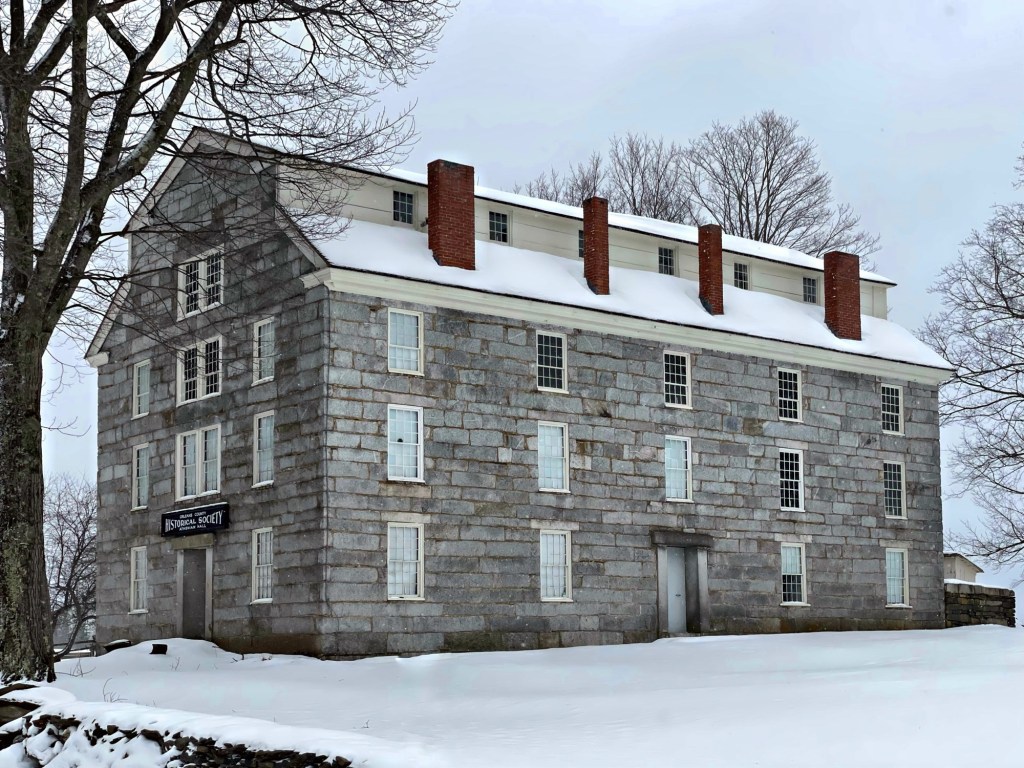
Athenian Hall – Old Stone House // 1836

Across from the Alexander Twilight House (last post) in Brownington, Vermont this massive stone structure which is possibly the first granite public building constructed in the state. Alexander Twilight (1795-1857) is reputed to be the first African American in the United States to graduate from college, where he was likely inspired by the large granite dormitories there (a private institution). Twilight served as headmaster of the Orleans County Grammar School, which due to its rural location, required many students to travel long distances for their education. As a result, they boarded with families in town, including with Twilight. Athenian Hall was built to accommodate the larger number of students attending the Grammar School. The building closed in 1859, two years after the death of Alexander. The building sat vacant for much of the late 19th and early 20th centuries until 1918, when the Stone House was put up for auction. A representative of the railroad in the state of Vermont bid on the structure with the hopes of using the granite stones for bridge abutments. Luckily for us, The Orleans County Historical Society outbid the railroad and won the auction. The building was opened as a museum in 1925 and is today part of the Old Stone House Museum and Historic Village.
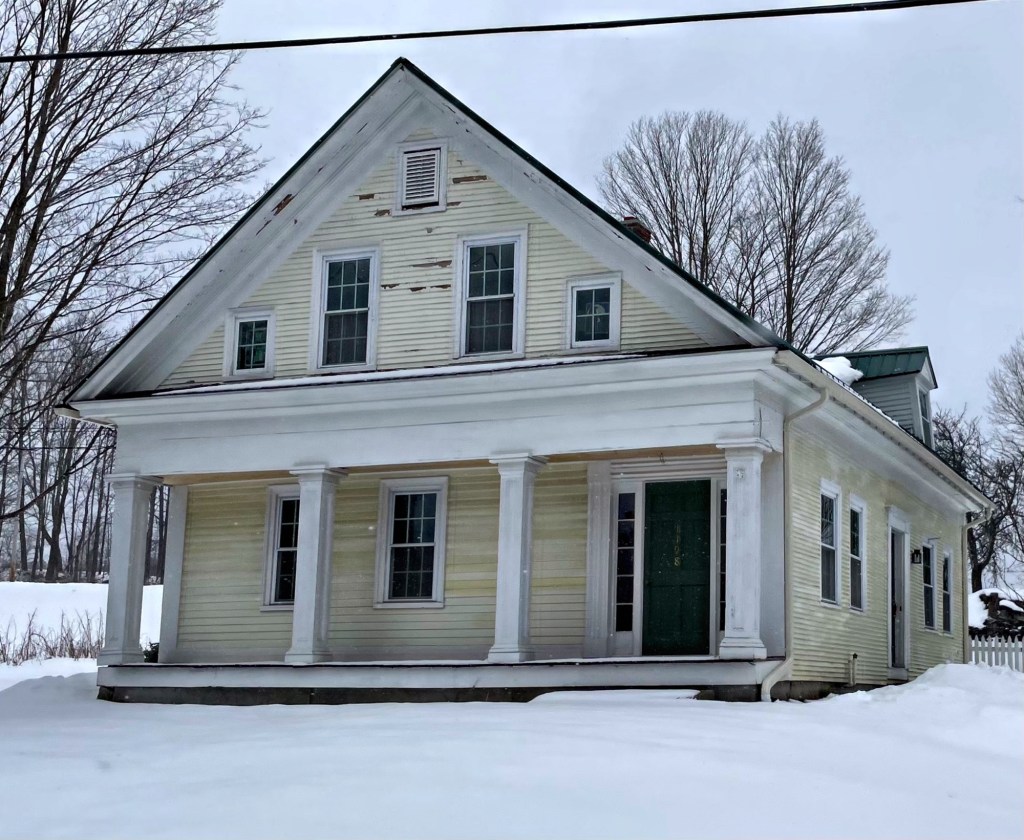
T. C. Stewart House // 1843

Welcome to Brownington, Vermont! This small, rural town sits in the Northeast Kingdom region of the state and was granted to Daniel and Timothy Brown in 1790, and named after their family. One of the first roads in Orleans County went through Brownington, connecting Greensboro to Derby. Brownington Village was once a stopping point for stagecoaches traveling between Boston and Canada. This Greek Revival style house was built in 1843 along the stagecoach route to Canada and was built for Thomas C. Stewart. Thomas Carlisle Stewart (1804-1865), an attorney and prominent member of town who was the son of Amherst Stewart, one of the town’s founders. The Stewart home has its gable end extending over the recessed front porch, reading like a temple-front home.

Sawyer Mansion // 1863 & 1914

Originally built in the Carpenter Gothic style in 1863, the Sawyer-Gillett Mansion in Whitingham, Vermont, is the highest-style house in town today. Indistinguishable from its Civil War-era original construction, the house was greatly expanded and altered into an elaborate take on Queen Anne / Shingle styles in 1914. The house was originally constructed by John W. Sawyer, but it was his son, Lincoln H. Sawyer who renovated the house and etched his name “L.H. Sawyer” on the glass of the new front door. The updated house style reflects a nostalgic Victorian preference by the owner, who sawed all the trim and materials on site at the family sawmill. It was recently sold and is now a B&B!

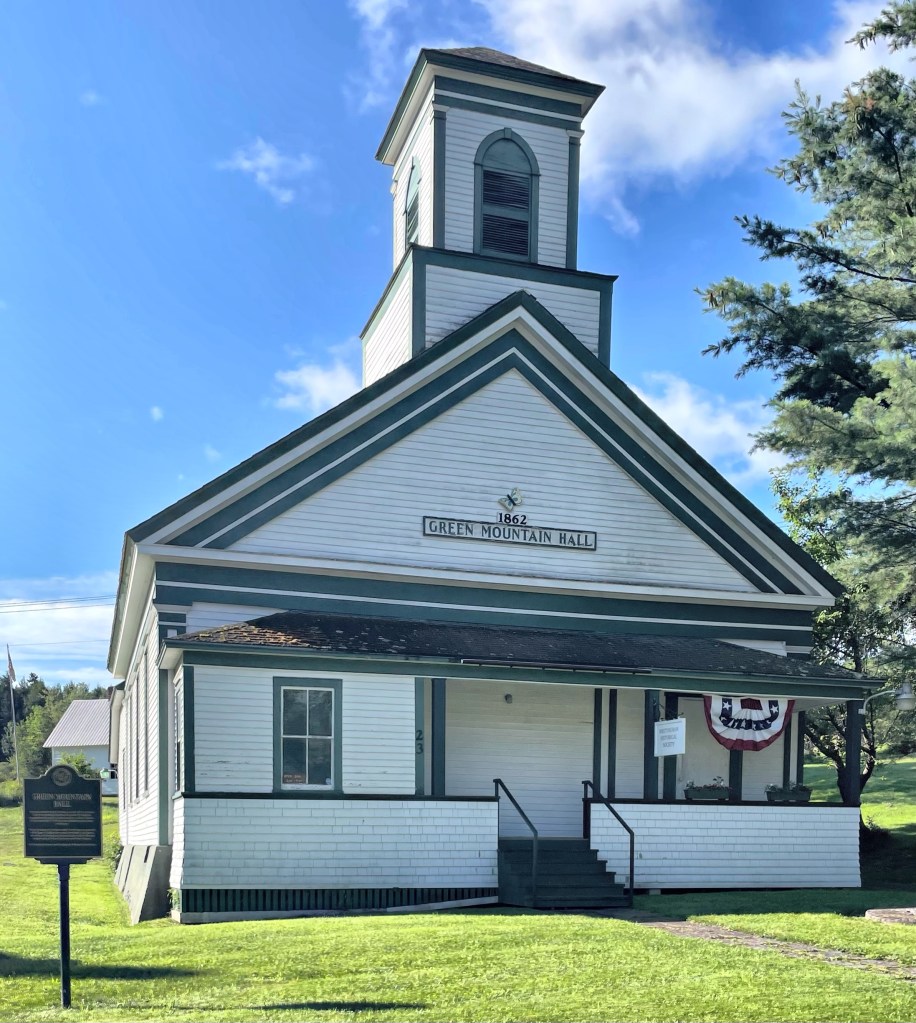
Green Mountain Hall // c.1860

This simple Greek Revival style country church in Whitingham, Vermont is similar in form to the Methodist Church (last post) with a gable front double entry, large full pediment, corner pilasters, and centered two-tiered steeple. Also like the Community Church nextdoor, this was built circa 1860 as a church, but for the Universalist Unitarians in town. In 1892, the church was transferred to the Green Mountain Club, giving it the informal name “Green Mountain Hall,” and in 1905 the Town of Whitingham took it over. The building was used for dances, meetings, social gatherings, and other events until the Whitingham Historical Society took it over in a lease in 1971 to develop into a museum. The well-preserved vernacular building with its c.1920 front porch is a great representation of Vermont architecture, reuse for new uses and update. No waste, and a whole lot of charm!

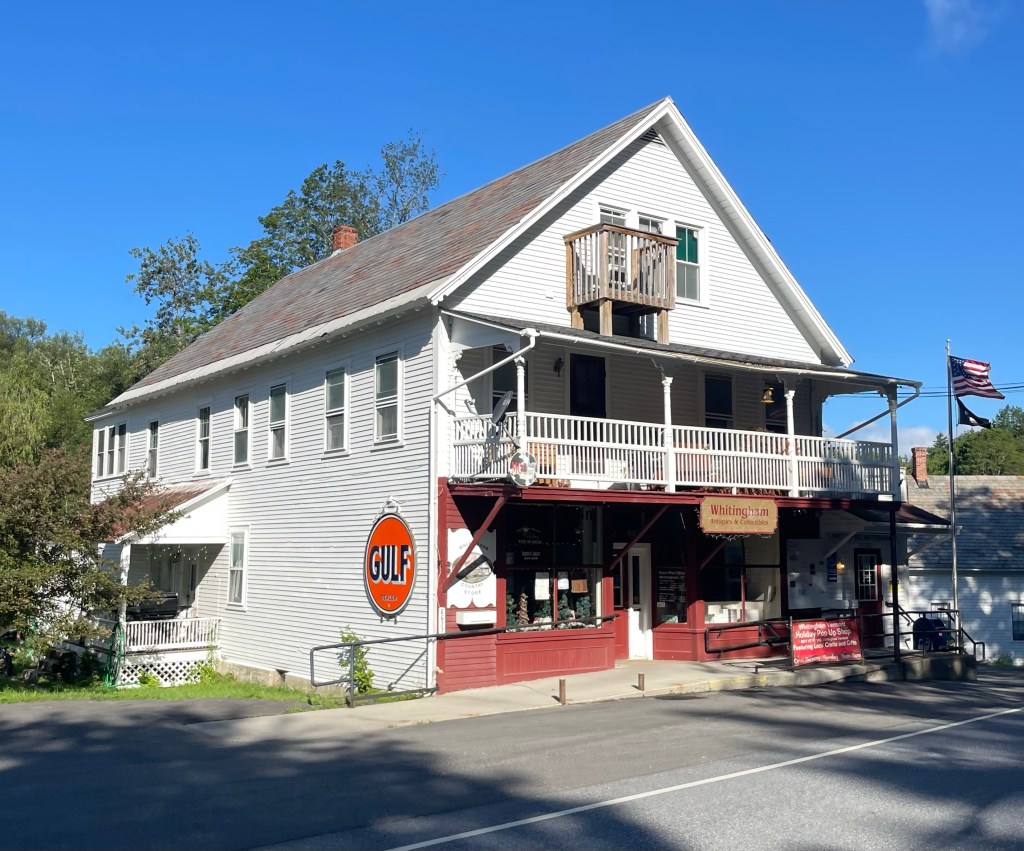
Wheeler-Jillson Store // c.1905

To me, Vermont is synonymous with Vernacular architecture. The state obviously has high-style and architect-designed buildings all over, but the character of the state (to me) is based around local builders, local materials, and local traditions. The patchwork of towns and villages in Vermont all have one thing in common, at least one general store. These buildings serve as an informal meeting place or community center where residents and visitors alike can hear the local gossip and events taking place. The general store in Whitingham, Vermont is located in the middle of the village, perfect for stopping in. The building was constructed in the first decade of the 20th century, replacing a former hotel/tavern on the site. The late-folk Victorian style store exhibits some decorative columns and storefronts, likely produced at one of the working lumber mills in town at the time. The store was originally built by Arthur and Carl Wheeler as the “Wheeler Brothers Store” but after 15 years changed hands and became the “F.W. Jillson & Son Store”. Since then, the Jillson’s opened up an antique store in the building which serves as a multi-use facility (collectively as a country store). Keep it local Vermont!