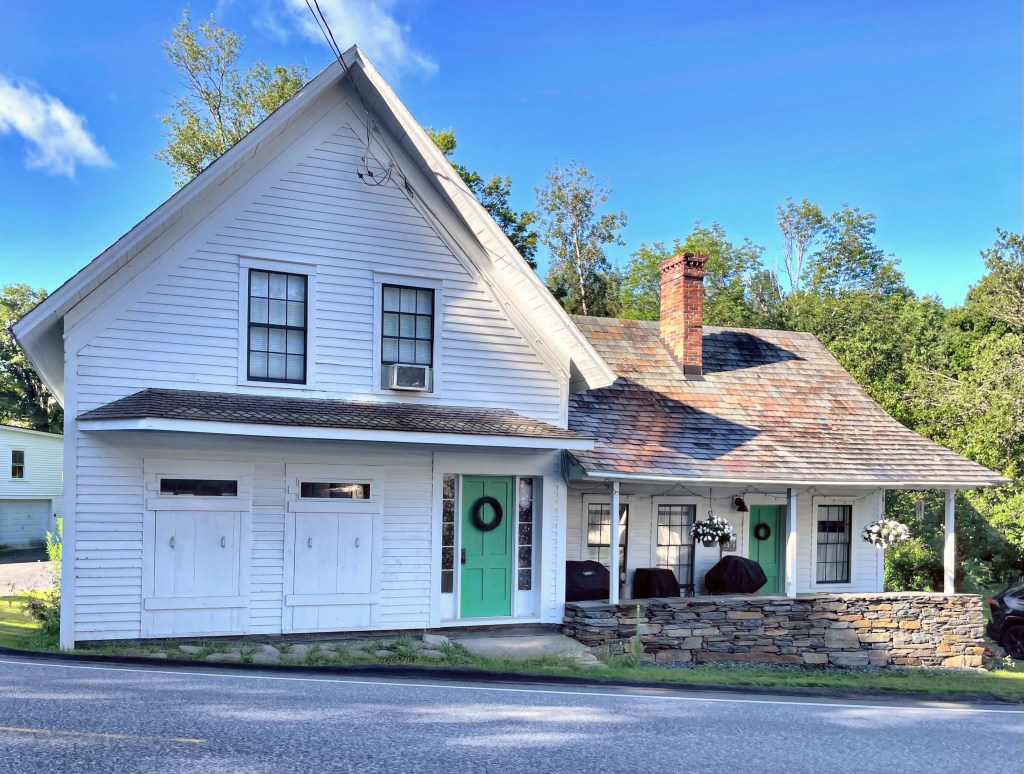
Abraham Chase House // c.1860

One of the cutest old houses in Whitingham Village in Vermont is the Abraham F. Chase House, just a stone’s throw from the country store and post office. Abraham Chase was a dealer in dry goods, groceries, boots, shoes, and hardware in this village, possibly from half of this building. The vernacular one-story clapboarded frame house has some Gothic details like the rear steep double gable wall dormer. I am actually a huge fan of the green doors and newer stone porch wall, they really make this cottage pop!

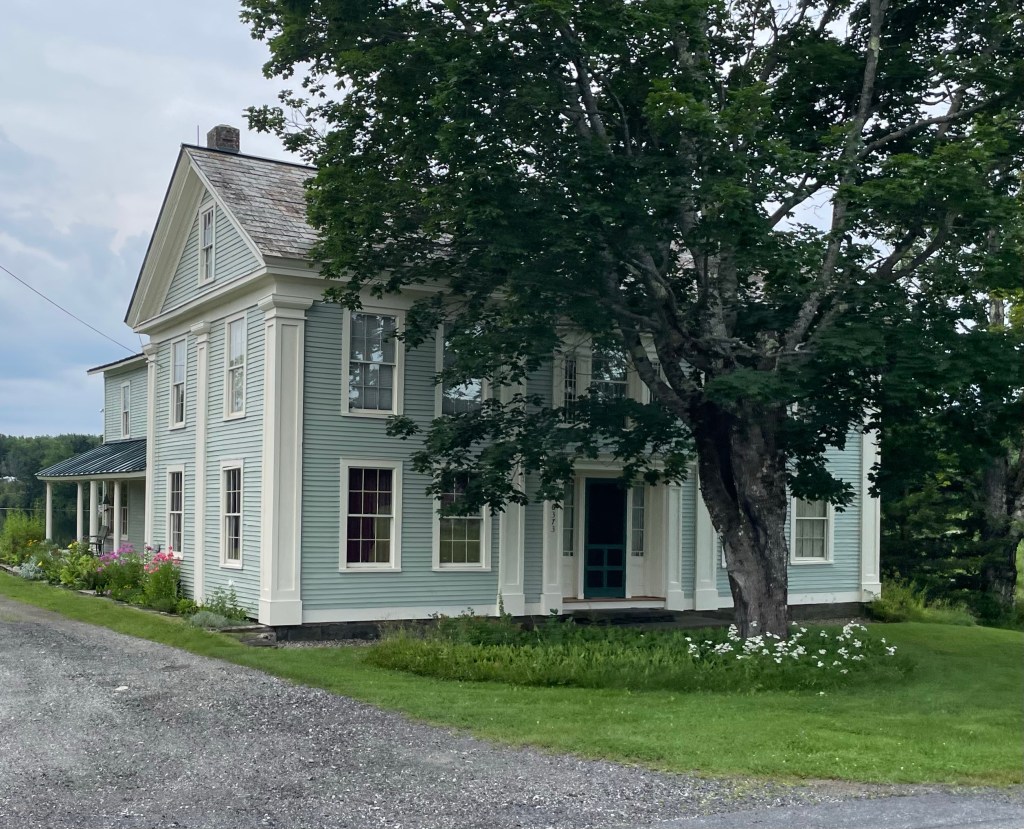
Reuben Winn House // 1840

The main part of this stunning Greek Revival house in Whitingham, Vermont was built by Reuben Winn around 1840 and was originally located on the town common, southeast of the present village of Whitingham. The building was the only one to be moved from the hill to the valley as development shifted westward to the current town center and its access to water power for industry. This house was moved in 1889 and was run as the Sadawga Lake House hotel by Charles E. Putnam who also was listed in local directories as a slate dealer. The present slate roof was likely added by Putnam! The architectural element which stood out to me was the three part Palladian window directly above the front door that uses the motifs of the Greek Revival pilasters and entablature common to the other façade elements. The home is very well-preserved and even maintains a detached barn on the property!

Charles C. Warren House // c.1880

Located just steps from the former State Hospital of Vermont in Waterbury, the Charles C. Warren House on Main Street stands as an important Victorian-era residence in the town. The late Italianate style residence features a detached carriage house at the rear which was later converted to a auto garage and most recently to office space. Mr. Warren was a businessman in town who owned a tannery and creamery. He built a water system in the town in 1879, making a substantial amount of money in the process. Mr. Warren was a serious auto enthusiast who in addition to purchasing the first automobile in Vermont (a 1899 Haynes Apperson), he held Vermont registrations #1 and #2. He had his carriage house converted to an auto garage equipped with a turntable that obviated forever the tedium of backing down the driveway. The building is now home to a law office.