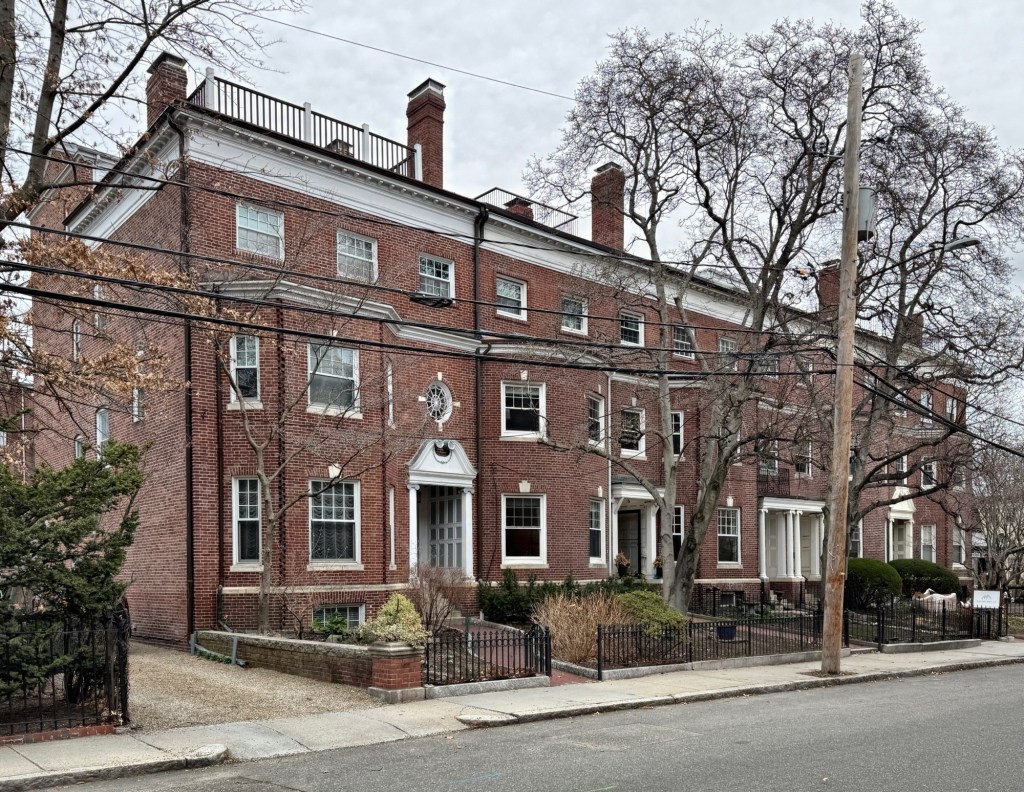
Around the turn of the 20th century, much of Brookline, Massachusetts, saw rapid development and suburbanization as the area streetcars and subway made Boston better-connected to adjacent communities. Developers eyed un- and under-developed lots near major corridors and stations to develop denser housing at varied success. In the Longwood neighborhood, Luther Merrill owned property along Beacon Street and in the more established wealthy neighborhood, where he sought to build. Taking cues from the surrounding context and precedence for rowhouse development, Merrill hired the local architectural firm of Ball and Dabney to furnish plans for a five-unit row. The firm designed the four-story building in the Colonial Revival style with its upper floor set back off the facade to give it the appearance of a three-story structure, to better fit with the surrounding character. The five privately owned rowhouses feature rounded bays and recessed paneled entrances, some surmounted by large swans neck pediments.
 Buildings of New England