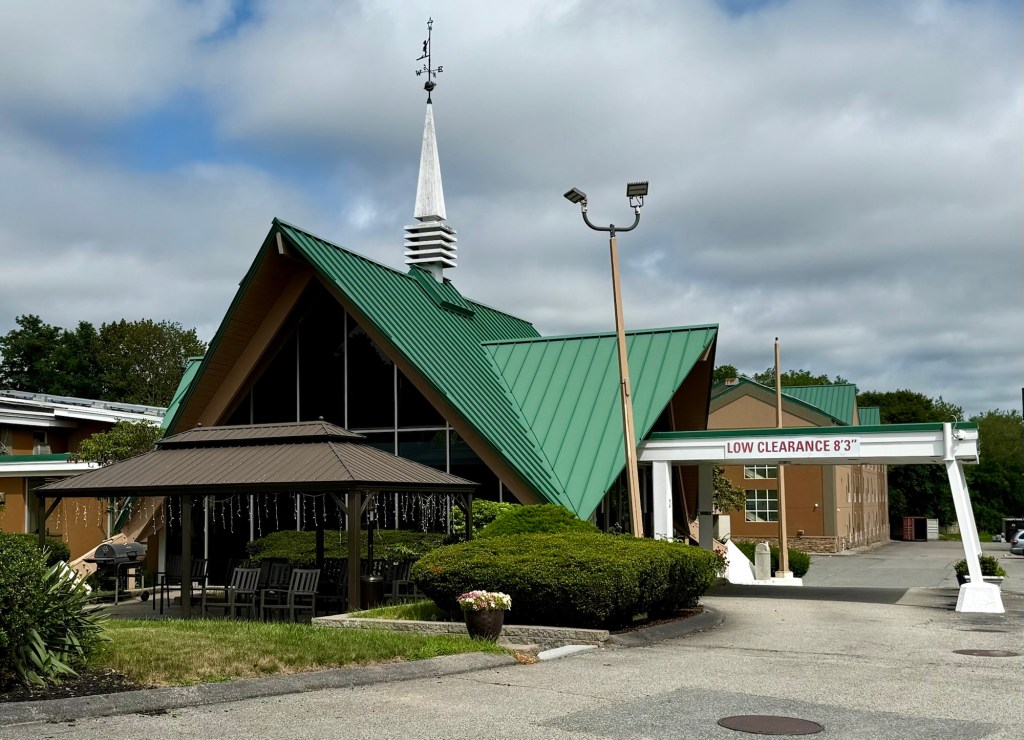
Former Howard Johnson’s Motor Lodge, Kingston // 1956

Howard Johnson’s (Hojo’s) traces its beginnings to the late 1920s when the Boston native Howard D. Johnson (1887-1972) opened a series of ice cream stands at various locations along the South Shore of Massachusetts. By 1940, there were more than 125 restaurants from Maine to Florida and by the late 1950s there were approximately 500 along the east coast. In 1954 the company expanded to motor lodges (motels), eventually opening over 500 across the United States. The growth of the motel tied closely with 1950s legislation that authorized Interstate highways connecting cities via automobile, increasing traffic all across the country. Howard Johnson’s adopted a policy of acquiring real estate directly off highway exit ramps and often the parcels were large enough to include a restaurant and motor lodge. Specifically, many Howard Johnson’s Motor Lodges featured prominent signage and bright orange roof, to help motorists identify the motel while speeding down the interstate. The Kingston location here opened in 1956 along Rt. 3, connecting Boston and points north, to Cape Cod. While it’s iconic name and orange roof do not remain, the unique Googie-esque form of the lobby with very 50s weathervane remain as an important vestige of 1950s America. 
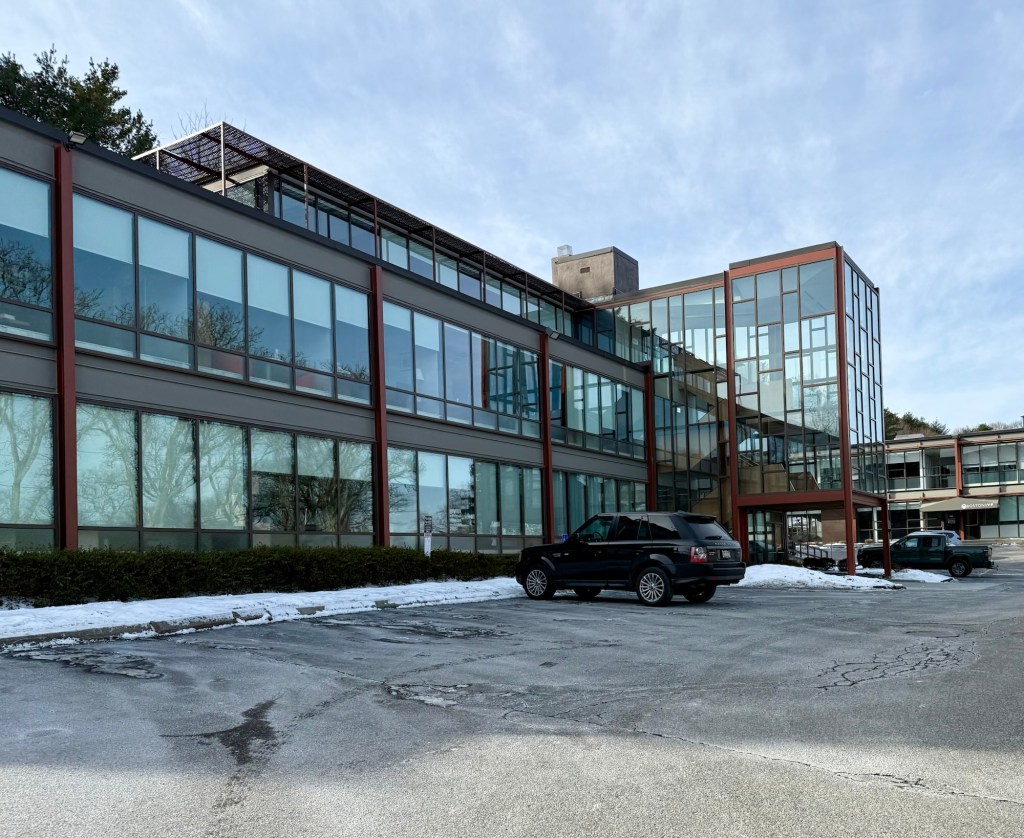
Lyman Park Offices // 1959

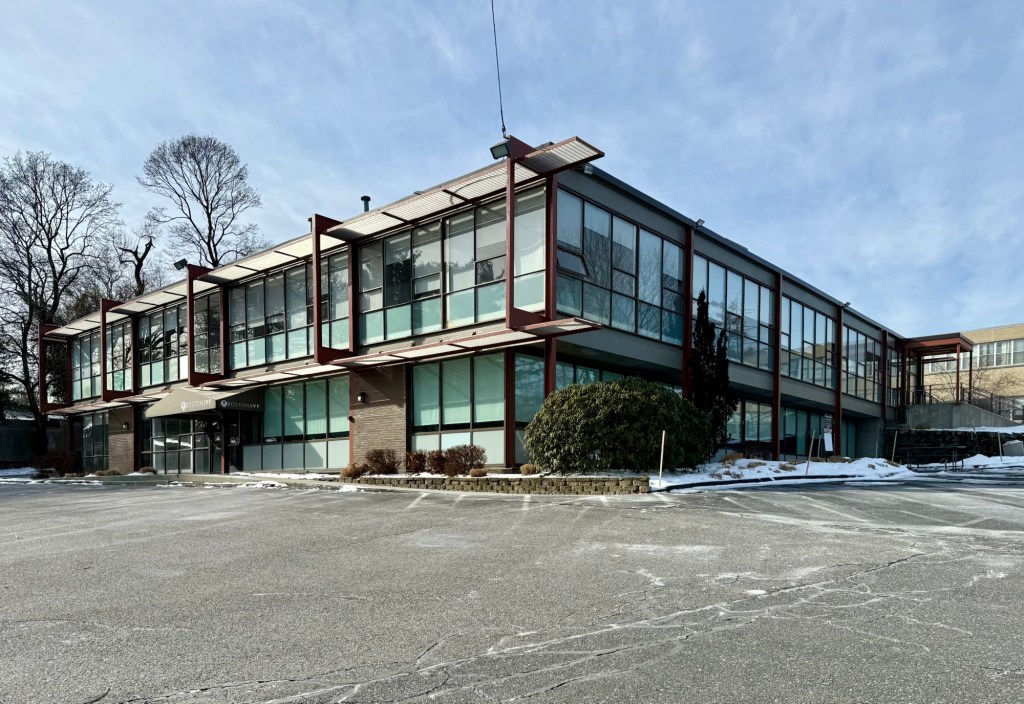
Mid-Century Modern commercial architecture is often maligned for its car-centric and unadorned designs, but the Lyman Park Offices on Boylston Street in Brookline, Massachusetts, are some of the finest office buildings constructed in Brookline in the 20th century. The two office buildings were built on the site of the Theodore Lyman estate and were built at a time Brookline saw rapid commercialization along the Boylston Street corridor. Designed by the firm of Salsberg & LeBlanc, the Lyman Park Offices are landmark examples of the International style in the commercial form in Brookline. Built of steel and glass, the buildings exhibit spandrels above each floor level, enhancing the strong horizontal emphasis of the design.

Yale University Art Gallery // 1953

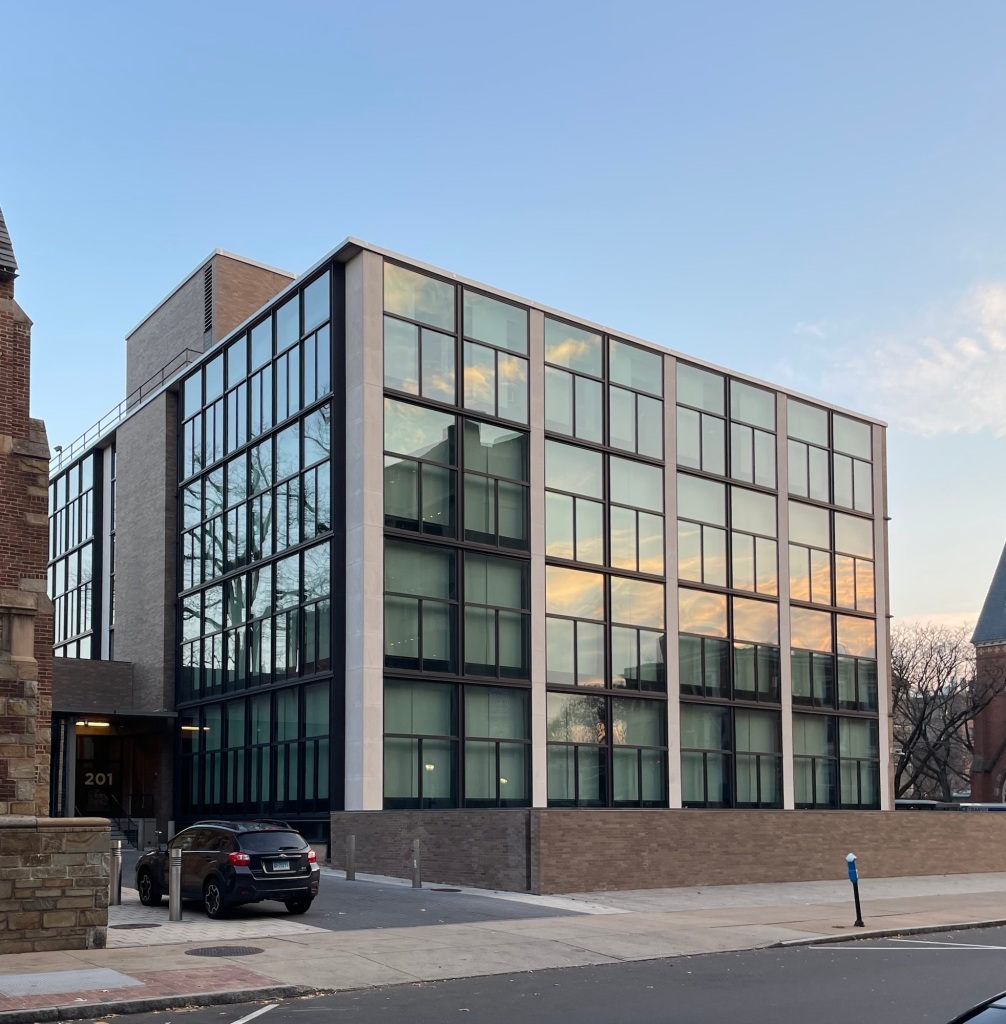
Yale University’s School of Architecture was in the midst transition when Louis Kahn joined the faculty in 1947. The post-war years at Yale trended away from the school’s Beaux-Arts lineage towards the avant-garde, and Modernist principles brought over from European architects. When the University called for a new wing for its existing Venetian Gothic style Art Gallery Building (1928), they obviously had no choice but to make a statement for the future of the school. Architecture professor Louis Kahn worked with Anne Tyng, who was both a professional partner and his “muse”, who heavily influenced his works, including here where she designed the concrete tetrahedral slab ceiling at the interior galleries. As a professor and practicing architect, Kahn hoped for students and visitors would engage with the building, even interior spaces often overlooked design-wise, such as the stairwells. While the facades are fairly minimal in design details, because the attention was paid to the interiors, which provide protection from natural light while also allowing for large floor plates for customizable exhibitions. The structure is Yale’s first true Modernist building on a campus which soon after was dominated by some of the country’s most iconic examples of the style.

Socony-Mobil Building // 1956

One of the unsung heroes of Modernist architecture in New York City is one of my personal favorites, the Socony-Mobil Building at 150 E 42nd Street in Manhattan. Completed in 1956 from plans by Wallace Harrison of the iconic firm of Harrison & Abramowitz, the development stands out amongst the competing masonry buildings and glass skyscrapers in the area. At the time of its completion, the Socony–Mobil Building was the first skyscraper to have its exterior wall entirely clad with stainless steel, as well as being the largest air-conditioned building in the world! The base is clad with opaque blue glass panels framed with stainless steel moldings; above, the tower and wings are clad in over 7,000 embossed stainless steel panels. The firm reviewed over 100 different designs until they settled upon the four raised relief panels: a rosette-like motif for above and below the windows; a large and small rosette to flank the windows, and two variants displaying a design of interlocking pyramids. The panels were likely designed by or inspired by Oskar Nitzchke (1900-91), a German-born designer who worked at the firm and worked on the similar style Alcoa Building (1953) in Pittsburgh. The building was developed as a speculative project, but the largest tenant, the Socony-Mobil Oil Company, later renamed Mobil, helped to give way to the naming rights. The building was landmarked by the City of New York in 2003.