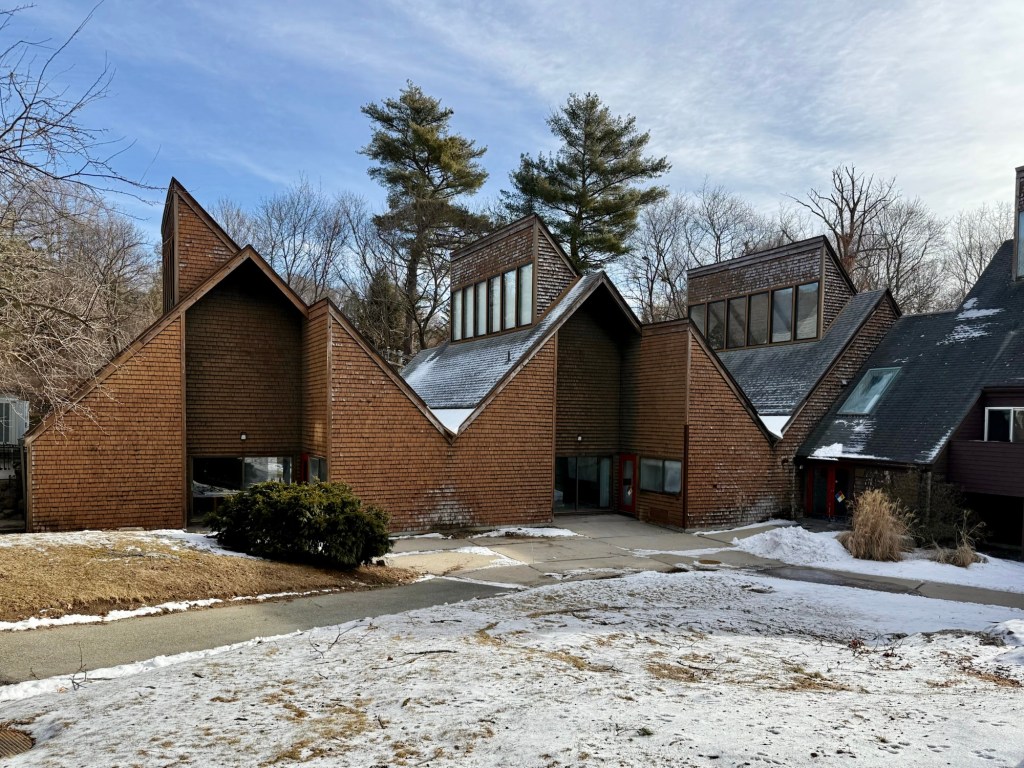
Abercrombie Fine Arts Wing // 1974

Completed in 1974 for the now defunct Pine Manor College in Brookline, Massachusetts, this interesting Contemporary/Shed style building is modern, yet employs materials and a general form that fits into its surrounding context. When Pine Manor College received a grant by the Abercrombie Foundation, planning began immediately to design and build the Abercrombie Fine Arts Wing of the school. The building was designed by Paul J. Carroll & Associates, and features a bold roofline with clerestory windows, used to provide ample natural light for the classroom and art studio spaces inside. The building remains a part of the newly established Messina College, a Boston College campus enrolling first-generation high-financial need students, giving all an opportunity for education, no matter their circumstances.

Alumnae Memorial Library – Elms College // 1973

Located just north of and in stark contrast to the ornate Neo-Gothic 1932 Administration Building of Elms College, the school’s main library building showcases how much architecture styles changed in just 40 years. The college’s library was long in the main Administration building, but was outgrown in the latter half of the 20th century. The two-story steel and cast-concrete library building was built in 1973 with exterior details in red brick and concrete, a nod to the historic materials of the older campus buildings. Unapologetically Modern, and somewhat Brutalist, the building has complex geometry of sunken voids and solid sections, broken up by a horizontal band of windows with concrete fins to mitigate sunlight. The building was designed by Boston architects, Carroll & Greenfield, and recently celebrated its 50th anniversary.

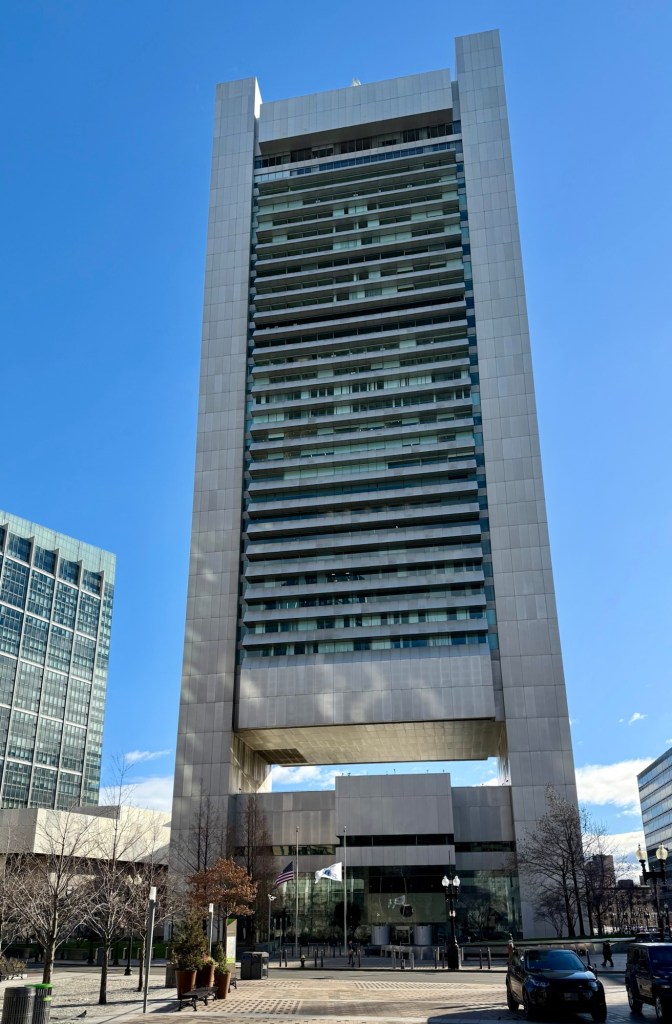
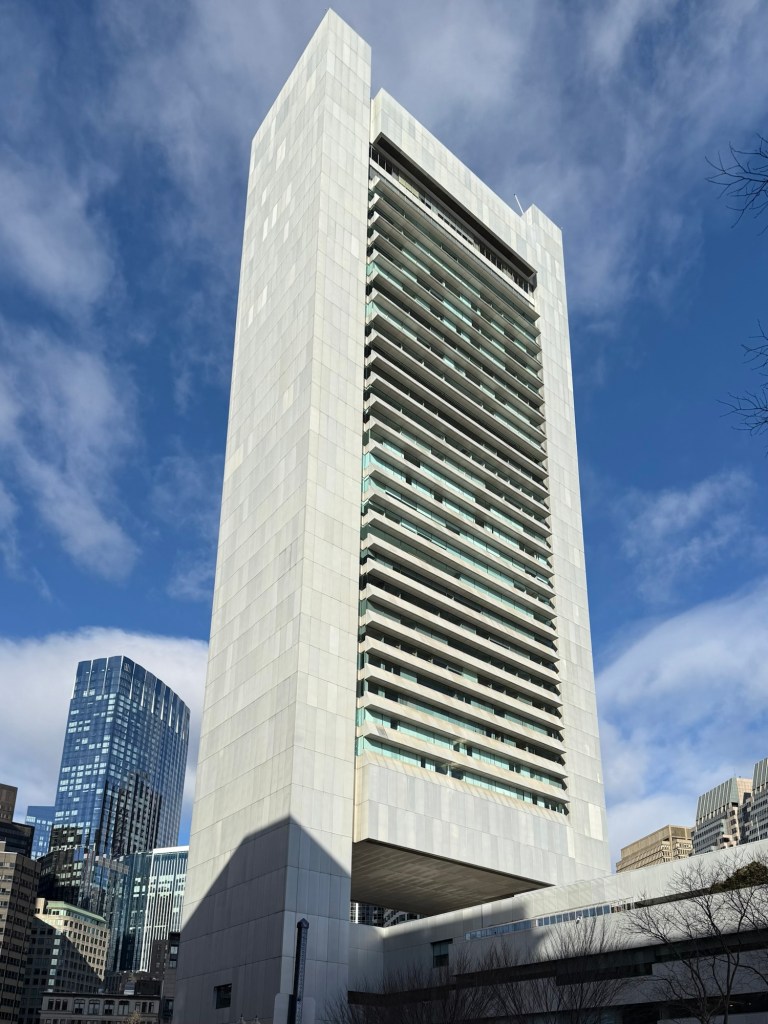
Federal Reserve Bank of Boston // 1972

Established by Congress in 1913, the Federal Reserve System is the nation’s quasi-public central bank. Its primary functions are to set monetary policy, supervise and regulate banking institutions, maintain a stable financial system, and provide financial services to the U.S. government, the public, and domestic and international financial institutions. Organized in 1914, the Federal Reserve Bank of Boston is one of 12 district banks across the country and serves the six New England states. Construction for the Boston Reserve’s Renaissance revival bank was begun in 1920 and finished in 1922, but was outgrown in the second half of the 20th century. The original building would be landmarked and is now known as the Langham, a luxury hotel. Planning began on a newer office and a site was acquired on waterfront land cleared from Urban Renewal in the late 1960s. The current building was constructed between 1972 and
1974, and occupied by the bank in 1977. Designed by the firm Hugh Stubbins & Associates, the complex occupies a full city block, with the 32-story tower and a 4-story section serving as the bulk of the mass. A 600-ton major steel structure called a “truss” marks the beginning of the tower’s offices above the breezeway. The exterior is natural anodized aluminum, which acts as a curtain wall and weatherproof facing. The aluminum spandrels or “eye-brows” shade the building interior from the sun in the summertime and allow more sunlight in the winter months. Love it or hate it, this building is extremely significant architecturally for its Modern design and materiality, and for its engineering. It has become a visual landmark and anchor into Boston’s dense Downtown.

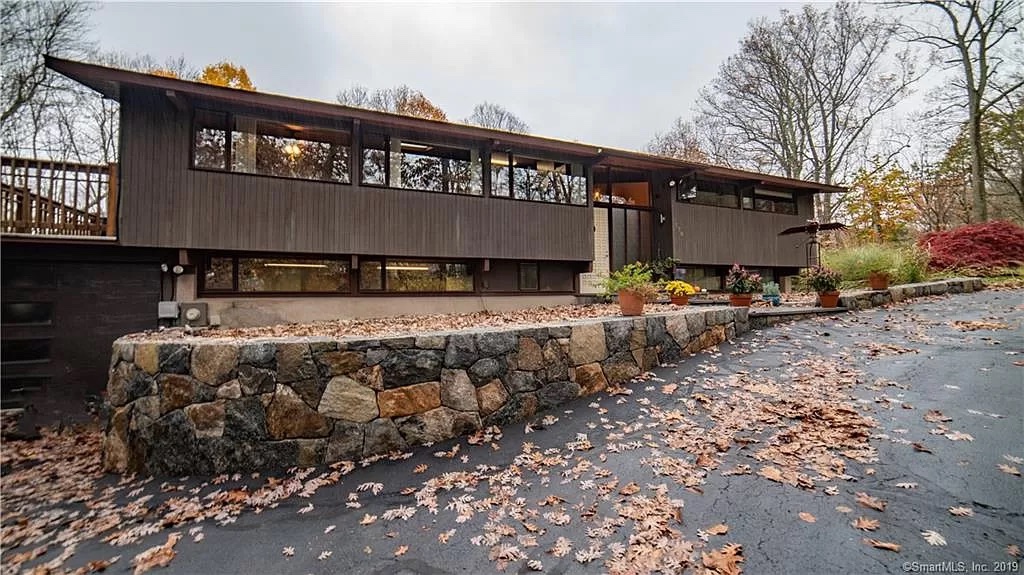
Dublin Hill Deck House // 1974

I don’t share Mid-Century buildings on here enough, mostly due to the fact that so many of the houses of the period are secluded down winding driveways and surrounded by trees! This stunning house is located in Southbury, Connecticut, and is a great example of a Deck House. The Deck House was a housing type developed by architect Carl Koch. According to At Home With Tomorrow, he began his lifelong mission to create “the good, the beautiful, and the inexpensive” in housing while at Harvard under the guidance of Walter Gropius, who is famous for the development of the Modernist Movement in architecture. After the war, he turned his focus on the housing shortage, a symptom of the Great Depression, WWII, and returning Veterans with growing families and VA mortgage loan offers. His solution was for an affordable house of pre-fabricated parts to cut costs and provide streamlined construction. In 1953, his Techbuilt house was launched, after a decade of research. William Berkes and Robert Brownell had worked with Koch at Techbuilt after graduate school, but wanted to create a design of their own. They left Techbuilt in 1959 and founded Deck House, using the same principles. The exposed Douglas fir beams, wood panel ceilings and mahogany trim and window casements are what give the deck house a lot of its signature aesthetic. A wall of glazing, open floor plan with sloping roof rafters extending beyond the walls and a low placement in seemingly untouched nature are further elements that have endeared these houses to the modern homeowner.