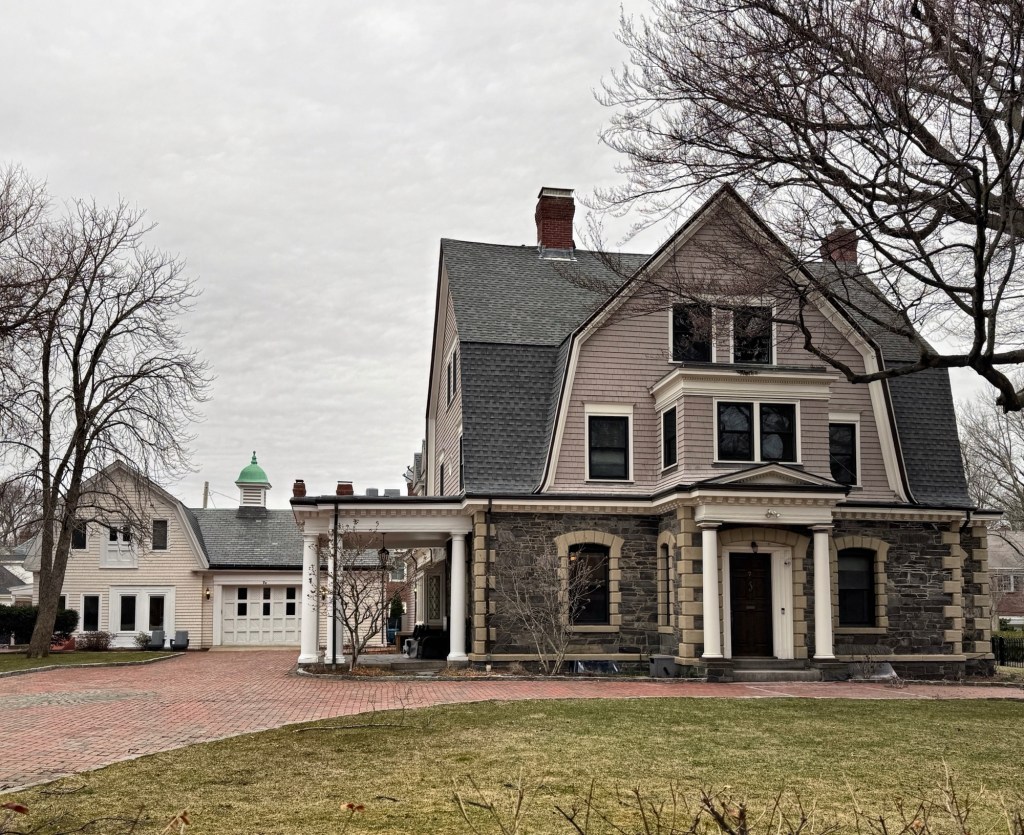
Amory-Richards House // 1865

Built in 1865 along with its neighbor and later renovated in the Colonial Revival style, the Amory-Buckingham House on Colchester Street stands as an altered, yet historically significant residence in Brookline’s important Longwood neighborhood. A large lot on Colchester Street was purchased by Dr. Robert Amory (1842-1910), who in 1864, married Marianne Appleton Lawrence (1843–1882), daughter of Amos Adams Lawrence, a major developer of the nearby Cottage Farm neighborhood of Brookline. This stone cottage, one of two neighboring homes built at the same time for Dr. Amory was likely his main residence when not residing at his Boston townhouse or summer residence in Bar Harbor, Maine. The property was sold by the end of the 19th century to Edwin Buckingham and in 1902 to George L. Richards, who had the home expanded with an additional floor added with gambrel roof. A detached stable was also constructed around this time.

Mary English Cottage // 1911

This shingled beach cottage on the southern tip of New London, Connecticut sits in the Neptune Park community, which was laid out by real estate speculators as summer homes, primarily for local families. The Post Hill Improvement Company made up of professionals, purchased the beach and the surrounding land for $25,000 and began selling off the land adjacent to the beach. Then, once developable lots were sold and many cottages were built, they sold the beach alone back to the City for the same sum of $25,000. Like many such developments, deed restrictions were placed on properties, and ensured that only a dwelling house, with a minimum value of $2,500 if not waterfront and $3,000 if waterfront, could be constructed on the lots. This formerly Colonial Revival cottage was built in 1911 for Mary R. English, and would have cost at least $3,000. The shingled home was later given the tower and other details, but retains much of its charm.

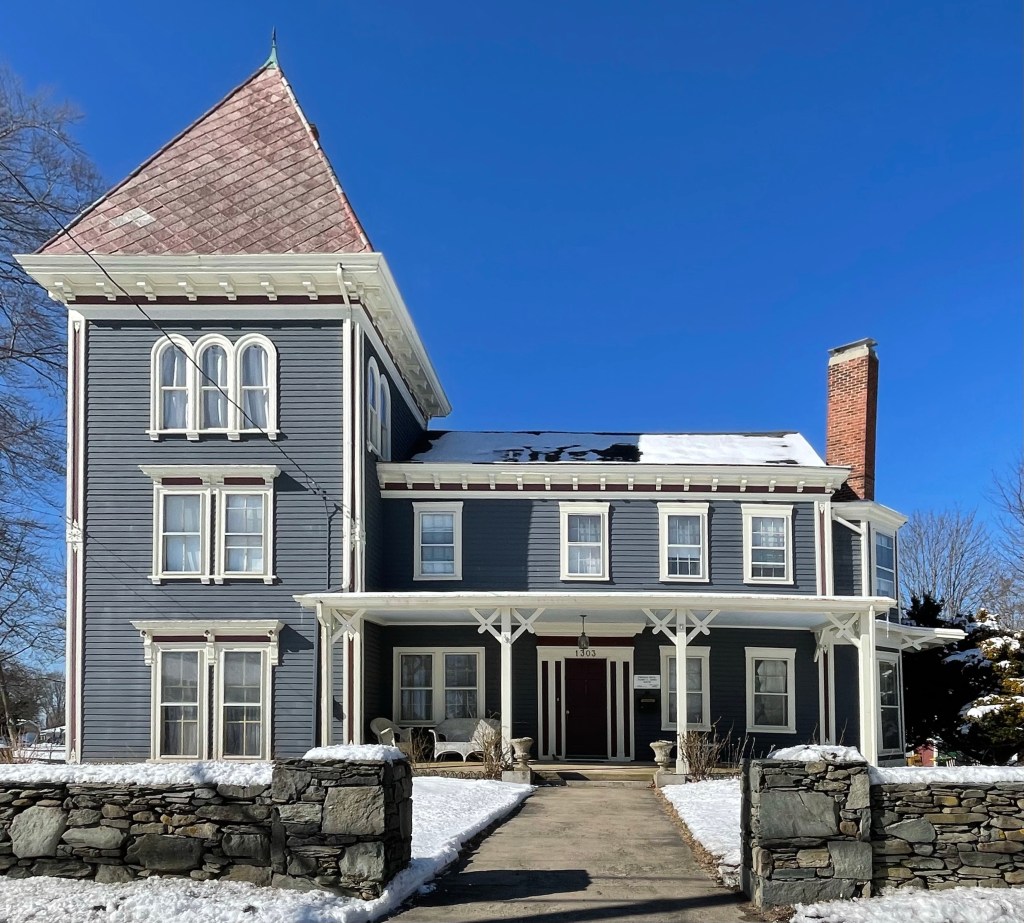
Ferncliffe // c.1760

One of the most unique houses in Bristol (and the State of Rhode Island for that matter) is Ferncliffe, a colonial farmhouse that morphed into this beauty in the late 19th century. In 1749, the 200-acre farm of Benjamin Church, containing land where this home sits, was divided among his four daughters. Thomas Peck, a farmer, purchased one share in 1761; his deed refers to a house already on the property. The home was likely a five-bay Georgian home with little details. However, in 1882, James L. Tobin an undertaker, bought the property which then extended west to Narragansett Bay. He “modernized” the home with brackets, front porch, oh and a massive three-story tower with pyramidal roof! Tobin’s daughter Mary named the house for the fern plants lining the waterside cliffs at the far extent of the property, giving it the name “Ferncliffe”. Since then, the farmland was subdivided and sold off and now contains many house lots, with many of the streets laid out named after his children and wife. After Tobin’s death in 1925, he willed the home to his two living daughters, Helen and Annie.