Built by the Boylston Market Association, replacing the former Boylston Market (1810-1887) in Downtown Boston, the Boylston Building is a great example of late 19th-century commercial design in Boston. The Association hired German-born architect Carl Fehmer (who alsodesigned the amazing Beaconsfield Terrace housing in Brookline) to design a structure that would stand up to the architectural landmarks along Boylston and Washington Streets nearby. Fehmer’s design exhibits many features of the emerging Commercial style (also known as Chicago school style) of architecture which promoted new technologies of steel-frame construction in commercial buildings with masonry cladding, while clearly showcasing the Romanesque round arch windows. In the mid-20th century, this area of Downtown Boston became known as the ‘Combat Zone‘, Boston’s Red Light District, flooded with prostitution, drugs, and adult video stores. The Boylston Building was occupied by an adult video store and dive pizza shop. The building and area surrounding are different today, but you can always find some characters nearby!
One of the biggest architectural losses in Boston has to be the demolition of the Boylston Market formerly at the corner of Boylston and Washington Streets. A new market house in Boston was desired by many of the city’s elite, and when John Quincy Adams (who lived on Boylston Street and was elected President of the United States 15 years later) gathered capital for the new structure it was so built. The group hired Charles Bulfinch, who at the time was THE architect of Boston, to design the new brick market. When opened to the public in 1810, the market was considered far out of town, but the neighborhood quickly developed around it with new Federal and Greek Revival homes popping up all around it, with commercial buildings soon after. The market featured stalls for the “sale of provisions” on the first and second floors, and Boylston Hall on the third floor, which featured musical and theatrical productions. The market building was sadly demolished in 1887 for a larger and more modern market of the same name. The belfry atop the former market was disassembled and given to a church in Arlington, MA, who now displays it on their own church building.
One of the most visited buildings in New England is the stunning Old North Church in the North End of Boston. Old North Church (originally Christ Church in the City of Boston) was established when the cramped original King’s Chapel, then a small wooden structure near Boston Common, proved inadequate for the growing number of Anglicans in the former Puritan stronghold. Subscriptions for a new church were invited in 1722. The sea captains, merchants, and artisans who had settled in Boston’s North End contributed generously to the building fund, and construction began in April, 1723. The church was designed by William Price, though heavily influenced by Christopher Wren’s English churches.
Before the American Revolution, both Patriots and Tories were members of the church, and often sat near each-other in pews, clearly adding to bubbling tensions. The enduring fame of the Old North began on the evening of April 18, 1775, when the church sexton, Robert Newman, and Vestryman Capt. John Pulling, Jr. climbed the steeple and held high two lanterns as a signal from Paul Revere that the British were marching to Lexington and Concord by sea across the Charles River and not by land. This fateful event ignited the American Revolution.
A full scale restoration of Old North was carried out in 1912-14 under the direction of architect R. Clipson Sturgis and a number of 19th century alterations were then eliminated. In this work, floor timbers and gallery stairs were replaced, the original arched window in the apse at the east end was replaced, and the old square box pews and raised pulpit were reconstructed. Additionally, the interior woodwork was incorrectly repainted white rather than the rich variety of original colors described in the early documents of the church, clearly submitting to Colonial Revival sensibilities. The iconic white steeple is also not original. The original steeple of the Old North Church was destroyed by the 1804 Snow hurricane. A replacement steeple, designed by Charles Bulfinch, was toppled by a hurricane in 1954. The current steeple uses design elements from the original and the Bulfinch version. Even with all these differences, Old North lives up to her name and stands proudly as a symbol of freedom and revolution.
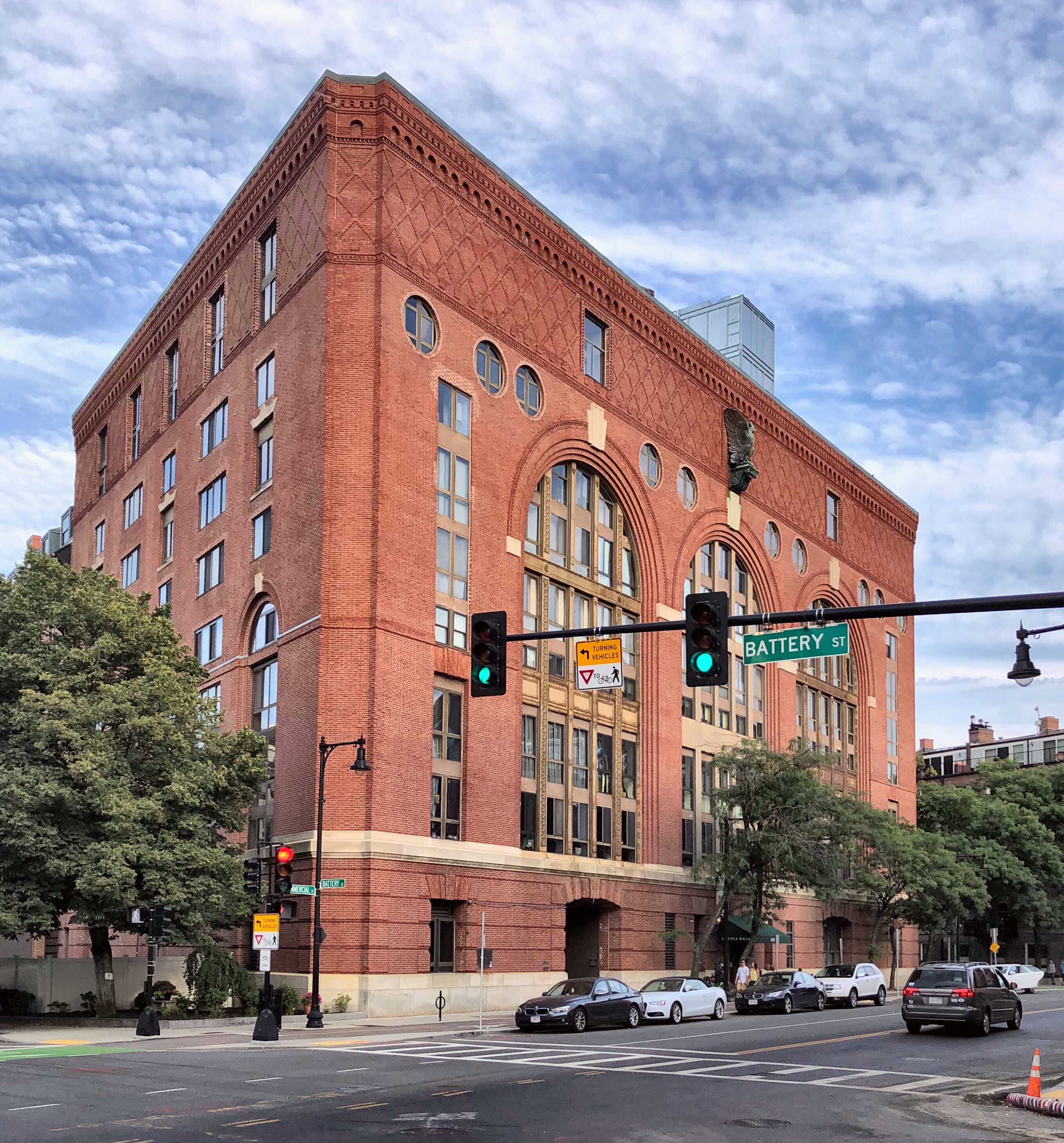
Back in the day, even power stations were gorgeous!
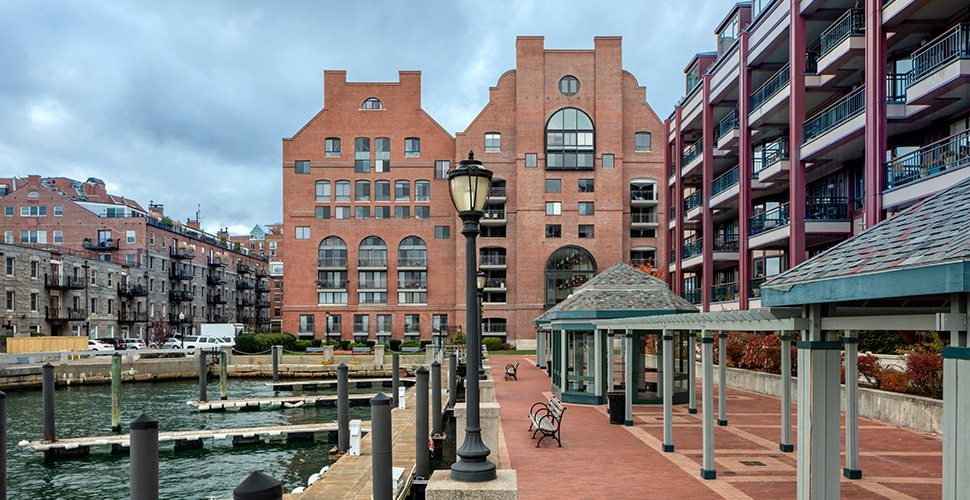
The Boston Elevated Railway Company, and its successor, the Massachusetts Bay Transportation Authority (MBTA), operated Lincoln Wharf Power Station from 1901 to 1972. The Boston-based engineering firm of Sheaff & Jaastad, specialists in electric power and lighting plants, designed this 1901 power station to serve the Atlantic Avenue Line and provide supplementary power for the Downtown Boston elevated and surface lines. Due to increased demand in 1907, a massive addition was constructed at the rear, facing Commercial Street, which now is the main orientation of the large structure. By 1971, all elevated tracks powered by this station were removed and the power station was sold by the MBTA to a private developer for housing. Eventually, San Marco Housing Corporation, hired the Boston Architectural Team, Inc., to renovate the power station in 1987 for low- to moderate-income housing. The result is an innovative and stunning example of adaptive reuse providing much-needed housing, while retaining historic fabric of old Boston.
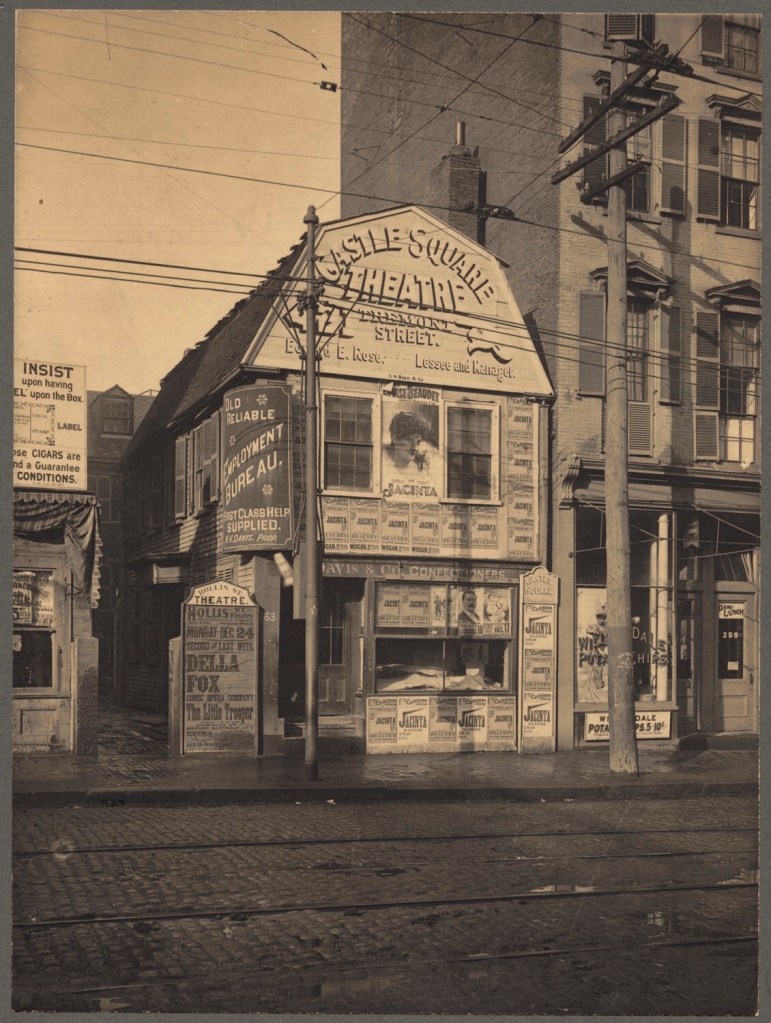
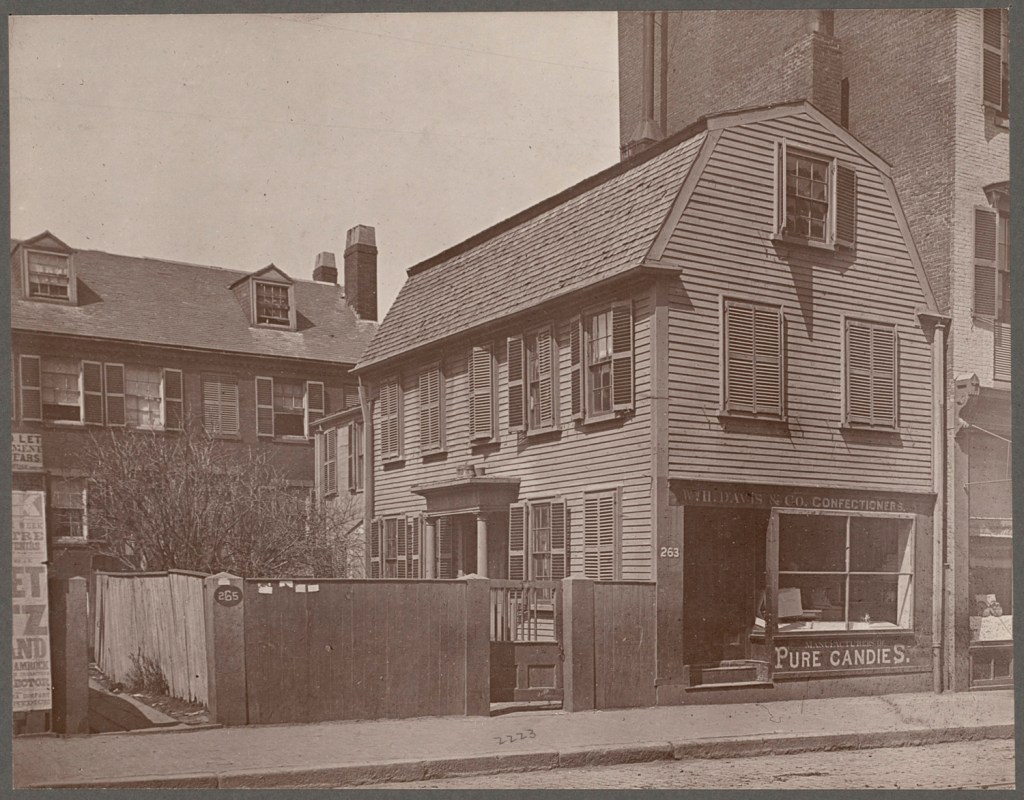
Formerly located on Tremont Street in Downtown Boston, this ca.1670 Georgian gambrel home went from residence to candy shop to billboard in its lifetime. The home was constructed by John Crane (1744-1805), who was a housewright by trade but a patriot and soldier most importantly. At the tender age of 12, he had an early military experience when he substituted for his father in the French and Indian War when his father received the draft. Records state that Crane was an active member the Sons of Liberty, a secret revolutionary organization that was founded by Samuel Adams to fight taxation from the British government. Hours before the Boston Tea Party, Crane and the other participants met at his shop at his home to disguise themselves as American Indians as disguises for the events that would take place that night. He was in the hold of one ship when he was knocked unconscious by a falling crate of tea. His fellow patriots thought him dead and hid him under a pile of wood shavings in a carpenter’s shop off the harbor, only for Crane to recover later. Less than a year later, Crane and his family moved to Providence, Rhode Island where he would later serve under a militia there in the Revolutionary War. After serving, and seeing battle, he was awarded land in Whiting, Maine (Maine was part of Massachusetts at the time) where he built a home and spent his last days.
Crane House, c.1880s, courtesy of BPL.
His former house on Tremont Street in Boston was occupied as a home until the late 19th century until it was occupied by a confectionary shop, with a storefront added on the street. Due to the shifting demand for theater-oriented development and lodging, the candy shop began struggling. The owner, James Grace, then allowed for the home to be covered with signage and notices advertising various theaters nearby. Ironically, the home was demolished by 1908 for the Shubert Theater, which remains today.


 Buildings of New England