West Cornwall Covered Bridge // 1864

The West Cornwall Covered Bridge spans the the Housatonic River in the town of Cornwall, Connecticut and is one of three historic covered bridges in the state. Records indicate that a bridge was in this location as early as 1762, but many were destroyed by floods and storms over the years, and even in the past century, flooding as a result of the 1938 New England hurricane and the flood of 1955, threatened to wash the bridge away, but she survived. The 172-foot bridge has been depicted in paintings, photographs, and movies, including Valley of the Dolls a 1967 film. The charm of a historic New England covered bridge is so enchanting and has been a draw for tourists to stop by this amazing town for decades.
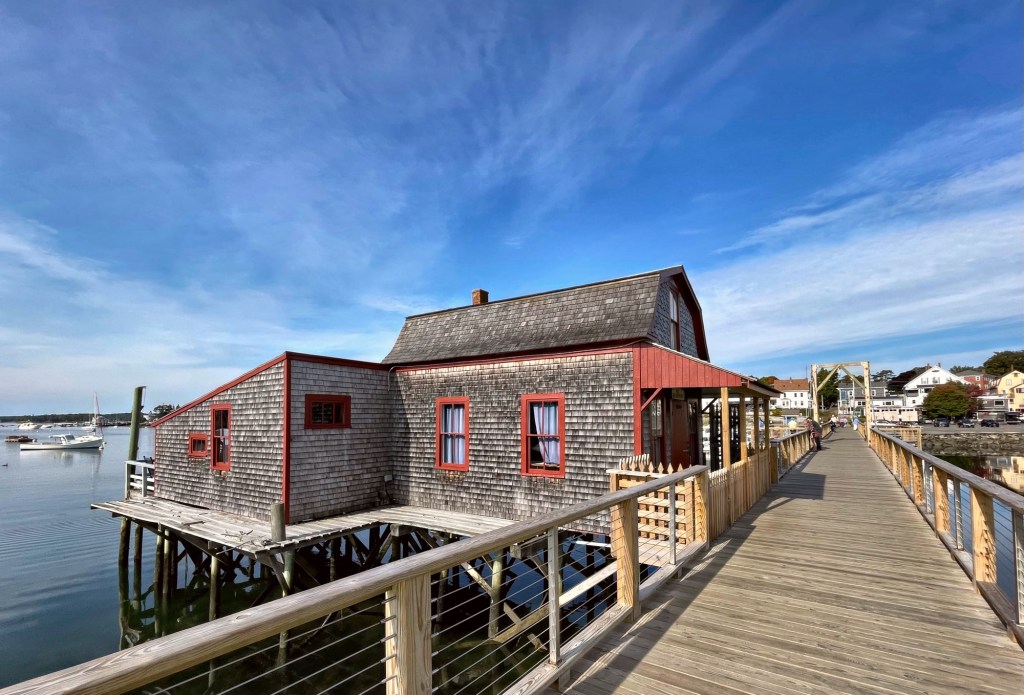
Boothbay Harbor Bridge House // 1902

In 1901, a footbridge was built in Boothbay Harbor, Maine, connecting the downtown area with the Mt. Pisgah and Spruce Point areas, which both developed as summer colonies. Within a year, this bridge house was built and occupied by William Foster, the bridge-tender who likely operated some sort of swing to allow vessels to pass by until the footbridge was largely replaced after the Great Freeze of 1918, without a swing or draw. When Mr. Foster operated the footbridge, others in town suspected some wrongdoing. A local selectman began investigating and as the story goes, Mr. Foster had been smuggling liquor into town via ships to this bridge house through a trap-door in the floor of the building. Maine was a dry state, and William would have been able to bring in illegal alcohol to the town. Later uses of the building included a candy shop, gift shop, and the bridge house is now a private residence, with thousands passing by every summer.

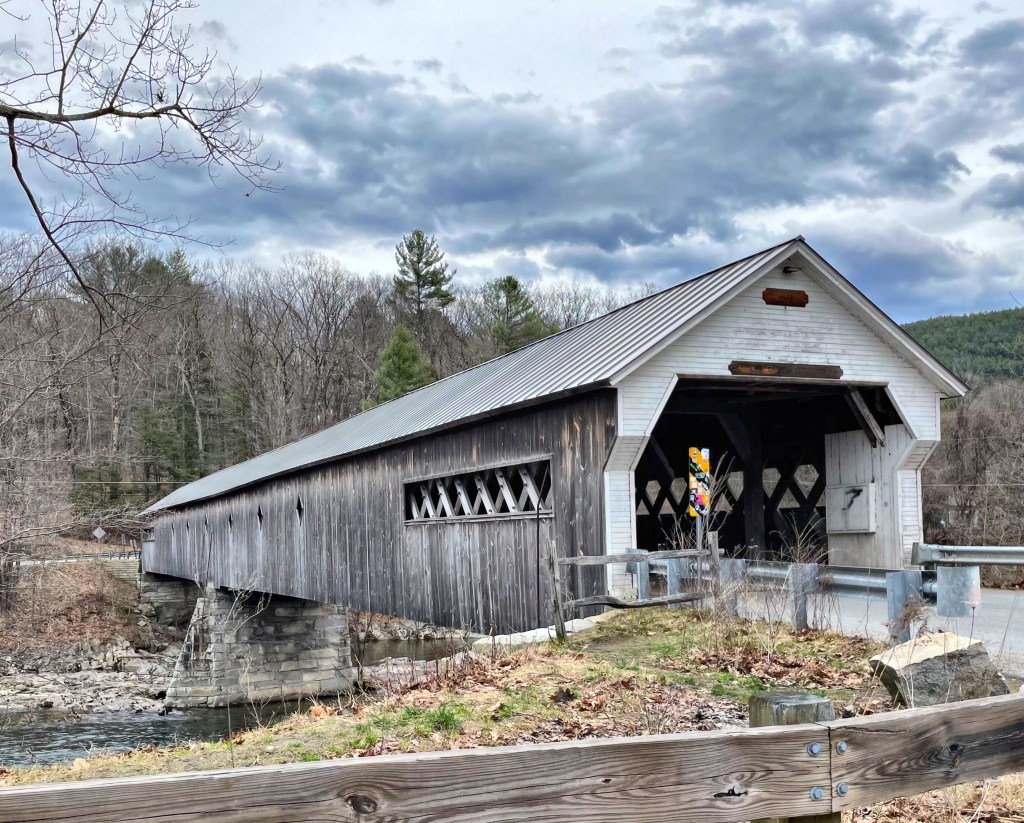
West Dummerston Covered Bridge // 1872

Oh covered bridges, one of the many symbols of New England that always give me joy when I see them! This beauty was constructed in 1872 to span the West River in Dummerston, Vermont and is the longest that is wholly within the State of Vermont. The bridge was designed by Caleb B. Lamson, a master carpenter and the bridge is the only known bridge built by Lamson that survives. Vermont is significant for covered bridges as about one hundred bridges still stand in the state, which is probably the greatest concentration by area of covered bridges in the nation. A reason we have to thank Vermont for this is purely population. With more people living in the state, transportation demands change, and these bridges are often replaced with modern steel structures. Keep doing you Vermont!

Echo Bridge // 1876

Spanning the Charles River between Upper Falls Village in Newton and Needham, the Echo Bridge, is one of the most stunning structures around Boston. While not technically a building, I couldn’t help but share one of my favorite off-the-grid places to explore in the region.

The bridge served as crossing for water to be transported from the Sudbury River to the growing City of Boston. The entire aqueduct transported water over 18 miles from Farm Pond in Framingham and was stored in the Chestnut Hill Reservoir in Boston. Due to the topography of Hemlock Gorge in Newton, a large elevated bridge was required, creating one of the biggest engineering marvels around Boston. George W. Phelps, a contractor from Springfield, MA was selected as the builder of the bridge with a low bid. The 500′ bridge features a total of seven arches, with the largest spanning the Charles River being 137′, the second largest masonry arch span in the U.S. upon its completion.

Echo Bridge is constructed of large granite block and brick, which was held in place by wooden framework until the arches would be able to support their own weight at the top of the arches. Echo Bridge gets its name from the acoustical phenomenon when you stand at the base of the arch at the river and when speaking, the sound reverberates and echoes back and forth.