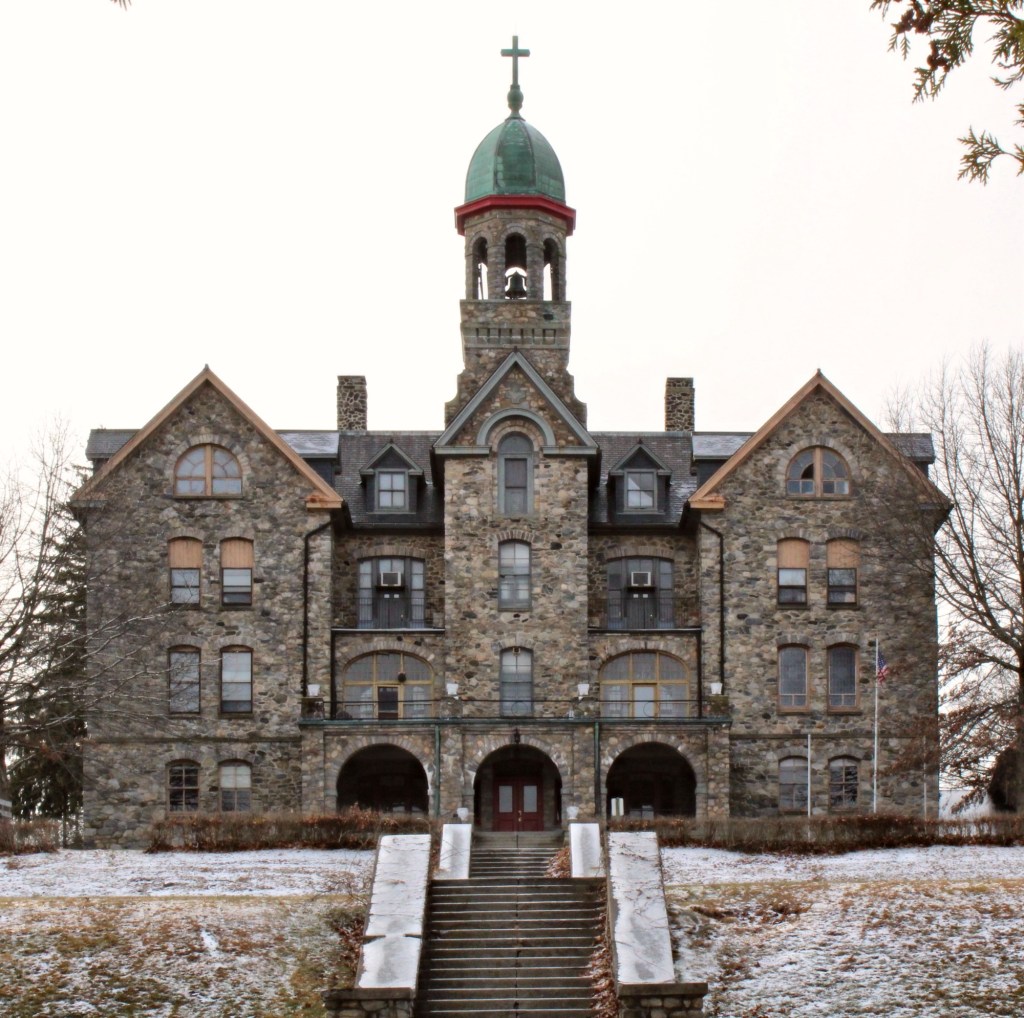
Mount Saint John School // 1908

The former Mount Saint John School in Deep River, Connecticut, sits atop a hill on the western banks of the Connecticut River and is a visual landmark in every sense of the word. The school was founded by the Diocese of Hartford, who acquired the site in Deep River and began construction on the present building in 1907. Completed by 1908, the stone building (architect not known at this time), served as an industrial school for 100 boys in the Hartford region aged 8-16. The school, led by the Xaverian Brothers, was intended to educate troubled young men in the Catholic faith and learn working skills for a profession. The use changed numerous times throughout the 20th century, and ended up becoming the Mount Saint John School. Then under the Norwich Diocese, the school became known as the Mt. Saint John School. The school closed years ago and the historic building and surrounding campus’ future are uncertain.
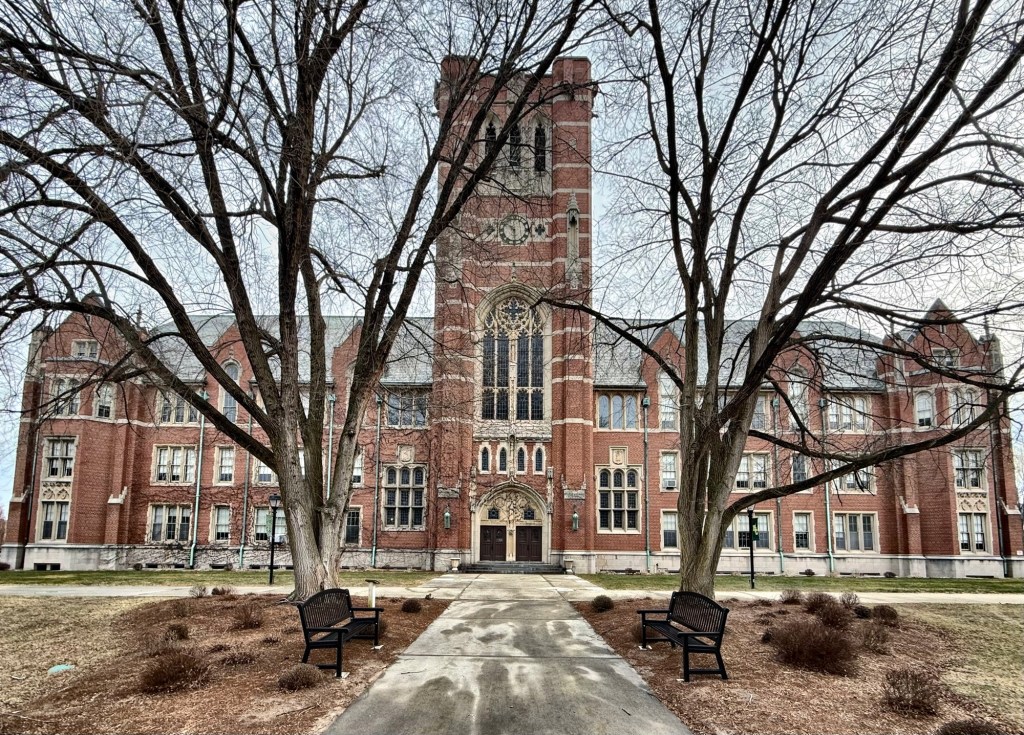
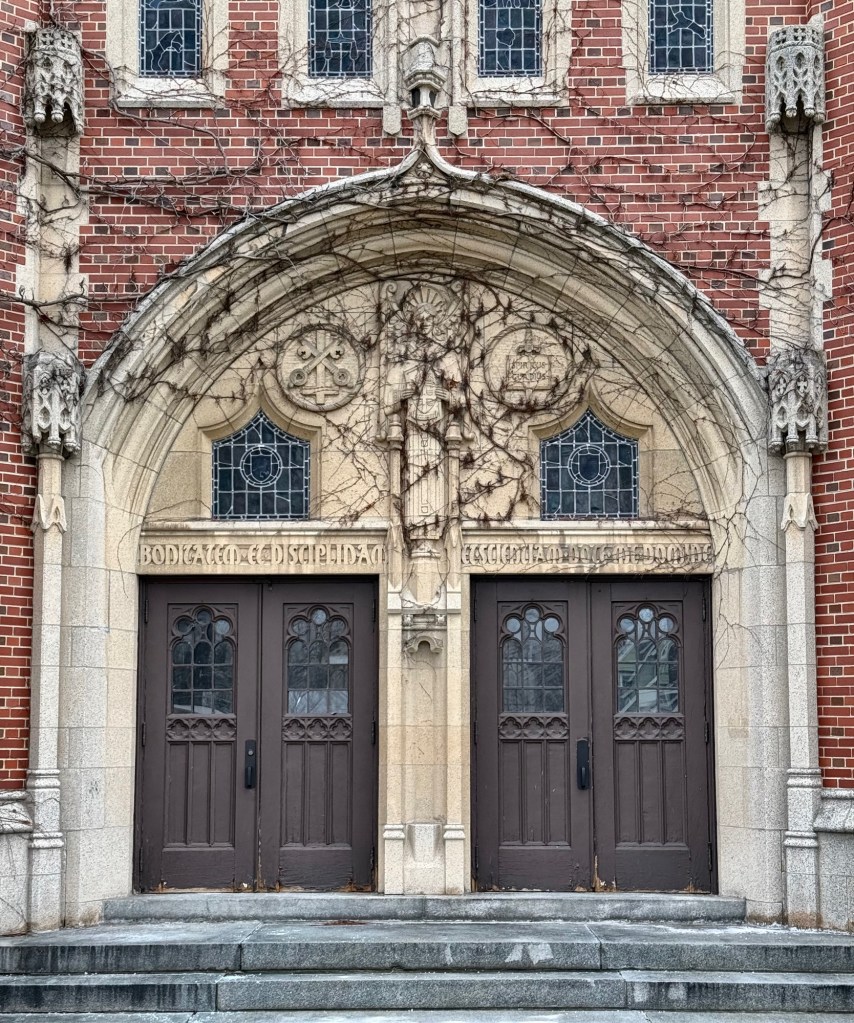
Administration Building – Elms College // 1932

Elms College in Chicopee, Massachusetts began as the Academy of Our Lady of the Elms, a Catholic boarding school for girls established in Pittsfield by the Sisters of Saint Joseph in 1897. The academy was relocated to Springfield Street in Chicopee through the efforts of Bishop Thomas D. Beaven in 1899. The Academy provided elementary and secondary education with a Normal School component that prepared young women for careers in teaching. In 1924, Bishop O’Leary announced the intention to expand the school into higher education, creating a women’s college. The college charter was approved in 1928 and the Academy became the College of Our Lady of the Elms. Planning and construction of the Administration Building (later renamed Berchmans Hall in 1983) began immediately after the incorporation of the College in 1928. Designed by John W. Donahue, the official architect of the Diocese of Springfield at the time, Berchmans Hall is a landmark example of the Collegiate Gothic/Neo-Gothic style that proliferated higher education and ecclesiastical buildings in the early decades of the 20th century. Completed in 1932, the new building included offices, modern classrooms and laboratories. The back section contained a gymnasium in the basement and an auditorium on the main floor. The building remains the main building on the Elms College campus and serves as an important visual anchor to the school.

Xavier Hall // 1911

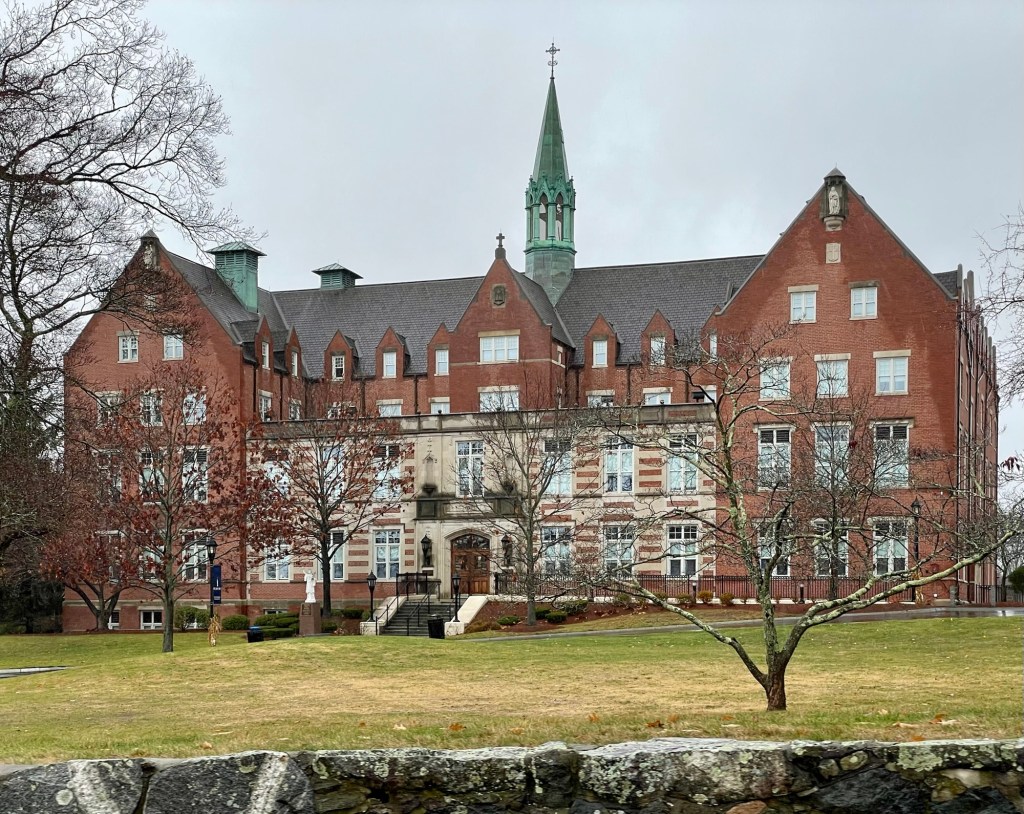
Xavier Hall was built between 1910-11 on the campus of St. John’s Prep School in Danvers, Massachusetts. The building was constructed by the Xaverian Brothers as classrooms as the first purpose-built structure in what would become a large campus. The Neo-Gothic Revival style building was sited adjacent to Porphyry Hall, an 1880 estate house that the new school purchased in 1891, which was later expanded by the addition of a rear chapel. Edward T. P. Graham, an architect best known for his design of Roman Catholic churches and associated buildings, was hired to design the stately structure built of brick and limestone.