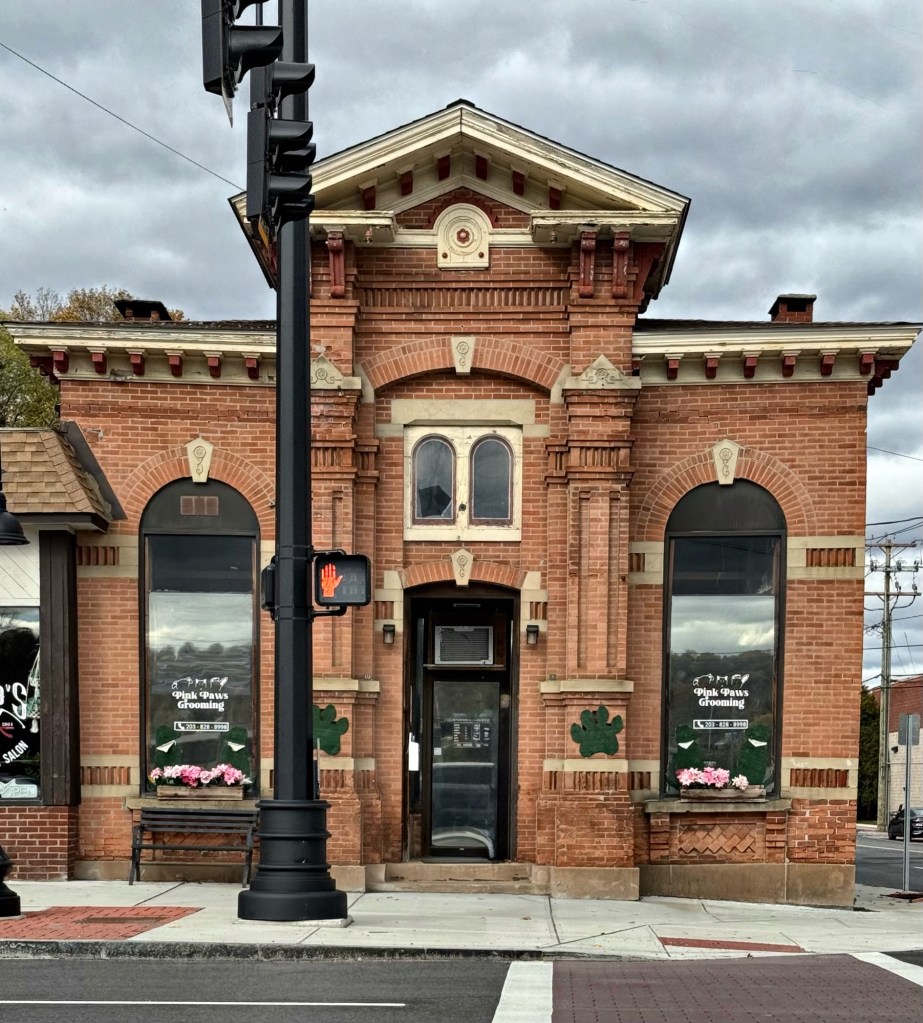
Ousatonic Water Company Offices // c.1880

The Housatonic River (also spelled the Ousatonic) is, after the Connecticut and Merrimac, the most powerful river in New England. Its location in Derby, Connecticut, was seen as a benefit to local businessmen, who after the Civil War, created the Ousatonic Water Company. The new organization made up of industrialists and businessmen, set off to complete the Ousatonic Dam (on the Housatonic River) towards the end of 1870. The dam precipitated the rapid development of the industrial villages of Birmingham (Derby) and Shelton. Aptly built on the corner of Main and Water streets, this handsome Italianate style masonry building was constructed by the 1880s for the Ousatonic Water Company for their company offices. The company was absorbed into the Connecticut Light & Power Company in 1927. The former offices have since been repurposed for a local business.

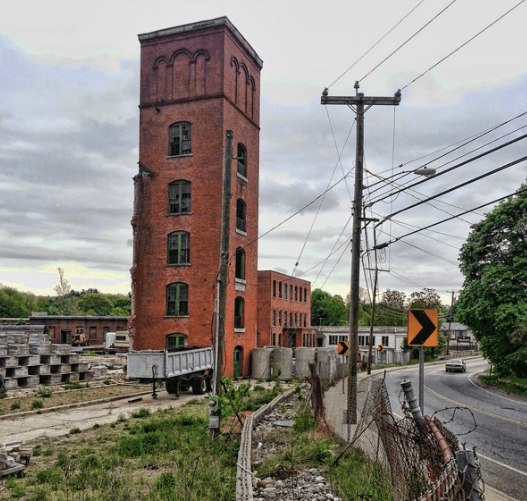
Sayles Mill // 1882-2023

Dayville, a mill village in the town of Killingly, Connecticut, is typical of many similar 19th century villages in the region. Dayville was named after John Day (1756-1838) a Revolutionary War veteran who later owned the water privileges on the Five Mile River. With the opening of the Norwich and Worcester Railroad in 1830, Dayville became a stop along the route and also became a hub for freight transport for other manufacturing villages along the river. In 1858, brothers Harris (1817-1893) and Sabin Lorenzo Sayles (1827-1891) from Rhode Island, purchased a mill site in Dayville and established a woolen manufacturing company. Harris retired in 1879 and Sabin continued the business as the Sabin L. Sayles Company. Sabin had a modern brick mill building constructed here in 1882-1883 which employed 250 people in production of woolen broadcloth. After Sabin’s death, the company was sold and modified numerous times, eventually becoming a metal products plant and later was left vacant. In the 2010s, funding and plans were begun to redevelop the old mill, but that was abandoned after a massive fire in 2023 destroyed the building, leaving just the six-story tower intact.

Photo courtesy of Journeysthrumylens

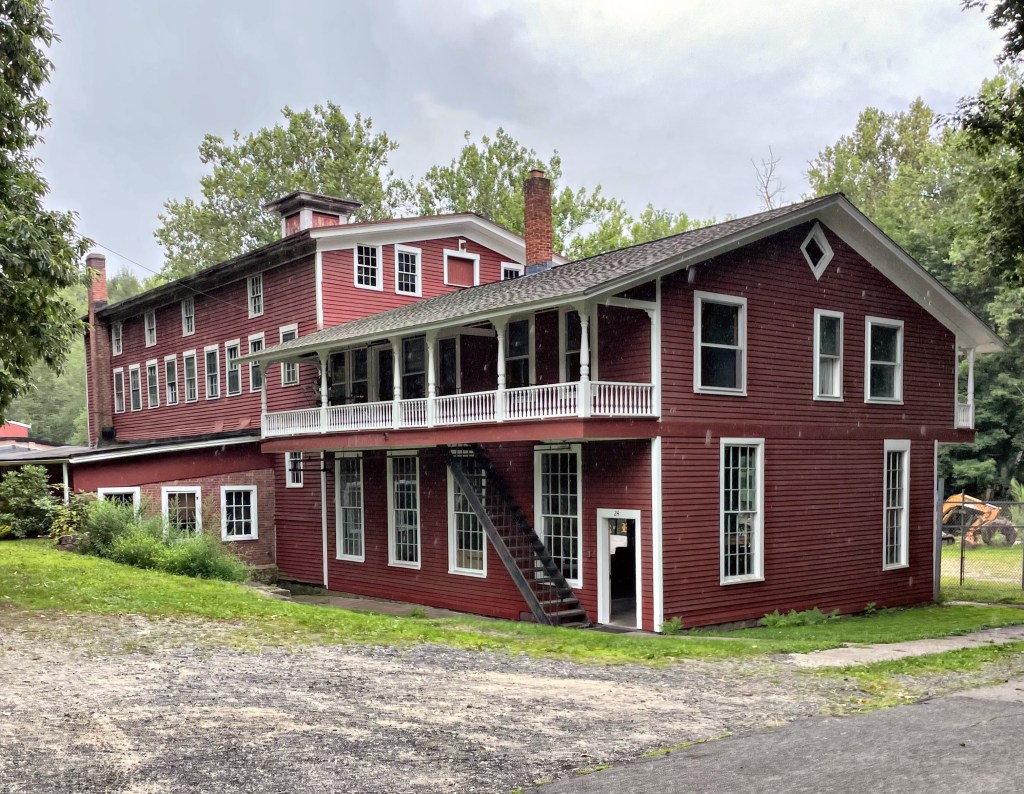
Hawkins Company Factory // 1866

The Hawkins Company was originally organized by Ira L. Hawkins for the manufacture of tacks, buttons, and other metal specialties. The firm appears to have begun operations in Waterbury, Connecticut around 1890 acquired control of the former Blake, Lamb and Company, an animal trap manufacturer established in Waterbury during the mid-19th century. In 1899, Hawkins purchased this four-story woolen mill located in the South Britain section of Southbury that had formerly been operated by the Bradley and Hoyt Company. All of the Hawkins Company’s operations were moved to this plant c. 1900. Production of animal traps quickly became the primary focus of the Hawkins Company and the former Bradley and Hoyt Company mill was enlarged in several phases in order to accommodate demand. The Hawkins Company eventually closed its doors during the late 1960s. The building has been recently painted and maintained well, but it is unclear to me what it is used for, anyone know more?

Collins Axe Company Factory // 1826-1966

Image courtesy of Keith Thom

The first ready-to-use axes produced in the United States came from the Connecticut-based Collins Company, which was founded in the early 1800s. Prior to the firm’s establishment, consumers either purchased unground axes imported from Europe or looked to a local blacksmith who, along with his other activities, might also make axe heads. The Collins Company factory opened in 1826 by Samuel W. and David C. Collins, with the purchase of an old gristmill and a few acres of land along the Farmington River in Canton. As the company grew, the village of South Canton grew around it, and was later renamed Collinsville after the company (imagine if we had Starbuckstown or Walmartville!) In the 1840s, the company expanded and sold internationally with their machete; it sold more than 150 varieties of machetes in 35 countries, supplying 80% of the world’s machetes at that time. In the 1860s, the company built several dams along the Farmington River to produce hydroelectric power to run its factory. It saw steady growth during World Wars I and II. However, after the Flood of 1955 wiped out the railroad line, the company could not match the foreign competition. Portions of the business were sold to the Stanley Works in New Britain and to other firms. In 1966, the Collins Company closed after 140 years in business. Some of the old buildings along the river have since been demolished, others left vacant. Some have been repurposed into other uses, thankfully.