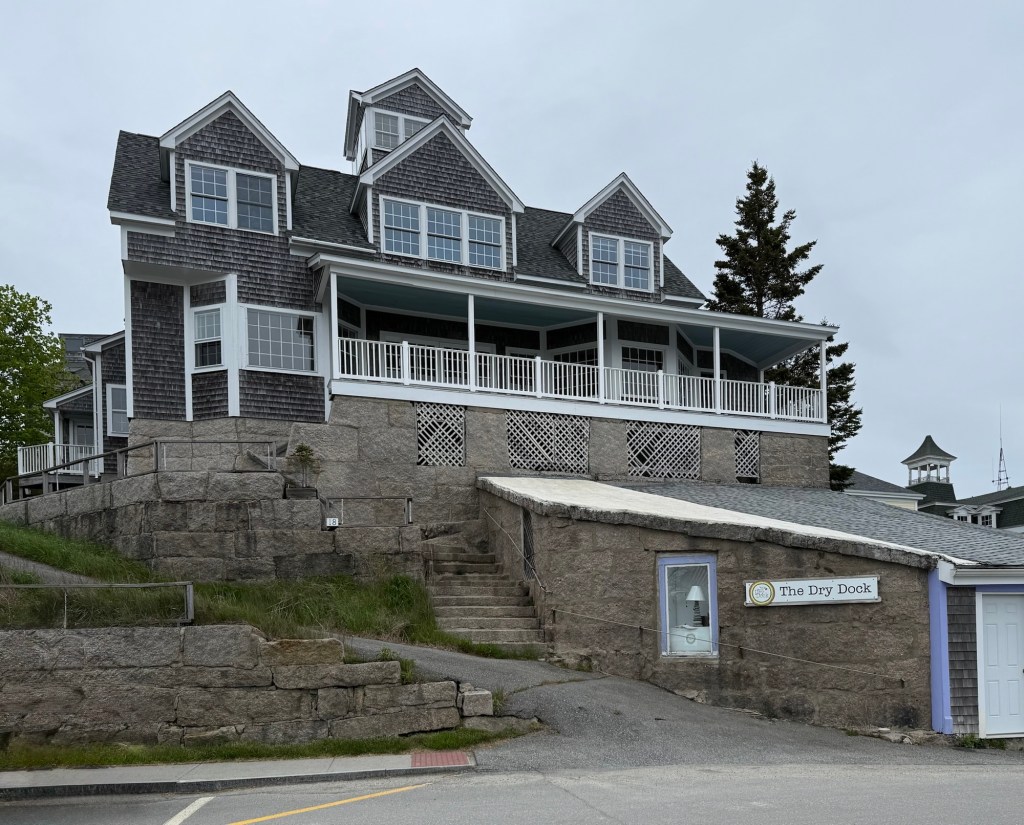
Dr. Benjamin L. Noyes House and Vault // 1903

Benjamin Lake Noyes (1870-1945) was born in Lisbon Falls, Maine, but grew up on Grand Manan, New Brunswick, Canada. He worked at his father’s hardware store before entering Bowdoin Medical College. After graduating, he moved to Stonington, Maine, to work as a physician. Here, he met his wife, Linnie Howard, and they married in 1899. In 1903, the couple had a large Queen Anne style house built on a bluff, overlooking the Stonington Harbor. Dr. Noyes was a physician, surgeon, occultist, inventor, surveyor and antiquarian, who took interest in genealogy and local history in his spare time. By the time of his death Dr. Noyes had completed 100 volumes of material on island history and genealogies of its people. To house his massive collection, he constructed a fire-proof vault of local granite at the base of his home opened his record collection to the public known as the Penobscot Bay Archives. After his death in 1945, much of the collection was sent to the local historical society for preservation. A fire in 1981 destroyed much of the house except the first floor and the granite, fire-proof building, and the upper floors of the Noyes house were rebuilt.
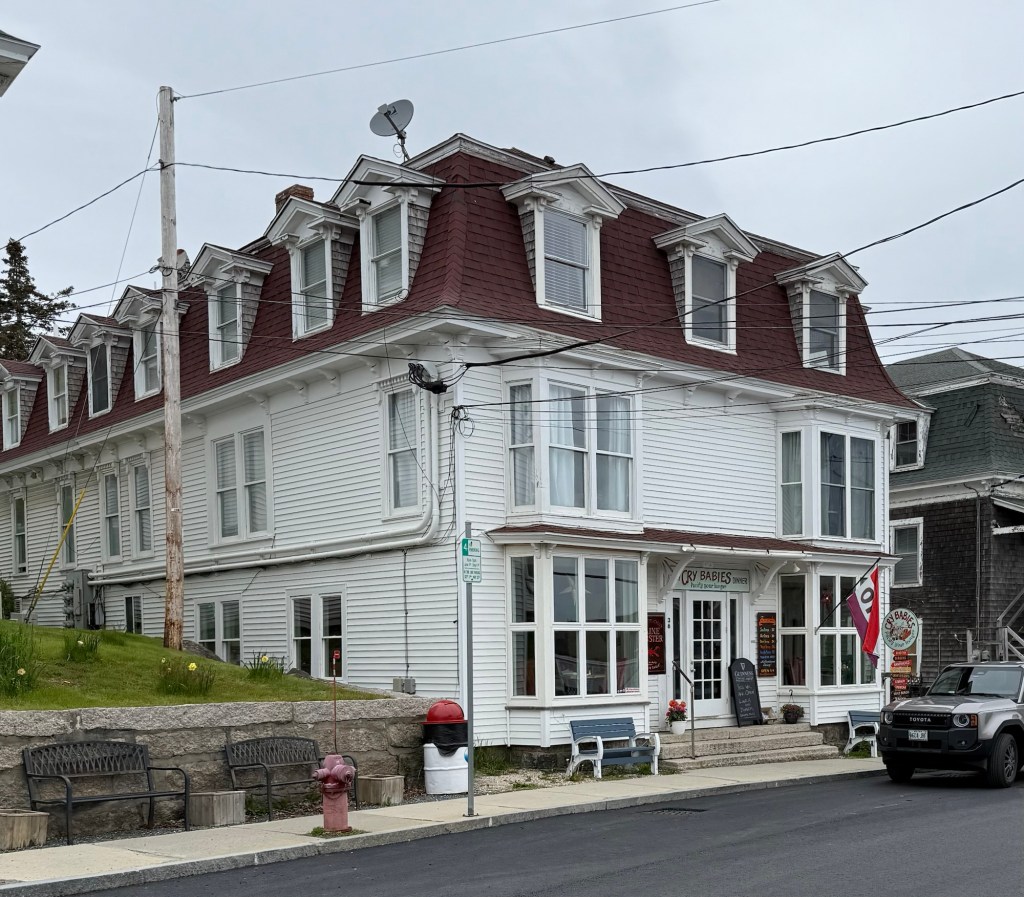
Central Hall // c.1885

Located next door to the former High School (now the Town Hall) of Stonington, this mansard-roofed commercial building on Main Street is a prototypical example of late 19th century mixed-use architecture seen all over Maine. This building was constructed in the 1880s and known as Central Hall. The building contained retail spaces at the ground floor and tenement housing in the upper floors for workers at local granite quarries. The building is well-preserved and an important contributing building to the working village of Stonington.

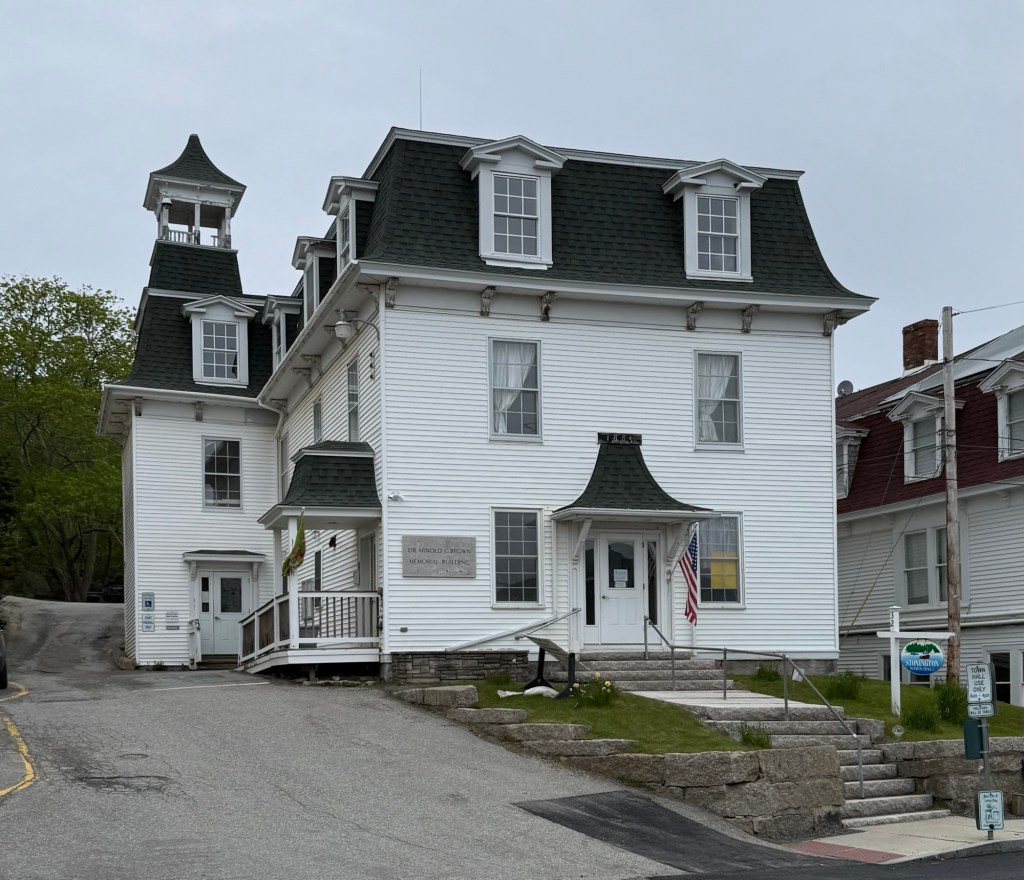
Stonington Town Hall // 1885

Overlooking an archipelago of over sixty islands, the working port town of Stonington, Maine, is one of the more vibrant and active ports in the Pine Tree State. With a population of just over 1,000 residents, the town is consistently ranked among the top lobster ports in the country and is the largest lobster port in Maine. In 2011, 14,854,989 pounds of lobster were landed by Stonington fishermen! The town was originally a part of Deer Isle, with the main village known as Green’s Landing, until 1897 when it incorporated as its own municipality in 1897, choosing the name Stonington after the area’s granite quarries. This handsome mansard building was constructed in 1885 as the village’s school. Named Rockbound School, the building features an intact belltower at the rear. The school would eventually close in the second half of the 20th century, and became the Town Hall of Stonington after a fire destroyed the previous building in the 1970s.