Yale University – Trumbull Gallery // 1832-1901

Pre-1869 image of Trumbull Gallery, Yale Archives

Before there was Street Hall or the Old Yale Art Gallery Building, there was the Trumbull Gallery, the first college-connected art museum in the United States. This building was erected in 1832 by artist and collector, John Trumbull (1756-1843), who specialized in Revolutionary-era works, and was known as the “Painter of the Revolution”. In his later years, Trumbull sold 28 paintings and 60 miniature portraits to the Yale College, and helped establish the college-affiliated art museum. He is said to have designed this Classical style building, to house his collections, all with minimal windows to protect his collection from direct sunlight. The gallery also housed a crypt for Trumbull and his wife, hence its tomb-like appearance. When Street Hall was built, the collection and tombs were relocated there, and again in the late 1920s when the Art Gallery was constructed. In 1869, Yale College added windows to the building and operated the school treasury from here until it was demolished in 1901. The Trumbull Gallery stood just in front of the Old Library.
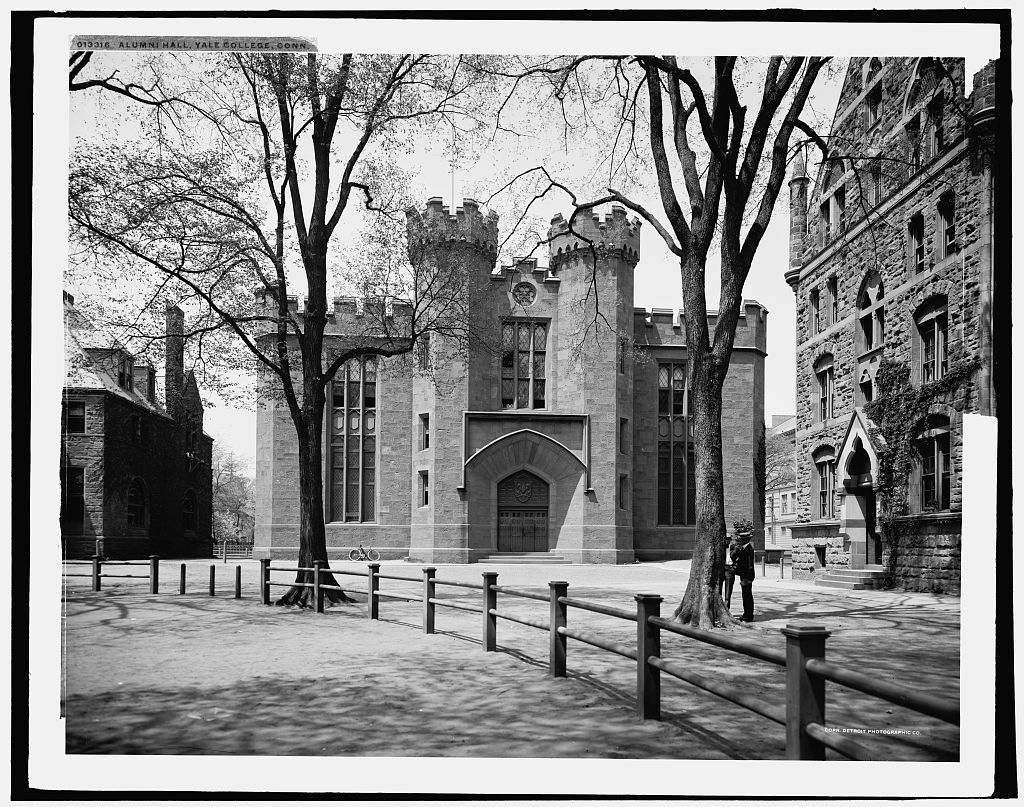
Yale University – Alumni Hall // 1851-1911

Detroit Publishing Company image

Alumni Hall at Yale was designed and built between 1851-1853, at the northwest corner of Yale’s Old Campus. Its was designed by Gothic specialist architect Alexander Jackson Davis, who completed Dwight Hall (the Old Library) a some years prior. The building had a large, open floorplan on the first floor for large gatherings as well as the entrance examinations, along with the biennial examinations that every student had to take at the end of his sophomore and senior years. As the building turned 50 years old, the campus around it was already looking very different. Shifting priorities for dormitory space in the yard necessitated its demolition for Wright Hall (next post). Alumni Hall was razed in 1911, but its two crenelated towers were salvaged when the building was demolished. They were incorporated into Weir Hall which has been incorporated into Jonathan Edwards College, one of Yale’s residential colleges.

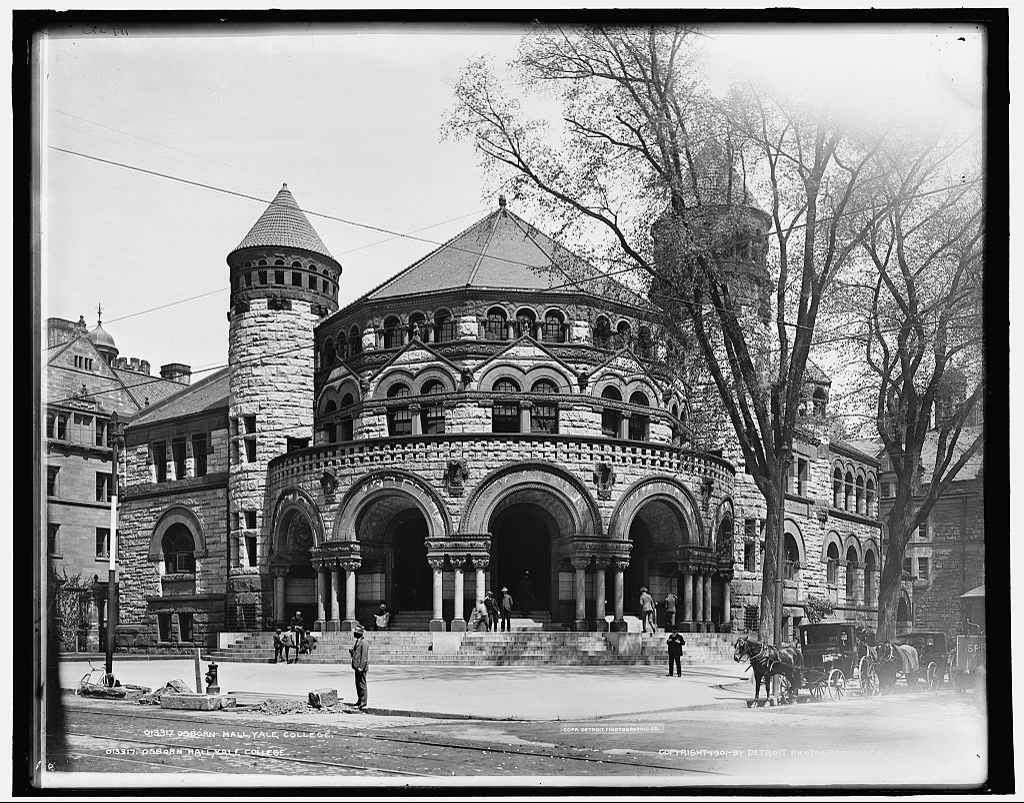
Yale University – Osborn Hall // 1888-1926

One of the biggest architectural losses at Yale was the demolition of the grandiose Osborn Hall in 1926, after standing less than 38 years! The building was constructed in 1888 at the southeast corner of the Old Yard at Yale, at the corner of College and Chapel streets, and was a landmark example of the Richardsonian Romanesque style of architecture. Designed by architect Bruce Price, the building was designed to face outward and was said to resemble a “squating toad with an open lip”. While architecturally stunning, the building was immediately met with criticism. Its construction necessitated the removal of the cherished Yale fence and the outward-facing design made it hard for students to focus on lectures while the sounds of horses and carriages on the cobblestone streets just outside. The short-lived Osborn Hall was razed in 1926 for Bingham Hall (next post), a prominently designed, but inward-facing building.