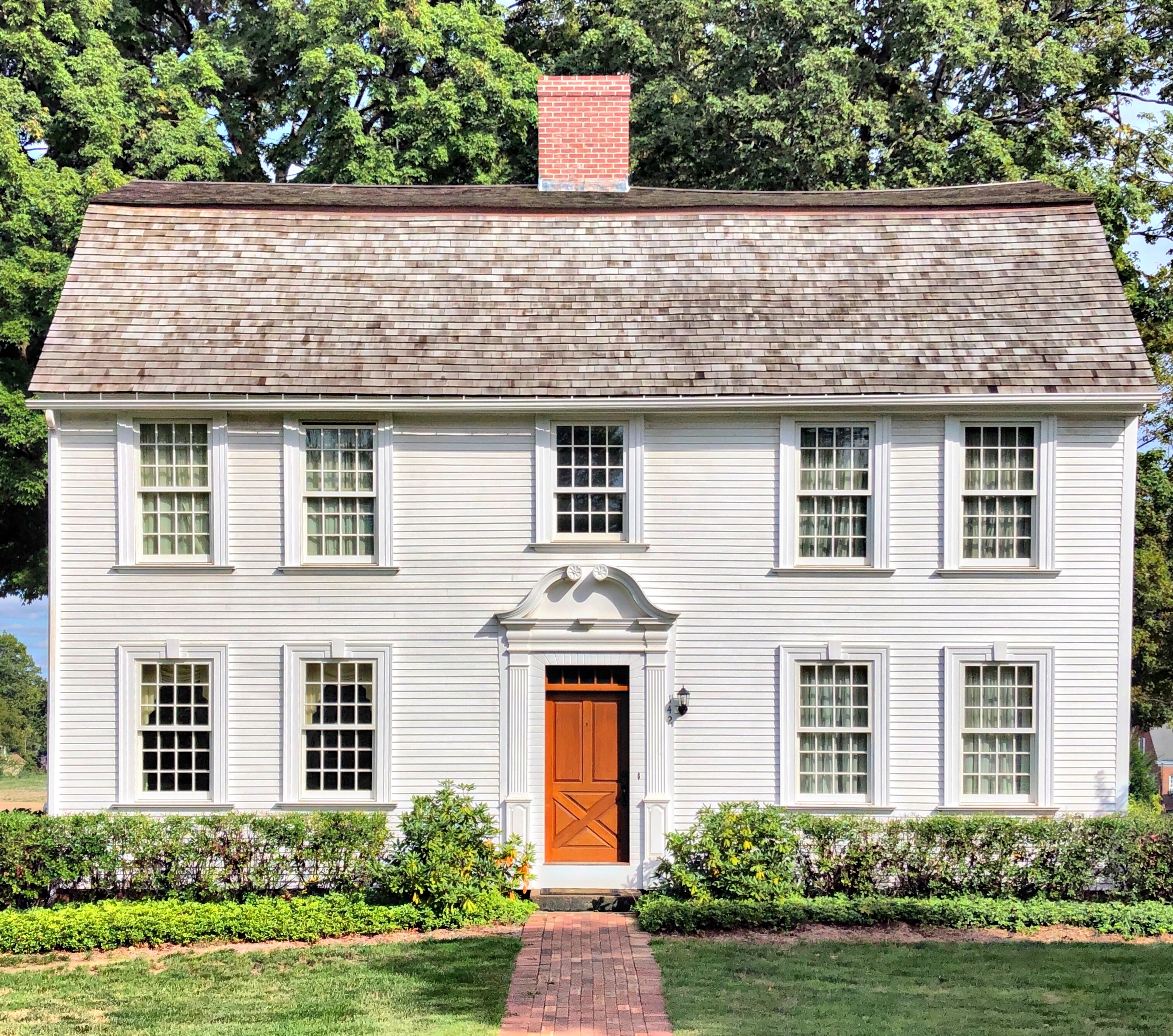
Thomas and Esther Smith House // c.1758

The Thomas and Esther Smith House in the Feeding Hills area of Agawam, Massachusetts is a 1½ story, vernacular Georgian style house with a gambrel roof. Feeding Hills, so named for its bountiful soils, is an agricultural plain approximately five miles west of the Connecticut River at the eastern foot of Provin Mountain. The land was highly sought after by farmers, with many agricultural uses still taking place here to this day. This parcel of land was purchased by Thomas Smith, a carpenter, in 1757, who likely built the home soon after for his new family. The family occupied the home into the mid-19th century, harvesting crops and raising cattle for sustenance and sale. The agricultural property was subdivided numerous times and now sits on just an acre. The home and remaining land was purchased by the Agawam Historical Society in 2002, who maintain the property and educate on Agawam’s agricultural heritage.

General Crane House // c.1670-1908

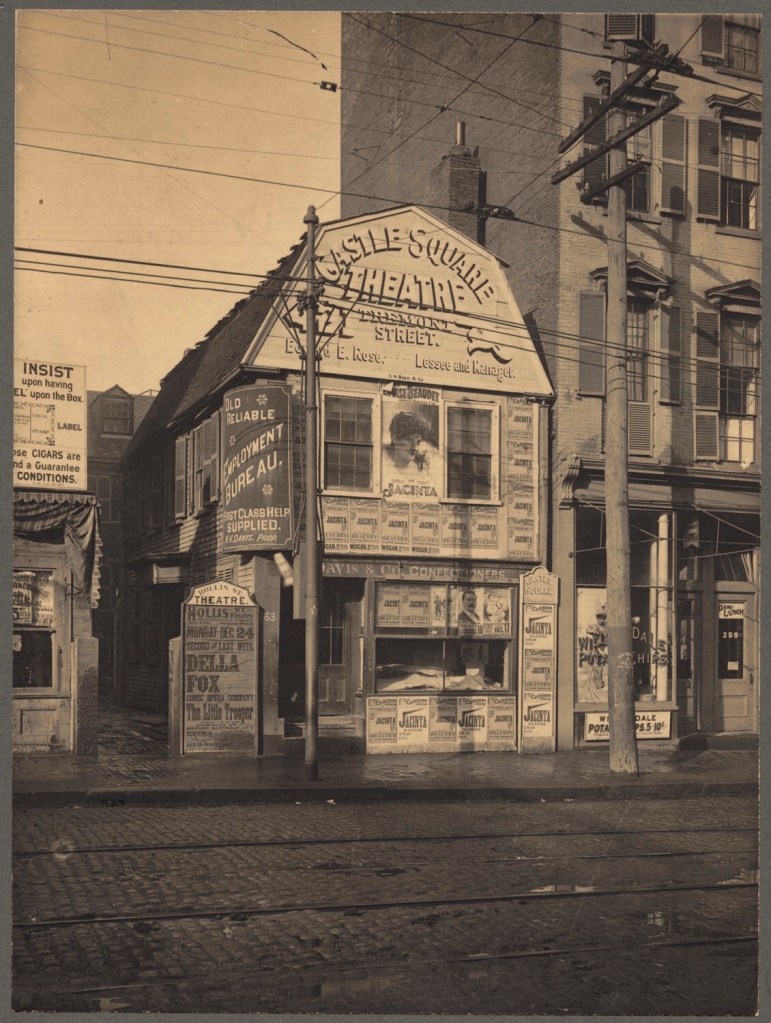
Crane House c.1900, courtesy of BPL.

Formerly located on Tremont Street in Downtown Boston, this ca.1670 Georgian gambrel home went from residence to candy shop to billboard in its lifetime. The home was constructed by John Crane (1744-1805), who was a housewright by trade but a patriot and soldier most importantly. At the tender age of 12, he had an early military experience when he substituted for his father in the French and Indian War when his father received the draft. Records state that Crane was an active member the Sons of Liberty, a secret revolutionary organization that was founded by Samuel Adams to fight taxation from the British government. Hours before the Boston Tea Party, Crane and the other participants met at his shop at his home to disguise themselves as American Indians as disguises for the events that would take place that night. He was in the hold of one ship when he was knocked unconscious by a falling crate of tea. His fellow patriots thought him dead and hid him under a pile of wood shavings in a carpenter’s shop off the harbor, only for Crane to recover later. Less than a year later, Crane and his family moved to Providence, Rhode Island where he would later serve under a militia there in the Revolutionary War. After serving, and seeing battle, he was awarded land in Whiting, Maine (Maine was part of Massachusetts at the time) where he built a home and spent his last days.

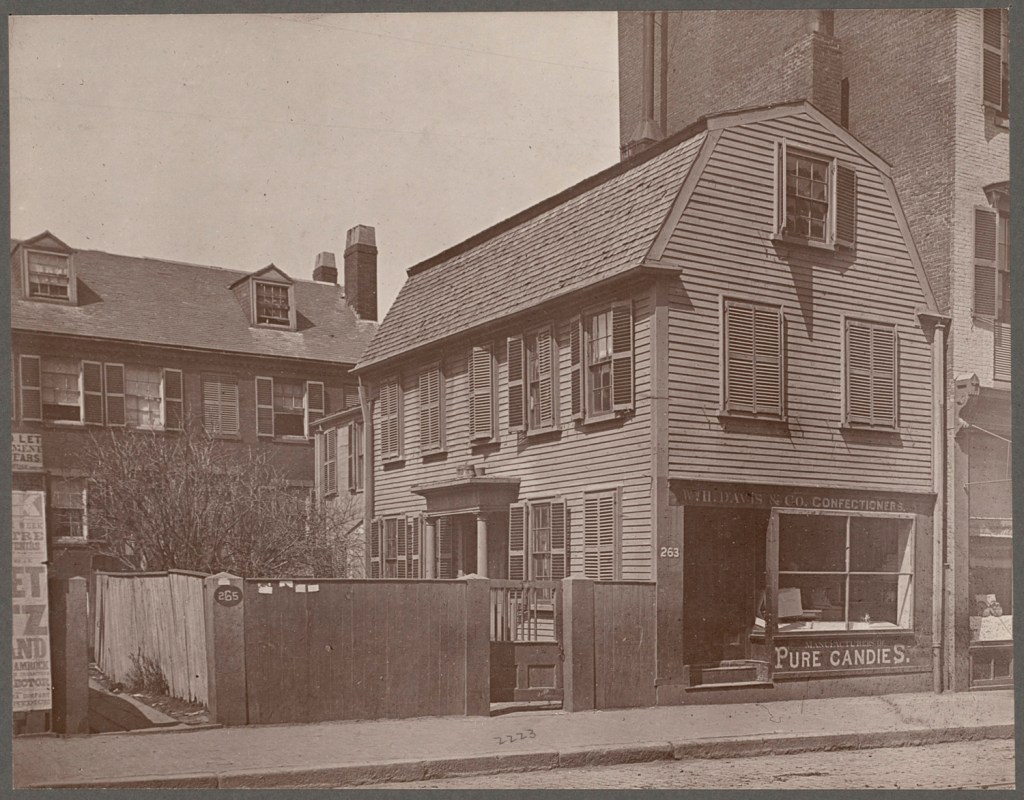
Crane House, c.1880s, courtesy of BPL.

His former house on Tremont Street in Boston was occupied as a home until the late 19th century until it was occupied by a confectionary shop, with a storefront added on the street. Due to the shifting demand for theater-oriented development and lodging, the candy shop began struggling. The owner, James Grace, then allowed for the home to be covered with signage and notices advertising various theaters nearby. Ironically, the home was demolished by 1908 for the Shubert Theater, which remains today.