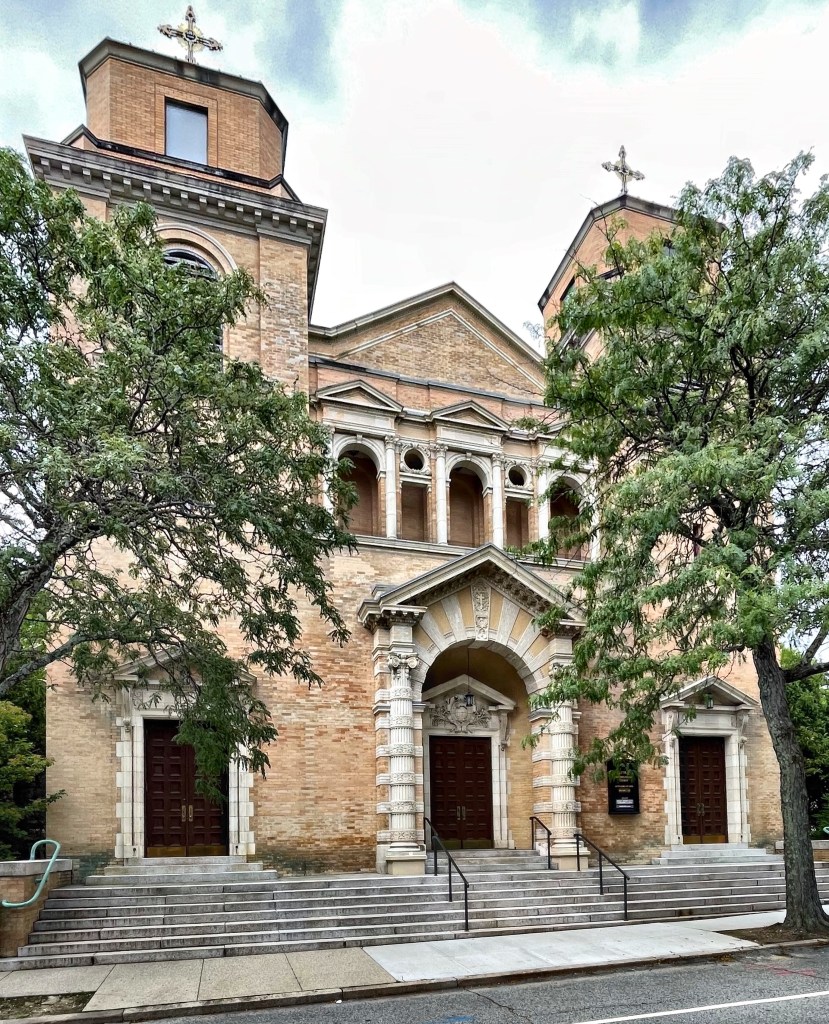
One of the best examples of Renaissance Revival architecture in Rhode Island is the Central Congregational Church of Providence. Constructed between 1891-1893, this building was the new home to a growing congregation, which outgrew its original Thomas Tefft-designed building on Benefit Street (which has since been occupied by RISD). Famed architect Thomas Hastings of the firm Carrère and Hastings of New York City, was hired to furnish plans, and worked closely with Reverend Edward C. Moore to make sure the building was fitting of the site. The church is cross-gabled in form and is constructed of yellow brick with terracotta trimmings, evocative of Spanish and Italian Renaissance styles. The facade has a detailed central pavilion which is flanked by two towers. These towers were originally surmounted by elaborate belfries, but these were damaged by a hurricane in the mid 20th century and replaced by the present brick caps. The dome and vaulting is of tiles by Rafael Guastavino, it is the first dome that he constructed in the U.S., making this building even more significant.

 Buildings of New England