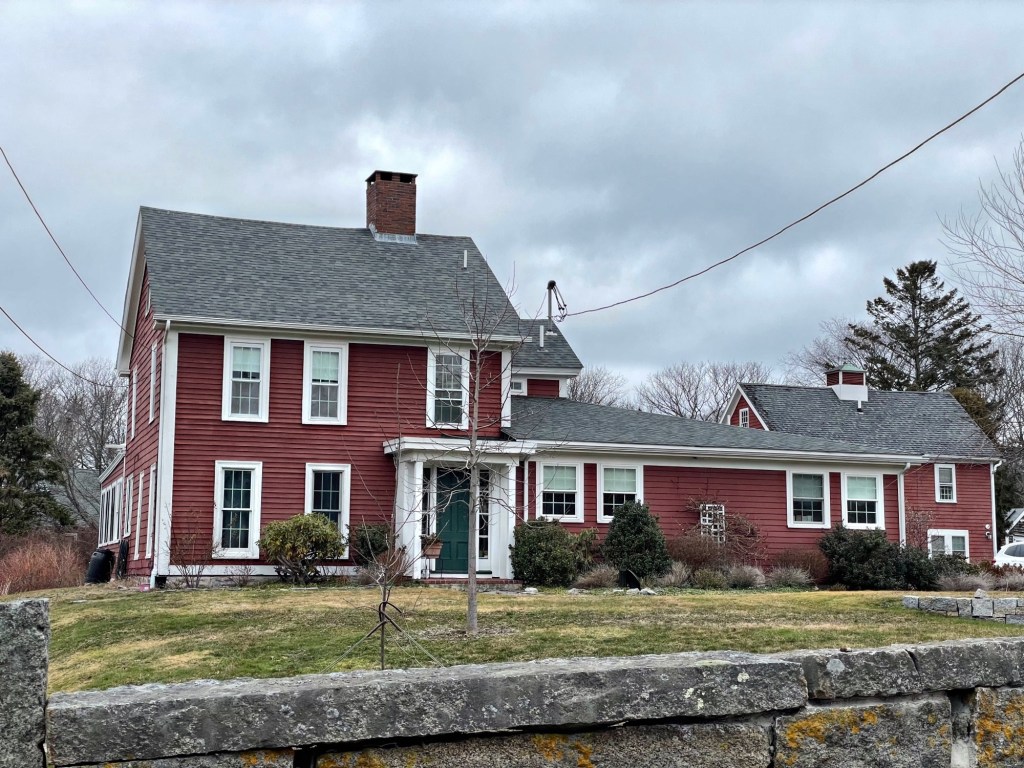
Located in northern Rockport, Massachusetts, you will find this charming Colonial-era farmhouse set amongst the backdrop of ocean cliffs and granite quarries. At the tip of Pigeon Cove, adjacent to the present-day Halibut Point State Park, James Norwood purchased land and would erect this house by 1799 for his family (possibly built from an older dwelling formerly on the site). After James’ death, the property was willed to his daughter and son-in-law and sold a few times until 1820, when it was purchased by David Wallis Babson who raised his family here. As granite-quarrying became a lucrative trade in Rockport by the early-mid 19th century, David’s son Joseph bought twelve of the Babson Farm acres from other family members to organize a stone cutting business here. The property would leave the Babson Family decades later, but retained the family name until today. Edwin Canney would purchase the remaining 70-acre Babson Farm, selling it to the Rockport Granite Company. For the next thirty years, industrial-scale mining and shipping would redefine Halibut Point over the next thirty years. The quarries are now a State Park, and the former Norwood-Babson farmhouse remains intact as a significant piece of the town’s earlier history.
 Buildings of New England