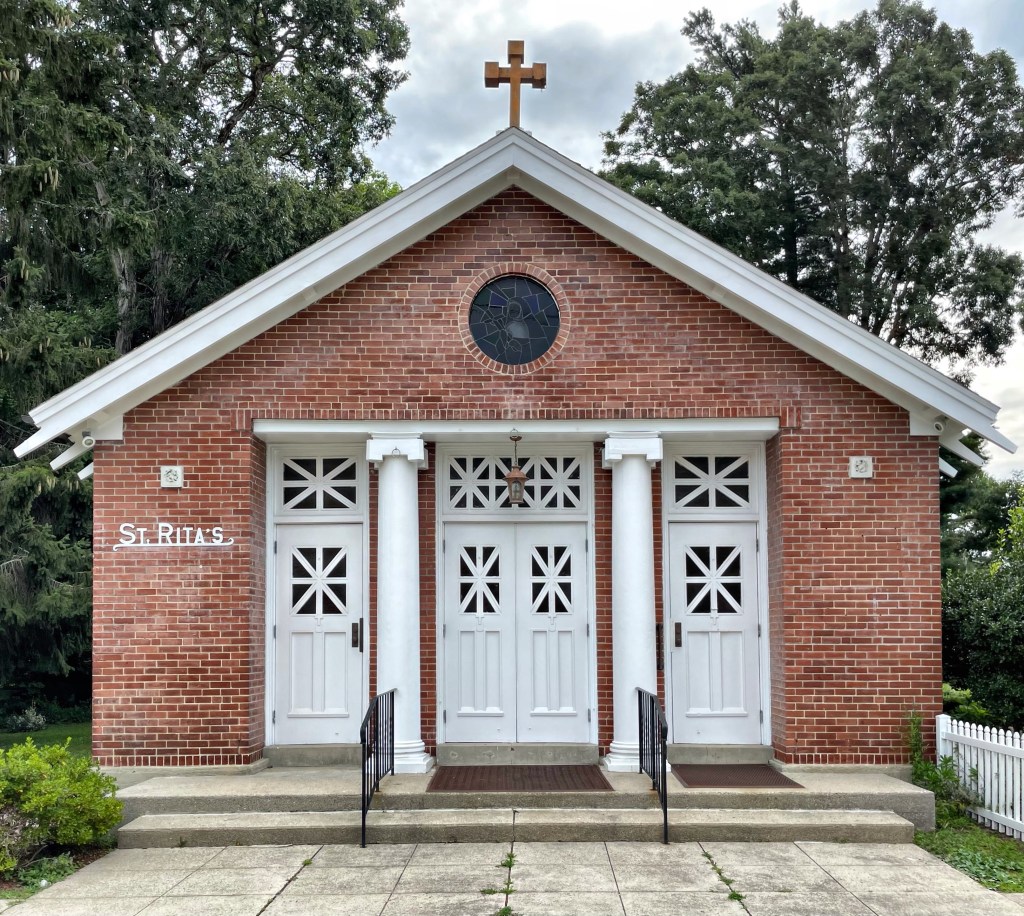
St. Rita’s Roman Catholic Church // 1916

A Roman Catholic parish was established in the South Coast/Cape Cod area by 1830 in Sandwich, where a large glass company employed a number of Irish immigrants. Over the course of the 19th century, several mission churches were established, and eventually a second parish, St. Patrick’s, was established in Wareham in 1911. Soon after, a mission was established in nearby Marion to serve the summertime Catholic community there. A parcel of land was acquired by the Roman Catholic Bishop of Fall River and they hired architect Matthew Sullivan to furnish plans for the small church. Matthew Sullivan (1868–1948) trained in the office of Edmund M. Wheelwright, Boston City Architect (1891-1894). Sullivan succeeded Wheelwright as City Architect and served in that position from 1895 to 1901, when he became a junior partner in the firm of Maginnis, Walsh and Sullivan, which was widely known for its ecclesiastical work, where he too specialized in religious buildings. St. Rita’s Roman Catholic Church is an example of an early 20th century chapel in the Craftsman style, characterized by eaves marked by long projecting rafter tails and a bold entry framed by Tuscan columns.

First Universalist Church, Marion // 1830

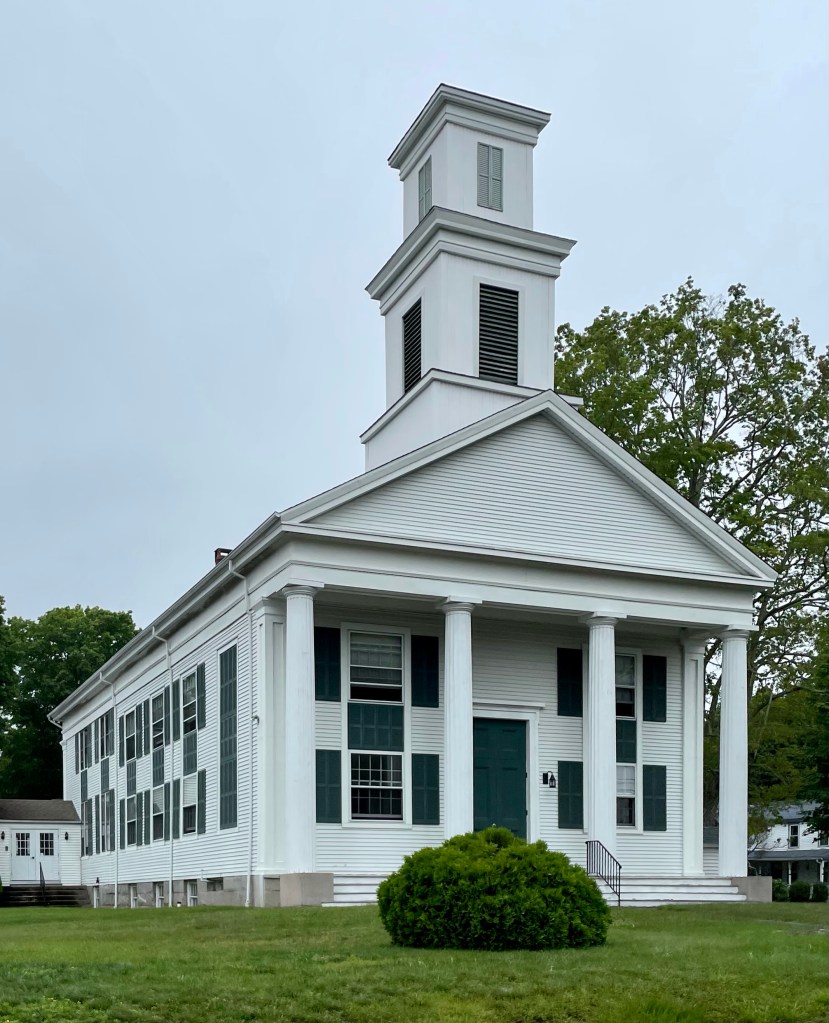
I do love a good adaptive reuse story! This Marion, Massachusetts church building was constructed in 1830 for the town’s growing Universalist congregation. Architect Seth Eaton was hired and furnished plans, likely relying on neighbor, Warren Blankinship, a carpenter and congregant, to construct the building. It blends together the Greek and Gothic Revival styles well, but in a less sophisticated form. By the mid 20th century, membership of the church dwindled, and it finally shuttered its doors. With the building’s future uncertain, at a time where demolition for surface parking lots was the go-to solution, Marion residents Andrew and Dorothy Patterson, purchased the building and soon after worked with local artists in town to restore the building for use as an art space. The Marion Art Center was thus founded in 1957, and to this day, serves as a non-profit community cultural organization dedicated to promoting the visual and performing arts.

Central Congregational Church, Providence // 1893

One of the best examples of Renaissance Revival architecture in Rhode Island is the Central Congregational Church of Providence. Constructed between 1891-1893, this building was the new home to a growing congregation, which outgrew its original Thomas Tefft-designed building on Benefit Street (which has since been occupied by RISD). Famed architect Thomas Hastings of the firm Carrère and Hastings of New York City, was hired to furnish plans, and worked closely with Reverend Edward C. Moore to make sure the building was fitting of the site. The church is cross-gabled in form and is constructed of yellow brick with terracotta trimmings, evocative of Spanish and Italian Renaissance styles. The facade has a detailed central pavilion which is flanked by two towers. These towers were originally surmounted by elaborate belfries, but these were damaged by a hurricane in the mid 20th century and replaced by the present brick caps. The dome and vaulting is of tiles by Rafael Guastavino, it is the first dome that he constructed in the U.S., making this building even more significant.

Christian Science Church, Gardiner // 1905

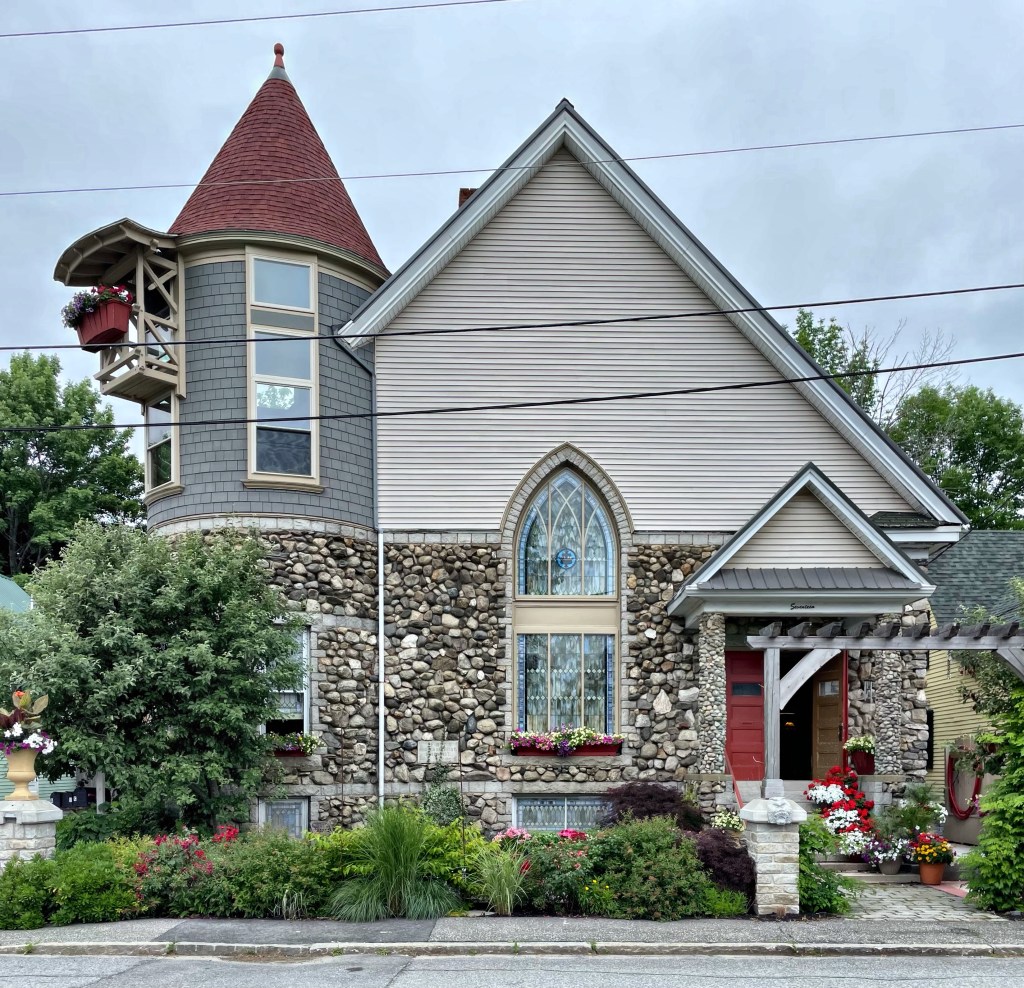
The first purpose-built Church of Christ, Scientist church in Maine is this turn-of-the-century edifice constructed in 1905 in Gardiner. Organized in 1897, this Christian Science Society of Gardiner met for several years in members’ homes and public places nearby until Palmer Noyes and his wife Caroline funded the new building. Caroline and Palmer helped establish the first such church in Chicago, after the couple witnessing a ‘healing’ and then heard Mrs. Mary Baker Eddy lecture in 1882. This church in Gardiner was seemingly designed by Caroline, who was likely inspired by architectural influences on the churches in town, from Gothic style lancet windows, to the shingle style facades. The building was eventually converted to a development center for the disabled, and is now known as “The Stone Turret”, a bed & breakfast, with amazing stained glass windows!

First Baptist Church, Waterford // 1848

Founded in 1710, when Waterford was still part of New London, the Baptist Church was one of the dominant institutions in the historical development of the Jordan Village, which became the historic population center of town. The fact that Jordan Village in Waterford sprang up around a Baptist and not a Congregational church gives it an unusual religious significance in the state. The Baptist denomination was introduced to Connecticut from Rhode Island in 1705. The separation from the City of New London, which was organized around the locally supported Congregational church, was due in large part to the differences between the the formal, structured, Congregationalists and the evangelical Baptist farmers. In 1848, when this church in Jordan Village was built, many residents followed the architectural vocabulary and built Greek Revival homes nearby, creating a large development boom in the new town center. The church remains today as an active member of the community.

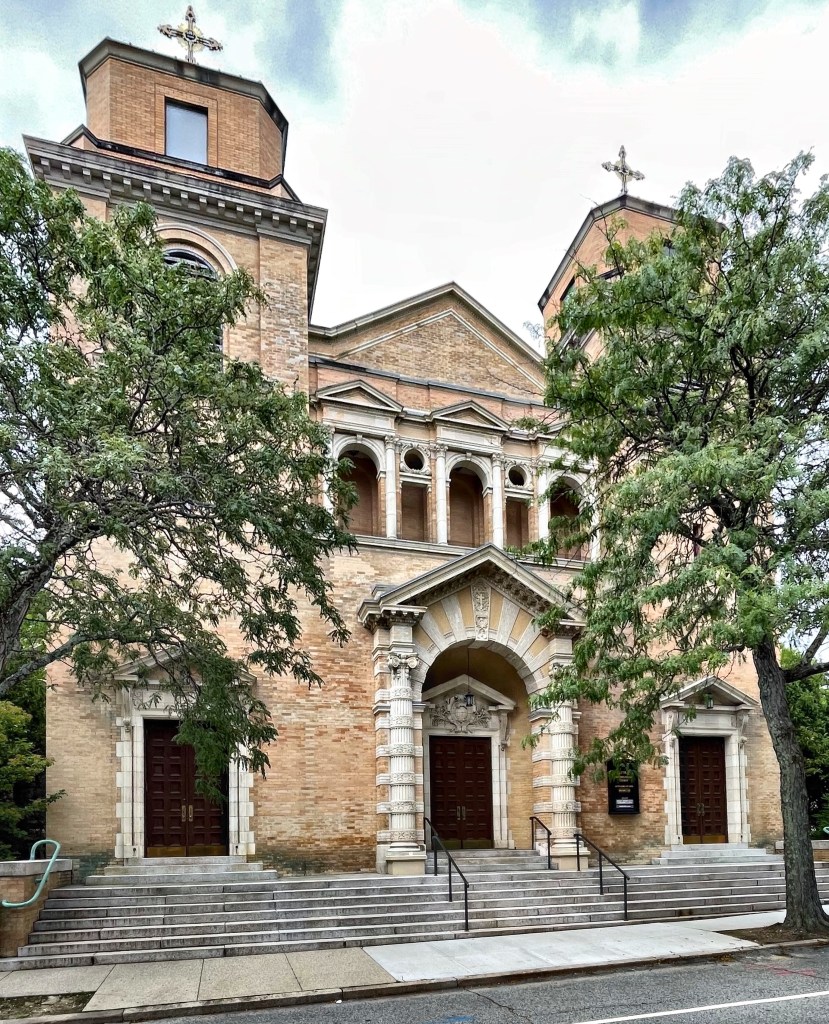
St. John the Evangelist Church // 1900

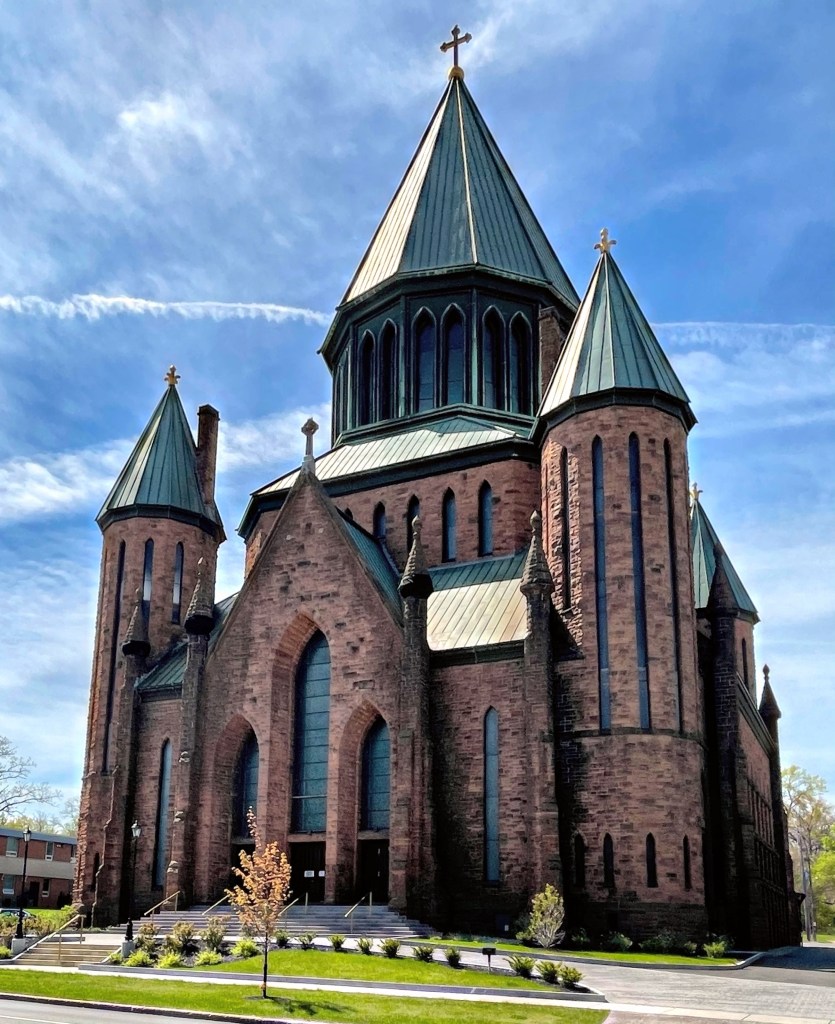
St. John the Evangelist Church in Schenectady, NY is probably the most imposing church I have ever seen (outside of European cathedrals). The church began in 1898 when Monsignor John L. Reilly purchased land across from Union College’s campus to erect a new church. He began collecting donations to fund a church suitable for Schenectady, and visited Europe to seek inspiration for the design. He worked with architect Edward Loth of nearby Troy, NY on the design which resulted in this massive 120’x130′ structure. The stone church has a small tower at each of its four corners with a central spire reaching 230′ high. The center spire was constructed of steel and glass to cast light onto the sanctuary below (sadly has been replaced with a metal roof). This is definitely one of the more memorable churches I have ever seen! What do you think of it?

St. Andrews-by-the-Sea // 1876

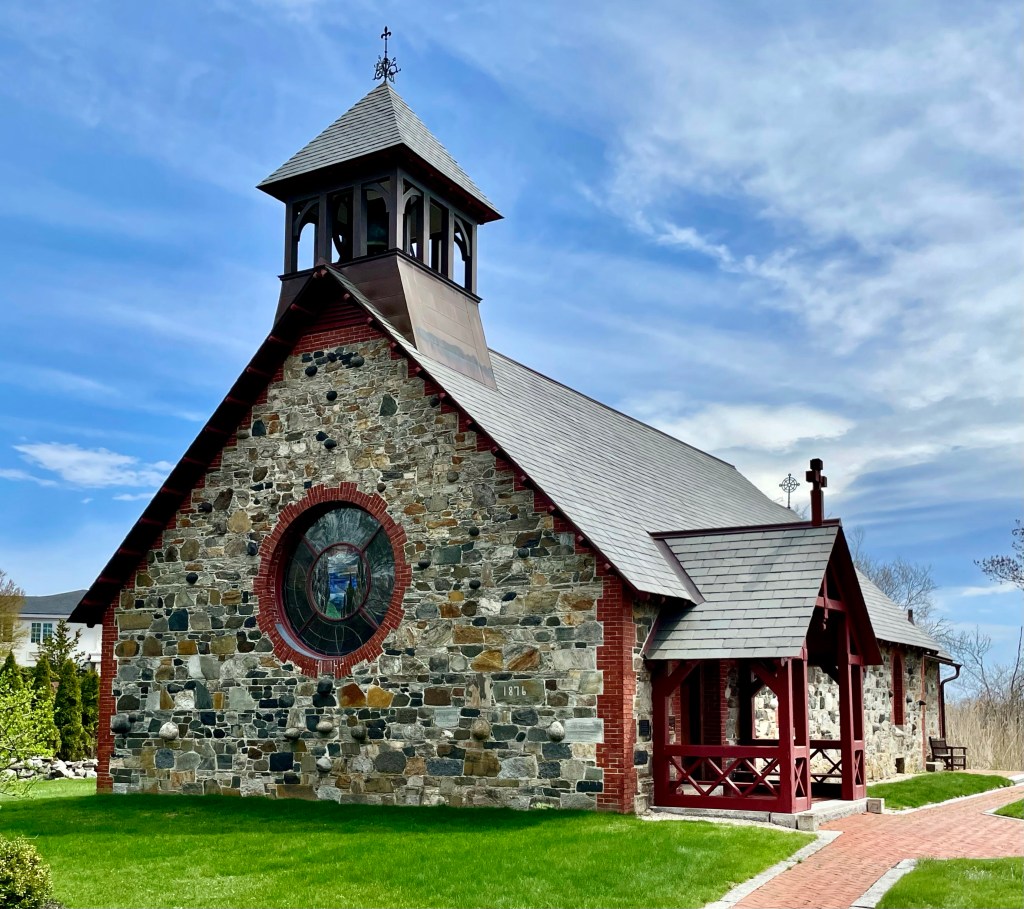
In the mid-to-late 1800’s, Rye Beach on the coast of New Hampshire was a popular summer residences for wealthy families from New York, St. Louis, Chicago, and other mid-western cities. Church services were important to these summer residents who united together to build this chapel, which before its construction, had to go to services at the casino in the colony (not ideal). Generally, wealthy summer residents here brought their household staffs, who lived in the many hotels and boarding houses along the beach. Some of these servants and employees of the hotels were African-Americans, who used St. Andrew’s for their own worship services and meetings. The summer chapel was built in 1876, completed that next year and is one of the most stunning chapels I have seen in New England. St. Andrew’s was designed by the architectural firm of Winslow and Wetherell. It is a unique example of a small rural stone chapel embellished by wooden trim and owes much to both the Stick and late Gothic styles. English country parish churches clearly inspired the chapel’s design and the use of rubblestone construction (likely of stones that were taken from the site) makes the building pop! Oh and that rose window at the facade!

Church of All Nations // 1975

One building in Boston that has always perplexed me is this round church building. It echoes Eero Saarinen’s MIT Chapel in Cambridge, but is much heavier and plain. After over an hour of researching, I finally found out some history behind it! The church was constructed in the South Cove Redevelopment area, an urban renewal program run by the Boston Redevelopment Authority (now BPDA) as a sort of “slum” clearance near Chinatown. The Church of All Nations was founded in the South End in 1917, housed in a Gothic Revival chapel that was seized by eminent domain for the Massachusetts Turnpike Extension and demolished in 1963. The congregation met in temporary quarters on Arlington Street until the new church was constructed in 1975. Records show that the congregation hired famed Modernist architect Bertram Goldberg as early as 1967 to design a new chapel, set in a new public park. The original plans called for a square building with a massive “steeple” incorporated as the entire roof. For some reason (possibly funding and changing demands for the church), the final design was a little more mundane. The cylindrical church is clad in dark glazed brick with a cross raised in the brickwork. The church suffered from a dwindling congregation in its location, and now appear to rent out the building. One of my favorite local architecture firms Touloukian Touloukian, Inc., re-imagined the site as a new residential tower. It would be one of the few beautiful new buildings in Boston in the past decade or two. Can we please make this happen?!

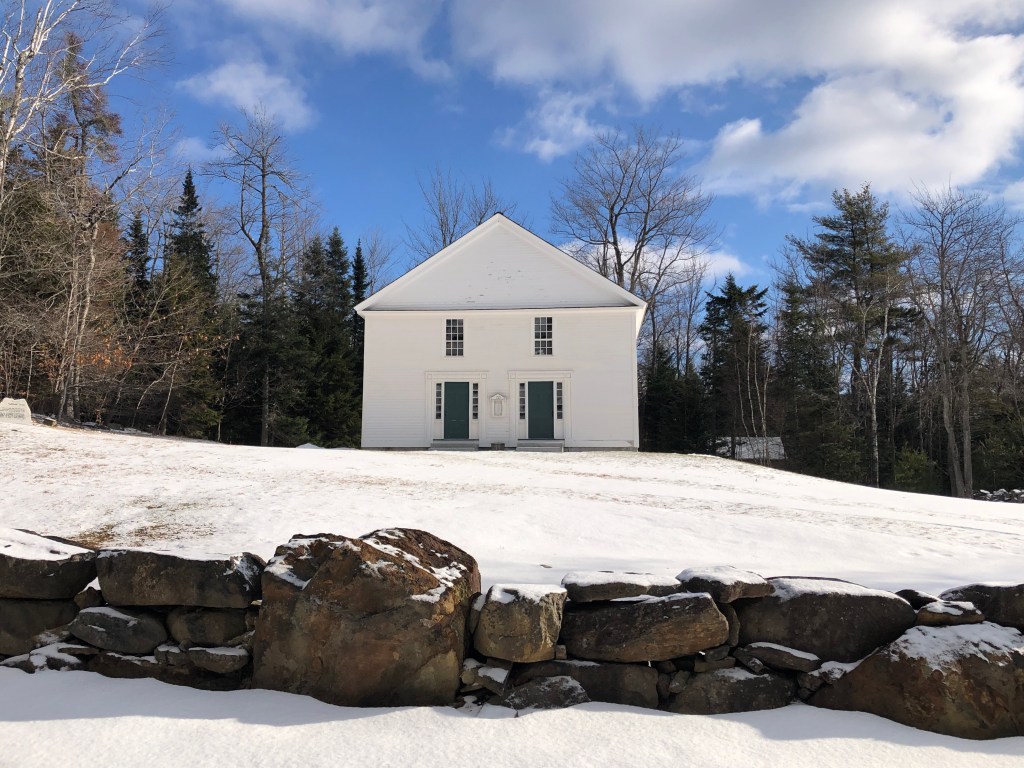
Seventh-Day Adventist Church // 1842

In the township of Washington, New Hampshire, about three miles from the Washington Town Green, stands a rural church building, a white wooden structure complimenting freshly fallen snow. This church is honored as the mother church of the first Seventh-Day Adventists. Its story started in 1842 by a local group of farmers calling themselves Christian Brethren, who dissented sharply from the strict Congregationalism of the Church in Washington Center. Many of the Christian Brethren became Adventists about the time this building was first used, and thereafter some of them began worshiping on the Seventh Day; and eventually the majority did so. In 1862 the official Seventh-day Adventist denomination was born at this place. Today, the building is a regular point of pilgrimage for members of the massive, international congregation.

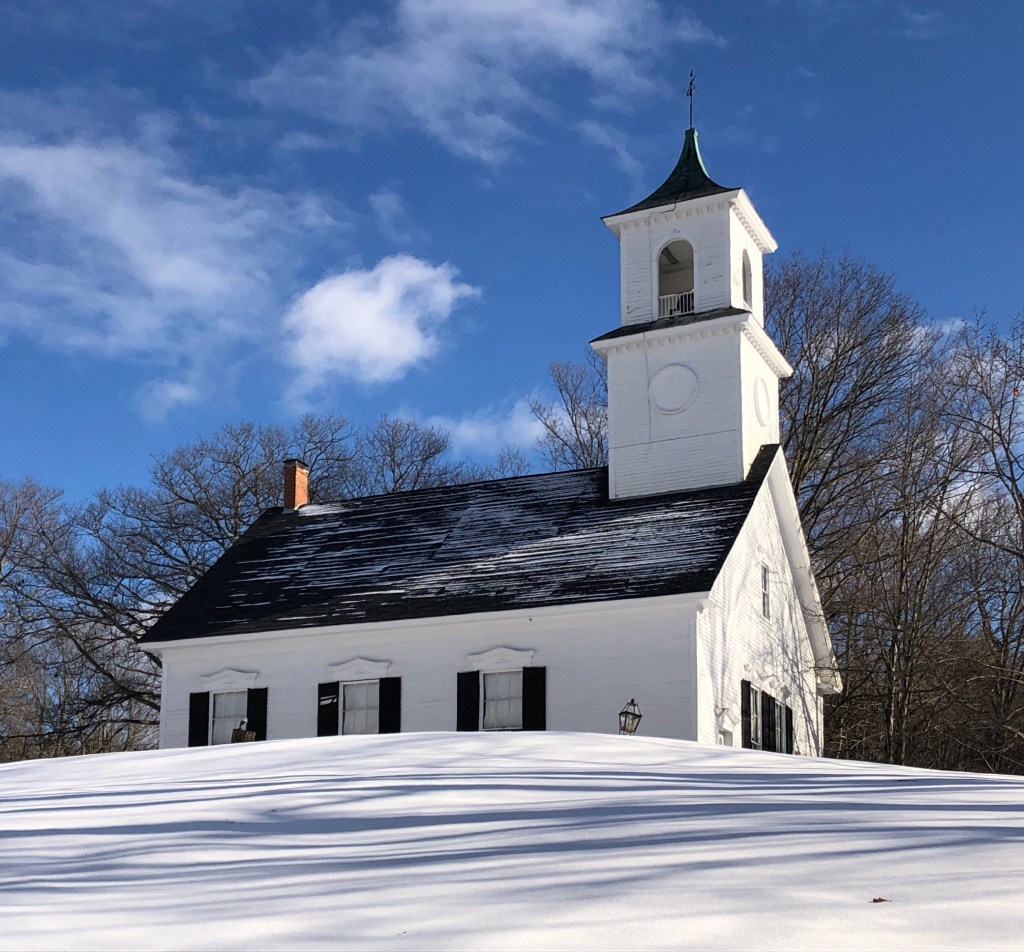
East Washington Baptist Church // 1877

Residents in the eastern portion of the rural town of Washington, NH found it very inconvenient to attend church at the center of town. In 1800, a group of residents on the east side of town banded together to create a new congregation, building a church perched on a low hill soon by 1826. The church was used for decades until it burned in 1844, it was replaced a year later, but that burned as well. Undeterred, the small congregation had yet another church built in 1877. The church remains in great condition, and is still active.