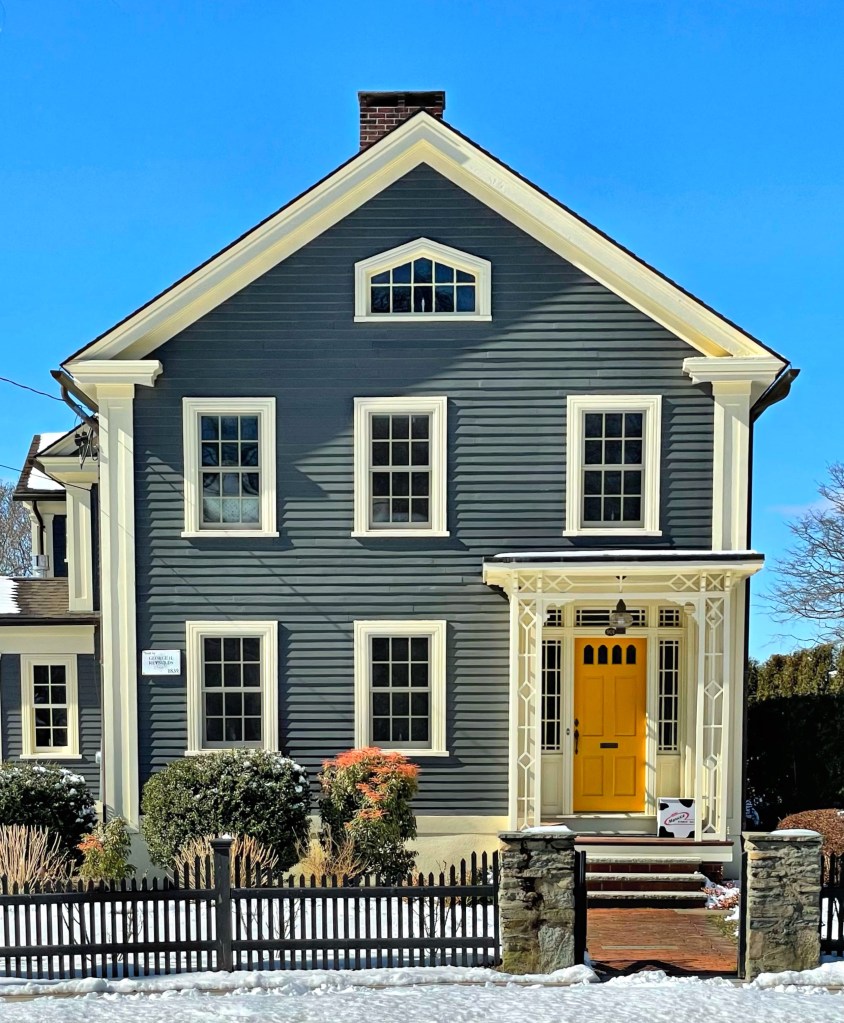
George H. Reynolds House // 1839

This two-story Greek Revival home was built in 1839 for George H. Reynolds (1809-1880), a descendant of Joseph Reynolds, who’s home was featured here previously. In 1836, George Reynolds worked as a blacksmith; by 1837 he sold shoes and groceries. By 1840, he was appointed postmaster. The side-hall home features corner pilasters and a gorgeous pedimented window in the gable end. The home was given a delicate entry portico in the latter half of the 19th century which immediately caught my attention.

Seth Paull House // 1880

Seth Paull (1840-1906), a lumber merchant whose warehouse and business were located at the foot of State Street downtown, began construction of this house in 1879. It is evident that he sought to showcase his lumber’s quality in his own home, as a testament to his business. This elaborate 2-1/2-story, hip-roofed, Second Empire house has a three-bay facade with a projecting central pavilion capped by an ogee gable roof. A two-story tower on the right corner, topped by conical roof with a copper finial, has elaborate brackets, diamond panels in wood, and a saw-tooth frieze. The home is well-preserved and sits on a large lot, set back from the street behind a row of trees. The lot was once larger, but was subdivided for housing to the north. The former Paull barn was repurposed as a separate home.

Dennis Doran House // 1891

Located just east of downtown Bristol, the Dennis Doran House stands as an excellent example of the Queen Anne style of architecture for a middle-class residence. The home was built in 1891 by Dennis Doran as his personal house. He worked as a carpenter and cabinet maker, and showcased his wood-working skills on this home. The asymmetrical facade, dominated by an octagonal corner tower, capped by a steep conical roof stands out, but is complemented by a complex hipped roof broken up by various jerkin-head and gable dormers at two tiers. The home is also clad in shingles of varied shapes to provide a complex texture.

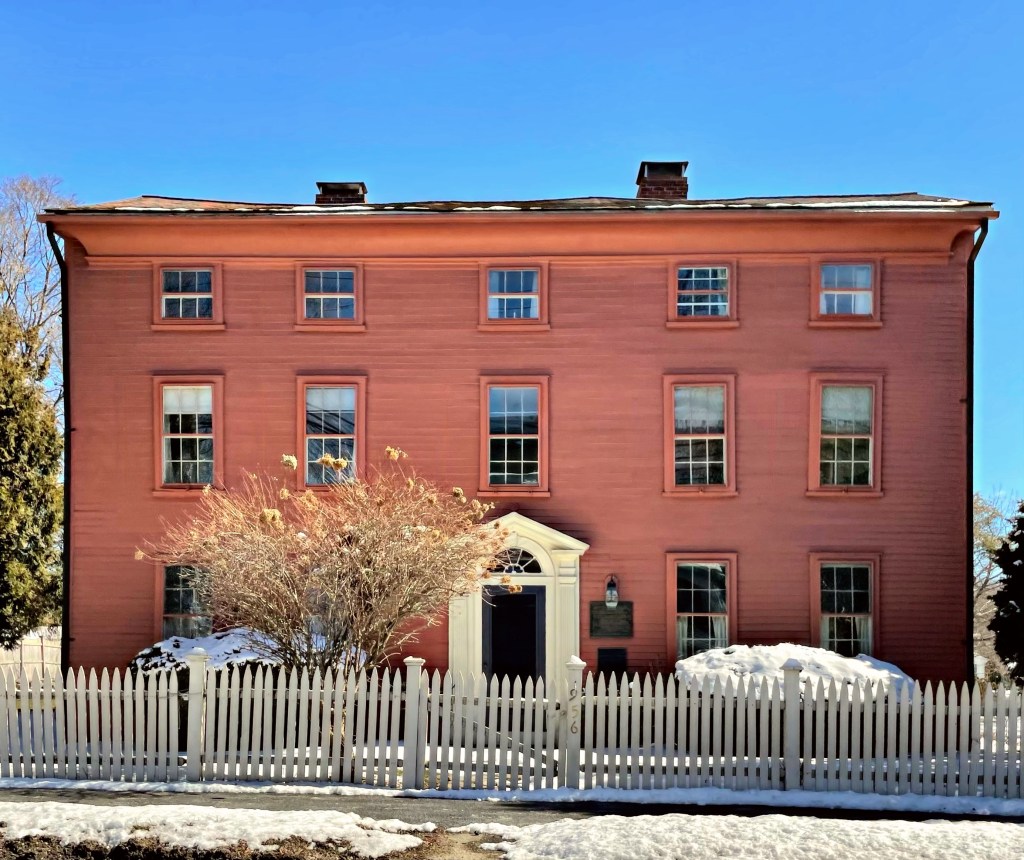
Joseph Reynolds House // 1698

This three-story wood-frame house is one of the oldest buildings in Bristol and the oldest known three-story building in Rhode Island. The home was built by Joseph Reynolds (1679-1759), a patriarch in the Reynolds Family, who later built the Reynolds-DeWolf House I featured previously. The house is five bays wide and three deep with the roof extending lower to the rear, giving the house a classic New England saltbox appearance. Joseph built this house, and also operated a tannery and gristmill on his land. The home is nationally significant as during the ownership of the house by his son Joseph II, Marquis de Lafayette occupied the north parlor chamber. Lafayette was a general in the Continental Army and was responsible for the defense of Bristol and Warren from September 7 to 23, 1778 during failed military operations to drive the British from occupied Newport. The home was added onto and altered in 1790 to give it the current design, with Federal detailing. The home remained in the Reynolds Family until 1930.

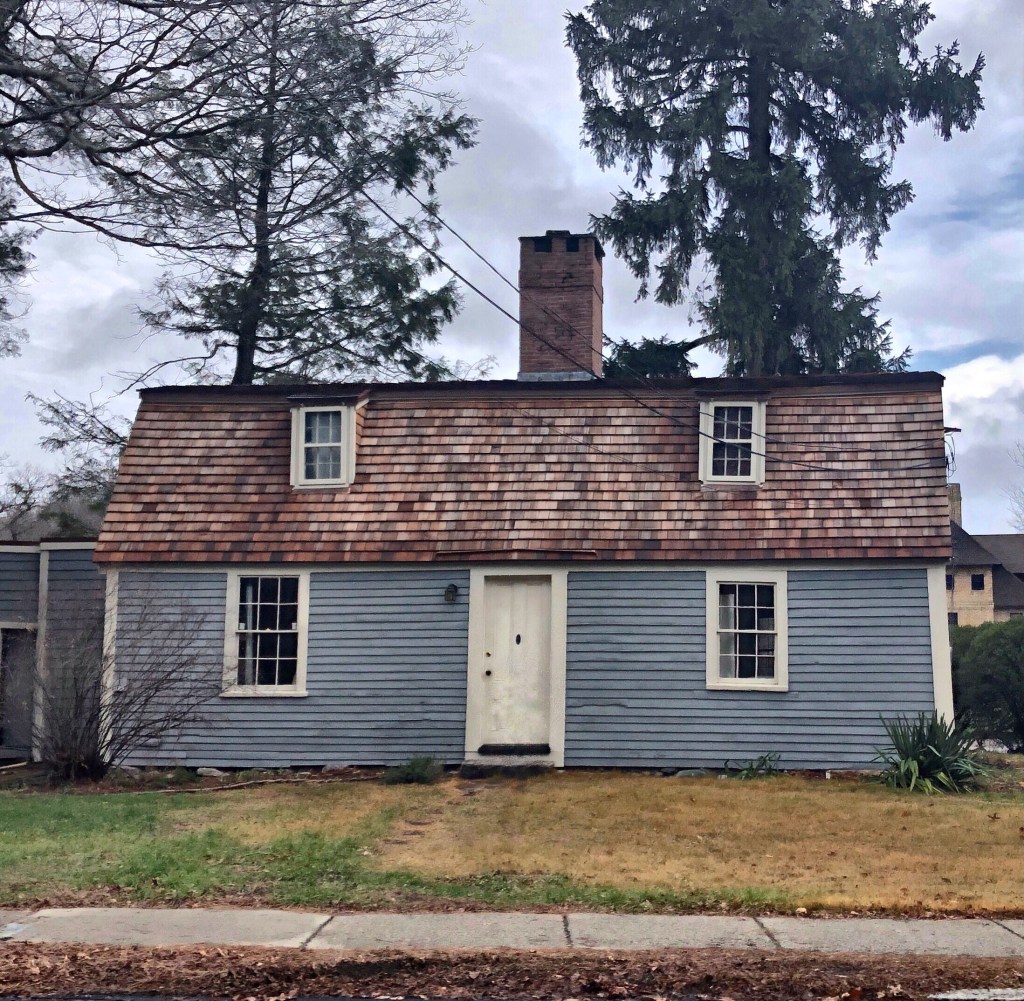
Hannah Harris House // c.1772

This cute little Georgian home in Brookline was built around 1772 for Hannah Winchester Harris, a widow at the time. Hannah’s husband, Timothy died in 1772 and it appears the widow had this small gambrel-roofed home constructed sometime soon after. Ms. Harris died in 1805 and the home was occupied by a new family, who added the saltbox addition. The home is today owned by the Town of Brookline, who maintain the building through the Brookline Historical Society. the home sits on the boundary of the old Weld Estate.