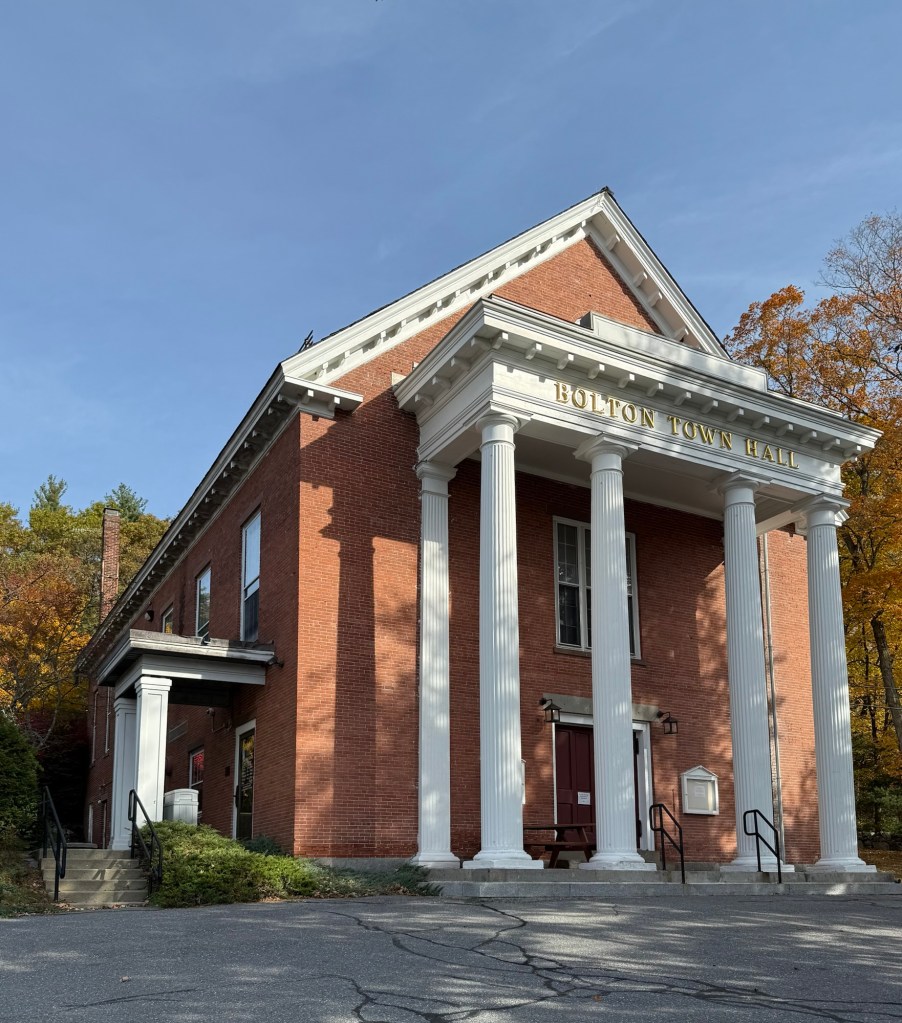
The Town Hall building in Bolton, Massachusetts, is significant as the hub of the town’s municipal activities for the past century and a half and architecturally as a mid-19th century town hall built in the transitional Greek Revival and Italianate styles. The structure was completed by the town in 1853 as a replacement for the former 1834 wood-frame town hall, which had burned down in 1851. The original wood-frame building was constructed at the time that municipal functions were being moved out of town meetinghouses across Massachusetts following the desire to separate church and government functions. Like many town halls of its era, the larger 1853 building was designed to accommodate multiple aspects of the community’s institutional and public life. The two-story building included a fireproof vault for town records, with town meetings held in the second floor meeting hall, with selectmen meeting in a room on the first floor. A small room was fitted for a library until the early 20th century when the town’s first purpose-built library was constructed farther down Main Street. The fairly unadorned Town Hall was modernized in around 1916 with the addition of the front portico and a rear addition. The Bolton Town Hall remains as a source of pride for the small, yet charming town of just under 6,000 residents.

 Buildings of New England