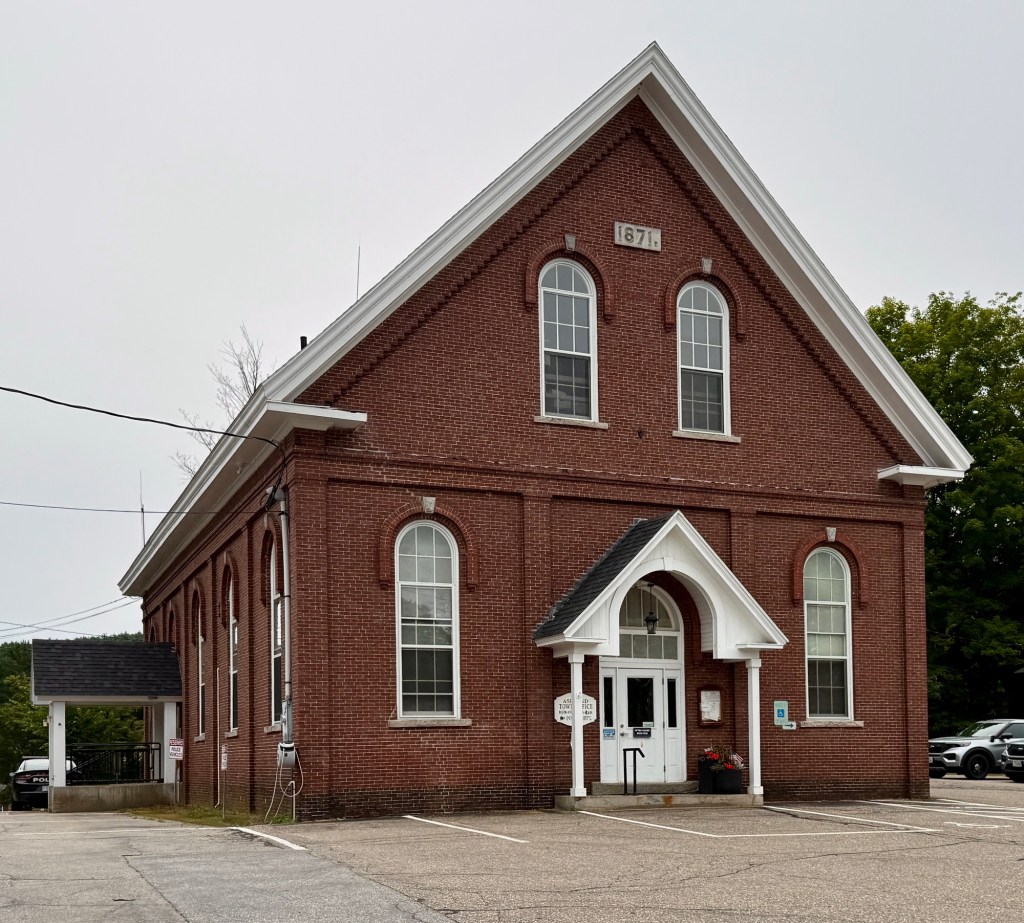
Ashland Town Hall // 1871

The Ashland Town Hall in Ashland, New Hampshire, was built in 1871, three years after the town separated from Holderness, due to its growing economy as an industrial village compared to its mother-town’s more agricultural character. Constructed of brick, the facade is dominated by its gable roof which reads as a pediment and bays divided by brick pilasters which harkens back to the Greek Revival style; while the use of arched brick mouldings which is a common element in the Italianate style. The handsome, well-proportioned structure was used for town meetings and elections until 1950, and in 1952, the building was used by the school district as the village school. The building returned to municipal functions in 1972 and has since housed the Ashland Town Offices. The Old Ashland Town Hall was listed in the National Register of Historic Places in 1983.
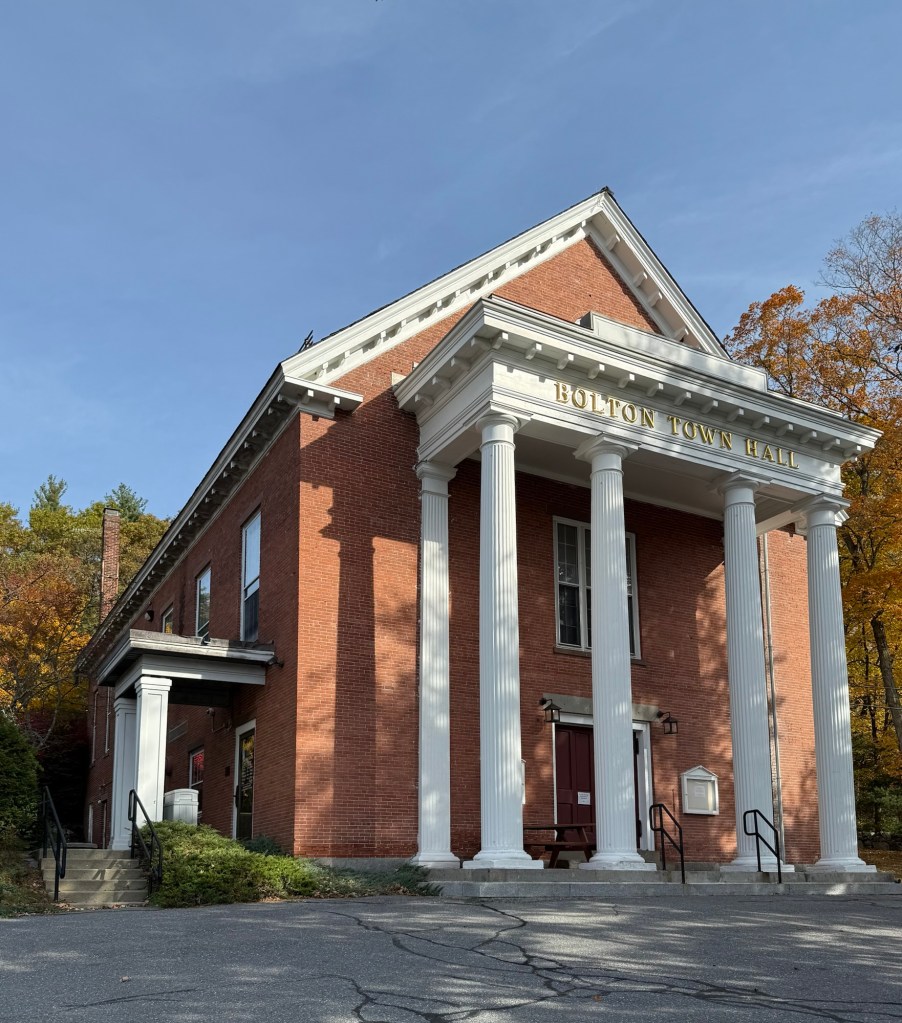
Bolton Town Hall // 1853

The Town Hall building in Bolton, Massachusetts, is significant as the hub of the town’s municipal activities for the past century and a half and architecturally as a mid-19th century town hall built in the transitional Greek Revival and Italianate styles. The structure was completed by the town in 1853 as a replacement for the former 1834 wood-frame town hall, which had burned down in 1851. The original wood-frame building was constructed at the time that municipal functions were being moved out of town meetinghouses across Massachusetts following the desire to separate church and government functions. Like many town halls of its era, the larger 1853 building was designed to accommodate multiple aspects of the community’s institutional and public life. The two-story building included a fireproof vault for town records, with town meetings held in the second floor meeting hall, with selectmen meeting in a room on the first floor. A small room was fitted for a library until the early 20th century when the town’s first purpose-built library was constructed farther down Main Street. The fairly unadorned Town Hall was modernized in around 1916 with the addition of the front portico and a rear addition. The Bolton Town Hall remains as a source of pride for the small, yet charming town of just under 6,000 residents.

Acton Town Hall // 1863

Acton, Massachusetts, was once part of Concord, the first inland colonial town established in the Massachusetts Bay Colony in 1635. 100 years later in 1735, land that we know today as Acton, separated from Concord to become their own town. Acton’s second Meetinghouse was located here in Acton Center, which was selected for its location more accessible to all houses and farms in the town. The Second Meetinghouse was built in 1806, and burned to the ground in 1862. Immediately after, a town committee was formed to construct a new town hall. Opening in 1863, Acton’s Town Hall stands as a stunning Italianate building with tripartite arched windows, corner quoins, a two-stage cupola with clock, and a bold (and historically appropriate) paint scheme. Acton’s Town Hall remains as one of the finest extant in the state.