Prospect Hill Tower // 1903

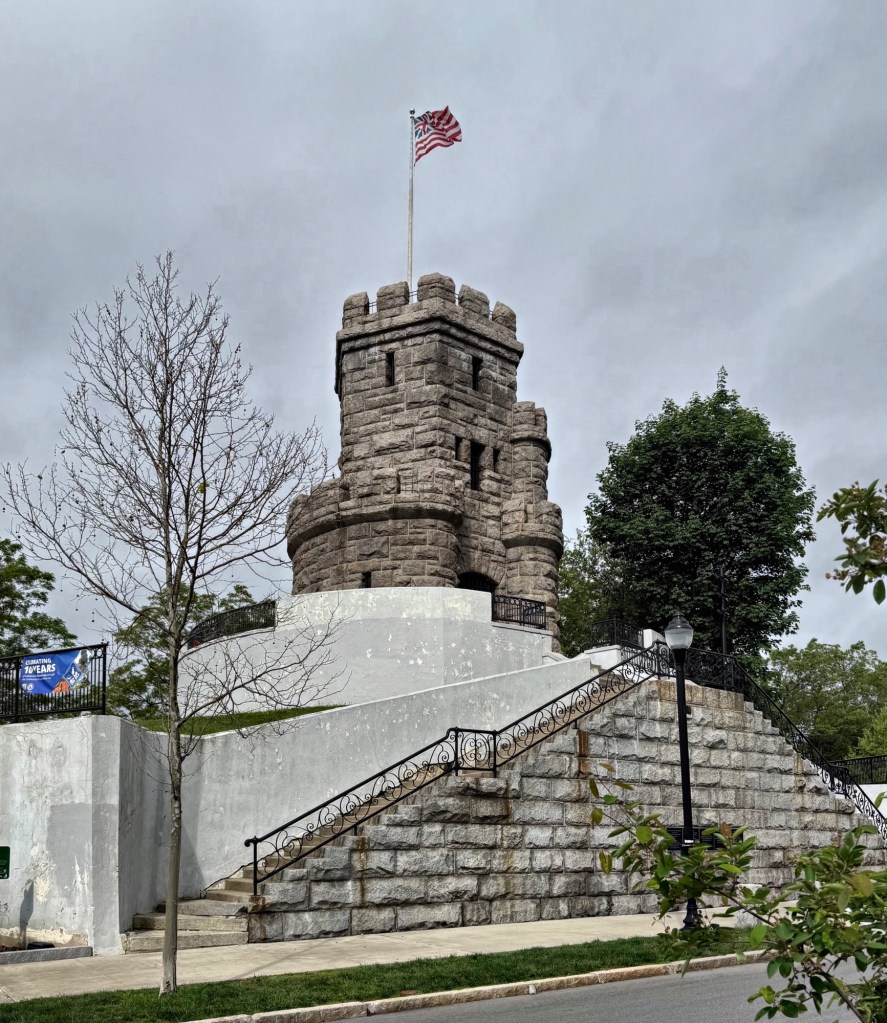
Originally part of the town of Charlestown, Massachusetts, Prospect Hill is now located in the nearby town of Somerville, established in 1842. As one of the hills closest to the city of Boston, the hill played a pivotal role in the line of defensive works constructed after the Battle of Bunker Hill. The area developed slowly, with old farms around Prospect Hill, largely subdivided in the late 19th century for residential development. Around this time, in 1886, the Prospect Hill Park Association was formed, and in 1898, land here was purchased for a public park. The focal point of the iconic neighborhood park is the stone castle structure at the top. Completed in 1903 to commemorate soldiers of the Revolutionary and Civil wars, the rusticated granite tower was designed by Ernest W. Bailey, the City Engineer of Somerville, who also worked to landscape the surrounding park. The granite blocks were shipped in from Deer Isle, Maine. By the 1960s, the structure began to suffer from deferred maintenance. The City of Somerville added the concrete retaining walls to shore up the landscape, which worked for some time. Decades later in the early 2000s, the structure was at risk of further deterioration. Through Community Preservation Act funds, the tower and surrounding landscape were restored and made safer, making this important memorial accessible and enhanced for all to enjoy. 

Island Grove Park Memorial Arch // 1912

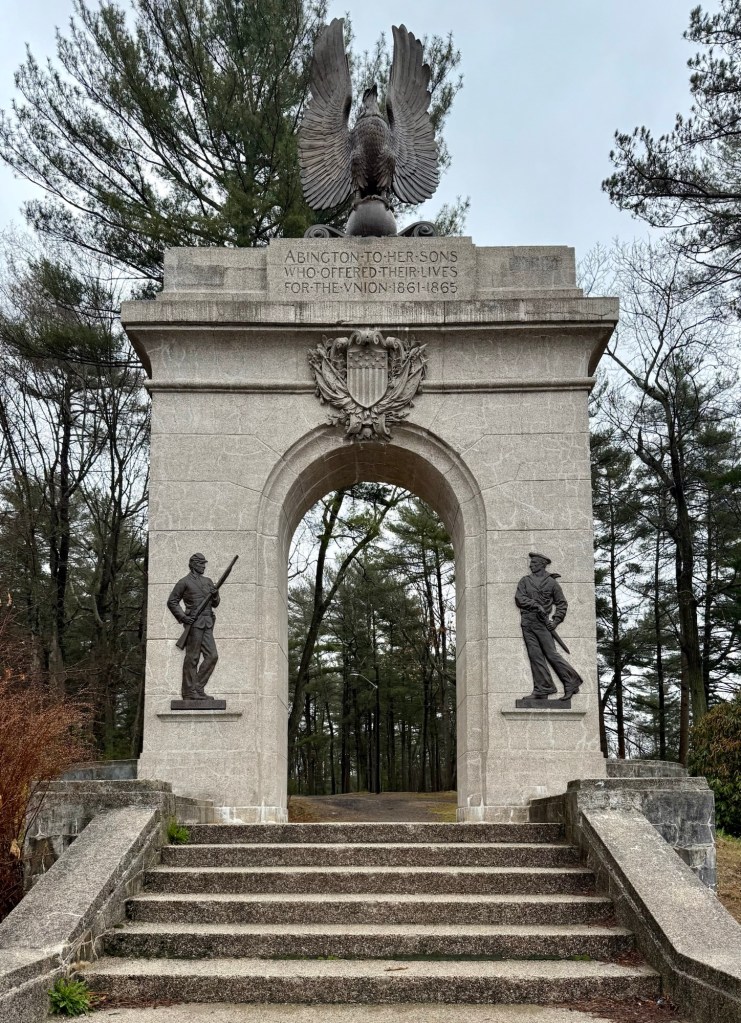
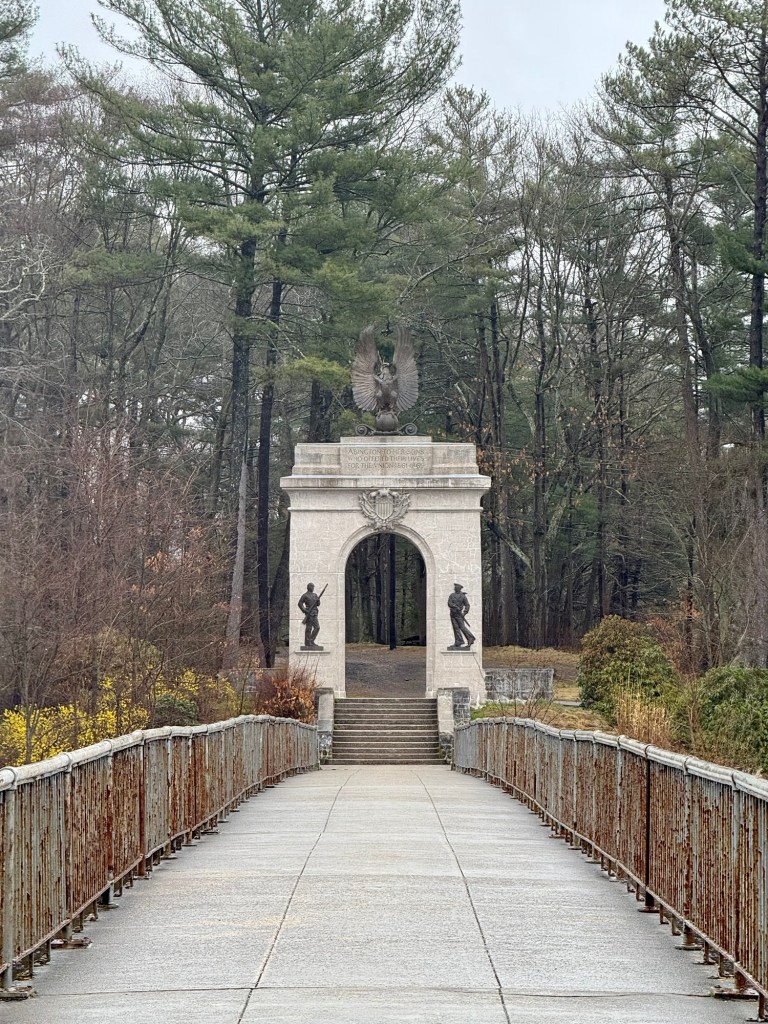
The Abington Memorial Arch and Bridge at Island Grove Park was dedicated on June 10, 1912 as part of the town’s bicentennial observances. The Grove had been a popular meeting place for the Massachusetts Anti-slavery Society, with William Lloyd Garrison, Wendell Phillips, Abby Kelley Foster, and Lucy Stone among the many prominent reformers who spoke there. Abington resident and Civil War veteran, Capt. Moses Arnold, donated a large marker in 1909 to commemorate the abolitionist meetings at Island Grove, this act led the local GAR Post to begin planning a Civil War Memorial Bridge and Arch for the community. The 17-acre park is comprised of a peninsula jutting into Island Grove Pond, a 35-acre body of water which was created by impounding the Shumatuscacant River in c. 1700 for industry. The area has a significant history, first as an industrial site, then as an amusement park, before it became the wooded park it is now. The Memorial Arch and Bridge serves as the main entrance to the park, and was designed collectively by architect, J. Williams Beal, landscape architects, the Olmsted Brothers, and sculptor, Bela Pratt. The municipal park is a beloved local landmark and host to many events.

Salem Willows Park // 1859

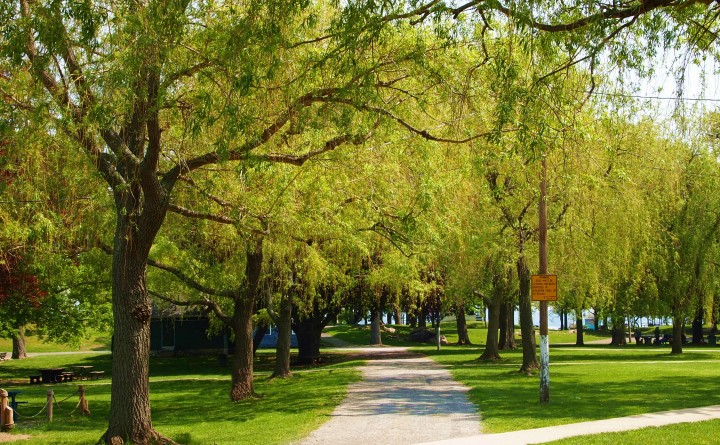
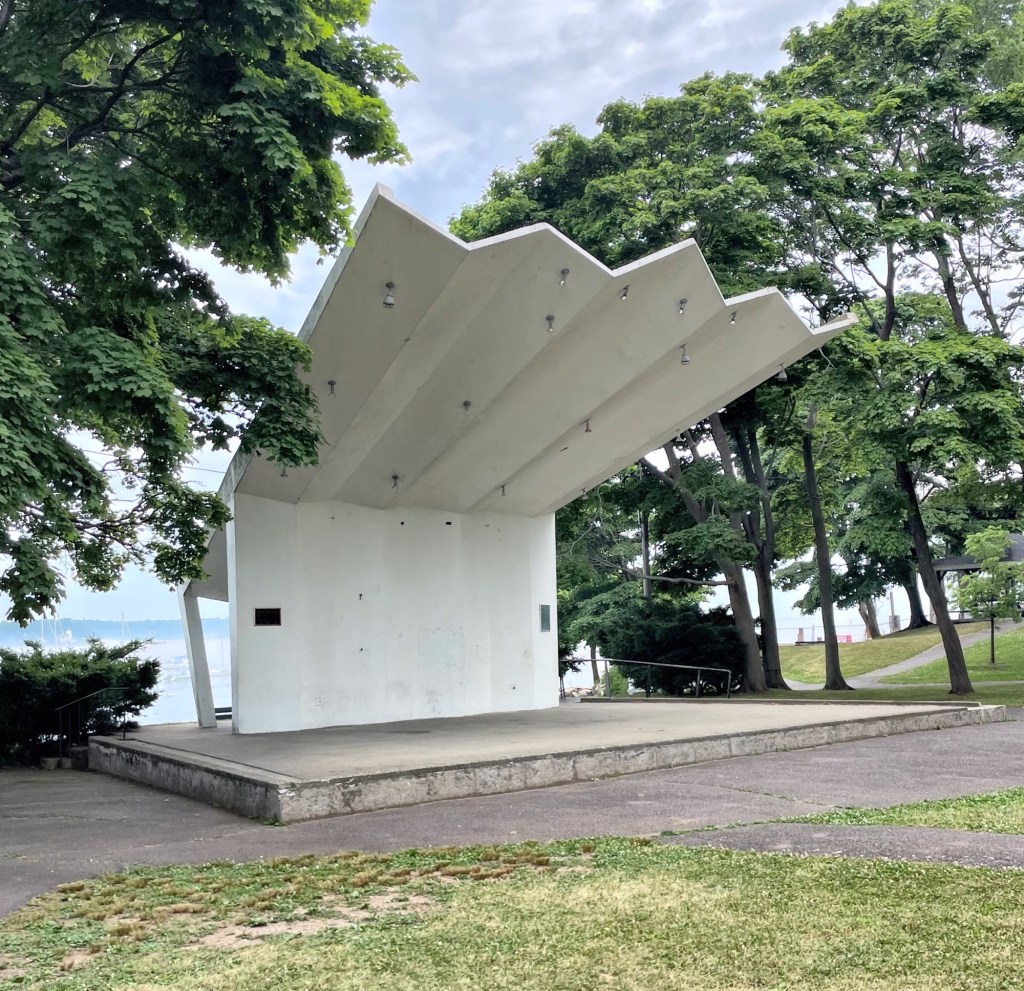
The Salem Willows neighborhood of Salem, Massachusetts sits at the extreme tip of Salem Neck, which juts out into the Atlantic Ocean. The area here was sparsely used until the 19th century, when a smallpox hospital was built here in 1800, mainly used for sailors to recover and be treated. Soon after, a man by the name of Hezekiah Williams planted rows of Willow trees for the enjoyment of patients, which would give the area (and later park) its name. The hospital burned in 1846. Part of the land on the Neck became a park, and a former farm known as the Derby Farm, was purchased and redeveloped with new streets and house lots laid out for summer cottages in the early 1870s. The neighborhood became known as Juniper Point. The Salem Willows Park was enhanced in the late 19th and early 20th centuries with bathing facilities, pavilions, and amusement and commercial buildings. The park is today well-maintained by the City of Salem and is an important protected site that documents the city’s history of the 19th and 20th centuries. I was also pleased to find the 1965 Memorial Shell Band Stand with accordion metal roof designed by the architectural firm of Robert Charles, Associates.

The Elms – Gardens // c.1911

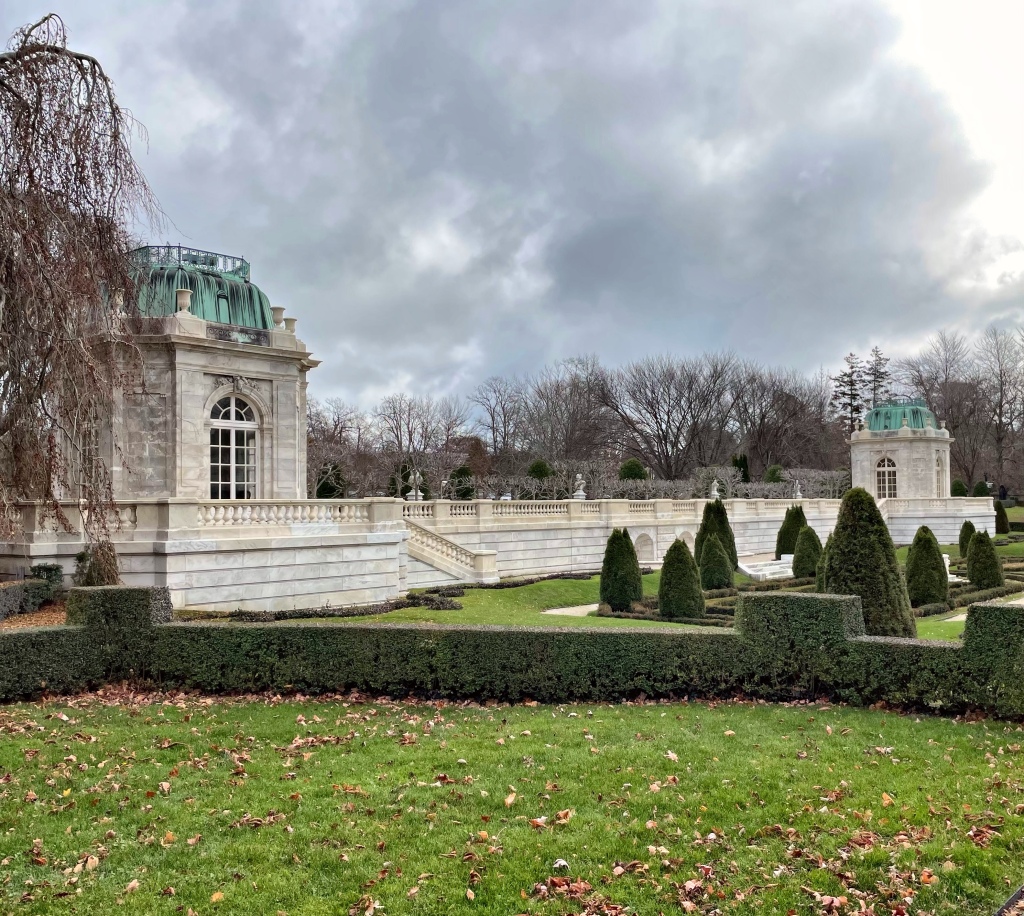
For my last post on the spectacular Elms Mansion in Newport, Rhode Island, I wanted to highlight something I rarely feature on this page, a garden. When the mansion was completed by 1901, architect Horace Trumbauer and his firm went to work to produce plans for a natural landscape with a large lily pond at the far edge of the property. After 1907, the Berwind’s and high-society shifted and landscape ideals were influenced by newer theories in American landscape architecture, which sought influence from historical European gardens. Trumbauer reworked The Elms’ garden to reflect this new emphasis on reviving classical European garden design alongside landscape architects Ernest W. Bowditch and Jacques Greber advising on the parterre design in the sunken garden. A grand allée on the scale of 18th century French palace gardens extends across an expansive lawn toward two formal marble pavilions situated along a minor cross axis above a sunken garden. The marble pavillions appear to have been designed by Trumbauer and are inspired by 18th-century French garden pavilions. The grand context for the gardens is a park-like collection of specimen beech, elms, maples, linden and other large canopy trees. Many of the large trees have since succumbed to disease, but the formal Italian sunken garden remains one of the finest in the United States.