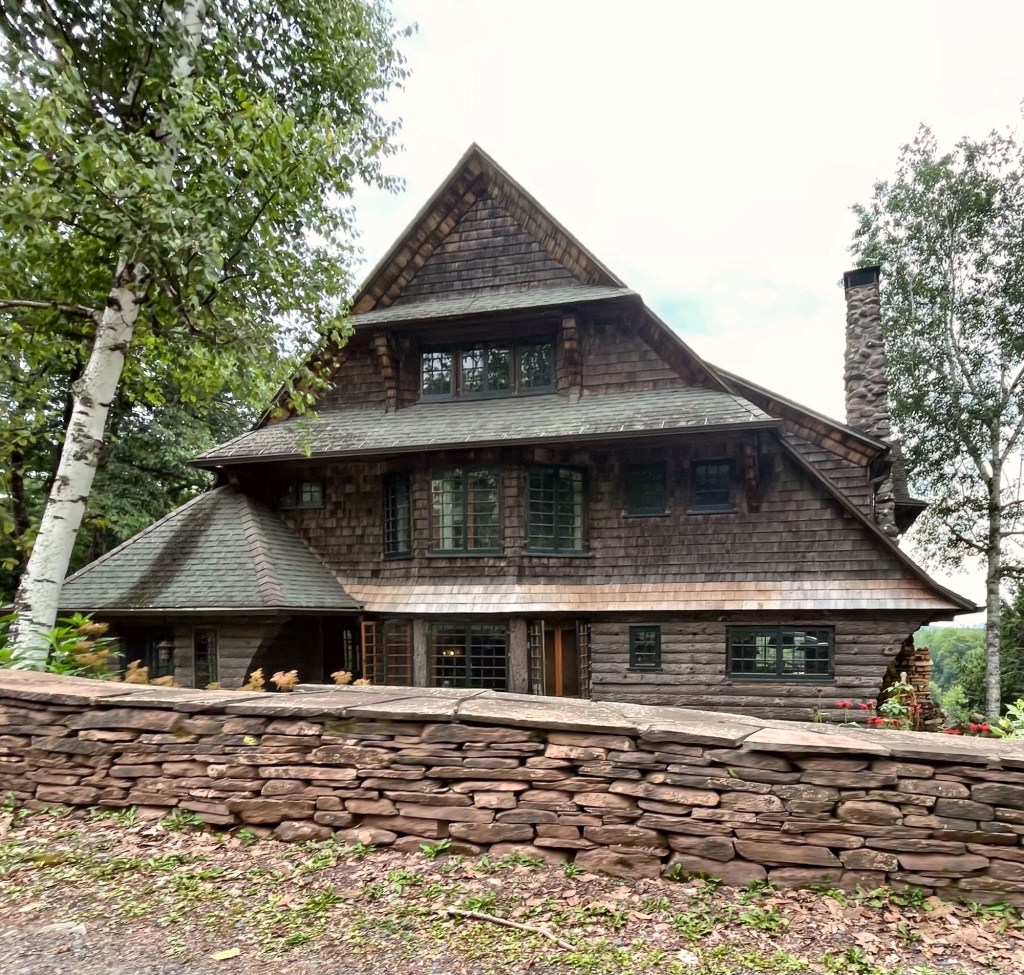
One of the more unique and enchanting historic summer “cottages” I have seen in my travels is this early 20th century rustic example in the Onteora Park colony. Built in 1902 for John S. Stanton Sr. (1837-1933), this residence was later the summer home of Dr. Edward Ahrens and his wife, Gertrude, who founded the Mountaintop Arboretum nearby. The house stands 3 1/2-stories tall and features horizontal log siding on the ground floor and cedar shingle siding above. The facade is dominated by the broad gable end roof that extends downwards to the first floor at flared eaves on the sides and over the windows.
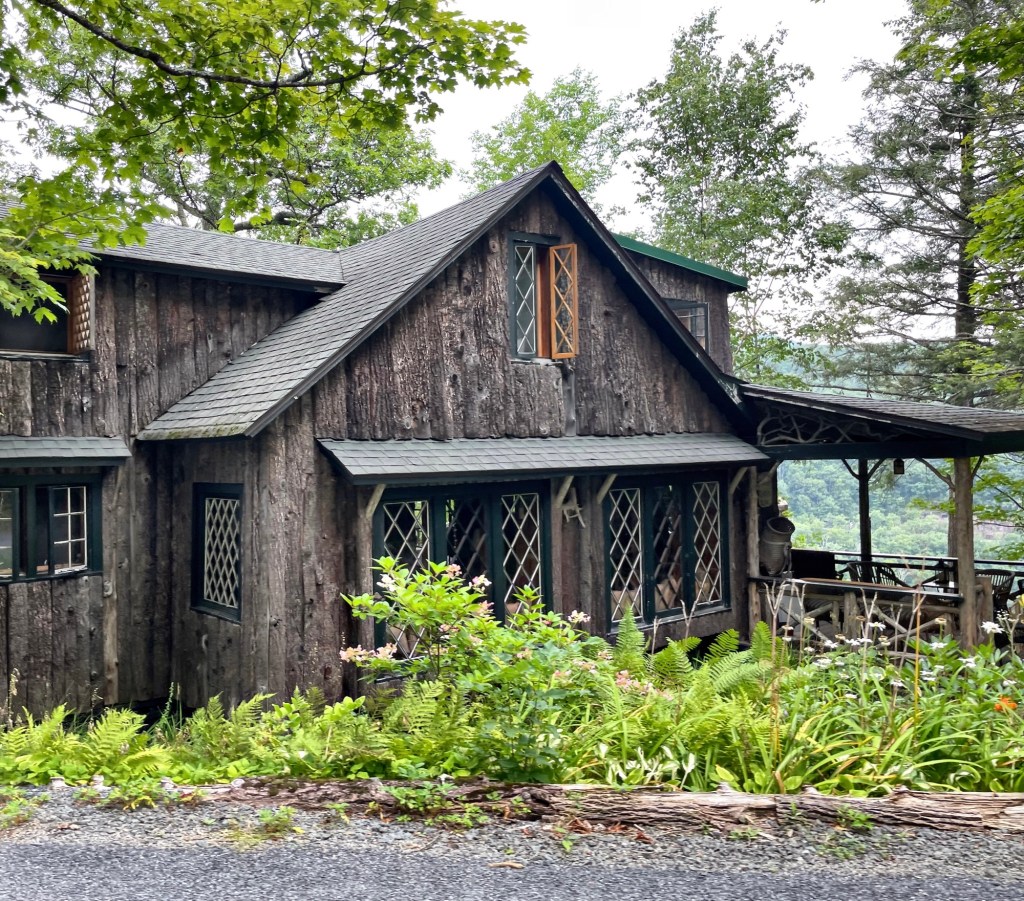
Tucked away in the town of Hunter in the Catskill Mountains of New York, the summer colony of Twilight Park has stood as an exclusive and private resort community established in the late 19th century. Twilight Park was born out of the Twilight Club, a Manhattan social club in the late-19th century and brought to life by founder, Charles F. Wingate. Mr. Wingate traveled to the mountaintop in 1887, and became enamored by its natural beauty. He arranged for the purchase of a former sheep’s meadow and led the construction of the first cluster of cottages in what would become a large community of over 100 summer homes. Cottages were laid out on roughly parallel roads at different elevations and on old connecting paths that later became roads with all lots built on ledges overlooking the Catskills. The first six cottages were log cabins, with this example, likely in the first batch. From maps and a report on the area, this early cottage appears to have been named “Cosy Cabin” and was first occupied by Mr. Wingate, the founder of the Twilight Club and Twilight Park. The cottage is unique for its vertically laid logs still containing their bark, and the rustic porch balustrade and detailing.
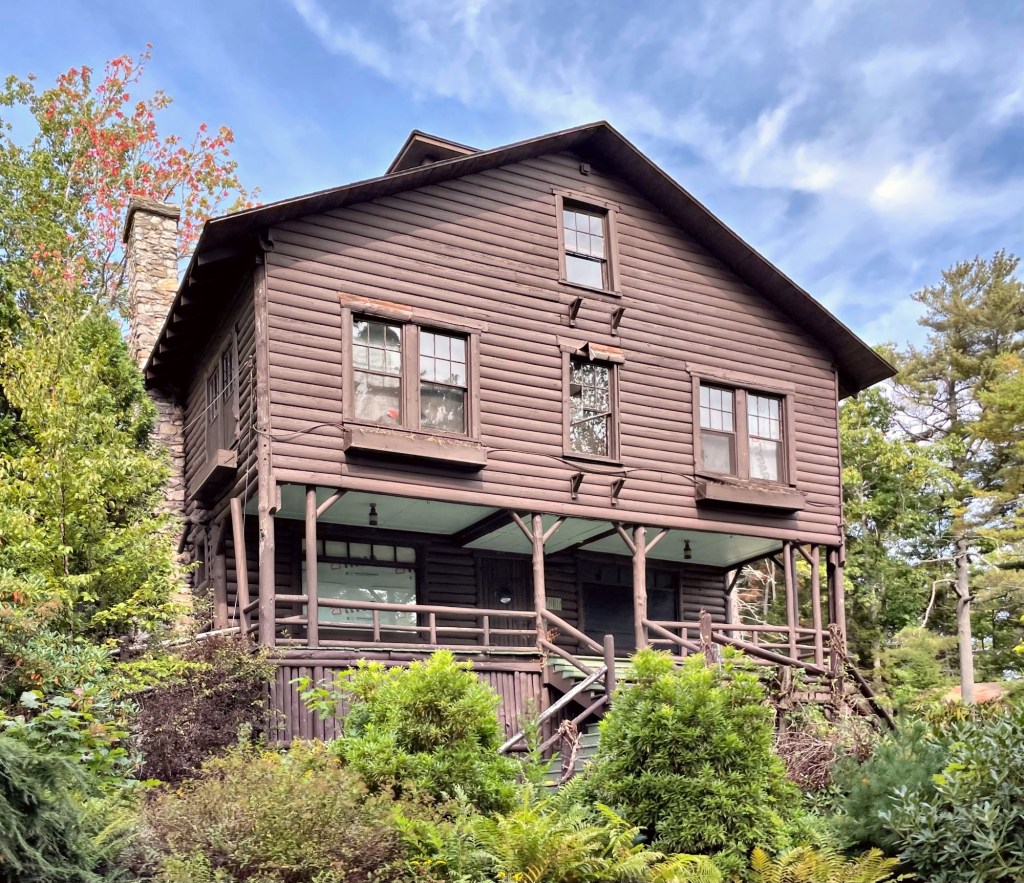
Sprucewold Lodge, nestled in the picturesque coastal town of Boothbay Harbor, Maine, boasts a rich history that dates back to the early 20th century. Established in 1911 by a group of visionary investors and rusticators, the lodge was designed as a summer retreat for families seeking solace in nature. Like the Spruce Point Inn, the building was developed with modest means, but quickly expanded and grew as the unique and rugged site on Spruce Point drew flocks of visitors every year. Its unique blend of craftsman and Adirondack style architecture and stunning natural surroundings quickly made it a popular destination. The investors hired Portland architect John P. Thomas to design a grand log hotel. The hotel was advertised as the largest log cabin in the world until it burned down just years later in 1930. A 31-room annex, this building, was added in 1927 and assisted to serve the over 60 rental cabins, tennis courts, a swimming pool, recreation hall, and a thirty-car garage. When the original Sprucewold Lodge burned down, this building became the new lodge, and it has remained so nearly 100 years later. This enclave of rustic log cabins on Spruce Point is very evocative of the early days of Maine, and it is easy to see why the state garnered the nickname, Vacationland.
 Buildings of New England