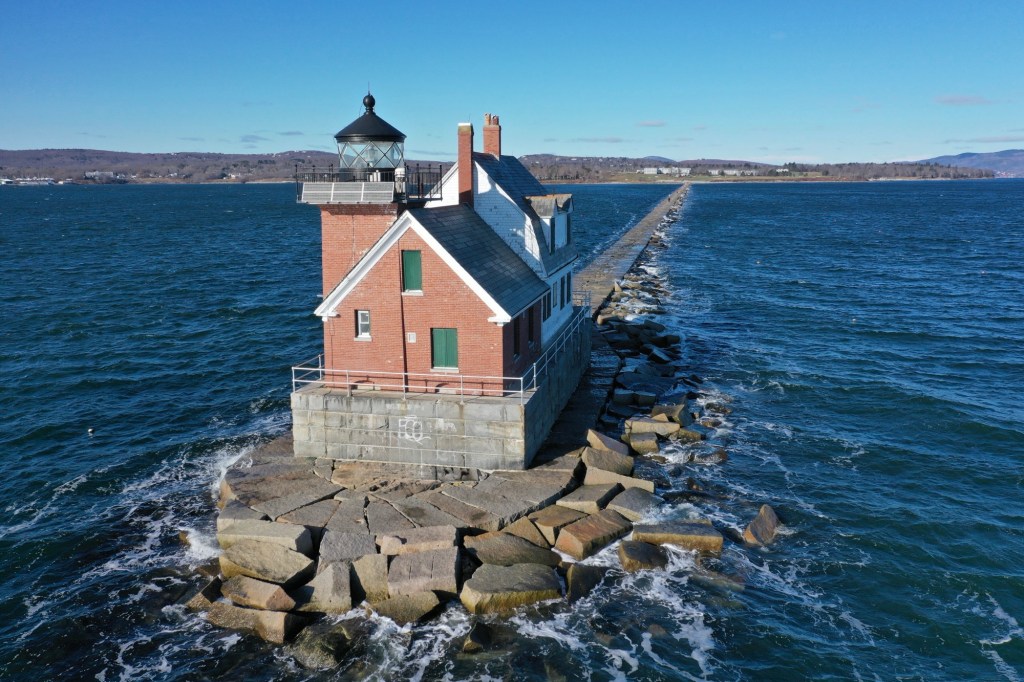
The Rockland Harbor Breakwater and Lighthouse is arguably the most iconic structure in the coastal town of Rockland, Maine. As Rockland was a major port and harbor, relying on the transportation of lime and shipbuilding for its economy, protecting the harbor was of paramount importance. Major storms in the 1850s highlighted the need for improved harbor protection, but federal appropriations for a breakwater were not approved until 1880. Between 1880 and 1900 the United States Army Corps of Engineers, under a series of Congressional appropriations, built the breakwater, a 4,364 foot long wall in the harbor built of locally quarried blocks of granite. It is truly a feat of engineering! The lighthouse standing at its end was added in 1902. The iconic breakwater is accessible by those who brave the crashing waves and distance to the end of the nearly mile-long walk out to the lighthouse. The structure is today maintained by volunteers and the City of Rockland.
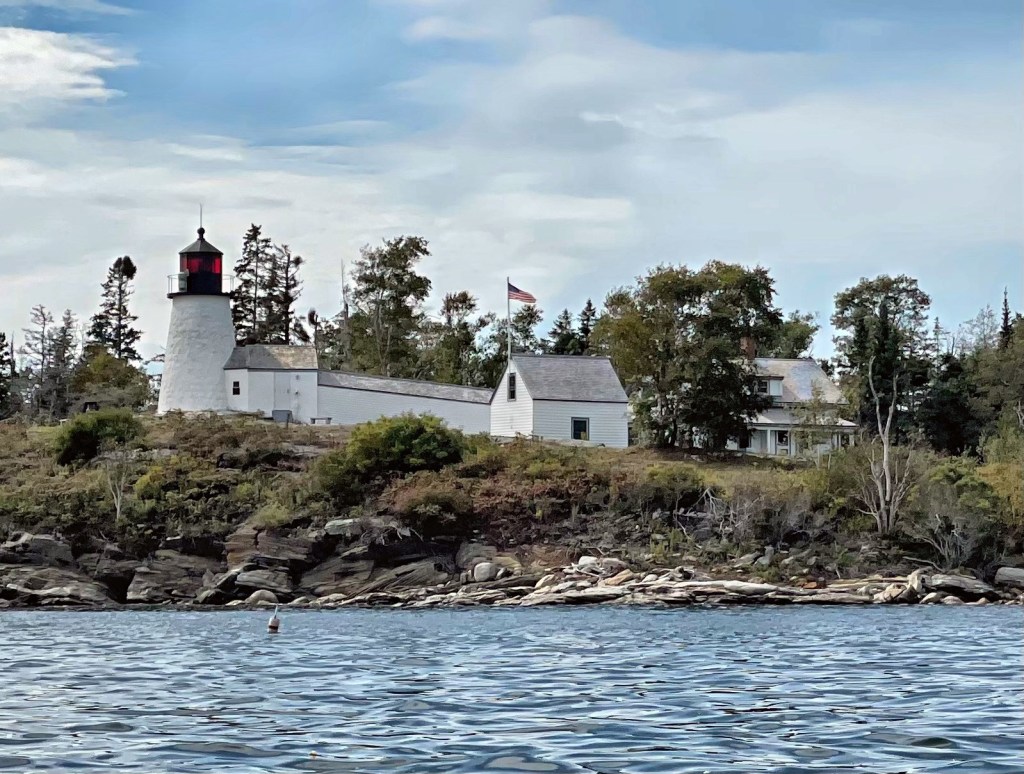
The Burnt Island Light Station was built in 1821 on the west side of the entrance to Boothbay Harbor, opposite the Spruce Point Inn (which I kayaked from to get a better view of this lighthouse). The federal government purchased the island for $150 from local businessmen Jacob Auld and Joseph McCobb. The government’s builders constructed a stone lighthouse and keeper’s dwelling using granite blocks cut from the island. The lighthouse was built on Burnt Island, which took its name from the historic practice of burning the island’s vegetation in order to keep the land clear for sheep grazing. Its purpose was the guidance of ships, the carriers of cargo destined for the development of industry and commerce, into Boothbay Harbor over a mile away. Built just one year before Maine became a state, the Burnt Island Light Station has served mariners for over 200 years. In fact, it’s considered the state’s oldest unaltered lighthouse, and it was manned until 1988 when the light was automated. In 1998, the island and light station were transferred to the State of Maine Department of Marine Resources as part of the Maine Lighthouse Program.
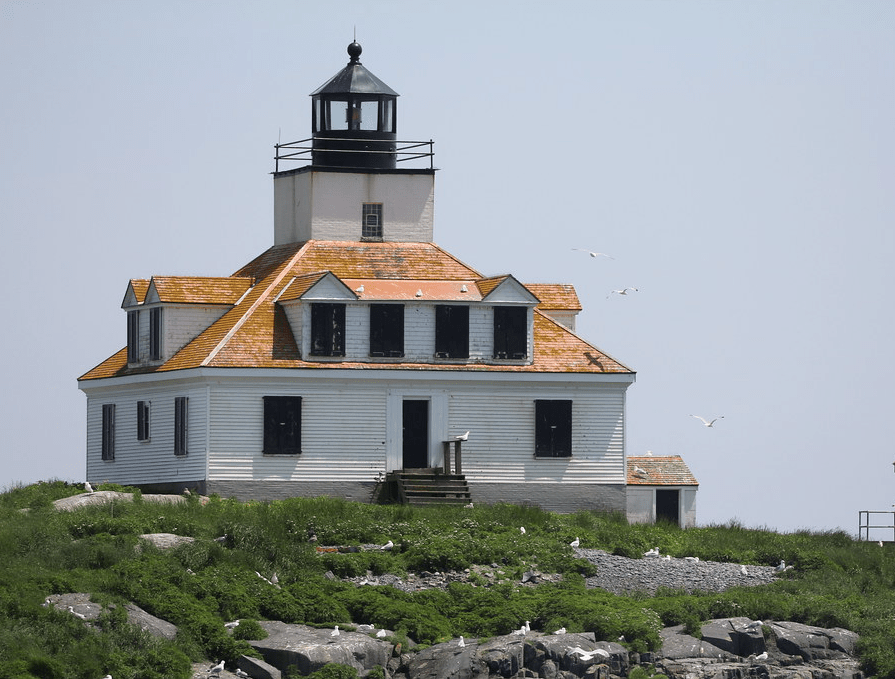
The Egg Rock Lighthouse sits in the middle of the Mt. Desert Narrows of Frenchman Bay between Bar Harbor and Winter Harbor. The lighthouse was constructed in 1875 to assist the already built Winter Harbor Lighthouse a short distance away, to provide guidance for the increased ferry traffic to Bar Harbor, which was quickly becoming a prominent summer colony. The architecturally unique lighthouse is comprised of a square tower projecting through the center of the square lighthouse keeper’s house, its unlike anything I have seen before. The station was automated by the United States Coast Guard in 1976, at which time its ancillary structures except the fog station were torn down. The light continues to be managed by the Coast Guard, and is not open to the public; the island and buildings are owned by the United States Fish and Wildlife Service.
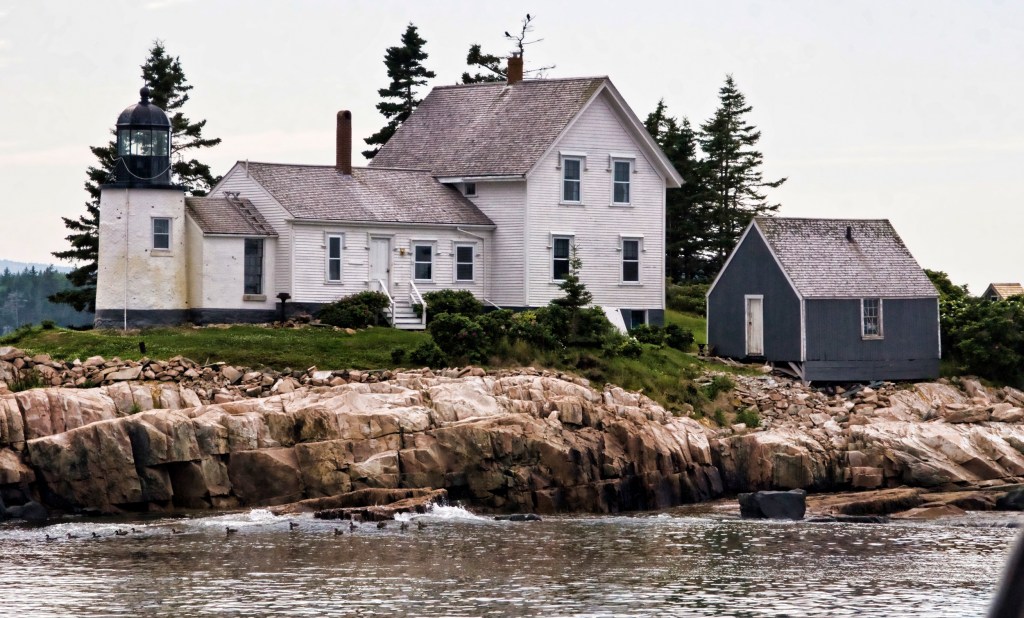
Built in 1857, Winter Harbor Light is one of Maine’s enchanting historic lighthouses dotting the rugged coastline. The lighthouse was built by the United States government to aid navigation for the local fishing fleet, an important piece of the local economy there. The light tower, built in 1856, is a round brick structure topped by an original octagonal lantern house with an iron walkway and railing around it. A brick single-story workroom projects from the tower. The keeper’s house is a two-story wood-frame structure, which was built in 1876 (along with the ell) to replace the original keeper’s house. The light was decommissioned in 1934 and sold into private hands, but in its seventy-six years of service, nine keepers and their families lived on the island. It remains a visual landmark on its small island in Mt. Desert Narrows on the drive along the Schoodic Peninsula in Acadia National Park (Winter Harbor side). What are your favorite lighthouses in Maine?
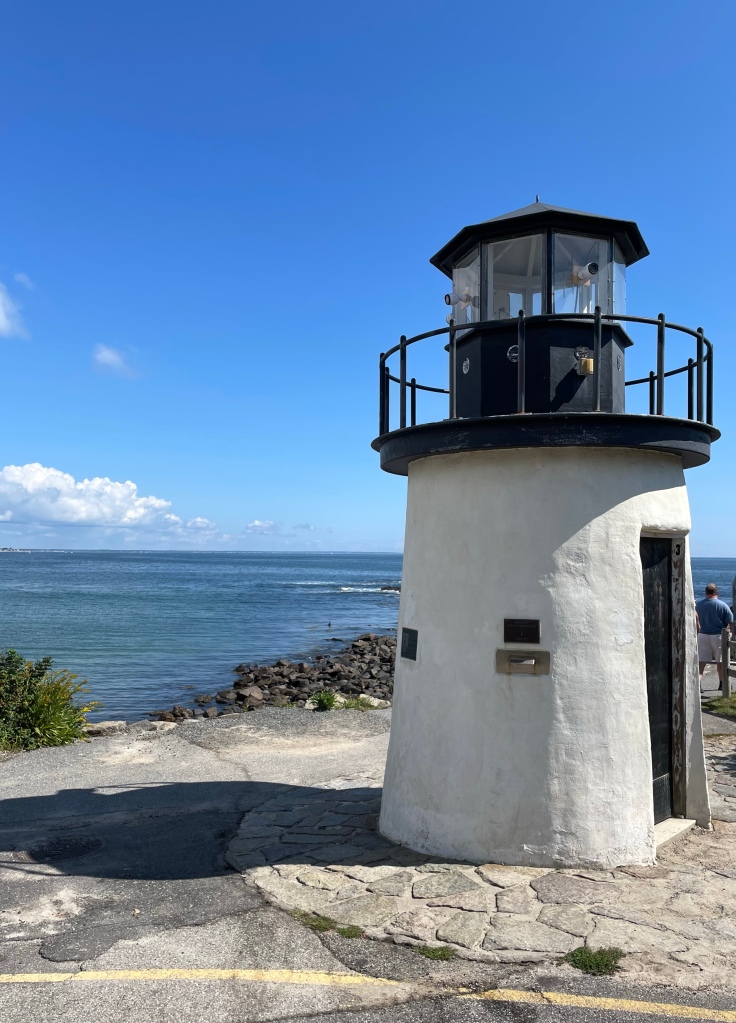
When you walk along Ogunquit’s Marginal Way cliff walk, it is missing one thing, an iconic Maine lighthouse… or is it? This mini lighthouse on the route always has people lining up to snap a picture and its quirky roadside attraction appeal is undeniable. The original Lobster Point Lighthouse was constructed in 1948 by Winfield C. Littlefield of the local family who first settled in the town. The “lighthouse” was designed by Grover S. Perkins. Much like the real lighthouses on the coast, the original structure was badly beaten by the salt air and high winds and parts of the structure were replaced. Notably, in 1993, the top (lantern) was replaced with fiberglass. Additionally, in 2009 the structure was upgraded, all from donations. The iconic roadside lighthouse will continue to ‘light the way’ for the droves of tourists and locals alike who navigate Marginal Way.
At the southern tip of Cape Elizabeth, Maine, two lighthouses have long provided a beacon to ships that sailed the rocky coast where the town protrudes into the ocean. The story of Cape Elizabeth’s Two Lights begins in 1614, when Captain John Smith, who sailed along New England’s shores, gave the appellation to the cape in honor of Princess Elizabeth, King Charles’ sister. After the American Revolution, Portland Harbor became an important trading port, and ships from all over the world would dock there. In 1827, the decision was made to use two lights at this location, a fixed light in the east tower and a revolving light in the west one, so the station would not be confused with the lights at nearby Portland Head Light or Wood Island Light in nearby Biddeford. After land was purchased for a mere $50, the towers were built, spaced by 895 feet and topped by octagonal wrought-iron lanterns housing lamps and reflectors, first shone their lights in October 1828. The stone towers were poorly constructed and keepers would consistently complain about poor working and living conditions. A $30,000 appropriation was made in 1873 to fund the erection of two matching sixty-seven-foot, brick-lined, cast-iron towers set 923 feet apart and featuring elegant Italianate details. In 1878, a new wood-frame, one-and-a-half-story dwelling was built for the principal keeper near the east tower, designed in the Gothic Revival style. During World War II, the west tower became an observation tower after a cylindrical turret was installed atop, which had had its lantern room removed after being discontinued. It was auctioned to the highest bidder in 1959. In 1971, actor Gary Merrill, ex-husband of Bette Davis, purchased the west tower for $28,000. Merrill sold it in 1983, and a new house was built next to it. The keeper’s cottage at the east tower is also privately owned, but the tower is retained by the Coast Guard, and is automated today.


 Buildings of New England