424 Massachusetts Avenue // 2002

Modern architecture can often compliment and blend into the context of historic neighborhoods, and this example in Boston’s South End neighborhood is one of the best examples locally. In 2002, developers eyed a long-vacant lot on the busy Mass. Ave corridor through the South End and began designs of a contextual addition to the streetscape. Dolezal Architecture was tasked with designing a modern residential building that would comply with local historic district regulations, a balance that can be difficult to accomplish. Employing traditional masonry, solid-to-void ratios, massing, and bays, but in a modern context, the building blends in with its surroundings yet is architecturally interesting. The building contains ten condos in a single building which reads more like two distinct structures.
Stoke Hall – University of New Hampshire // 1965

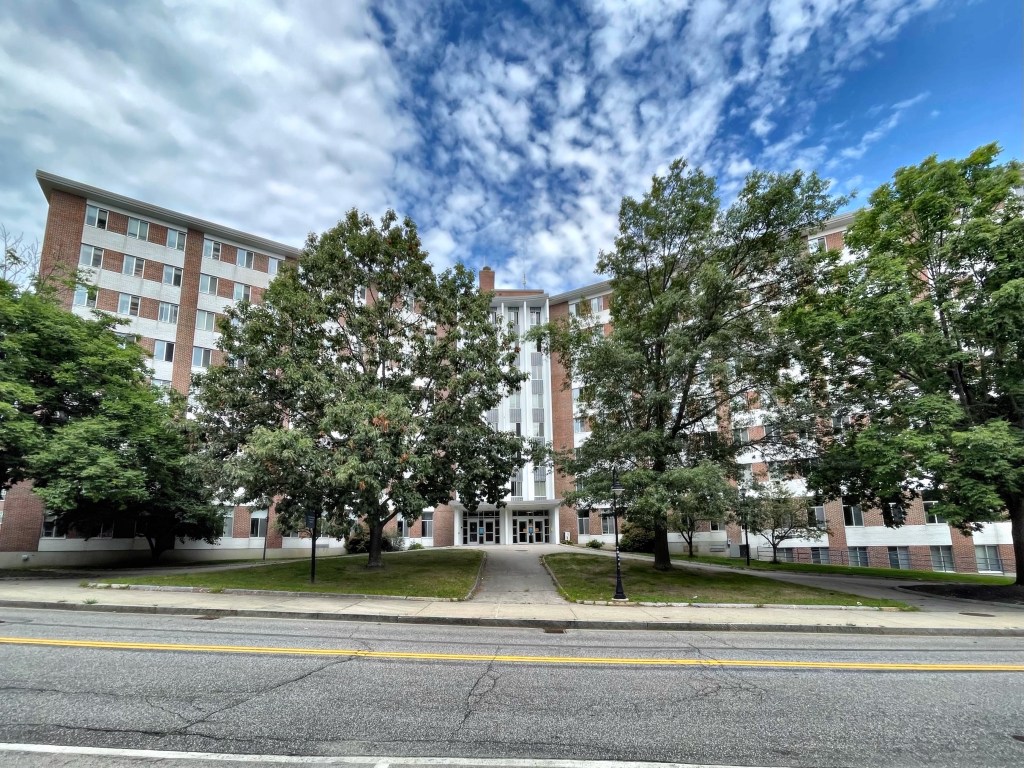
One of the most recognizable buildings (largely due to height) on the University of New Hampshire campus in Durham is Stoke Hall, a large dormitory on the outskirts of campus. The building was designed by Leo Provost, a New Hampshire-based architect, who actually graduated from UNH in 1936. Stoke Hall is named for Dr. Harold Walter Stoke, President of the University of New Hampshire from 1944-1947 during an enrollment surge that more than tripled enrollment and the beginning of a massive building program that continued for decades. The surge began with the conclusion of WWII, and the increase in young men going to college thanks to the GI Bill. Mr. Stoke got around as a President, as after three years at New Hampshire, he became President of Louisiana State University (LSU) until 1951. He later served as President at Queens College, New York, for six years. The Y-shaped building was constructed in two phases, the two wings facing the street were built in 1965, with the rear wing added the summer later. The design blends mid-20th century styles from New Formalism to Mid-Century Modern in a graceful way, especially for a college dormitory, though, I cannot speak for the interiors.

Castle House // 1964

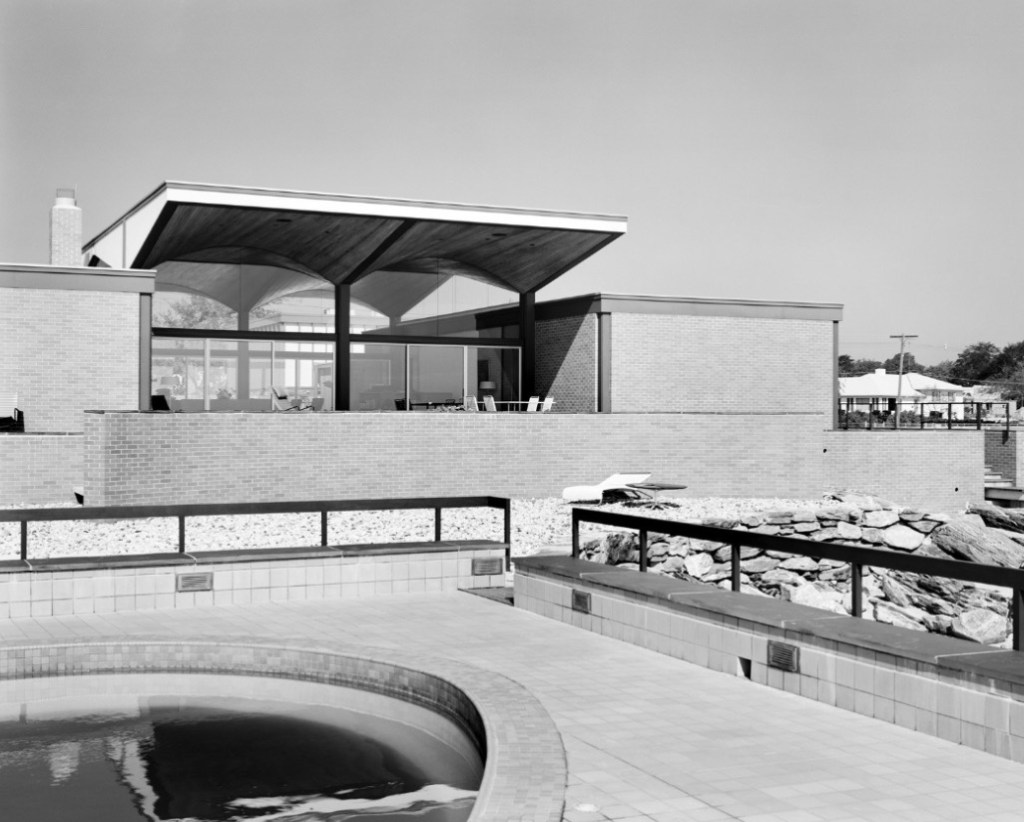
Perched atop the rocky coast of New London, CT, and seemingly at the base of the iconic New London Harbor Light, the “Castle House” stands as one of the most significant examples of 1960s residential design in a state known for such homes. The Castle House was completed in 1964 from plans by German-born American architect Ulrich Franzen (1921-2012), who attended Harvard’s Graduate School of Design after his service in WWII. After graduating, Franzen worked under I.M. Pei, until he formed his own firm, Ulrich Franzen & Associates, in 1955. The home’s signature element is its dramatic free-floating glass living room pavilion with cantilevered paraboloid vaults and flanking service wings, with a jaw-dropping cypress butterfly ceiling. Additionally, the oval pool sits over the harbor water and provides the best possible views of the 1801 lighthouse towering above. The house was recently updated by SchappacherWhite, a design firm who are known for their thoughtful Mid-Century Modern house preservation projects.

Massachusetts General Life Building // 1965

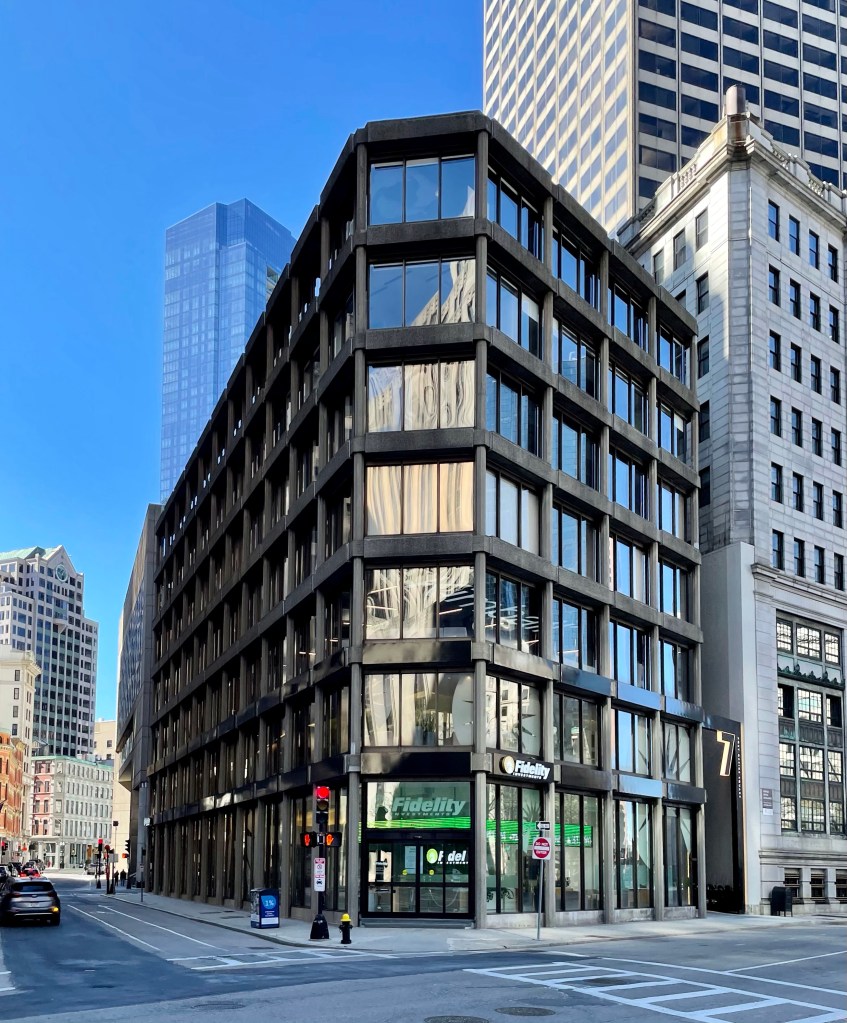
One of the lesser-known and written about examples of Brutalism in Boston is this refined, elegant take on the style, found in Downtown Boston. While many of you may dislike or even despise Brutalism, this building is a lighter version of the strong mass that we all know. The Massachusetts General Life Building was designed by Boston architect Frederick A. Stahl, who was trained in architecture locally at Harvard’s Graduate School of Design and MIT. Frederick Stahl was a perfect architect for Boston, he often worked on preservation projects including the rehabilitation of the Old South Meeting House, but showcased how 1960s architecture could compliment historic forms in a big way. For this building, he re-envisioned the historic granite commercial blocks found scattered around Boston, but showcased the ability of concrete to do more for much less massing. One of the key features of the design is that the two entrances are somewhat hidden, and are recessed in 14′ wide slots where the building is connected to the adjacent historic building. This was the aim to make this structure recess and not try and command the prominent corner. In the Mass. General Life Building, tenants also included the Loeb, Rhoades & Company, a brokerage firm based out of New York, that had offices in buildings in major financial centers all over the country. They later merged with Hornblower & Weeks, a Boston based firm, who had their own building in Boston.

Potter House // 1949

Cape Elizabeth is full of amazing late-19th and early-20th century summer cottages, but one of the best examples of early International-style architecture can also be found here! This house was designed by Marcel Breuer, one of the most famous architects working in the International Style in the mid- 20th century. The house plays on the traditionally New England vocabulary, but Breuer, a proponent of the Bauhaus Movement, turned it on its head. The house appears to emerge from its ‘ancient’ fieldstone foundation towards the street and levitates over the hilly landscape, supported by light columns. The house originally was painted a shade of white, common in the International style, but a later owner preferred the natural wood finish. The home is one of the most significant examples of the style in New England, and an uncommon example in Maine.

Socony-Mobil Building // 1956

One of the unsung heroes of Modernist architecture in New York City is one of my personal favorites, the Socony-Mobil Building at 150 E 42nd Street in Manhattan. Completed in 1956 from plans by Wallace Harrison of the iconic firm of Harrison & Abramowitz, the development stands out amongst the competing masonry buildings and glass skyscrapers in the area. At the time of its completion, the Socony–Mobil Building was the first skyscraper to have its exterior wall entirely clad with stainless steel, as well as being the largest air-conditioned building in the world! The base is clad with opaque blue glass panels framed with stainless steel moldings; above, the tower and wings are clad in over 7,000 embossed stainless steel panels. The firm reviewed over 100 different designs until they settled upon the four raised relief panels: a rosette-like motif for above and below the windows; a large and small rosette to flank the windows, and two variants displaying a design of interlocking pyramids. The panels were likely designed by or inspired by Oskar Nitzchke (1900-91), a German-born designer who worked at the firm and worked on the similar style Alcoa Building (1953) in Pittsburgh. The building was developed as a speculative project, but the largest tenant, the Socony-Mobil Oil Company, later renamed Mobil, helped to give way to the naming rights. The building was landmarked by the City of New York in 2003.

New Kent Memorial Library // 1972

Between 1900 and 1970, the town of Suffield doubled its population, and the 1899 public library was outgrown. The city gathered funds to construct a new library, knowing that the endowment for the day-to-day operations of the library by Sidney Kent, in memory of his parents, would transfer to a new building as long as the name carried with it. The town hired Warren Platner, an architect, interior designer and furniture designer, based out of New Haven. Platner designed the Modern library with a concrete frame, faced with pink stone and white painted brick above, surrounds a central garden court. The flat coffered concrete roof and overhanging concrete project outwards over the terraced exterior courtyards. The interior is on five floor levels connected by gradual ramps with no stairs inside (at least at the time of construction). The town proposed a plan to demolish the library in 2008, replacing it with a larger library, but it was voted down by residents, saving (what is believed to be) the only free-standing Platner building remaining in the country.

Eastham Public Library // 1897

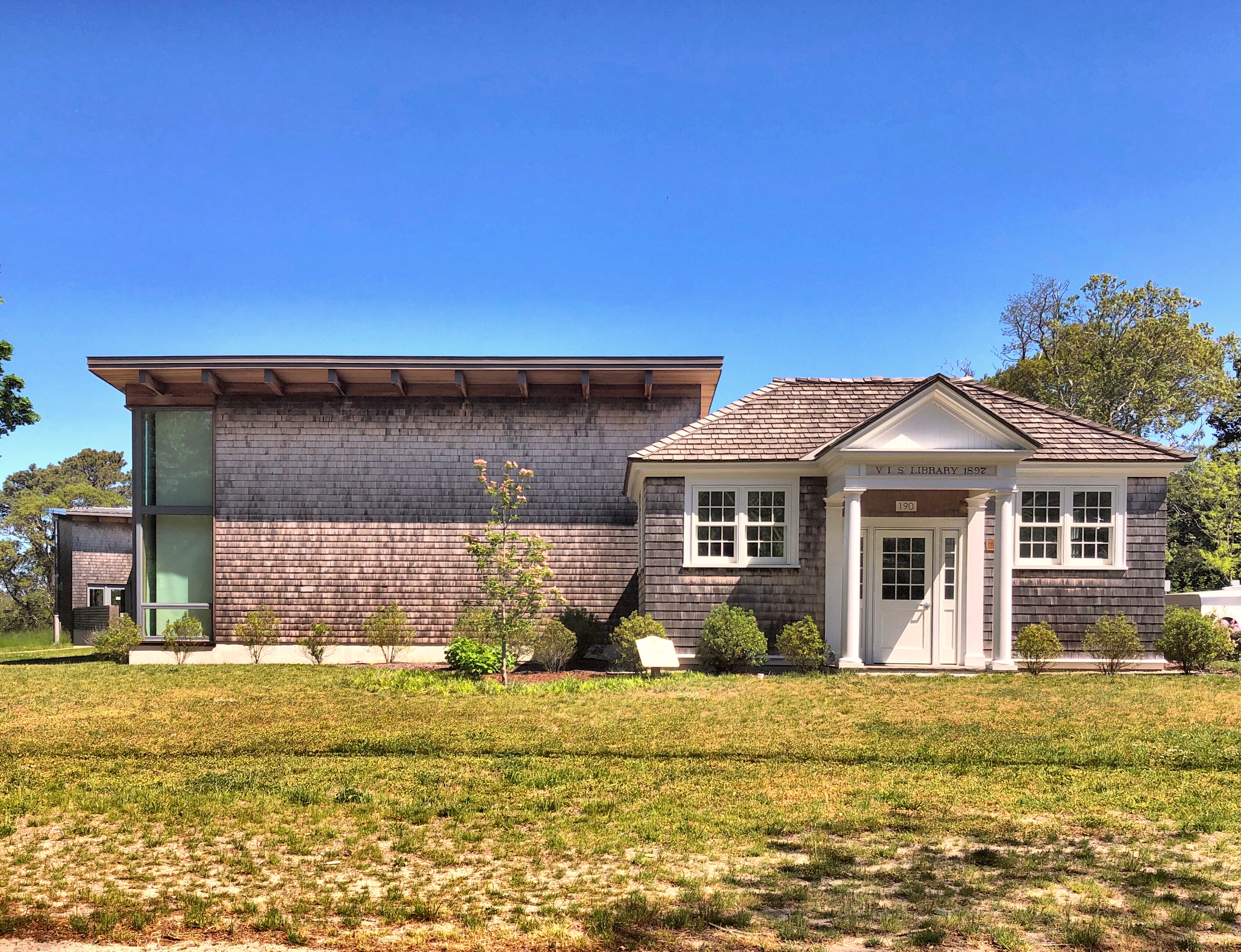
Built in 1897, the ever-charming Eastham Public Library has served the town for over 100 years, constantly adapting and growing to meet the needs of the community. Originally constructed as a one-room hipped-roof shingled library building, the tiny space was appropriate for the town of just 500 people in 1900. By the 1960s, the rear ell was replaced with a large addition, effectively quadrupling the square footage of the library, but keeping the original structure intact. The 1960s addition was eventually deemed insufficient and was replaced in 2016 with the gorgeous modern addition by Oudens-Ello Architecture of Boston. The addition compliments the quaint one-room original structure with the use of materials, yet clearly distinguishes itself as 21st century design.