Eddy-Cutler House // c.1806

Located next door to the Rebecca Maxwell Phillips House on State Street in Warren, Rhode Island the Eddy-Cutler House stands as possibly the finest brick Federal style building in the waterfront town. In July 1806, Benjamin Eddy purchased this house lot and began construction on his new mansion. Born in Warren in August 1772, he married Abigail Kelly in 1794 and began a career as a sea captain. Like many of the town’s wealthiest residents, Benjamin Eddy was engaged in the slave trade. Captain Benjamin Eddy was captain of at least three slave voyages, delivering 139 captives to the Charleston docks in June 1806 alone. In 1808, just before the “Act Prohibiting the Importation of Slaves” he purchased and imprisoned 176 Africans – the largest number ever carried on a Warren slave ship. Nineteen died during the return voyage. When he reached Charleston, South Carolina the remaining 157 people were sold into slavery. At the time, the sale would have returned nearly $33,000. He would return home to this mansion on money profited from human suffering, a story as American as apple pie. In 1871, the Eddy Homestead was transferred to Charles R. Cutler, a ship master and whaler who had many successful voyages to the Indian Ocean.

Rebecca Maxwell Phillips House // 1804

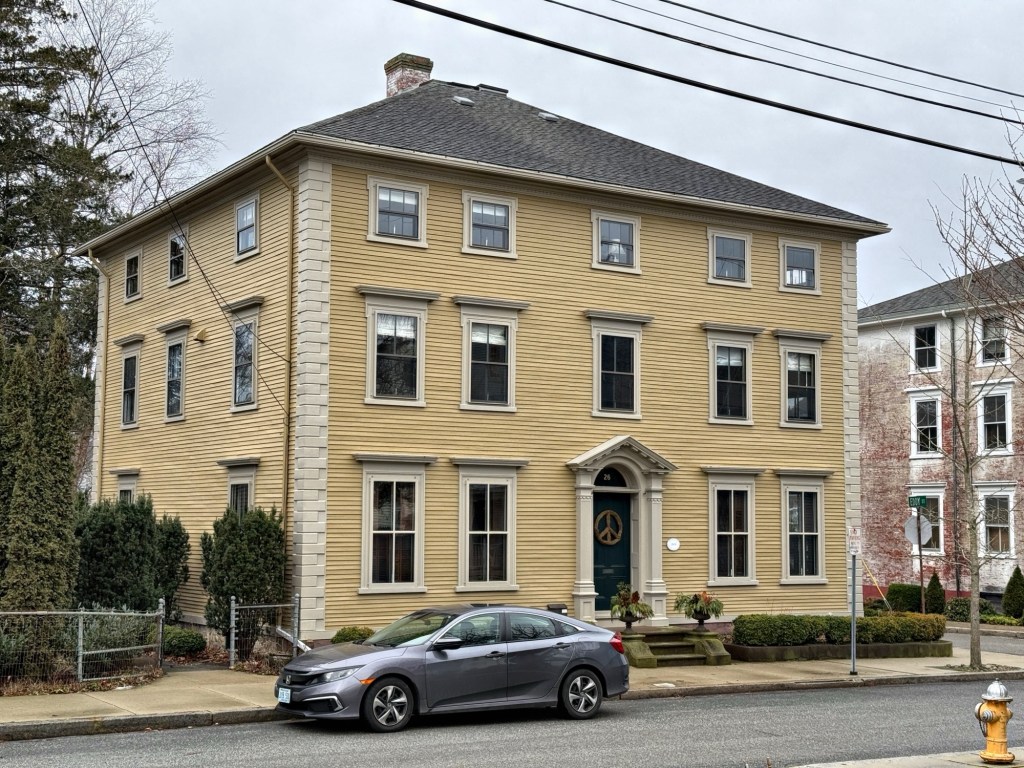
Another of the “wedding gift houses” in Warren, Rhode Island is this Federal style mansion on State Street! The house was funded by James Maxwell, a wealthy local merchant who profited by the transport and sale of enslaved Africans. A large part of Maxwell’s wealth was attributable to the sale of enslaved captives, such as those aboard Maxwell’s schooner Abigail, which left Warren in September 1789. The captain of the vessel, Charles Collins, purchased 64 slaves on the coast of Africa, and sold them in the Americas by June of 1790. Of the 64 captives embarked on the ship, only 53 survived the voyage. This home was built as a wedding gift to his daughter Rebecca and her new husband, William Phillips. The three-story mansion exhibits a pedimented fanlight transom, corner quoins, and a shallow hipped roof. The property has always included two lots, the other lot has long had a Japanese Beech tree, brought from Japan by Commodore Joel Abbot in 1853.

Francis M. Dimond House // 1838

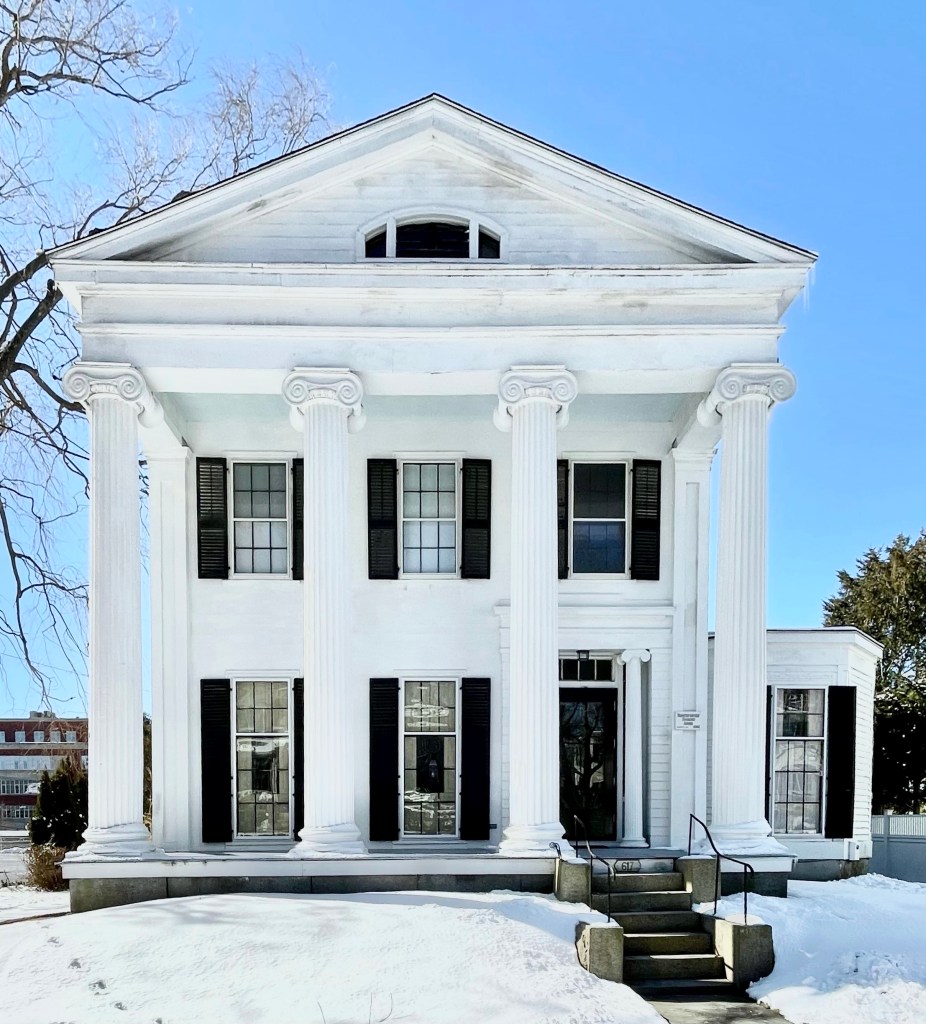
Built in 1838, just three years after the Talbot House in Bristol, Rhode Island, (just two houses away), the Dimond House remains as the other of the two remaining Greek, temple-front homes in town. Like the Talbot House, this home was also designed by Russell Warren, but is unique as it is in the tetrastyle (with four columns) and utilizes the Ionic order with the capitals featuring volutes (scrolls). Additionally, a polygonal bay can be seen on the right side of the home. Images show that the bay features stunning lancet windows! The home was designed for Francis Moore Dimond (1796-1859), who was born in Bristol, and later traveled to the Caribbean and served for several years (1832-1835) as the United States consul at Port-au-Prince. It is entirely possible that Dimond was involved in the slave trade, but I wasn’t able to find more than a couple articles referencing his connections to the infamous DeWolf Family. From 1842 to 1849, Dimond was United States Consul to the Mexican port city of Veracruz. When he returned to Rhode Island, he promoted the Southern Pacific Railway and presided over its construction. He was elected lieutenant governor of Rhode Island in 1853. He became the governor of Rhode Island when Philip Allen, then Governor, resigned to become a Senator. He held the governor’s office just one year. He moved back to Bristol and lived out his final days at his home.