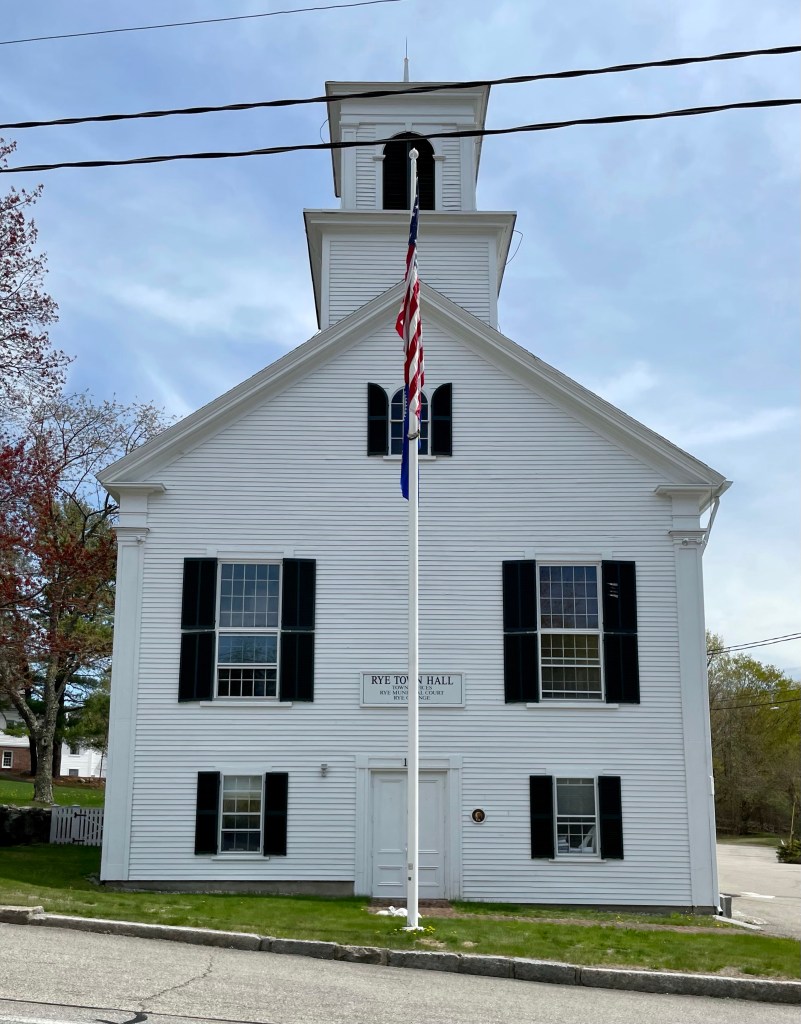
Rye, New Hampshire sits on the short coast of the state, between the busy towns of Portsmouth and Hampton, and provides a respite from the swarms of tourists and beach-goers alike. Modern-day Rye was the first settlement in New Hampshire by Europeans, and was originally named Pannaway Plantation, established in 1623 at Odiorne’s Point (more on that later). The settlement was eventually abandoned for Strawbery Banke, which became Portsmouth, the historic port town we know today. The town was later a village of New Castle, and was known as Sandy Beach Village, before it was called “Rye”, for Rye in Sussex, England, and incorporated as its own town in 1785. The town met in a Meeting House until it purchased an old 1839 Methodist church in town. In 1873, the building was purchased by the town of Rye for $1000, with an additional $2658 spent on renovations, which added a new ground floor to increase the height from 1.5 stories to 2.5 stories, added 10 feet in depth to the building, and the two-stage tower and belfry. The Greek Revival building has long been a landmark in town, hosting dances, concerts, whist parties, singing schools, oyster parties and immunization clinics, beyond the typical governmental functions. There were calls to demolish the building for a modern town hall, which saw resistance (thankfully) and now the town has agreed on a land-swap with a bank, demolishing an old house to take over the bank building, turning it into some town offices.
 Buildings of New England