Old Nantasket Beach Police Station // c.1930

The area of Nantasket Beach in Hull in the late 19th century was a hotbed of taverns, thievery, and brothels. To counter this trend of unsavory uses, the Metropolitan Park Commission (MPC) of Greater Boston acquired about 25 acres of land at Nantasket, which included roughly one mile of shoreline extending north from Atlantic Hill in 1900. The initial appropriations provided for only minimal facilities, such as a bathhouse and a few incidental buildings, one of which was a waiting room for those arriving or departing from the new railroad station (since demolished) at the beach. The MPC hired the Olmsted Brothers landscape architects to design the paths and landscaping for the new park, and they worked with architects Stickney & Austin who designed many of the early buildings here. This stucco structure was built around 1930 and served as MPC offices and a police station until 1992. The building has been vacant since 1992, but a recent push to convert the nearly 100 year old structure into the Nantasket Center for the Arts is slowly materializing. Fingers crossed to see this building preserved and used for the arts!
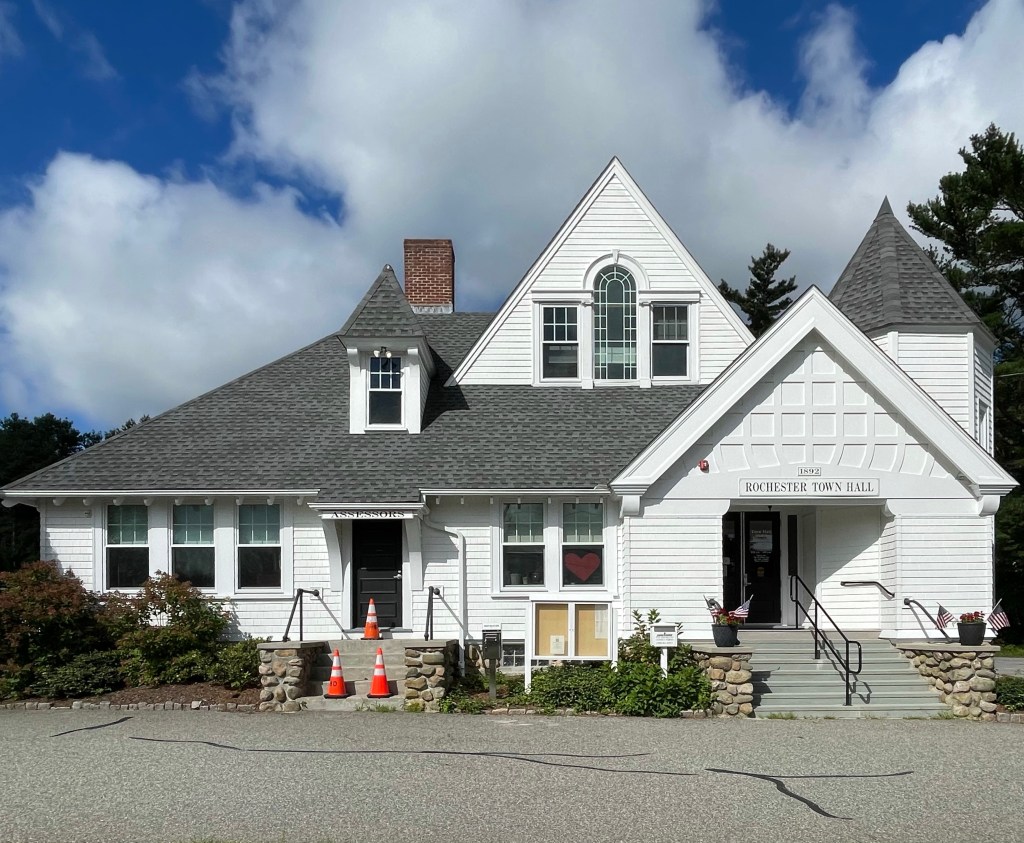
Rochester Town Hall // 1892

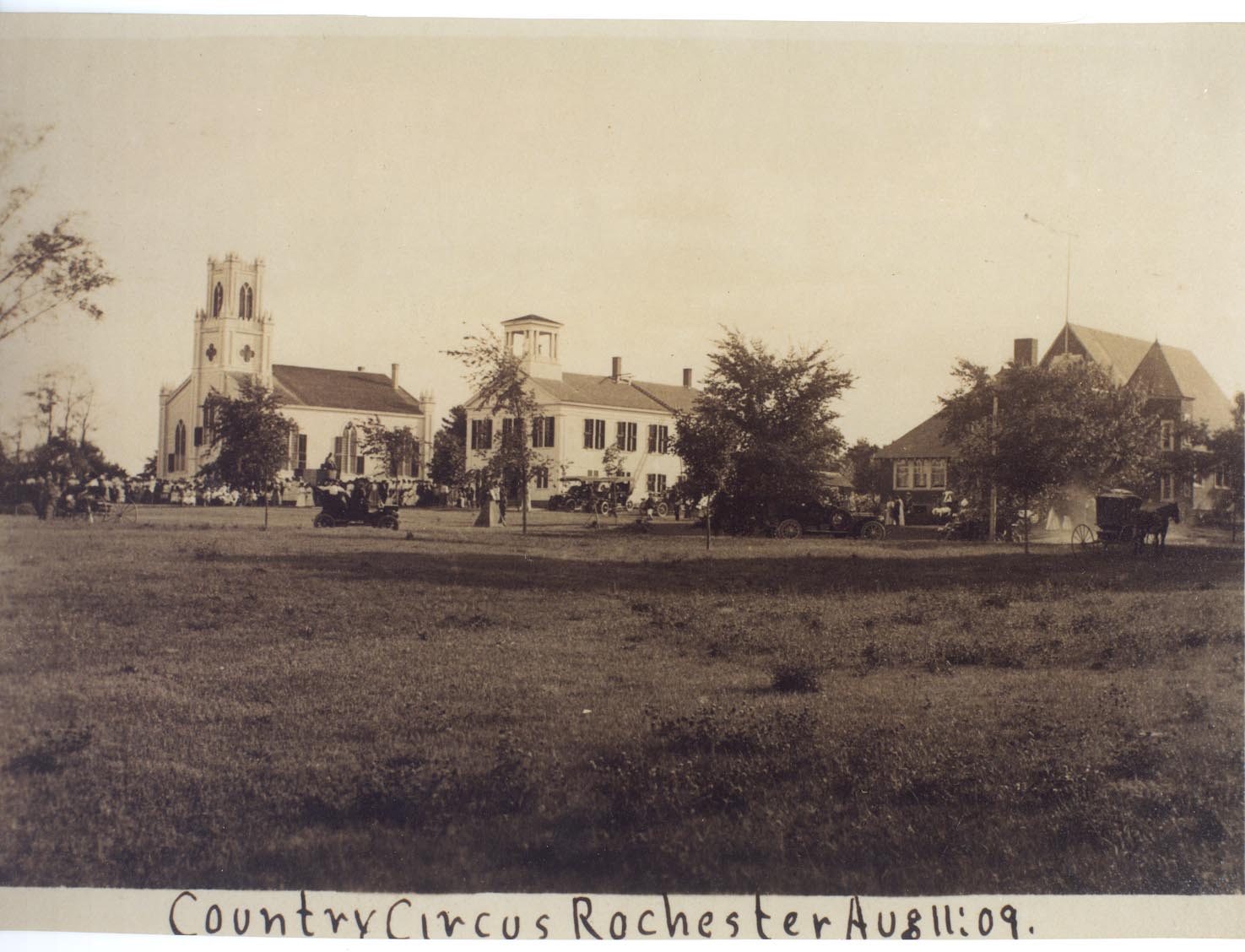
In 1679, three years after the end of King Phillip’s War, an armed conflict in 1675–1678 between indigenous inhabitants of New England and New England colonists, land that would become Rochester, Mattapoisett,
Marion, and Wareham was purchased from King Phillip, and immediately divided among 32 proprietors of “Old Rochester.” The first white settlers took up residence in 1680, and the Town of Rochester was incorporated in 1686. Rochester town center was formally established in 1697 when land was set aside for a meetinghouse, burying ground and training field. Rochester’s first meetinghouse, built in 1699, served as a church and town building. A larger meetinghouse was built in 1717, and a third in 1760, doubling in size every time as the town’s population grew. The old buildings were insufficient for the growing farming town, and wealthy widow Elizabeth Leonard funded half the cost of a new town hall building. The current structure on the town green was built in 1892 and is an uncommon example of a Queen Anne style town hall in Massachusetts. The building originally was painted a darker color, common in the style, but was given a bright white paint scheme to blend in with the older buildings on the Green.

Harvey Everest Cottage // c.1890

Built during the 1890s for real estate agent Harvey W. Everest, this home in Marion has such a stately presence even as a cottage. The Colonial Revival home features a large gambrel roof with two shed dormers and one central gable dormer. Mr. Everest in was active in town affairs, he petitioned to build a section of sea wall in town to help protect the buildings from storms and flooding during inclement weather. After building this home, he lived out his final days here, until the old age of 92. There is a horse hitch near the street too!

Blankinship House // c.1840

Across from the Marion Town Hall (last post), this perfect little cottage showcases what makes coastal New England so special. Built around 1840, by and for Warren Blankinship, a carpenter in town, the home represents a well-preserved example of a modest Greek Revival home. The home is clad in cedar shingles, a hallmark of many coastal homes in New England. White Cedar shingles are so popular historically as the species is such a hard wood that pieces are naturally insect and rot resistant and hold up amazingly well to salt air. Early colonists noted the use of the tree for canoes and other objects by Native people and followed suit, constructing homes from the native tree. The shingles were usually left exposed, and they would eventually weather over time. The exposed, cedar shingles have been a classic look in coastal homes since and even today, evoke a strong sense of place when seen on an old home here.

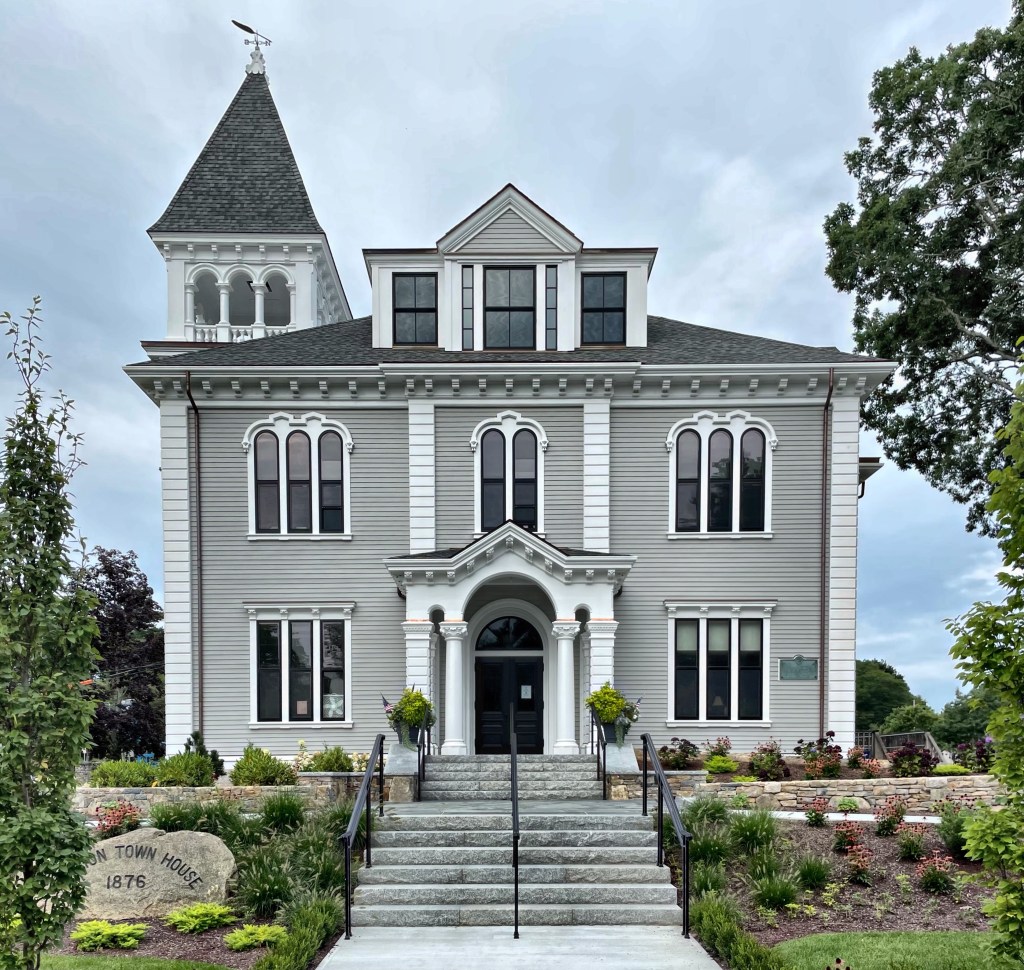
Marion Town Hall // 1876

Welcome to Marion, Massachusetts! Colonized in 1679 as “Sippican”, the town was once a district of adjacent Rochester, Massachusetts. The name, which also lends itself to the river which passes through the north of town and the harbor at the heart of town, was the Wampanoag name for the local tribe that once utilized these lands. Native settlements in present-day Marion dates as far back as 3000 B.C. as the local people were members of the Wampanoag tribe who, when the Pilgrims came, lived in a number of villages in Southeastern Massachusetts under the leadership of the great chief Massasoit. By the 19th century, the town was mostly known for its many local sea captains and sailors whose homes were in town. Today, the coastal town is known for its charming village and large waterfront homes, oh and amazing architecture!

This building was constructed in 1876 by Mrs. Elizabeth Taber (1791-1888), who, at the age of 85, founded Tabor Academy in town. She named it after Mount Tabor in Palestine rather than after herself. The school was built towards the end of the “Age of the Academies”, when in 1852, Massachusetts became the first state in the country to make education compulsory. While some major private institutions already existed, many more were founded in the mid-19th century. Tabor Academy served as a private school for boys and girls over 12 years of age, and was to remain free for local students. With the rise of public schools in the state, many academies began to struggle with admitting students, especially those that had parents willing to pay additional money for enrollment. The school struggled around the Great Depression and thus, traded buildings with the Town of Marion in the 1930s and this building became the Marion Town Hall, a use it retains to this day. The building itself is a stunning Italianate design constructed from plans by Boston architect William Gibbons Preston.

Stay tuned for more buildings and history on one of my favorite Massachusetts towns!

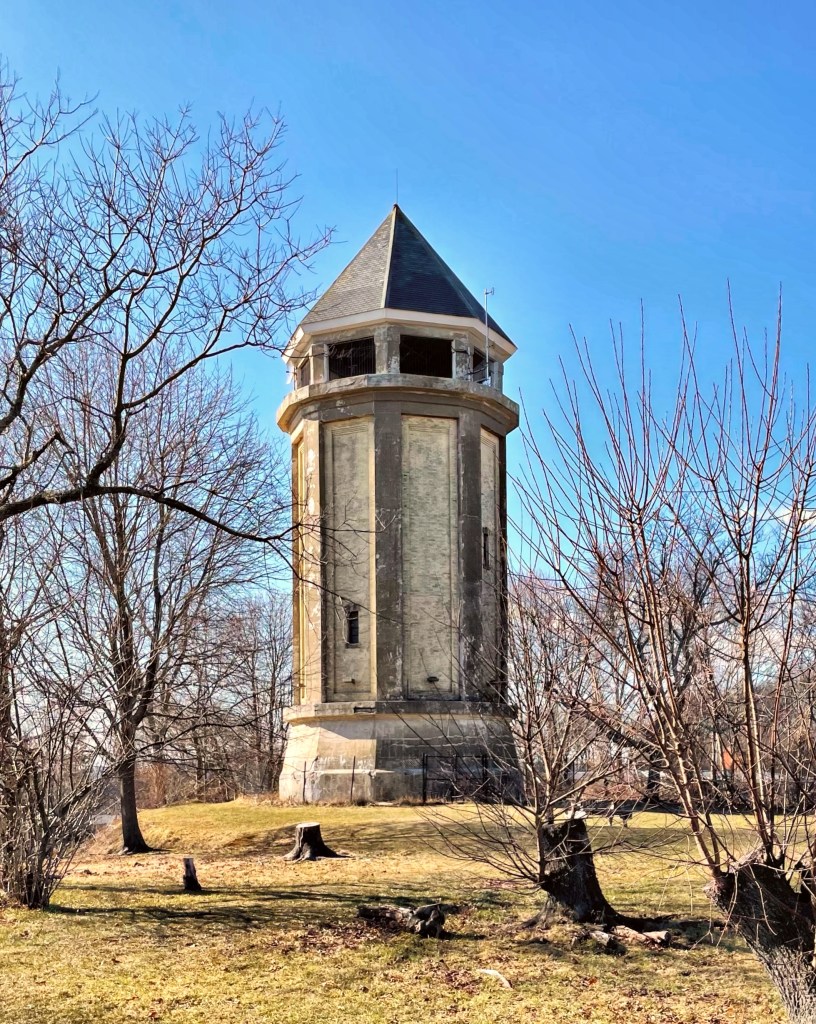
Fort Revere Tower // 1903

The Town of Hull, Massachusetts was first settled in 1622 and officially incorporated in 1644, when it was named for Kingston upon Hull, England. The town juts out into the Boston Harbor, which historically had provided as a defense for approaching vessels into the harbor. As early as 1673, Telegraph Hill in Hull, was used as the highest point in the Boston harbor area from which signals could be sent warning the approach of vessels. The site was first used as a fort in 1776 to defend the port of Boston. Fort Independence was built on top of the hill in 1776-1777, to be succeeded by the much larger Fort Revere in 1903 (see next post). The first telegraph tower was built on the hill in 1827. Several other telegraph stations later occupied the site until 1938, when radio communications made the site obsolete. Though little of the original Revolutionary-era fort remains, the fort which began construction at the turn of the 20th century lasts as a stunning reminder to the importance of coastal defenses, high atop hills. At the highest point of Telegraph Hill this water tower which rises 120 feet off the ground was built in 1903 for the new Fort Revere as the first reinforced concrete water tower in the United States. At the top of the tower, an observation deck (now closed) was also used to send messages to other harbor defenses. The tower was restored in 1975 was designated an American Water Landmark in 2003. It was periodically open to the public until mid-2012 when it was closed due to safety concerns.