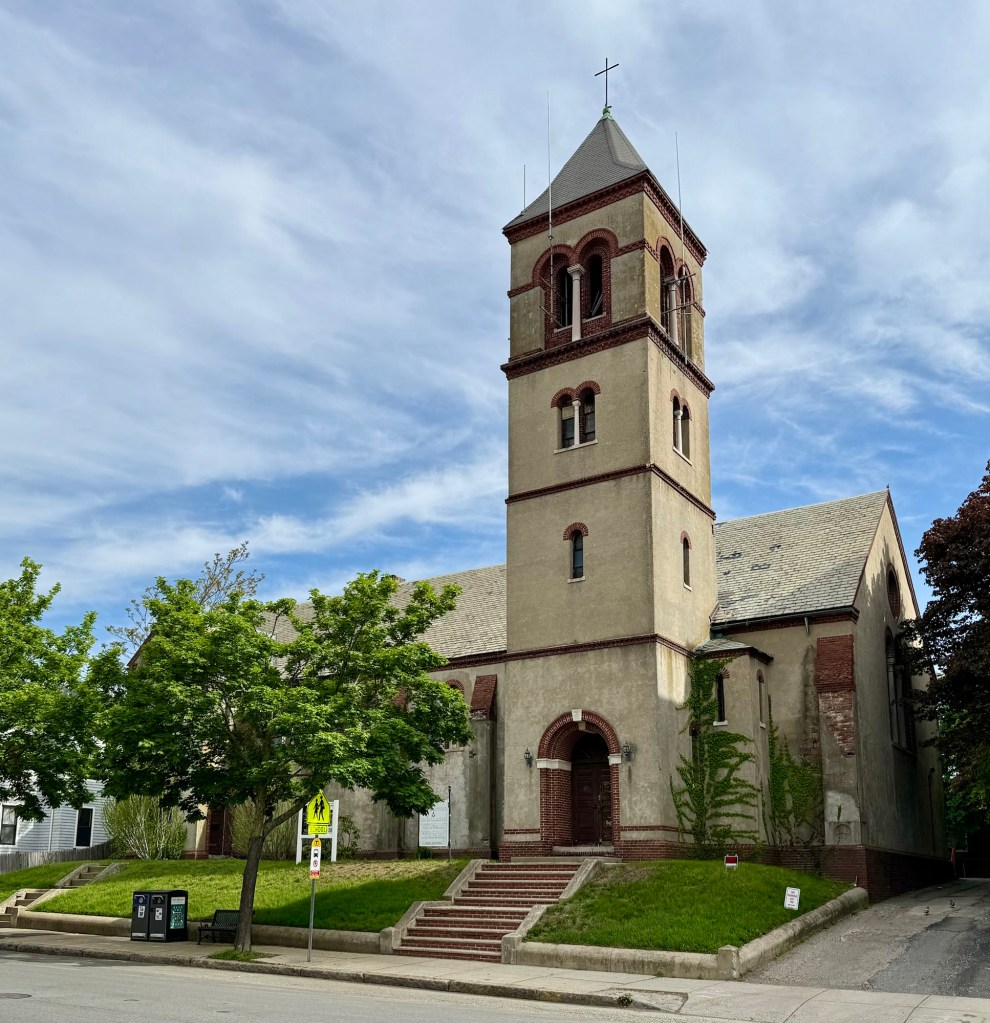
First Universalist Church of Somerville // 1917

The First Universalist Church of Somerville is located on the north side of Highland Avenue across from the First Unitarian Church of Somerville, in a completely different design. The congregation acquired this site in 1915, and the church was built from 1916 to 1923 to a design by the noted ecclesiastical architect Ralph Adams Cram, who produced a somewhat more Romanesque plan than the typical Gothical Revival work he is best known for. One of the key members of the building committee was Gilbert Henry Hood of the Hood Milk Company family. The new church was planned to house an “assembly room,” Sunday school classes, and a parish house. The church operated here for decades, but most recently was home to the Highland Masonic Building Association as the King Solomon’s Lodge. The lodge moved from the building and the property was purchased by a developer who hoped to demolish the building and erect a housing development. The building was deemed significant and “preferably preserved” by the Somerville Historical Commission, and landmark designation was initiated. The building was recently re-listed for sale, and would make a great adaptive reuse or even partial demolition for housing incorporated into the old church. Kudos to the Somerville Historical Commission for standing firm on this significant church by a nationally recognized architect.
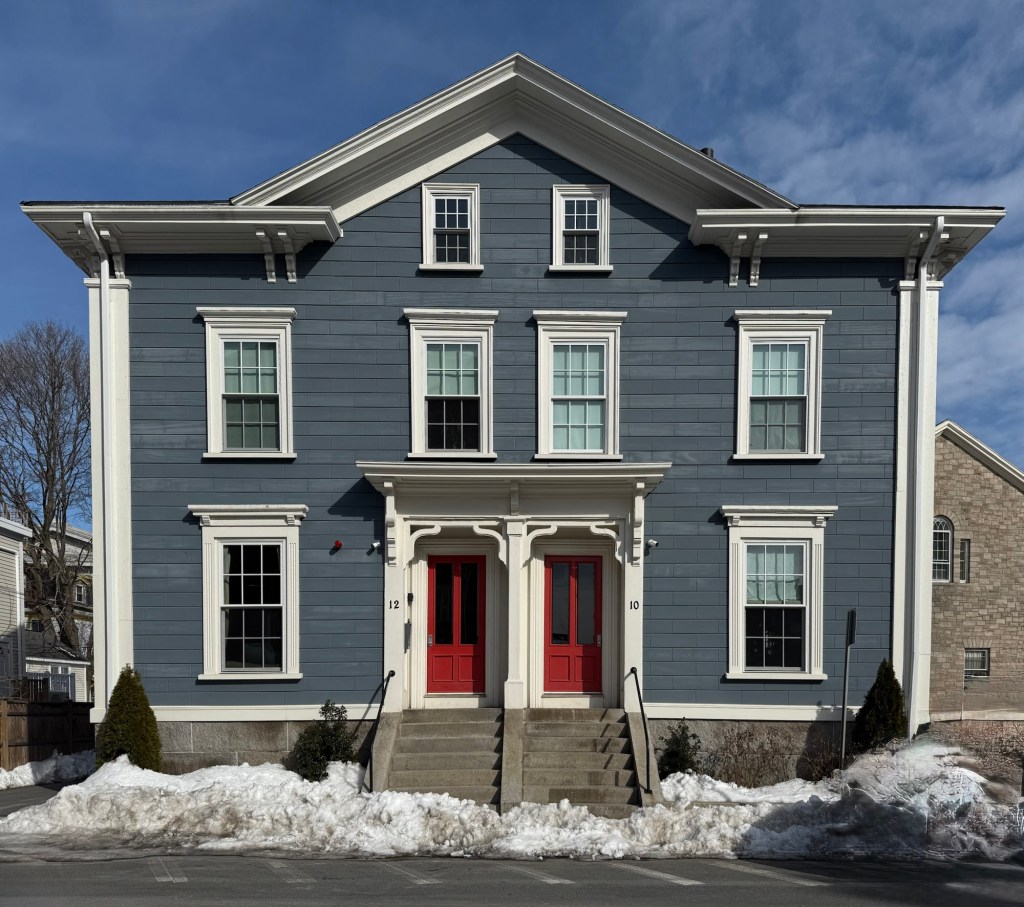
William Hunt Double-House // c.1858

The William Hunt Double House, located at 10-12 Lynde Street in Salem, is a 2 ½ story wood-frame Italianate building that showcases the emerging presence of the Victorian style on residential buildings in the mid-19th century, even in cities with strong support for Colonial and Federal period styles. The two-family house was built by William Hunt, a prominent Salem merchant, as a rental property with occupants of the building in 1859 including: John W. Lefavour, a cashier, and Benjamin F. Faber, a merchant. The property remained in the Hunt Family for three generations, and was converted to a boarding house in the 1930s. In November 2018, a fire gutted much of the building, displacing the residents, and concerned neighbors as to the future of this great property. Luckily for us, the owners hired  Seger Architects, Epsilon Associates and Groom Construction to fully restore the building to its former glory. The resulting project won a Salem Preservation Award and received Federal and State Tax Credits to offset restoration costs. What a great success story!

Freetown Village School // 1794

The Freetown Village School was originally built in 1794 as a lawyer’s office. At that time, it was half as wide as its current configuration. Around 1800, the office became a private academy for children of sea captains and ship-builders in Assonet. In 1858, the Town of Freetown purchased the building and turned it into a public school. By 1906, the school was enlarged and given the Colonial Revival detailing we see today. Like many smaller schools in New England, this school building was outgrown after WWII, and converted to other uses for the town, with uses from committee meeting space to storage. The schoolhouse was finally abandoned at the end of the 20th century, and stood empty. The roof developed leaks and water infiltration became a serious problem. In 2011, the Town approached the Massachusetts Historical Commission for an Emergency Grant, and was granted $30,000 for the preservation and restoration of the decaying building. The roof has been replaced and structurally repaired, but more work is to be done. I can’t wait to come back and check up on this beauty.