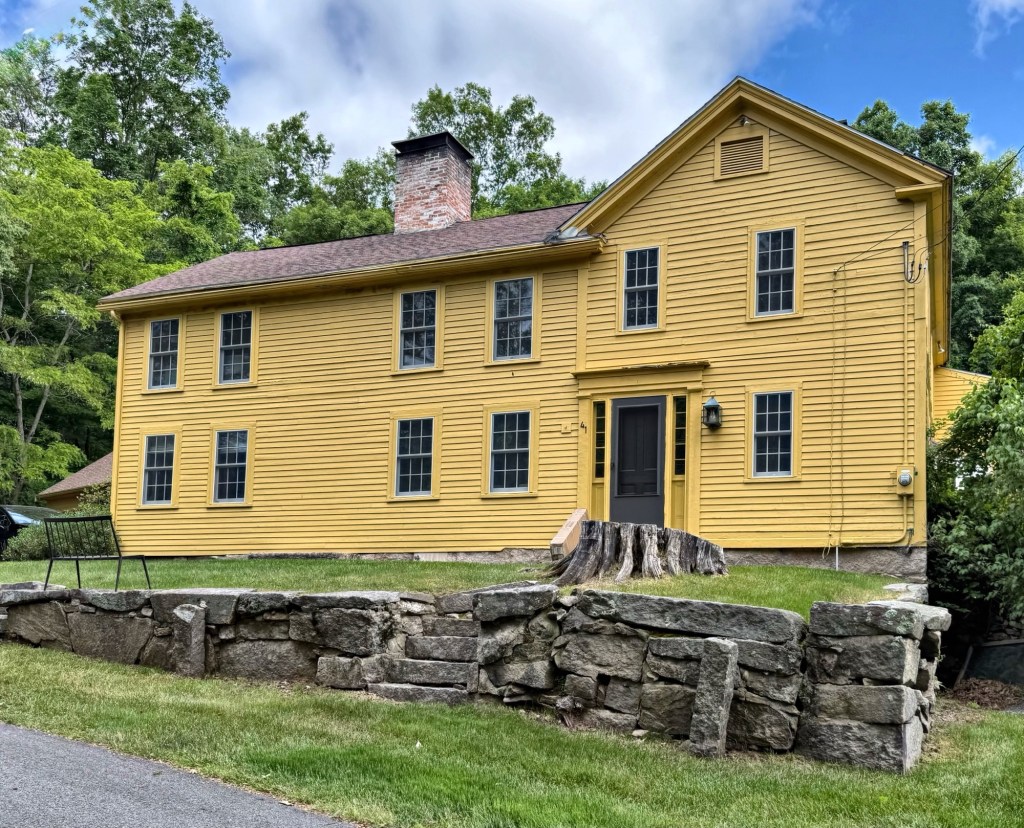
The Corbett House is a charming Federal-period house in Westborough, Massachusetts, and was the birthplace of Henry W. Corbett, an important figure who helped develop Portland, Oregon in the 19th century. This house was built around 1789, the year that Henry’s parents, Elijah and Malinda Corbett, married. The property was farmed for years until Elijah Corbett began an axe manufacturing company here, becoming the first edge-tool manufacturer in Westborough. The rear ell was likely added in 1815 for this purpose. Elijah retired and the family sold the property in 1831 to Lawson Harrington, who continued the business until around the time of the Civil War. The Corbett family settled in New York, where Henry would engage in business. By the mid-19th century, westward expansion and opportunity took hold, and the Oregon Territory became a U.S. territory, leading Henry to establish business there, followed by many of his siblings. Corbett set sail from New York on the long voyage through the Straits of Magellan around Cape Horn up the Pacific Coast to Portland with $25,000 worth of goods to establish business in this new territory. Henry would become City Treasurer of Portland, member of the city council and chairman of the Republican Oregon State central committee. In 1867, he was elected as a Republican to the United States Senate, serving until 1873. Who would have guessed that this house in Westborough would have connections to the growth of Portland, Oregon!?
 Buildings of New England