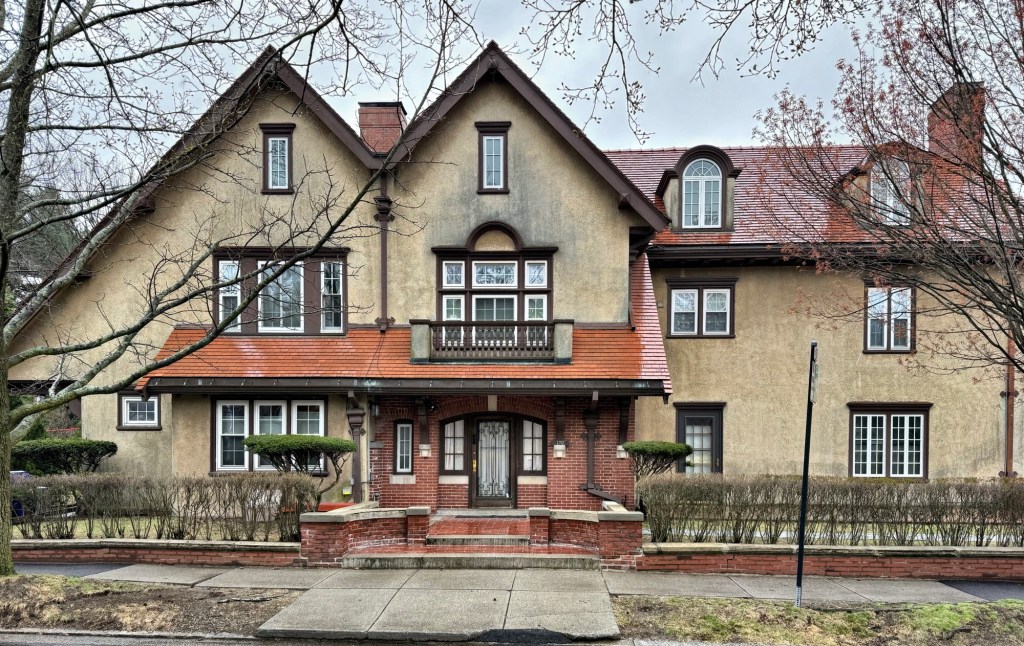
Old Nantasket Beach Police Station // c.1930

The area of Nantasket Beach in Hull in the late 19th century was a hotbed of taverns, thievery, and brothels. To counter this trend of unsavory uses, the Metropolitan Park Commission (MPC) of Greater Boston acquired about 25 acres of land at Nantasket, which included roughly one mile of shoreline extending north from Atlantic Hill in 1900. The initial appropriations provided for only minimal facilities, such as a bathhouse and a few incidental buildings, one of which was a waiting room for those arriving or departing from the new railroad station (since demolished) at the beach. The MPC hired the Olmsted Brothers landscape architects to design the paths and landscaping for the new park, and they worked with architects Stickney & Austin who designed many of the early buildings here. This stucco structure was built around 1930 and served as MPC offices and a police station until 1992. The building has been vacant since 1992, but a recent push to convert the nearly 100 year old structure into the Nantasket Center for the Arts is slowly materializing. Fingers crossed to see this building preserved and used for the arts!

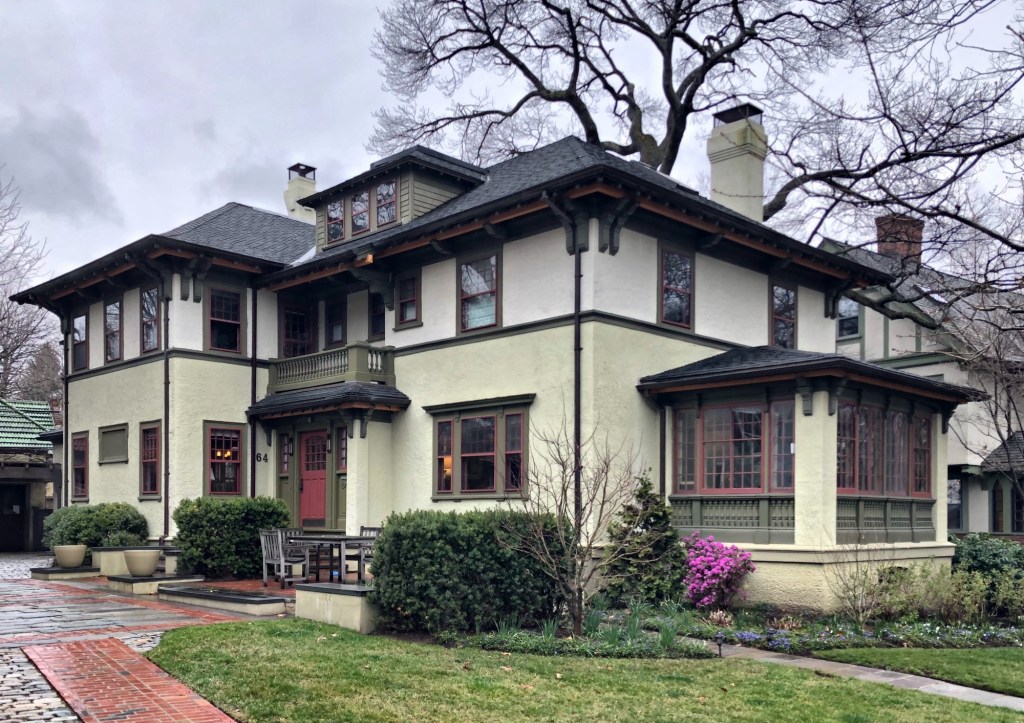
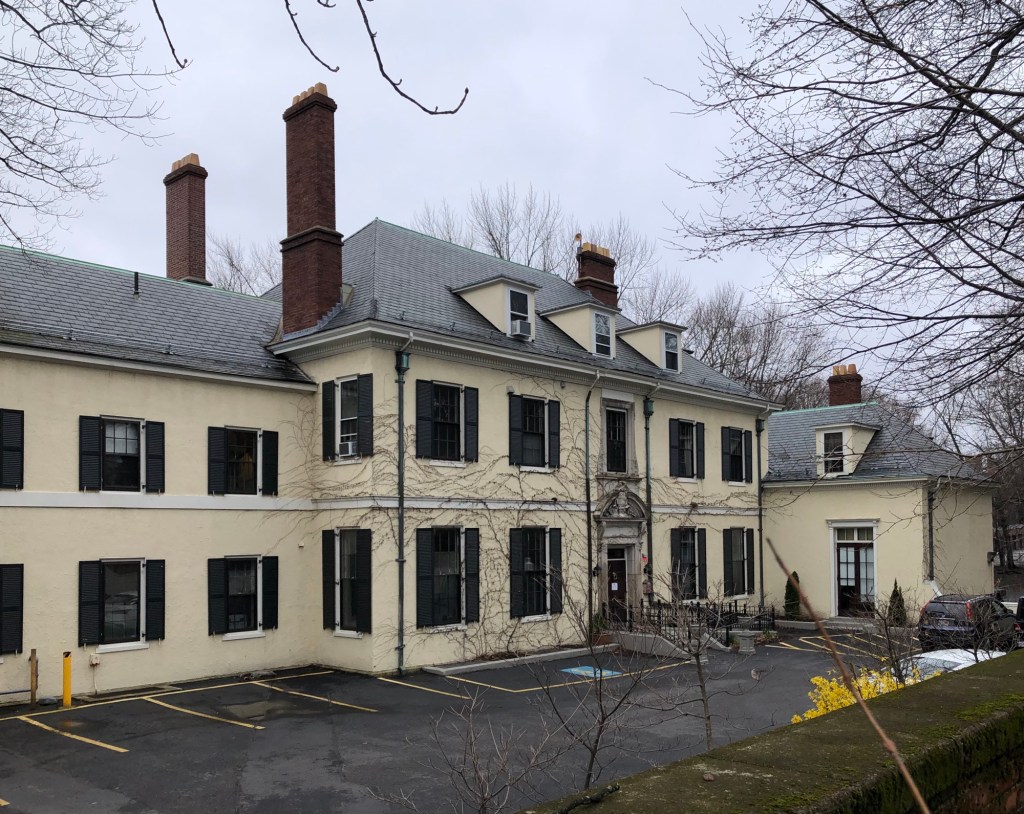
Pope-Gardner-Robbins House // c.1870

Historians date the bones of this house in the Longwood section of Brookline, Massachusetts to the 1870s (or earlier), but its present appearance is definitely from the early 20th century. This is the Pope-Gardner-Robbins House on Colchester Street, a lovely span of stucco-sided homes in one of my favorite neighborhoods in the Boston area. An early (1874) map of the area shows this was the home of T. B. Pope, and later purchased by Harrison and Laura Gardner, husband and wife. Harrison Gardner was a founder (and served as treasurer) of the Boston Red Stockings of the new National Association of Professional Base Ball Players (NABBP). The Red Stockings eventually became the Boston Braves baseball team and are now the Atlanta Braves. The multi-lot property was likely rented by Gardner for supplemental income and was eventually sold to Annette R. Robbins, who seemingly had this home renovated in the 1920s and others nearby built or renovated as well. The house is today an excellent (and fairly uncommon) example of a Colonial Revival style house with stucco siding.

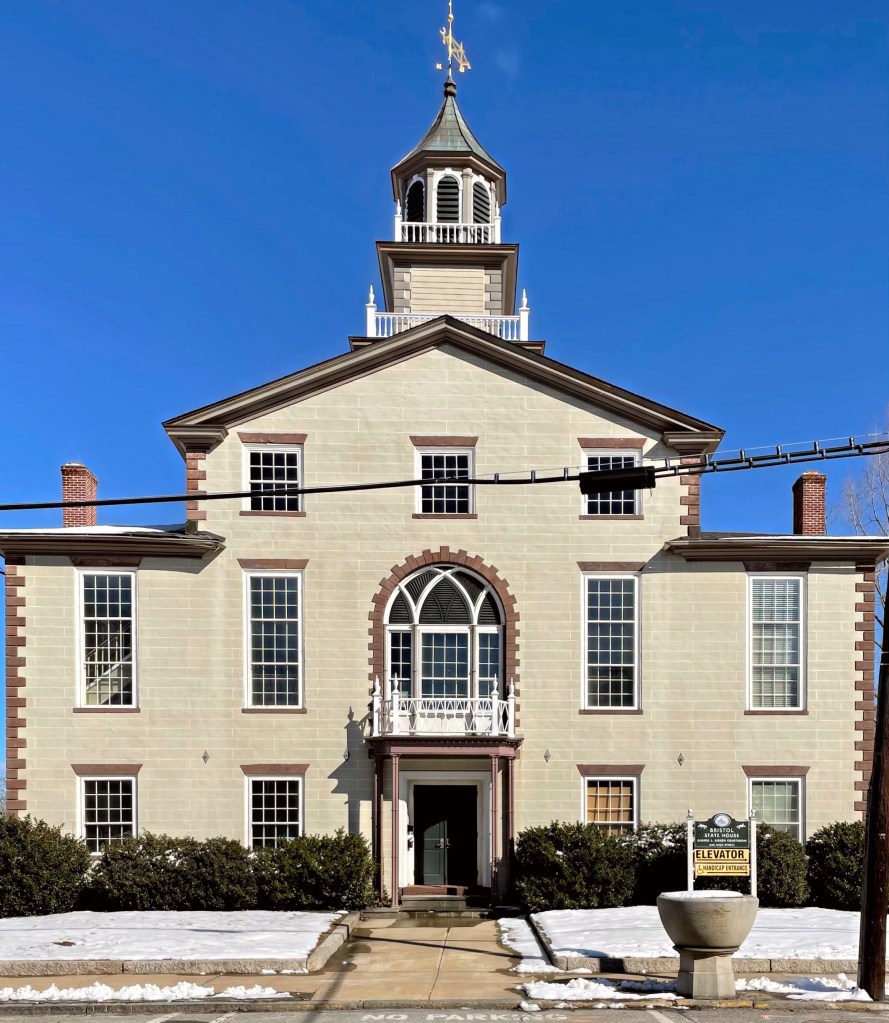
Bristol County Courthouse // 1816

Located on the Bristol Town Green, facing the main commercial area and harbor, the old Bristol County Courthouse is a well-preserved example of a building for civic use in town, at the height of its growth. It is believed that the courthouse is the work of architect Russell Warren, who lived in a home he designed just blocks away. This Federal-style stone building is faced with brick and subsequently stuccoed, giving it the unique composition it has today. The focus of the symmetrical facade is the large central arched window with granite quoins, and Y-tracery that echos Gothic design. As part of the 1836 state Bicentennial, the stucco facing was added over the original brick facing, and the exterior was painted a Gothic Revival sand color with darker trim, replicated in a 1976 restoration. From 1819, the courthouse served as one of the five state houses used in rotation by the Rhode Island General Assembly (in 1854, the General Assembly decided to meet only in Providence or Newport). In 1853, it reverted to courthouse use, a function which ceased in the early 1980s. The Bristol County Sheriff maintained offices there until 1997, when the building was purchased from the state for $1 by the Bristol Statehouse Foundation. The nonprofit foundation has worked to restore and maintain the building. Today, the building is used for education, community programs, meetings, and events.