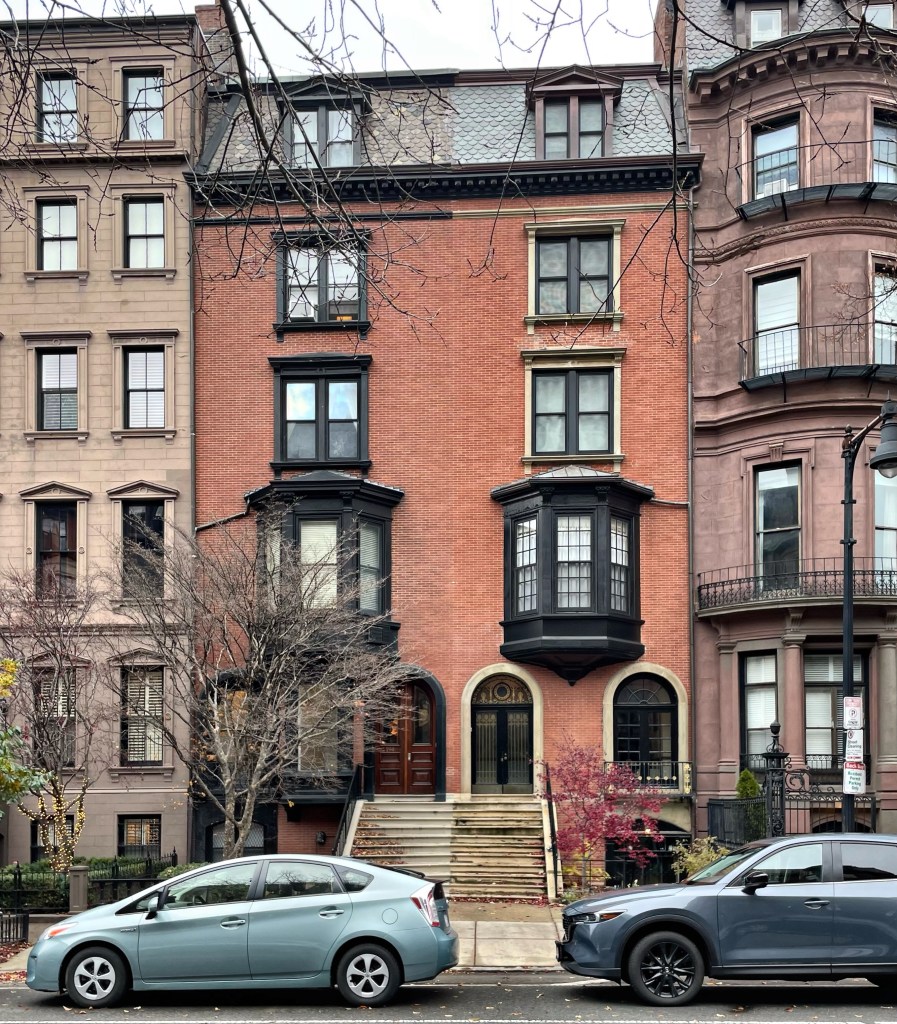
Two is always better than one, especially when it comes to historic townhouses! These two residences on Beacon Street in the Back Bay neighborhood were built in 1862 for two esteemed Boston families, the Storrows and the Meyers. 192 Beacon Street (right) was built as the home of Charles Storer Storrow and his wife, Lydia (Cabot Jackson) Storrow. Charles S. Storrow was an engineer by training and made his fortune as the chief engineer at the Essex Company, a company organized to harness the water power of the Merrimack River downstream from Lowell, Massachusetts in present-day. There, Storrow designed and built the Great Stone Dam across the Merrimack river, canals to distribute the water, several large textile mills, and a city, Lawrence, to house the mill workers. He came up with the idea to make roads that go to the mills in Lawrence, allowing him to become the first mayor of Lawrence in 1853. He retired and lived out his final years at this home in Boston. James J. Storrow, after whom Boston’s Storrow Drive is named, was Charles Storrow’s grandson. 194 Beacon Street (left) was built as the home of George Augustus Meyer and his wife, Grace Helen (Parker) Meyer. George Meyer was a prosperous German-American East India merchant and lived in this home until his death in 1889.
 Buildings of New England
