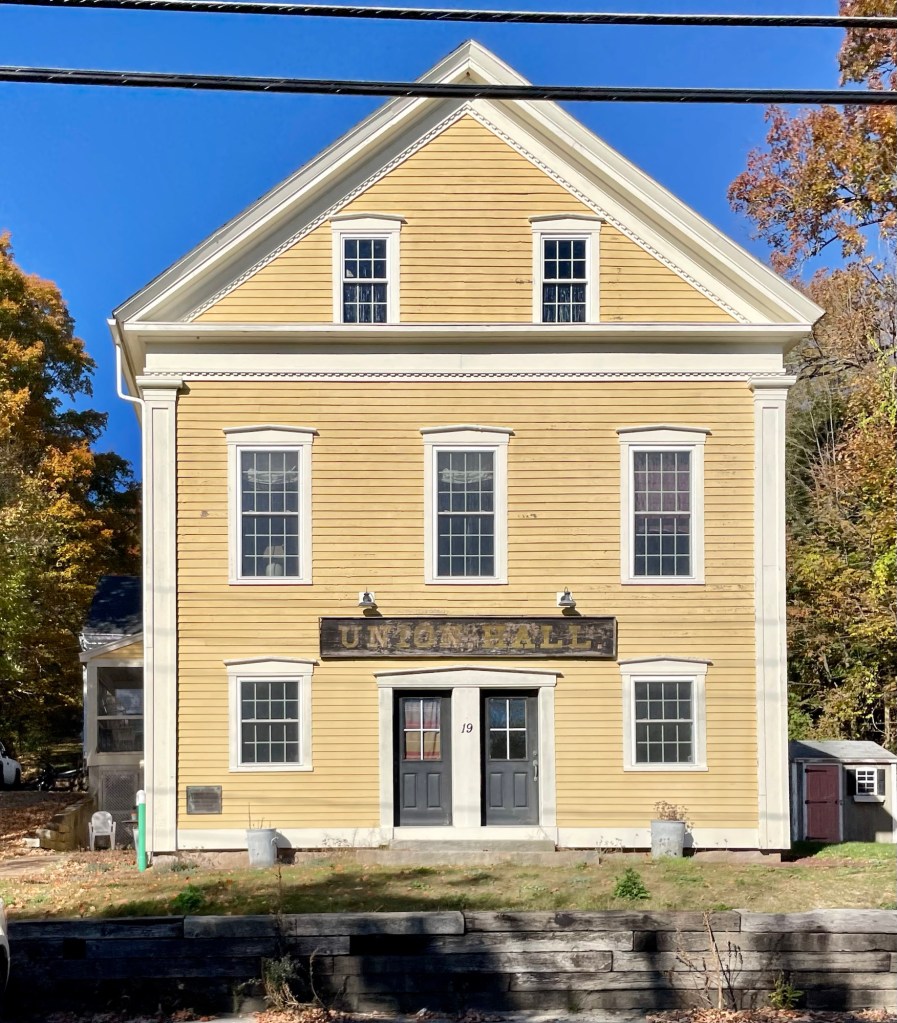
New Ipswich Union Hall // c.1845

This large, wood-frame building on Main Street in New Ipswich, New Hampshire, dates to the 1840s and has long served as a meeting place for local social groups and organizations. The building is a vernacular example of the Greek Revival style with corner pilasters, a dentiled entablature and slightly pedimented lintels over the windows and paired doors. The building was used by various groups including the local chapter of the International Order of Odd Fellows (IOOF), the Women’s Relief Corps, and as the Watatic Grange Hall.

Rockport Union Hall // 1856

Union Hall sits in the middle of the charming coastal village of Rockport, Maine. The Second Empire style building was built around 1856 as an original mixed-use structure with the first level containing retail spaces, the second level as a hall, and third level providing either office or living spaces. Rockport’s Union Hall was also once home of the town Post Office, a barrel factory, and a residence before it began to suffer from neglect and deferred maintenance at the end of the 20th century. In 2010, the owners underwent a massive restoration of Union Hall, which included: structural remediation to wood framing, a new elevator, slate roof repair, all new mechanical, electrical and plumbing systems, masonry repointing, restoration of windows and doors and more. These types of restorations are vital to small New England towns, providing jobs and the properties are often occupied by local small businesses, as is the case here!

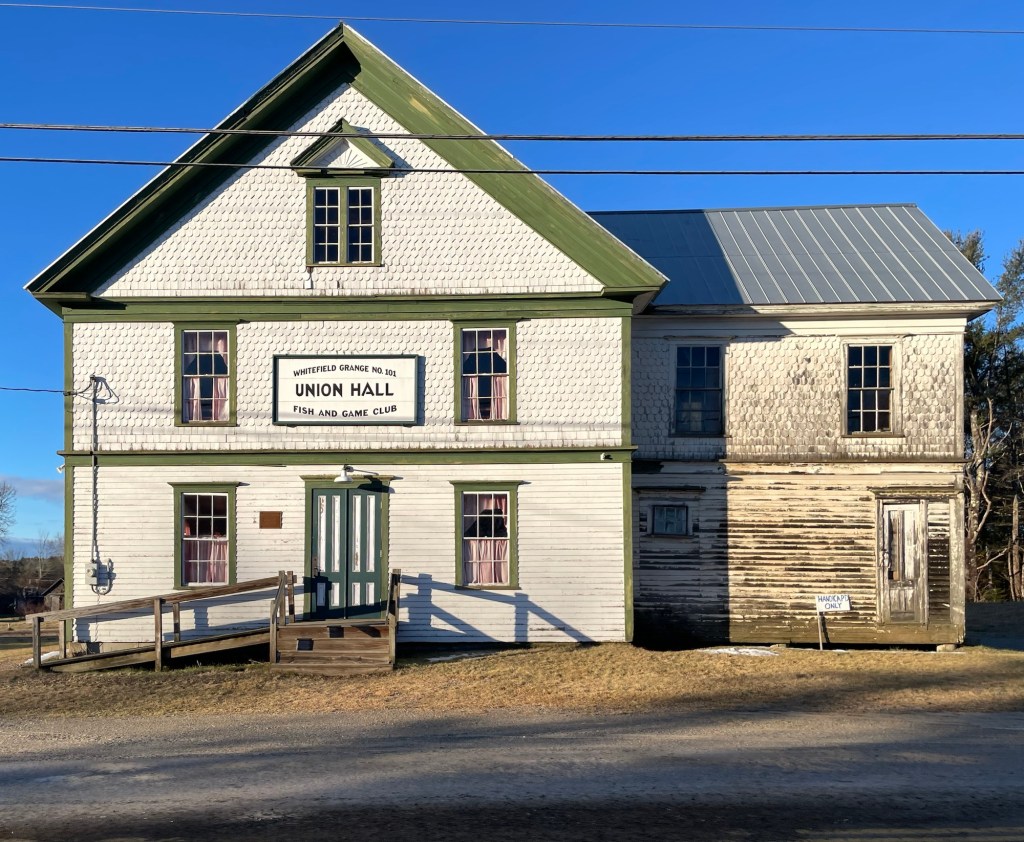
Whitefield Union Hall // 1900

Finding a Grange Hall in Maine are almost as common as finding an old church, they are everywhere! Located the next town over from Jefferson, Maine’s Willow Grange Hall, the town of Whitefield has an equally charming example. The National Grange of the Order of Patrons of Husbandry was established in 1867 to advance methods of agriculture, as well as to promote the social and economic needs of farmers in the United States. Communities all over built grange halls where farmers and residents could meet and discuss prices, trade, and share tips for larger crop yields. The Whitefield Union Hall was built in 1900, primarily under the auspices of the Whitefield Fish and Game Club, but with design input from the local Grange chapter, which contributed funds to its construction and was also a tenant. It was until 1919 the only public hall with a stage in southern Whitefield, playing host to dances, meetings of fraternal and social organizations, and other community events. The hall was managed by an association of the two organizations until 1947, and by the Fish and Game Club after the Grange chapter merged with another in 1969. The club closed down in 1974, and the hall is now managed by a union consortium of village community groups. The building is listed on the National Register of Historic Places.