Trippy Tower House // 2002

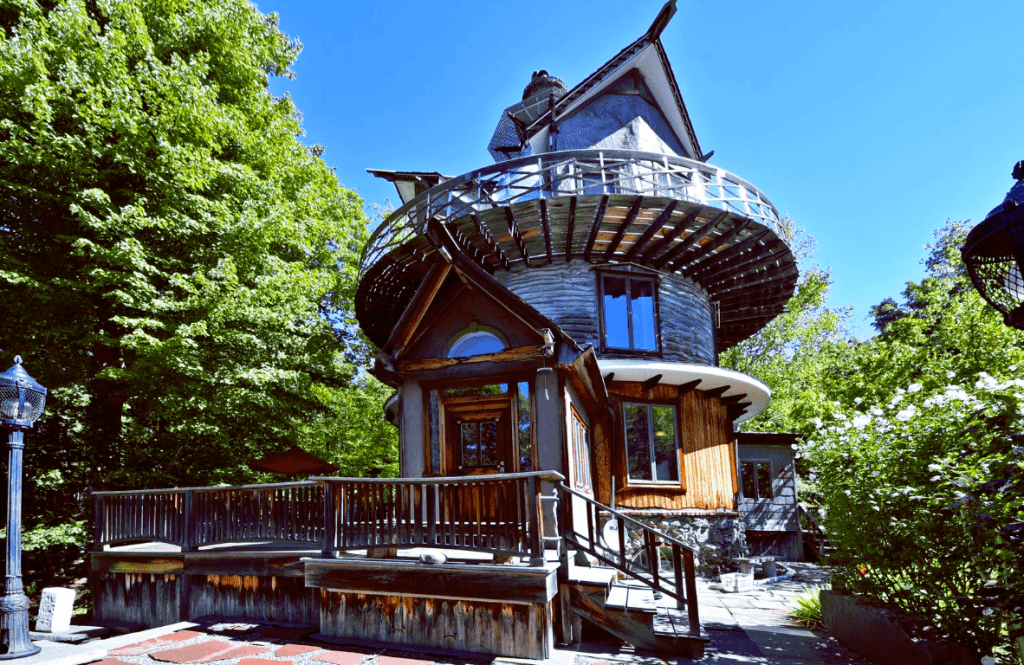
One of the most unique buildings I have ever stumbled across is located in the mountain town of Woodstock, NY. Often referred to as the Trippy Tower House, the house was built over the course of 15 years by artist John Kahn, who designed sets for the Muppets and “Fraggle Rock”. The Tower House is crafted from repurposed materials such as slate, copper, aircraft grade aluminum and redwood with the property being considered his largest “sculpture” and his life’s work. The 3,518 square foot home has three bedrooms and four bathrooms across its five floors The cylindrical house was completed in 2002 and sold five years later when Kahn moved to Easter Island. Kahn sold the house to Rhoney Gissen Stanley, who was former secretary to the Grateful Dead and wife of Owsley Stanley, the Dead’s sound man and the alleged first mass producer of LSD. It was listed for sale again in 2017 for $1.2 Million.
Woodstock Reformed Church // 1844

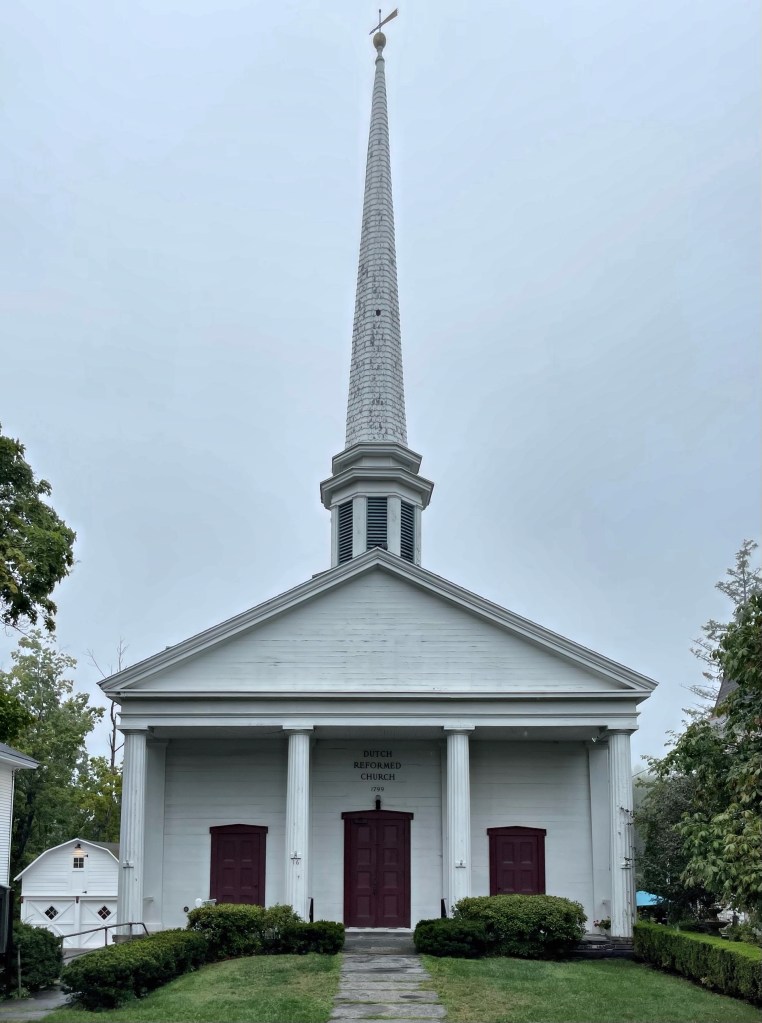
When Dutch and German colonists began to settle along the Hudson River Valley, they brought with them their own religious beliefs and desire for community in a new home. In the Village of Woodstock in Ulster County in 1799, the Dutch settlers began meeting in homes to worship establishing a church. By 1805, they petitioned the denomination for an organized church and purchased land, which is now known as the Village Green. In the heart of Woodstock, they built the first church structure. In 1844, that building was torn down for a new, Greek Revival place of worship on the outskirts of the Green. Architecturally, the church exhibits a prominent temple front with pedimented gable and Doric portico capped by an octagonal steeple. Inside, the sanctuary is lined on the walls and ceiling with decorative, pressed tin, which is apparently from the mid-19th century. The church remains very active in local and current events.

Tannery Brook House – Old Forge House // c.1780

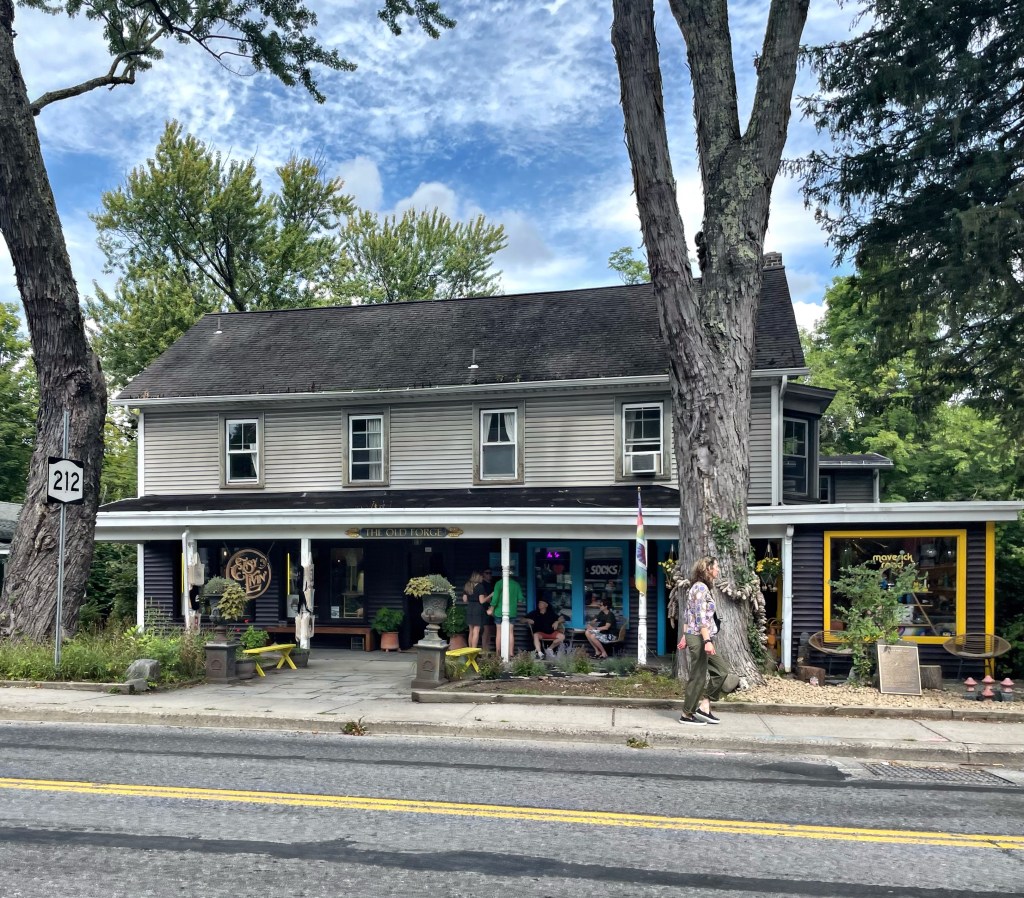
One of the oldest extant buildings in Woodstock Village is the old Tannery Brook House. The building (or a part of it) was originally an old grist mill developed by Isaac Davis and it was later turned into a saw mill. Around the end of the Civil War, the structure was home to the village blacksmith operated by John Wigram Davis, then it was enlarged as a barn for wagons and carriages. Later, owner Peter Longendyke operated a boarding house from the building. Around 1904, the New York Art Students League is believed to have had their first summer art class in the upstairs rooms of the building. In 1935, owner Lamonte Simpkins remodeled it as “The Art Shop”. Upstairs Mr. Simpkins sold clothes, shoes and drygoods, while downstairs The Art Shop and Tannery Brook Garden Flourished. The building was rebranded as the Old Forge House, as a nod to its historic use. It remains a vernacular, and important piece of Woodstock’s rich history from sleepy industrial village to vibrant artist community.

James Nelson Lasher House // 1884

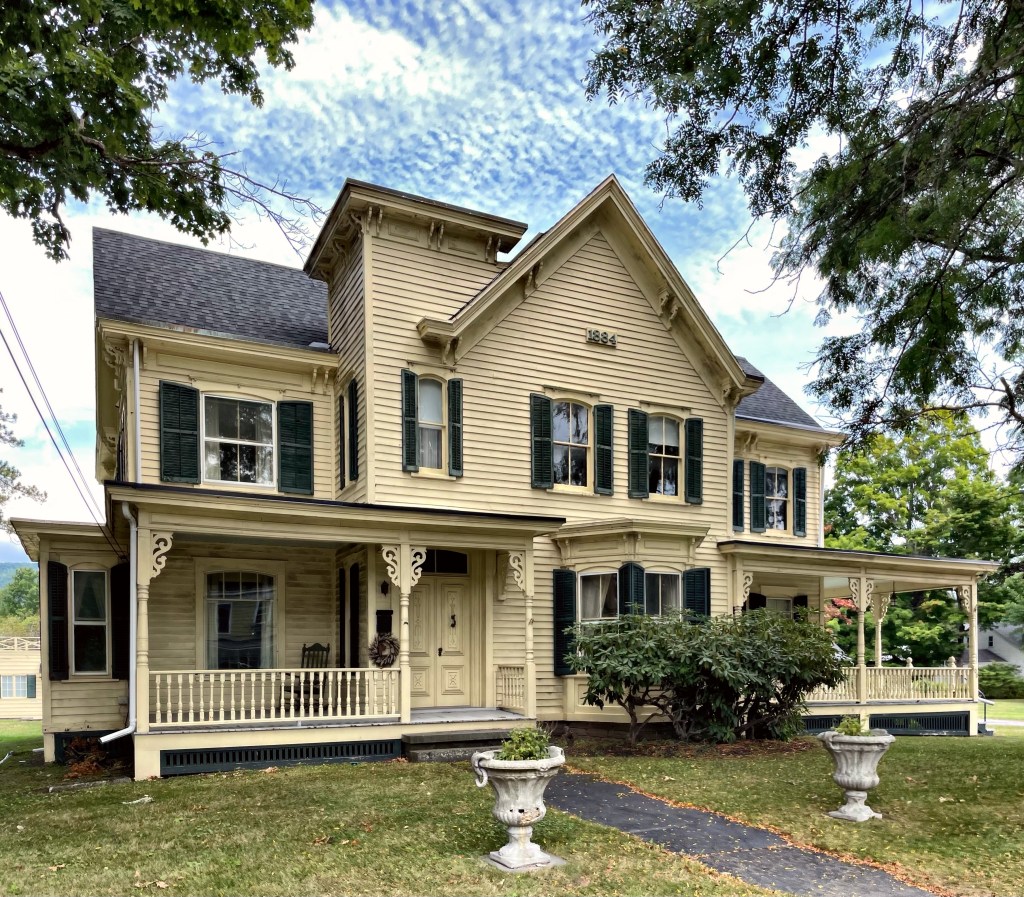
The James Nelson Lasher House in Woodstock, NY was built by James Nelson Lasher (1829-1906) in about 1884. “Nelson” Lasher, a farmer from Bearsville, acquired 45 acres on the outskirts of the village of Woodstock and established an undertaking business on the property, in 1879. Over the next two decades, he farmed the property with his son Franklin “Frank”, who by 1890, also began to manage the undertaking business. Frank Lasher (1864-1912) may have added the Queen Anne porches and tower to the house around this time. In the early 1900s, the Lasher household consisted of Nelson and wife Elizabeth, and Frank and his wife and three children. Nelson died in 1906 and Frank died six years later, leaving the property to his son, Victor, who continued the family undertaking/funeral home business. The property was sold out of the Lasher family in 1960, but operated as a funeral home until 2019. The property has recently been eyed as a hotel and for town offices, I wonder what its future holds!

Krack House // 1870

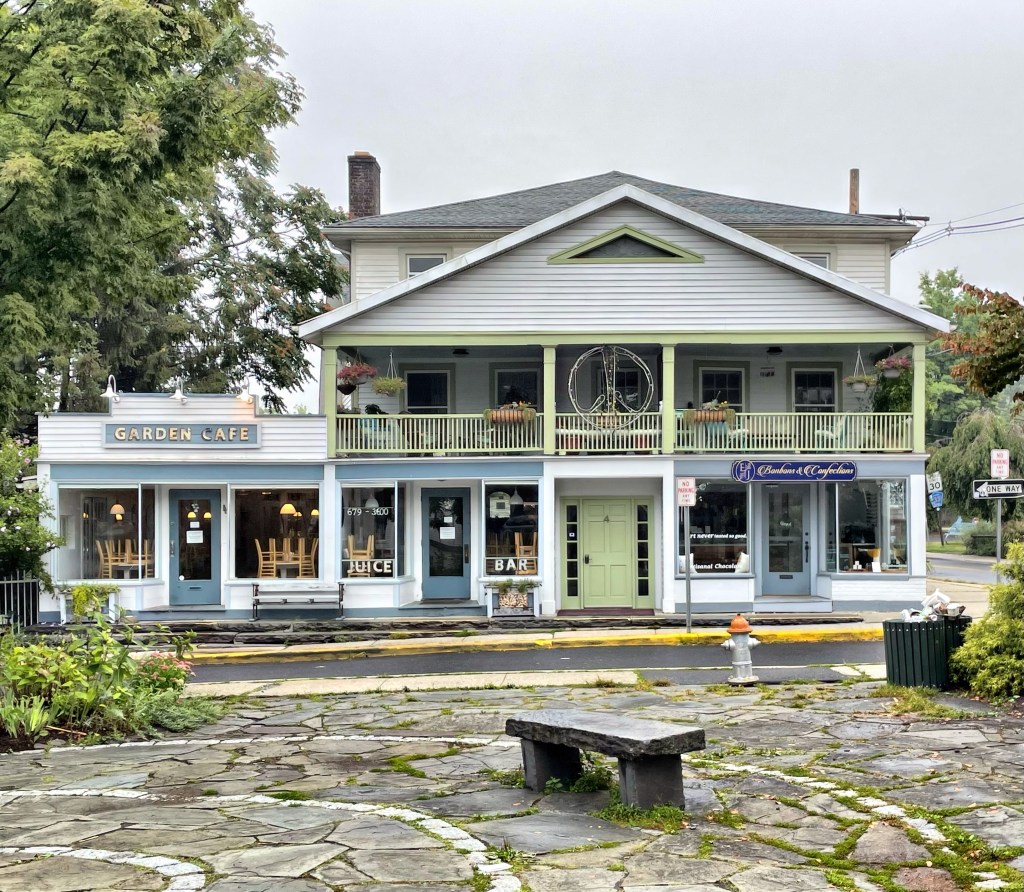
One of the largest buildings in the charming village of Woodstock, NY, is the former Krack House… I know what you are thinking, and no it was not due to illegal activity! The Krack House was developed in 1870 by Charles H. Krack (1824-1893), as a response to the success of other summer hotels built nearby as the area saw a boom in tourism. Charles Krack was born in Germany and after serving in the military there, he arrived to America in the mid-1800s. Here, he served as an overseer of a Georgia plantation, and moved to New York City after the Civil War, operating a hotel in Manhattan. He later became the owner of a floating bathhouse on New York City’s East River anchored near Grand Street, and made great money, investing it up the Hudson in Woodstock. In Ulster County, he got involved in politics. The Krack House was a summer lodging facility with food service and all the best amenities in the village. After Charles’ death in 1893, the property was eventually purchased by Stanley Brinckerhoff Longyear, who rebranded the hotel in his name, The Longyear. The building appears to now contain apartments above commercial spaces.

St. George’s Church // 1759

Schenectady’s oldest extant religious building, St. George’s Church, sits in the center of the Stockade Historic District in Schenectady, New York. As Schenectady was settled and dominated by Dutch settlers, English settlers began moving to the riverfront town, due to its rich fur trade and opportunity. With the growth of English residents, a church where the services were conducted in the English language became necessary. The blossoming congregation hired architect Samuel Fuller, who arrived to Schenectady from Boston in 1758, at the height of the French and Indian War. Ground was broken on the stunning Gothic church in 1759 and it was finally completed in 1763, delayed due to fighting nearby. The church was originally more modest for the smaller congregation, but underwent a large building campaign in the mid 1800s thanks to Reverend William Payne. He oversaw the construction of a new parish house, a new rectory, as well as two successive expansions of the church and the addition of a stone tower and spire to the west front of the church, giving it the appearance we see today. The congregation is still highly active and maintains the building beautifully to this day.

First Reformed Church, Schenectady // 1863

The First Reformed Church of Schenectady is the oldest congregation in the city. Founded by Dutch settlers, Schenectady’s first colonists, the first church lasted over a decade until it burned in the Schenectady Massacre in 1690, when a party of more than 200 French and allied Mohawk warriors attacked the unguarded community of Schenectady, destroying most of the homes, and killing or capturing most of its inhabitants. Sixty residents were killed, including 11 enslaved Africans. An expanding congregation after, outgrew its second and third buildings, replacing them with larger structures. The fourth was lost in Schenectady’s Great Fire of 1861, causing yet another building campaign. The present church building, an architectural landmark in Gothic design, was completed by the highly regarded Victorian-gothic architect Edward Tuckerman Potter in 1863. Potter is also known for his designs of the Nott Memorial Building (previously featured), in Schenectady, and Mark Twain’s home in Hartford, CT. A fire in the church gutted it in 1948, but the community at large banded together to fund the restoration efforts of the amazing architectural landmark.

Teneyck-Yates House // 1760

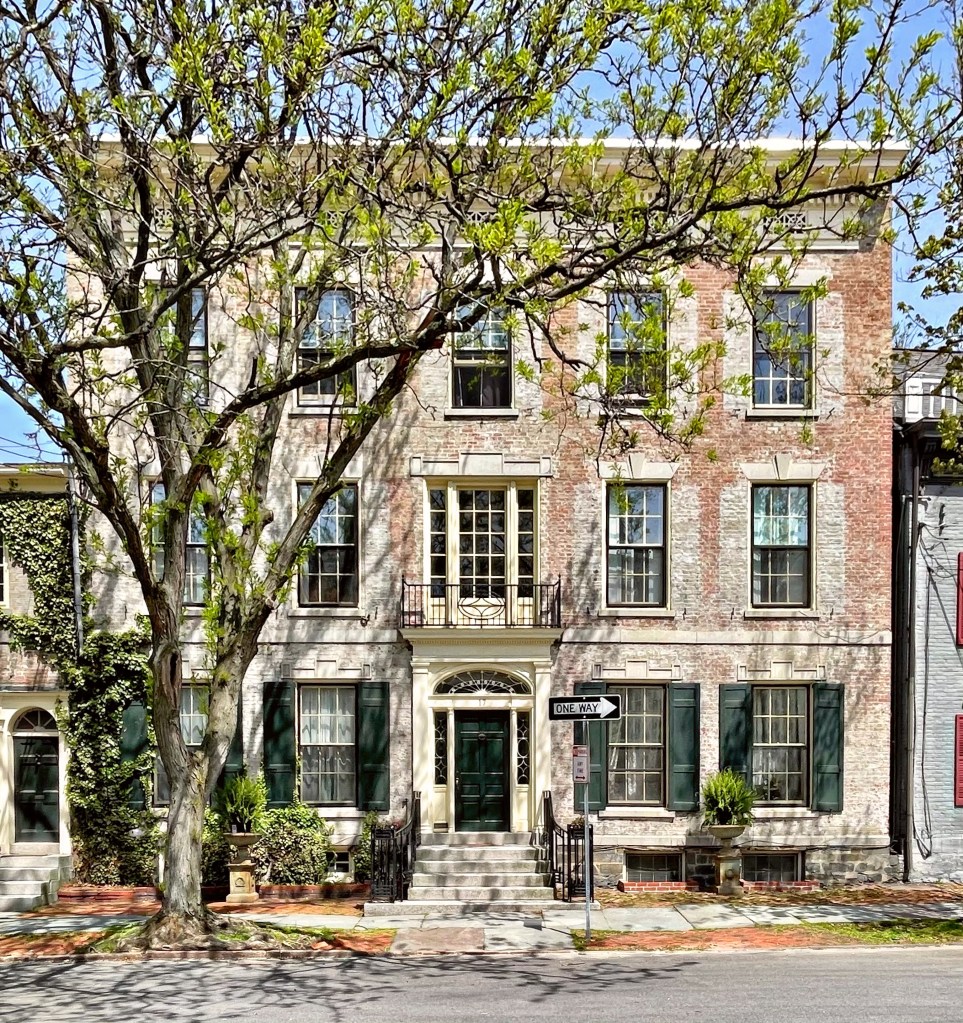
Tobias H. Ten Eyck was born in 1717 to a wealthy family from Albany, New York. He lived in Schenectady as a child and met his wife, Rachel De Peyster. The year he married Ms. De Peyster, he had this brick Georgian mansion built, which at the time, had a gambrel roof. Tobias was counted among Schenectady’s wealthiest businessmen, dealing in trade here until his death in 1774. The house was purchased next by James Ellice, who lived in the home with his wife Ann. While on a business trip to Montreal as an “Indian fur trader”, Ellice died at the young age of 33. His widow Ann remarried Joseph C. Yates, a lawyer. The couple occupied this home and Joseph built the one story law office to the side of the building to run his firm out of. He also had this home “modernized in the early 1800s, boxing off the third story and adding the Federal period detailing. He served as the mayor of Schenectady (beginning in 1798), being appointed successively to twelve one-year terms. In 1805 he was elected as a state senator, in 1808 as a State Supreme Court justice, and in 1823, as the seventh governor of New York (1823–1824).

David Forrest House // c.1857

This home in Schenectady’s Stockade Historic District appears to have been built in the mid-19th century, and is an excellent example of a modestly sized Gothic Revival cottage. The house was occupied around 1860 by David P. Forrest, who served one term as Mayor of Schenectady in 1859, later becoming an Inspector of State Prisons from 1860 to 1862. The amazing Gothic bargeboard and other trimmings have remained and add so much intrigue to the home’s design. And that lancet window in the gable end! Swoon.

Dr. Charles P. Steinmetz House // c.1850

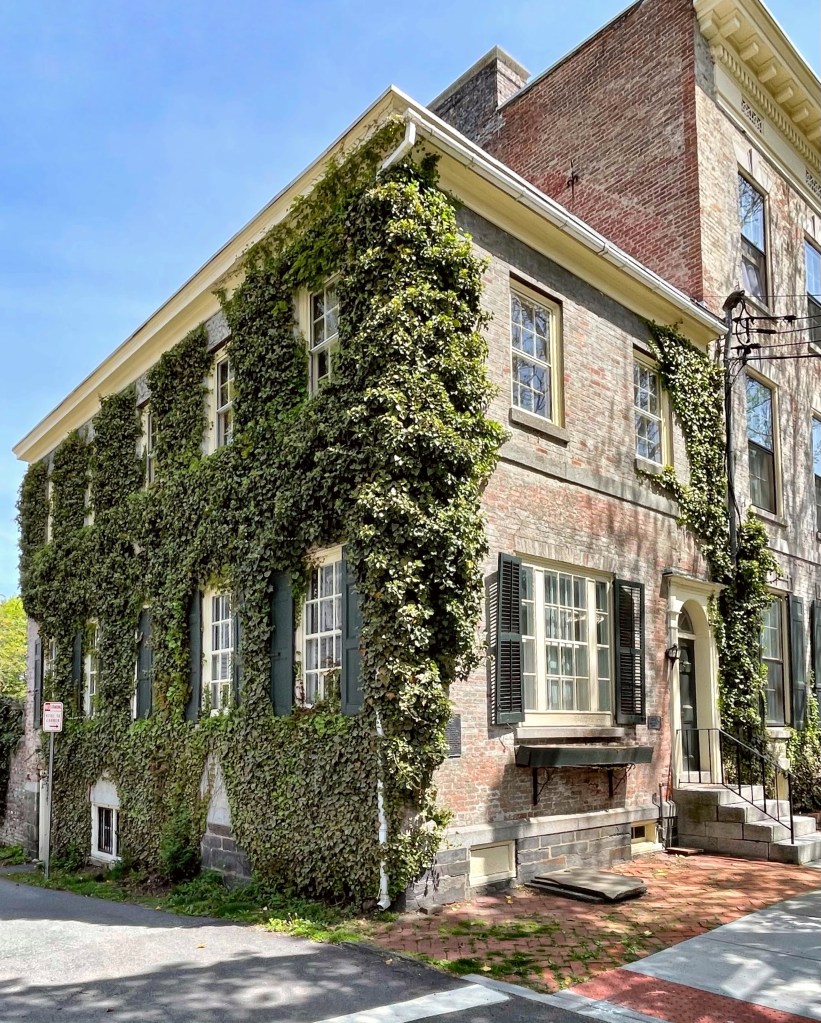
Welcome to the Stockade Historic District in Schenectady, NY! The National Park Service has described it as “the highest concentration of historic period homes in the country,” from this, the Stockade became New York State’s first local historic district, protecting it from demolitions and unfettered development. The neighborhood began in 1661, when a group of Dutch settlers, mostly merchants and fur traders looking to do business with Native Americans, settled the banks of the Mohawk River. This group of settlers built twelve houses surrounded by a wooden stockade (wooden defensive walls), to protect them from invasions, the neighborhood was named after this feature. The neighborhood developed over the 17th, 18th, and 19th centuries, providing an amazing layered neighborhood that showcases the best of designs throughout history! This home is no different. It was built around 1850 as an early example of Italianate architecture. It was most notably occupied by the famed Dr. Charles Proteus Steinmetz, a German-born scientist who beat the (then) impossible odds of succeeding with from dwarfism, hunchback, and hip dysplasia. Born Karl August Rudolph Steinmetz, he emigrated to the United States in the 1880s He changed his first name to “Charles” in order to sound more American, and chose the middle name “Proteus“, a wise hunchbacked character from the Odyssey. He got a job with General Electric in Lynn, MA, and was later transferred to Schenectady where he lived out his days. He settled in this quaint home between 1893-97, running a laboratory out of the first floor rooms. He went on to bigger homes, and never married or fostered children. I highly recommend that you all read more about him, he was a truly fascinating person!