Yale University – Battell Chapel // 1874

As the Old Campus of Yale was being enclosed at its north and east by Farnam and Durfee halls, architect Russell Sturgis was again tasked to design a new building, but for a corner site; though this time, he would design a college chapel. Built between 1874–76, it was funded primarily with gifts from Joseph Battell. Succeeding two previous chapel buildings on Yale’s Old Campus, it provided space for daily chapel services, which were mandatory for Yale students until 1926, which were all-male and mostly Protestant. The large stone chapel is constructed of New Jersey brownstone with decorative elements in sandstone. The design of the Victorian Gothic chapel is great, but how it sits with the entrance unceremoniously dumping out to the end wall of Durfee Hall leaves much to be desired.
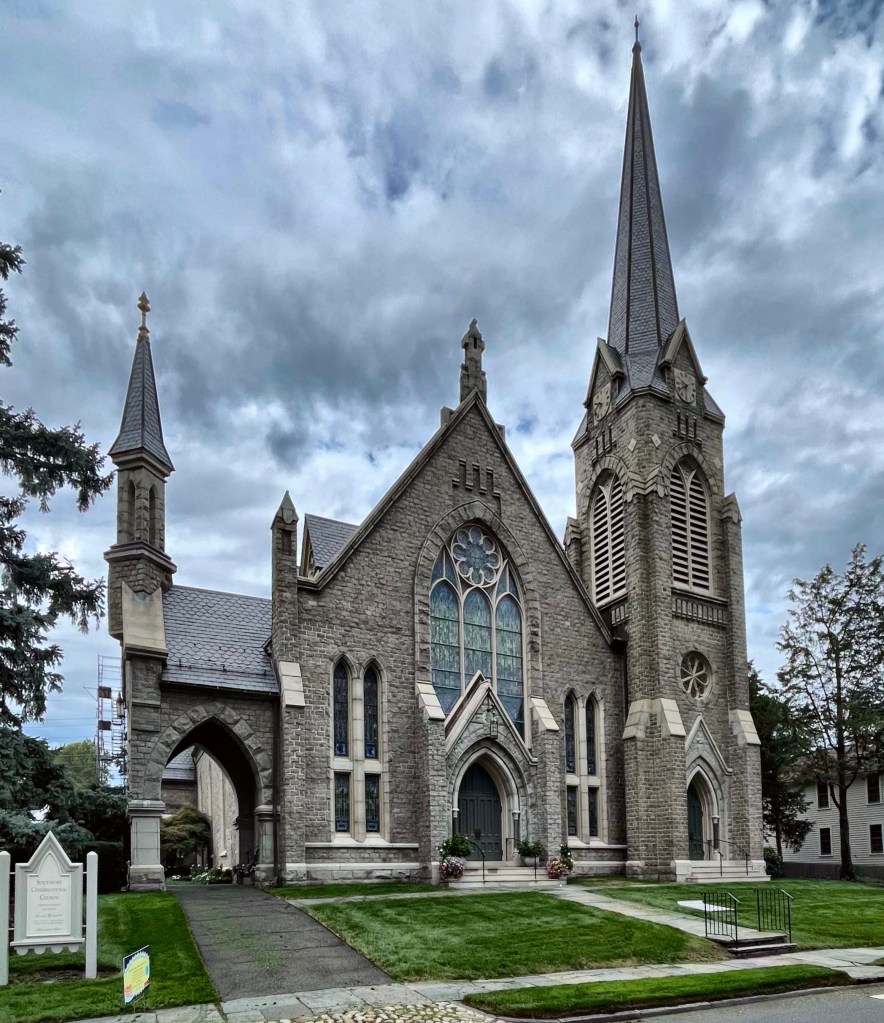
Southport Congregational Church // 1875

Southport was and still is a part of Fairfield, Connecticut, but it has long been very different from the geographic center of town. Largely due to distance, Fairfield Congregationalists in the Southport area of town sought to establish a new parish to worship closer to home. By the 1840s, their request was granted and a small wood-frame Greek Revival house of worship was built in 1843. By 1871, the increase in population and wealth in the village necessitated a new, larger church. The congregation hired the architectural team of Lambert and Bunnell who made a huge statement here! It is constructed of granite ashlar masonry with a steeply pitched roof and soaring spires.

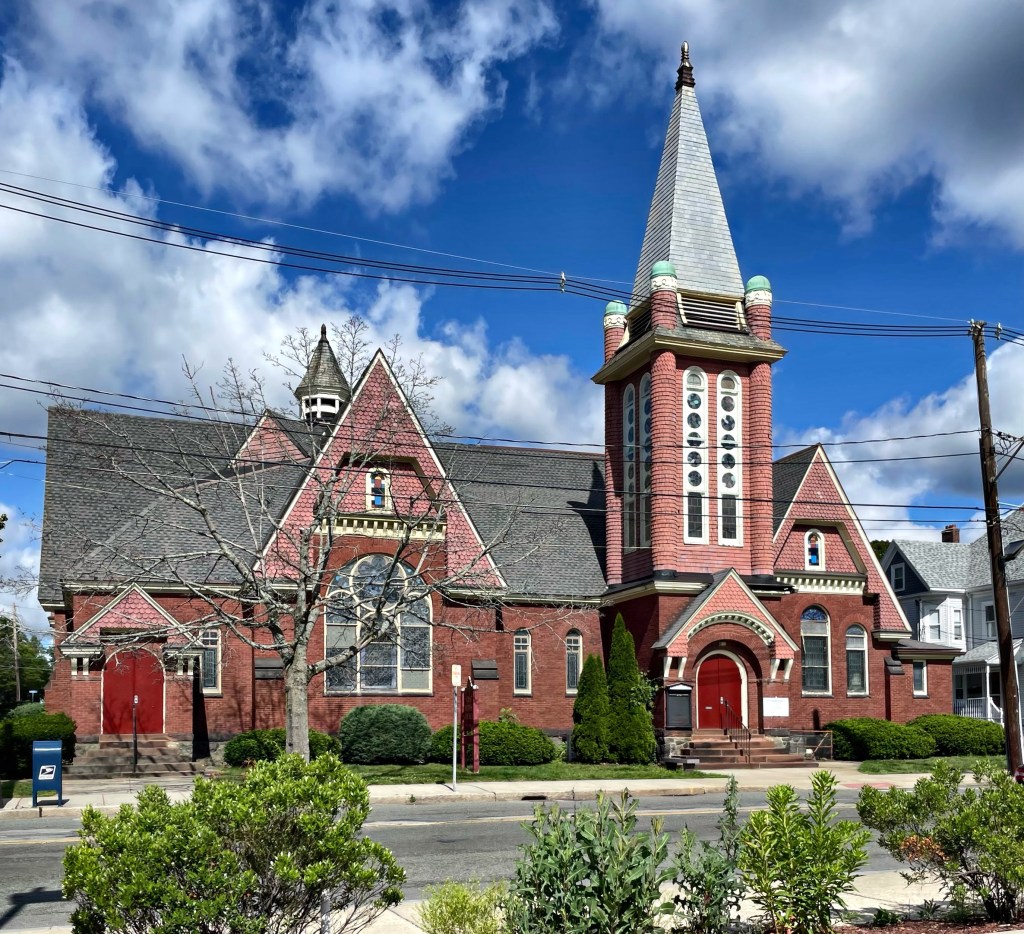
First Baptist Church of Stoneham // 1892

In 1891, the Baptist Society of Stoneham, Massachusetts unveiled that it had acquired funding and approved the plans for its first purpose-built church building in town. The organization met in a shared chapel in town since its founding in 1870. The new church would be unique in the Boston suburb as the only in town to be of the Queen Anne/Shingle style. A prominent site on South Main Street was acquired and work began in 1892 to erect the new house of worship. The design of the church is credited to the firm of L.B. Volk & Sons, a firm who specialized in church buildings with commissions all over the country. The church is complex in plan and combines brick and shingle siding in its construction with a prominent two-story tower with rounded corners and stained glass rondels (round windows).