One of the older extant homes in Kennebunkport is the Daniel Walker House on Maine Street. After the American Revolution, shipbuilding and other maritime industries grew along the Maine coast, especially in Kennebunkport (then still named Arundel). Sea captain Daniel Walker built the home on ample land on the outskirts of the village at the time. By the early 19th century, he sold off much of his land closer to the river to family and friends. The Georgian home is minimal, yet commanding with its massive facade, rusticated lintels and corners, an elaborate entry and a large central fireplace.
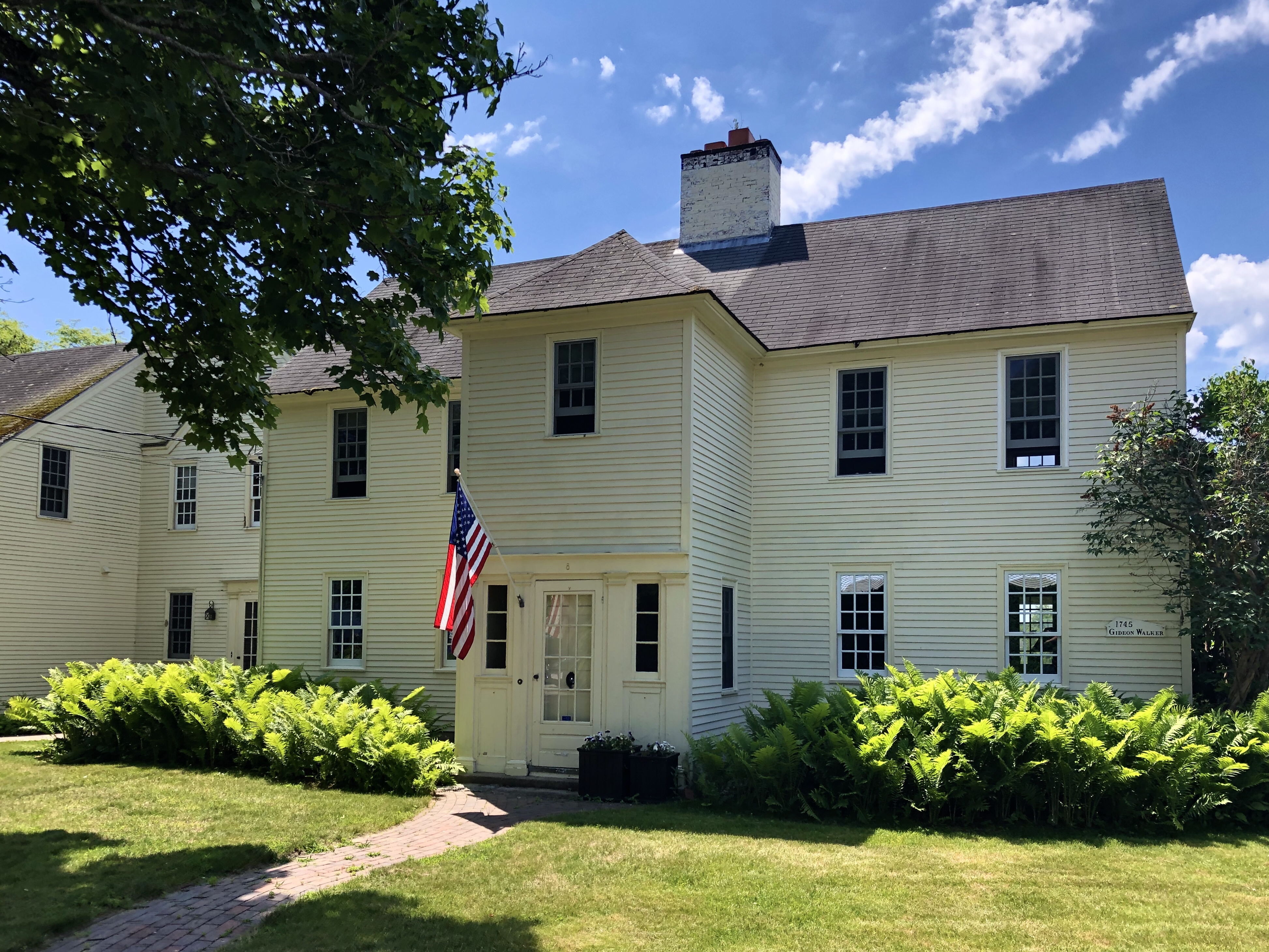
One of the older extant homes in Kennebunkport is the Gideon Walker Farmhouse, built in 1745. The home once sat on a larger parcel of land, on the outside of the village, which at the time, only had a handful of other homes nearby. At the time, the town was named Arundel, and was later renamed Kennebunkport, in reflection to its economy becoming one of shipbuilding and trade along the Kennebunk River. As the village population grew, the Walker land was sold off and developed for other large estates. The Georgian house featured a small, one-story projecting entry, typical of the period. In 1910, owner Anson McKim of Montreal, hired Portland architect John Calvin Stevens to update the home, which included the addition of the front entry’s second story and a large side addition approximating the size and location of the former barn which once stood there. The home has since been renovated a few more times on the interior and exterior, yet it still retains its historic integrity.
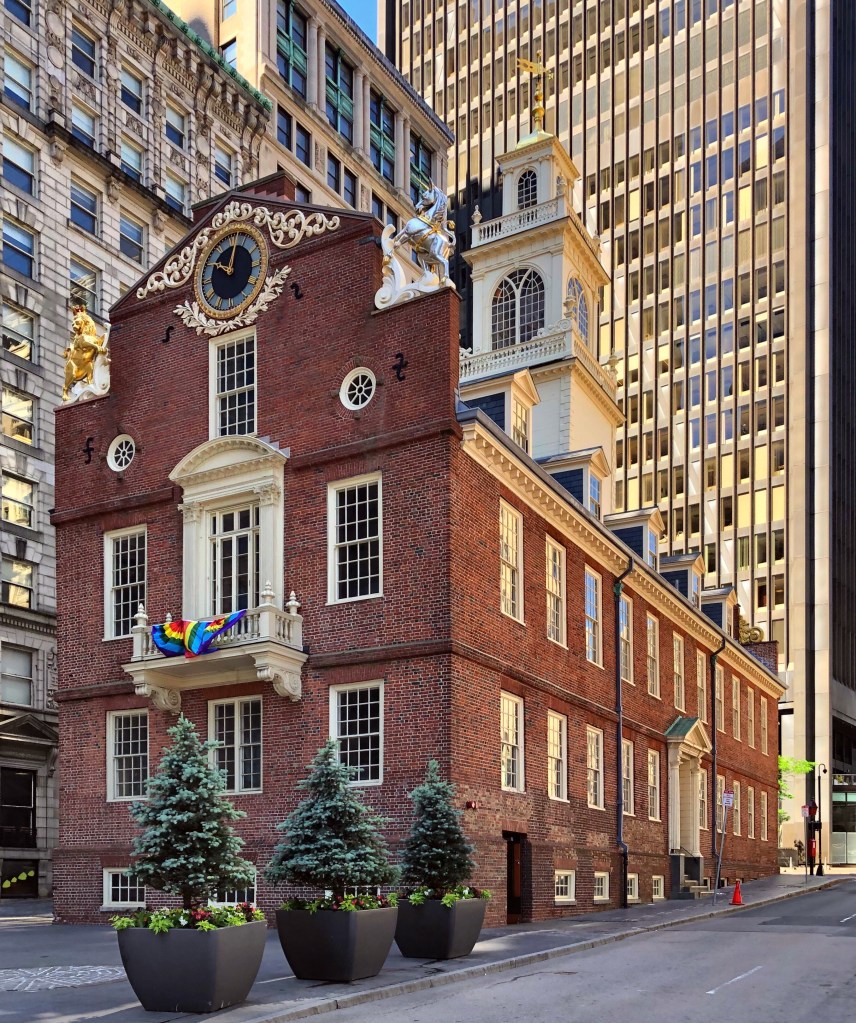
Nestled among the towering skyscrapers of Downtown Boston, the Old State House stands proudly, giving us a glimpse into pre-Revolutionary life and events. Happy Fourth of July!
Built in 1713, the “Town House” as it was originally known, served as a merchants’ exchange on the first floor and the seat of colonial and later state government on the second floor throughout the 1700s. The royal governor, appointed by the King of Great Britain, held his office in the building until 1775, and from the balcony gave voice via decrees and speeches to the King 3000 miles removed from London. Above the balcony, a lion and unicorn—royal symbols of the King of Great Britain—graced the main façade facing the public square.
“A cobblestone circle beneath the Old State House balcony marks the site of the 1770 Boston Massacre. Tensions ran high in Boston in early 1770. More than 2,000 British soldiers occupied the city of 16,000 colonists and tried to enforce Britain’s tax laws, like the Stamp Act and Townshend Acts. American colonists rebelled against the taxes they found repressive, rallying around the cry, “no taxation without representation.” On the frigid, snowy evening of March 5, 1770, Private Hugh White was the only soldier guarding the King’s money stored inside the Custom House on King Street. It wasn’t long before angry colonists joined him and insulted him and threatened violence. Calling reinforcements, a group of British soldiers stood near the Town House and were pelted with snowballs and rocks, with one soldier firing out of panic. Once the first shot rang out, other soldiers opened fire, killing five colonists–including Crispus Attucks, a local dockworker of mixed racial heritage–and wounding six. The event was one of the flashpoints which began the American Revolution.
Six years later, on July 18, 1776, Colonel Thomas Crafts read the Declaration of Independence from the balcony of the Old State House as a statement of strength from where the King’s declarations were given just years prior.
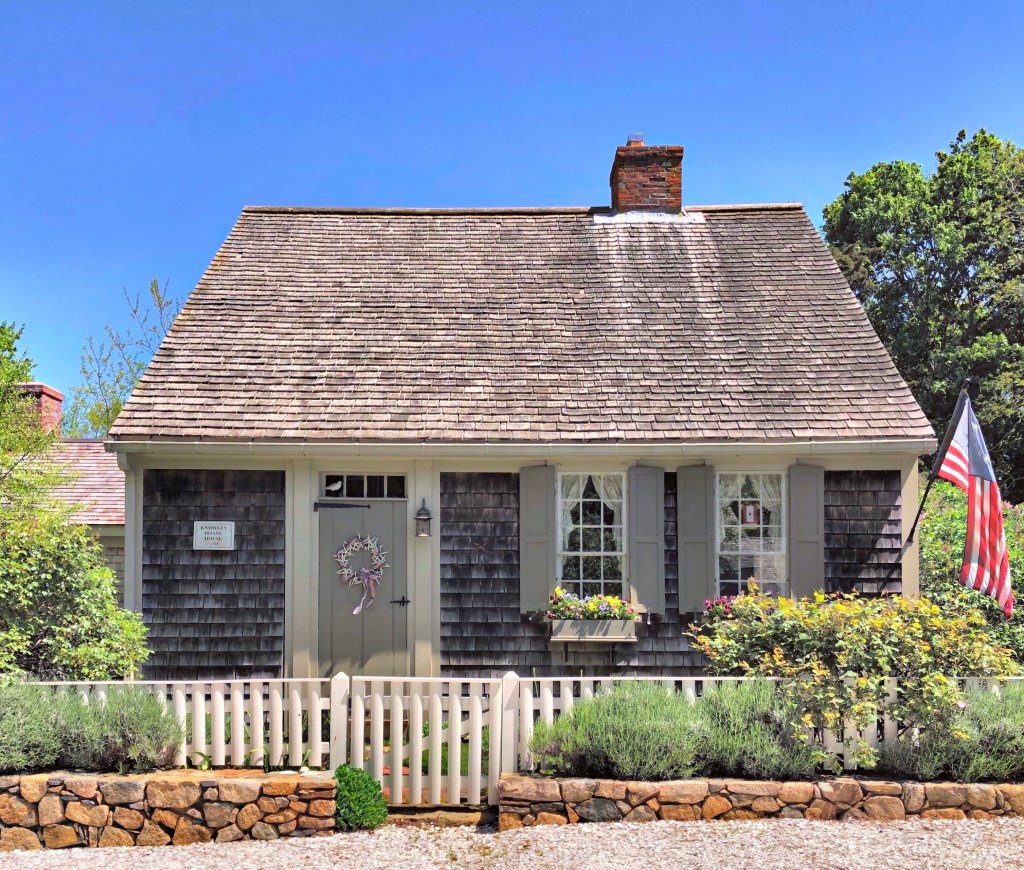
The gorgeous half-cape Knowles Doane House in Eastham is an early example of a traditional Cape home that are synonymous with the peninsula. The modest house features an off-center entry with a solid wood door with a transom above. Clad with wood shingle siding and roofing, the home screams “Cape Cod”. The large central chimney would have provided warmth inside the home during the harsh winter months. The home was likely built for a member of the Doane Family, whos patriarch, John Doane, arrived to Plymouth Colony by 1632. The family eventually settled in Eastham and participated in fishing, whaling and agriculture. By the early 1800s, the home was occupied by Knowles Doane.

 Buildings of New England