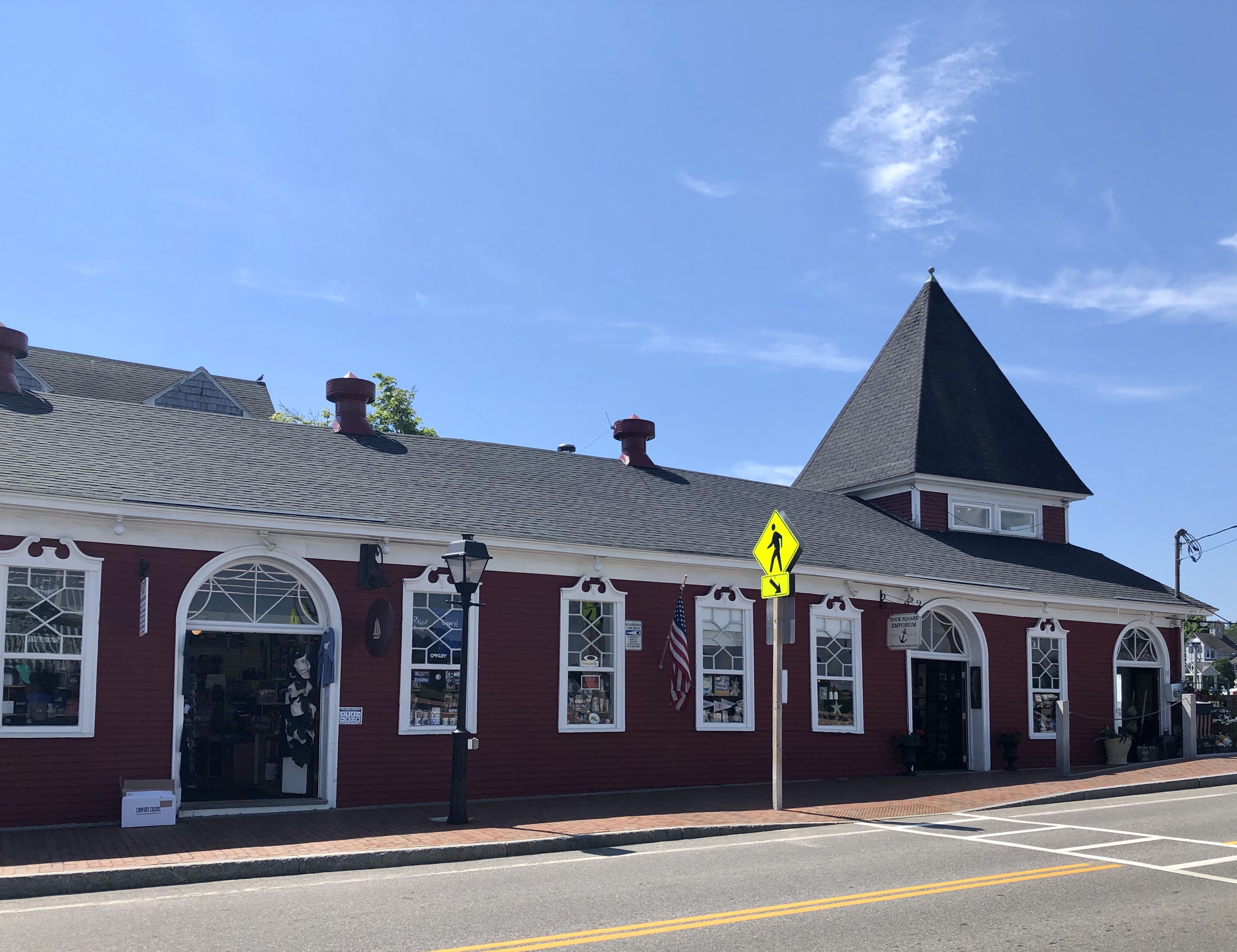
One of the more identifiable buildings in Dock Square in Kennebunkport Village is one of the first you typically see when arriving from neighboring Kennebunk. The wood-frame building perched on stilts at the edge of the Kennebunk River features a prominent pyramidal roof and stunning windows. Through some digging, it appears the building was built in 1919 as the Lyric Theater, a 350-seat motion-picture cinema, that catered to the summer residents. Sometime after the 1970s, the theater was converted to retail use and now is home to Saxony Imports a place where you can pick up some presidential swag, gag gifts, or touristy clothing.
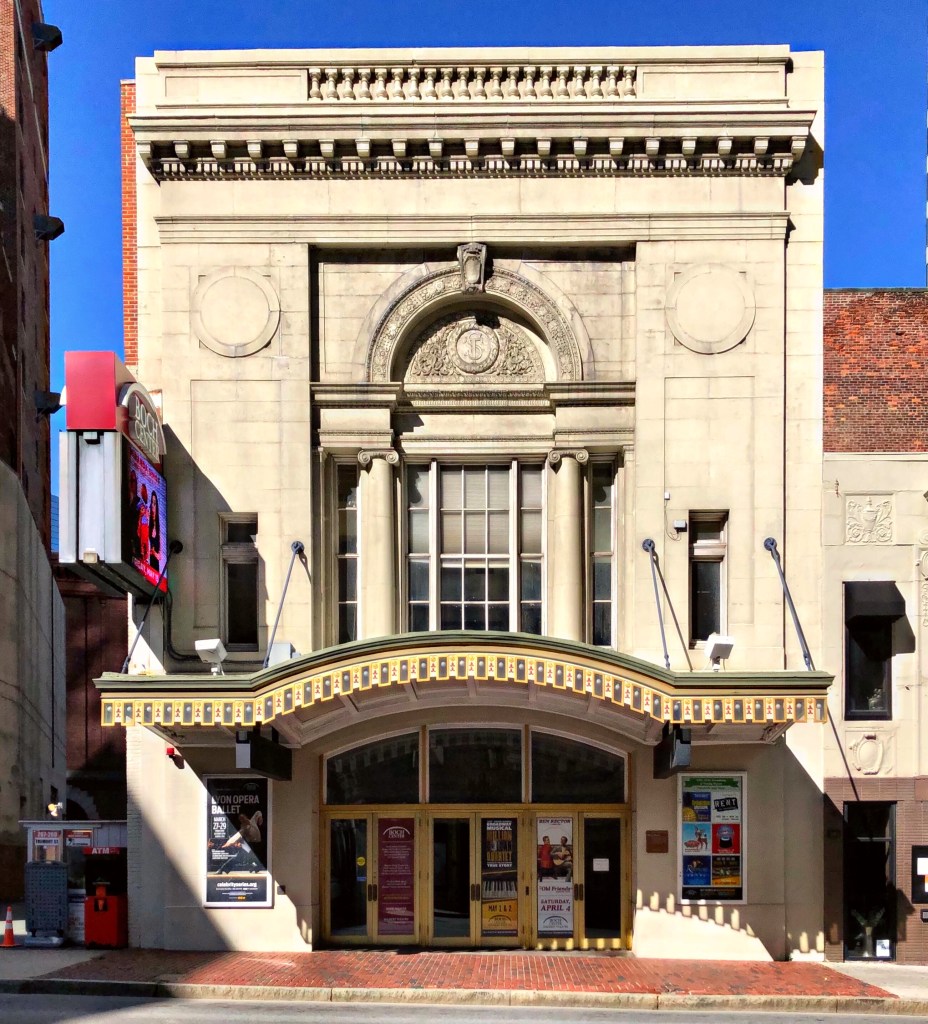
One of the many iconic theaters on Theater Row in Downtown Boston, the Shubert Theater packs a punch for one of its size. Designed in 1908 and originally named the Lyric Theatre, the theatre was built for live performances. The theatre was named in 1910 after Sam S. Shubert, known as the founder of the independent theatre movement. Shubert was the oldest of three brothers and the first to become involved in theatre management in the 1880’s. At the age of just 26, Sam Shubert died due to a train wreck in 1905, and his brothers Lee and Jacob went on to continue their brother’s empire, which included theatres in Boston, New York and Chicago, which operates after their deaths as the Shubert Organization. In February 1996, the Wang Center signed a 40-year lease agreement to operate the theatre with the Shubert Organization, which continues to own the building and property; the theatre reopened after renovation in November 1996. The Boch family became the namesake of the center in 2016, making the full name of the theatre the Shubert Theatre at the Boch Center.
Built in 1793, the Eastham Windmill on the old Town Green is the oldest workable gristmill on Cape Cod. Typical of Cape Cod, Eastham’s windmill is an octagonal , “hat and smock” or Flemish design in which the revolving top or hat can be rotated to direct the sails into the wind. Local historians contend that Thomas Paine, a noted early millwright and resident of Eastham, most likely built the Eastham Windmill in the late eighteenth century. Some sources state that the windmill was likely built in Plymouth and later moved to Truro and eventually to Eastham in 1793. In 1895, the women of the Village Improvement Society raised money to purchase the windmill and two adjoining properties from private ownership for $ 113.50. Around the turn of the twentieth century, the windmill became a local tourist attraction and the subject of postcards and souvenirs. The windmill is now the main attraction of the annual Eastham Windmill Weekend.
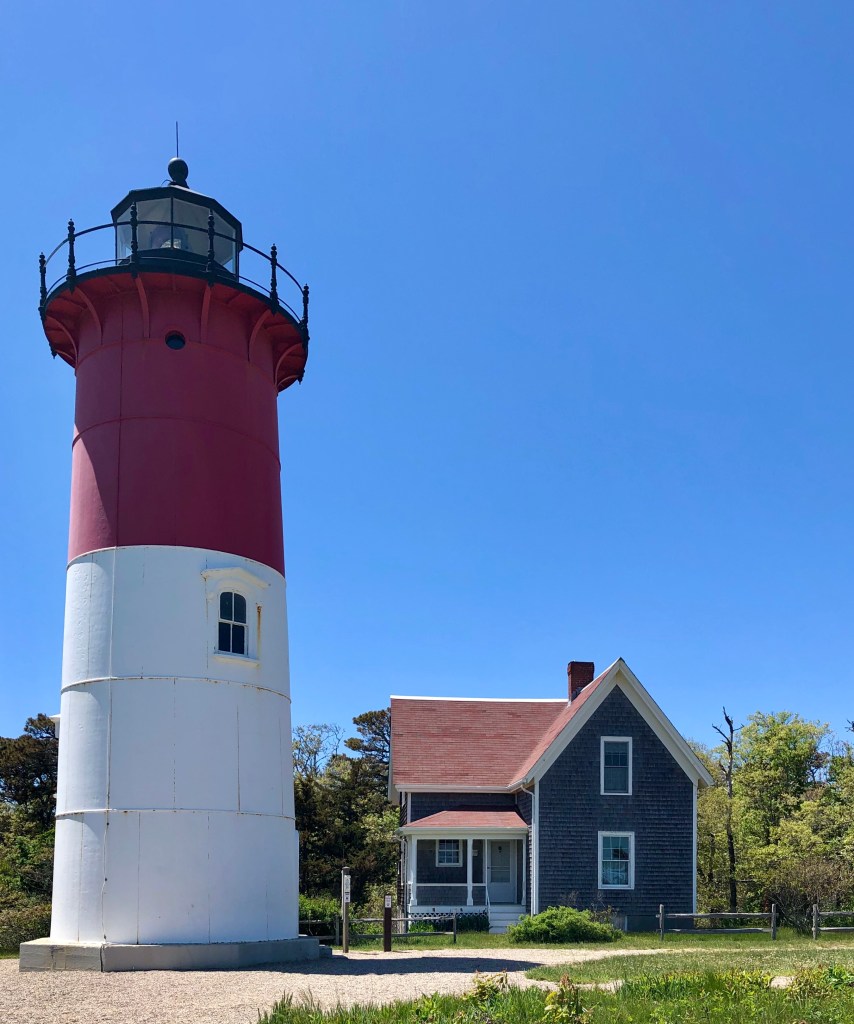
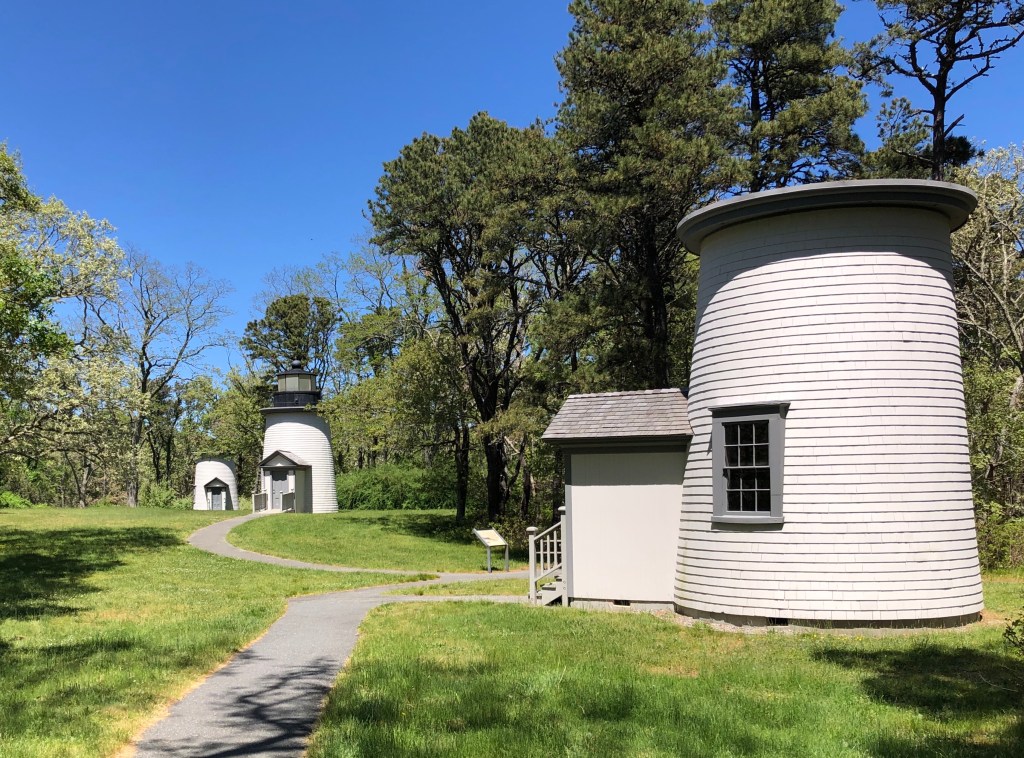
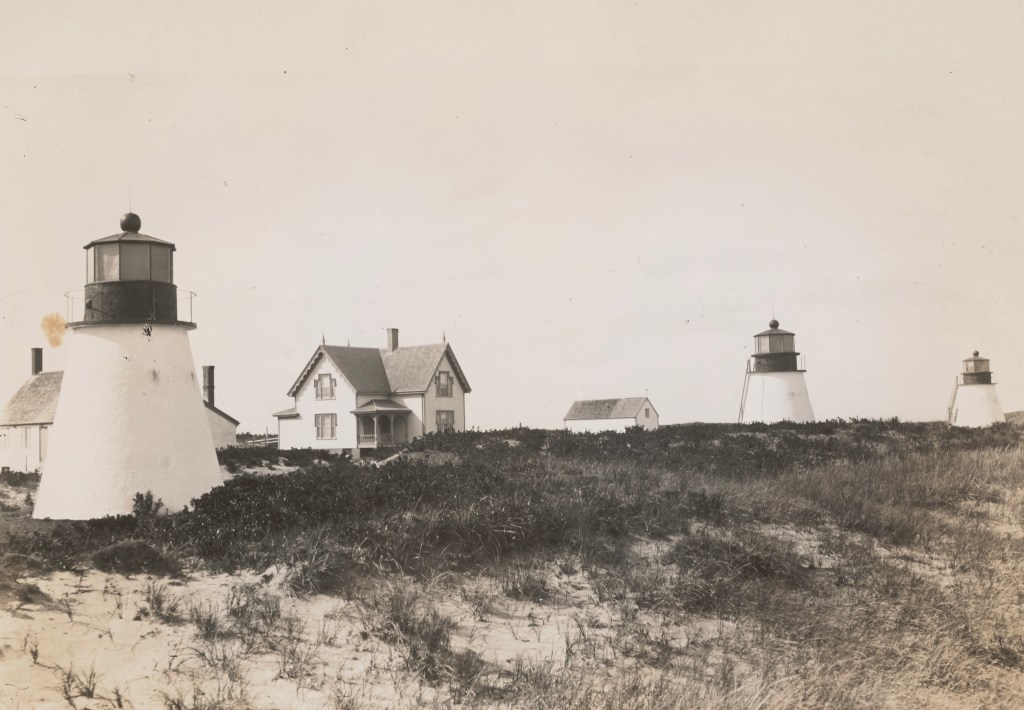
In 1838, three brick lighthouses served as aids to navigation off the Nauset Beach shores in Eastham on Cape Cod; these lights were replaced by three wooden towers in 1892. From 1911 to 1923, only one of these Beacons were used, as technology had evolved sufficiently enough to install a revolving light. Nauset was thus distinguished from the single light of Highland to the north in Truro and the twin lights of Chatham to the south. The forty-eight-foot-tall, brick-lined, cast-iron Chatham tower, originally built in 1877, was dismantled, hauled up the cape, and rebuilt atop a cement foundation 200 feet from the cliff’s edge at Nauset Beach. To provide accommodations for the keepers of the relocated cast-iron tower, the 1876 dwelling built for the Three Sisters was relocated farther away from the edge of the bluff. The cliff continued to fall into the sea over time and the lighthouse and dwelling were moved again in the 1990s. Both structures are owned and maintained by the Nauset Light Preservation Society.
Learn more on the history of the site in the Three Sisters Lighthouse post.
The first lighthouse station for Eastham, known as the Nauset Beach Light Station (nicknamed The Three Sisters), was completed in 1838. The name Nauset, which came from a local Native American tribe, formerly referred to the fifteen-mile stretch of Cape Cod from what is now Brewster almost to modern-day Truro. The lighthouse station actually consisted of a group of three lights atop 15-foot high brick towers located on a bluff looking over the Atlantic. Even though there were three lighthouses, the station was staffed by only one keeper up until 1867, when the position of assistant keeper was added. The assistant lived with the head keeper and his family in the station’s one dwelling (talk about cozy)!. The Lighthouse Board in 1873 noted the inadequacy of these accommodations in a report stating, “The dwelling-house should be enlarged, or a small cottage built for the accommodation of the assistant keeper, as the building now occupied is entirely too small”. Congress allocated $5,000 in 1875 for a keeper’s dwelling at Nauset Beach, which was erected in 1876.
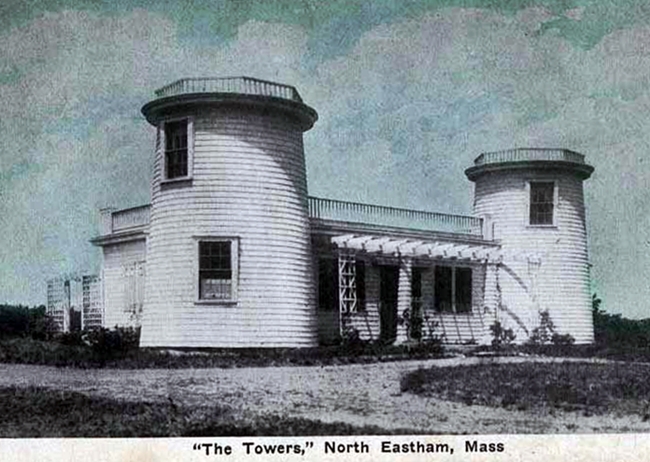
After the relentless Atlantic Ocean brought the three brick towers to the brink of disaster due to the eroding land under them, in 1892, three new towers were constructed thirty feet west of the originals along with a brick oil house. The replacements were constructed of wood so they could be readily moved if the need occurred again. By 1911, it was determined that there was a need for only one lighthouse (as three could get confusing), and two of the three lighthouses were auctioned off, the third was attached to the keeper’s house. The two towers (minus their lanterns) were sold in 1918 to the Cummings family of Eastham for $3.50. The family moved the two towers to a nearby location and joined them together as a summer cottage called “The Towers” on Cable Road. In 1923, the smaller wooden lighthouse was retired and replaced with the current Nauset Light. In 1983 after much uncertainty as to their future, the National Park Service united the Three Sisters in a park, just west of their original location for history geeks like us to enjoy!

 Buildings of New England